






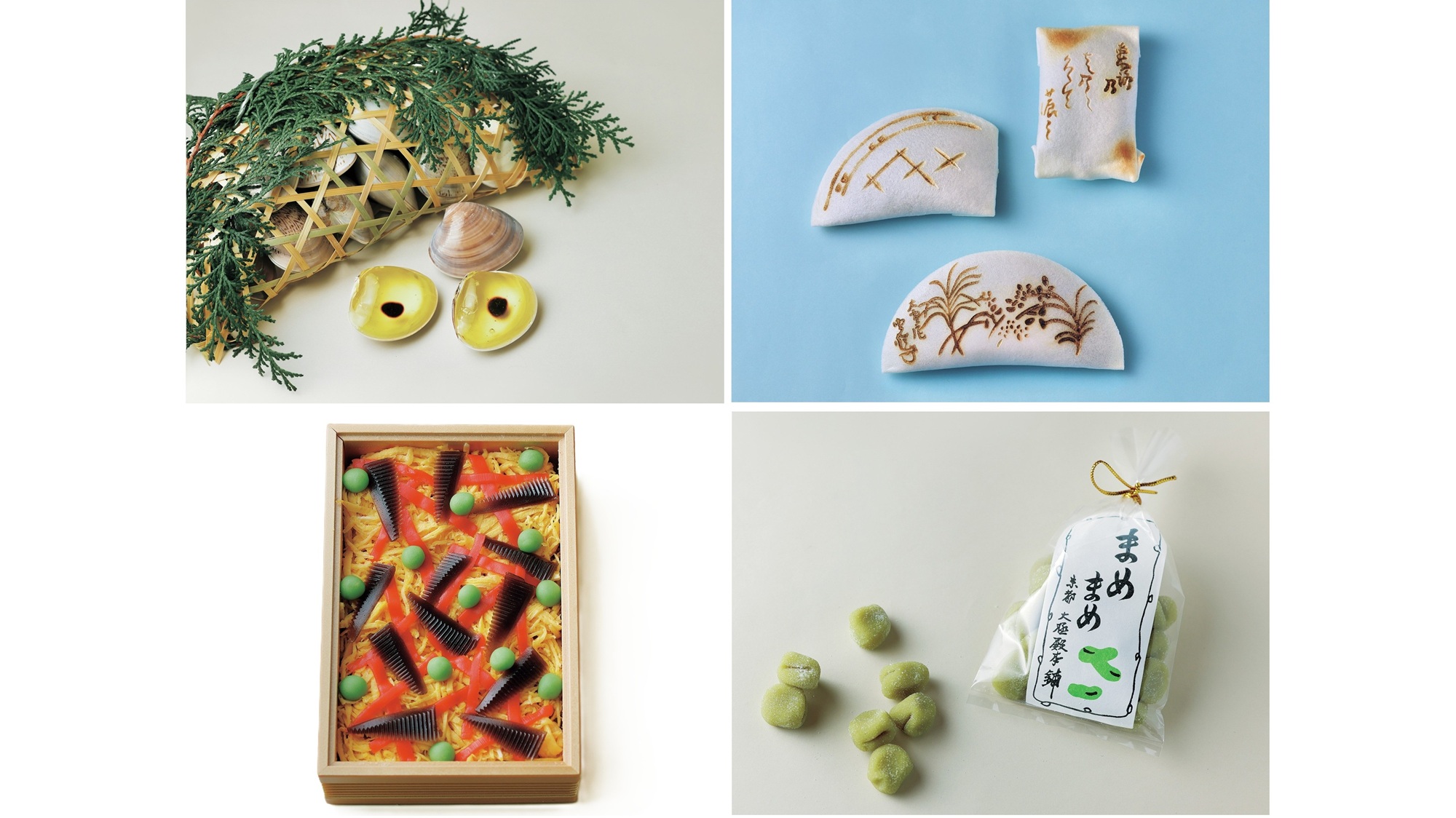
Suetomi (末富) and their ‘Koetsuzenzai’ (光悦ぜんざい) | The classic summer treat, Kaichushiruko (懐中しるこ), likened to a craft by Koetsu (光悦)
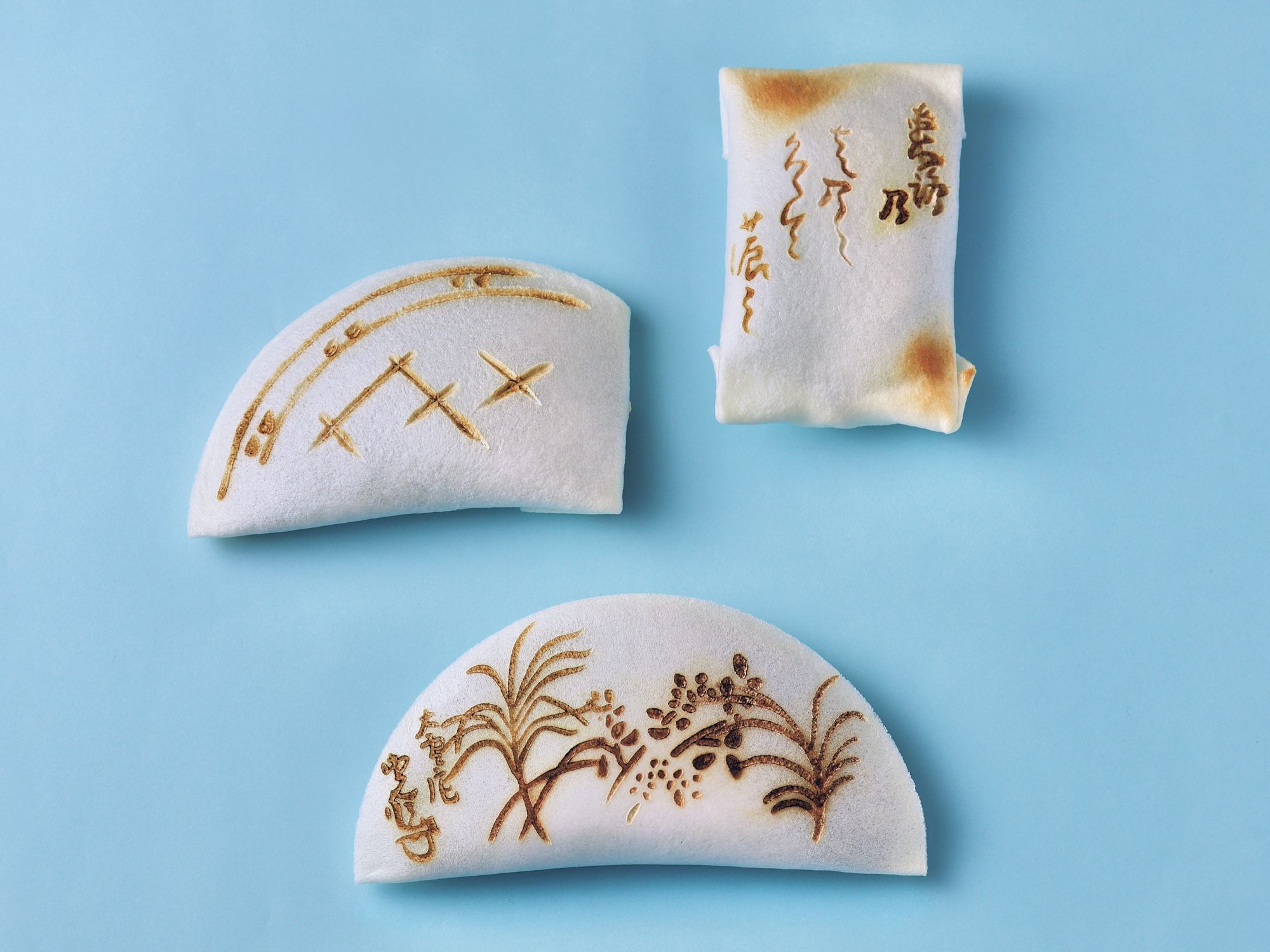
Kaichu-shiruko was invented in Kyoto in the middle of the Meiji period. The unique name of the sweet comes from the fact that people carried it tucked into the front fold of their kimonos as an accompaniment for outings.
It is an excellent item where refined red bean paste is placed inside a Fuyaki rice cracker made of glutinous rice, and by breaking the cracker and pouring hot water over it, a sweet red bean soup (oshiruko (お汁粉)) is made. In Kyoto, it is known as a summer sweet to dispel the heat.
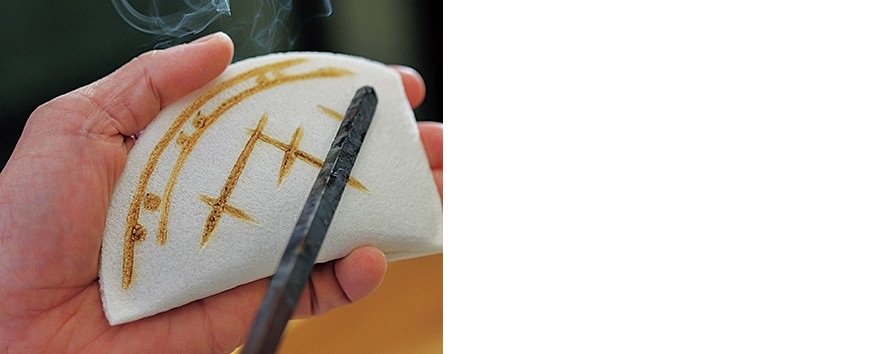
The reason renowned shops are celebrated is that they use elaborate designs for each shop, even with very limited ingredients like Fuyaki rice cracker and red bean paste. At Suetomi, the Fuyaki rice cracker are shaped by hand into motifs associated with Honami Koetsu, the star of the Rinpa (琳派) school!
According to the 4th generation owner, Yamaguchi Shoji, “Since our founding, we have had a connection with Koetsuji (光悦寺) through events like the Koetsukai (光悦会) (a prestigious tea ceremony held every autumn).” To be able to enjoy Koetsu’s outstanding artistic sensibility through sweets is nothing short of pure bliss for the senses.
The sweetness of the red bean paste is also elegant and glides down the throat effortlessly. The secret to a great kaichu shiruko is the chewy texture of the crisp rice wafer (tane). Because this sweet is molded into the elaborate shape of the iconic “Koetsu-gaki” fence, the varying thickness of the shell gives it a uniquely rich, satisfying chewiness that sets it apart from all others.
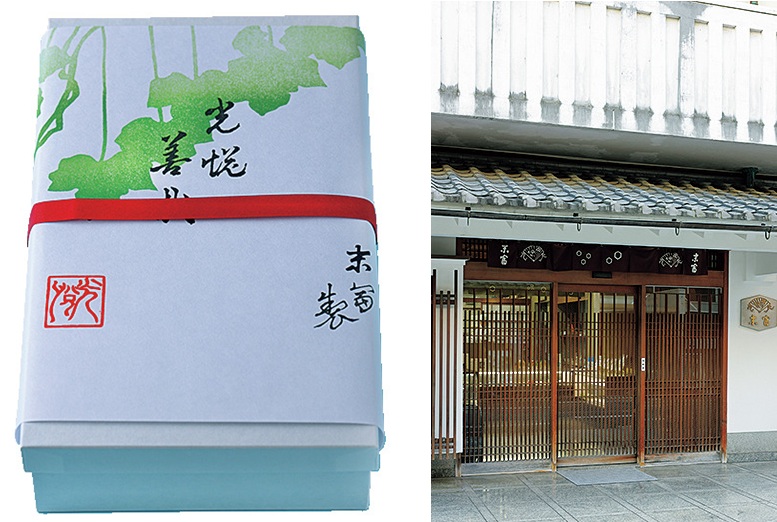
●’Suetomi’ Shop Info
Address: Matsubaratodomuromachihigashiiru, Shimogyoku, Kyotoshi, Kyoto
Telephone: 075-351-0808
Opening Hours: 9:00 – 17:00
Closed: Sundays and public holidays
Official Website: https://www.kyoto-suetomi.com/
Kameyanorikatsu (亀屋則克) and their ‘Hamazuto’ (浜土産) | A tea ceremony sweet for summer born from a longing for the sea
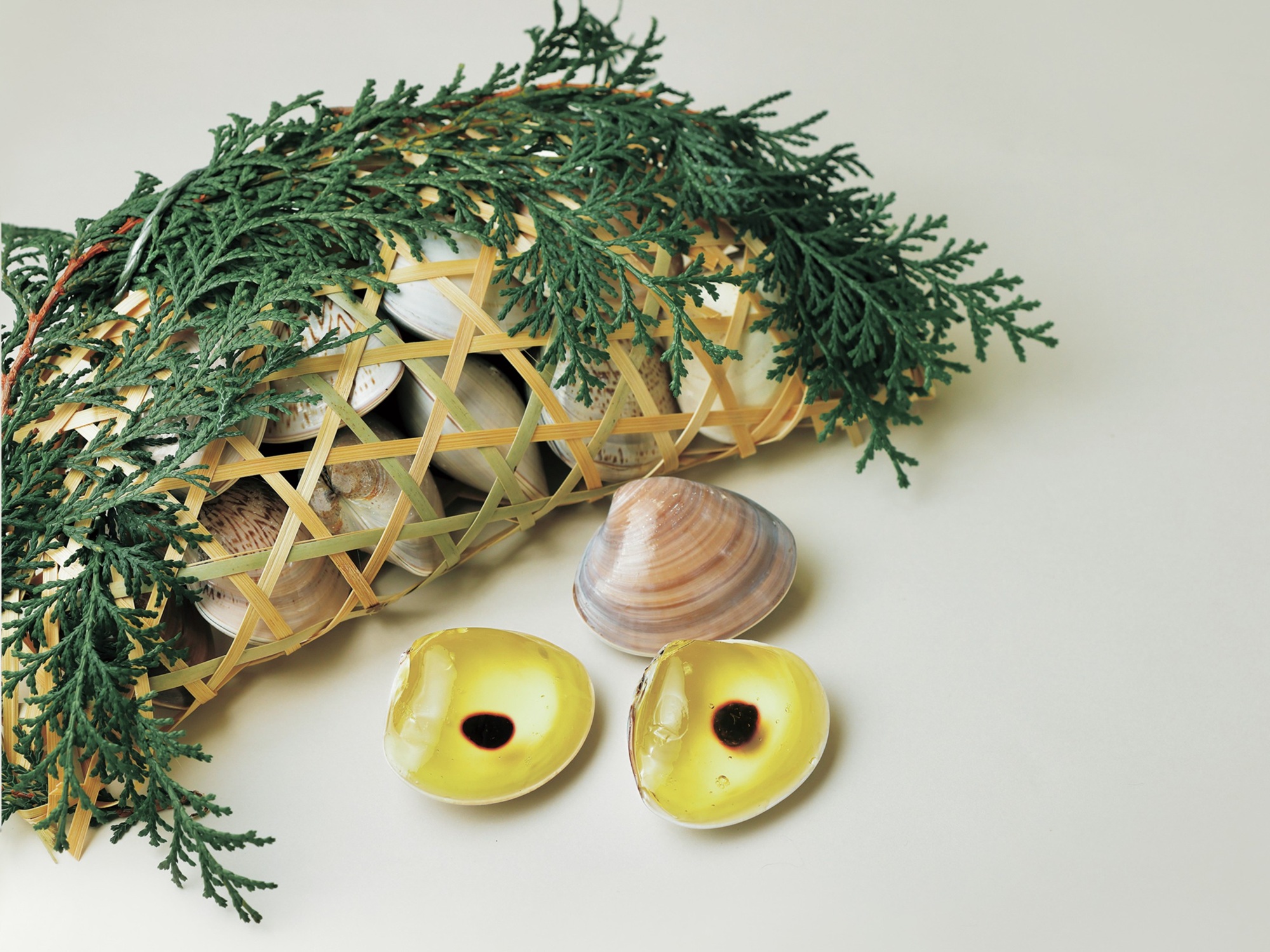
While clam shells have historically been used in Japan for parlor games like kaiawase (shell-matching), using an actual shell as the vessel for a confection is remarkably rare. This ingenious treat was created during the Taisho period (1912–1926). Wanting people to experience the refreshing breeze of the seaside in Kyoto—a city famously surrounded by mountains and far from the ocean—the shop’s founder gracefully named the creation Hamazuto, meaning “a souvenir brought home from the beach.”
Inside each translucent jewel of kohaku (a traditional jelly made of agar and sugar) lies a single Hama-natto bean. Unlike the sticky natto more widely known outside of Japan, Hama-natto is a savory, sun-dried fermented soybean. Originating in Hamamatsu, it is slightly smaller than Kyoto’s famous Daitokuji natto and features a distinct hint of ginger. The salty-savory punch of the ginger-miso bean cuts through the sweetness of the jelly in absolute harmony.
Because the shell can be sealed shut, it keeps well even in midsummer, and the accompanying Japanese cypress leaves (hiba (檜葉)) also have a preservative effect. From washing the natural shells to finishing them as vessels, the work is done by the family by hand. The technique of pouring the sweet ingredients into the shell is a “family secret.” It is a sweet carefully considered down to the details.
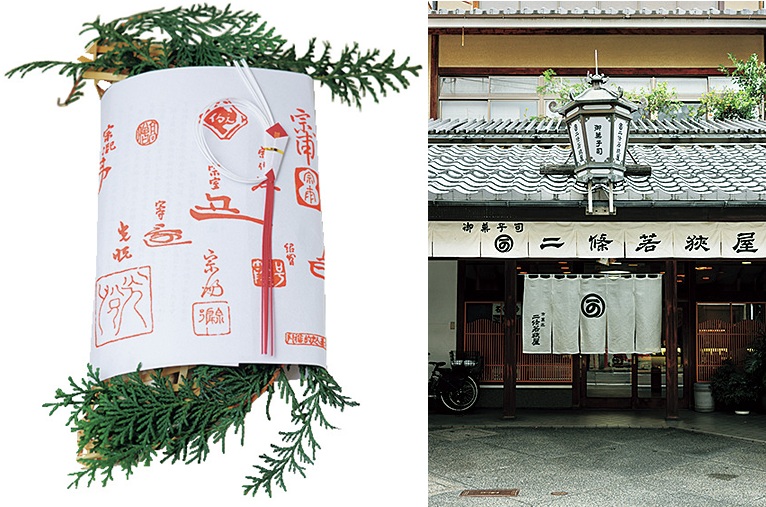
●’Kameyanorikatsu’ Shop Info
Address: Sakaimachidorisanjoagaru, Nakagyoku, Kyotoshi, Kyoto
Telephone: 075-221-3969
Opening Hours: 9:00 – 17:00
Closed: 3rd Wednesday of the month, Sundays, and public holidays
Official Website: https://www.kameyanorikatsu.com/
Daigokudenhonpo (大極殿本舗) and their ‘Mamemame’ (まめまめ) | A broad bean-flavoured suhama (すはま) sweet whose shape is also identical
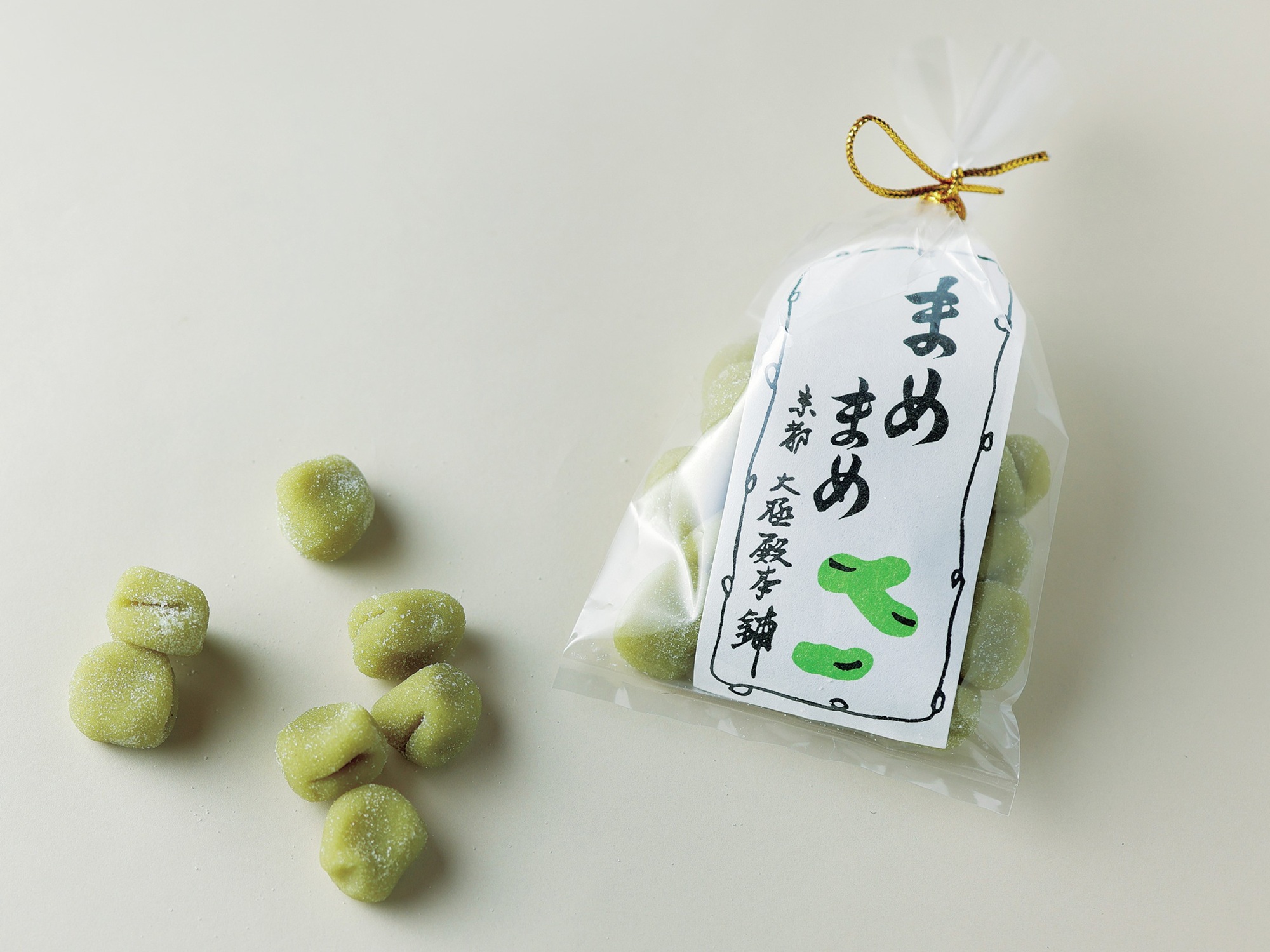
Suhama is traditionally celebrated for its toasted soybean (kinako) profile, crafted by blending deeply roasted soybean flour with sugar. Its texture, like Japanese marzipan, pairs perfectly with matcha (抹茶), and it is one of the familiar sweets in Kyoto. This one is made by creating that suhama with broad bean flour.
“Broad beans are originally not an ingredient used in Japanese sweets, but the finished product was surprisingly delicious, and it seems this was deemed a success. It apparently existed around the beginning of the Showa period, so customers also seem to fancy this flavour,” says the 4th generation proprietress, Shibata Yasuyo.
The slight bitterness peculiar to broad beans enhances the sweetness, making it remarkably fresh. Wanting to know the secret of its shape, I was specially shown the manufacturing process.
Small dumplings are made with traditional tools, crushed with fingers, and finished by inserting a wooden spatula. Because it is a small sweet, techniques using the hands are put to good use.
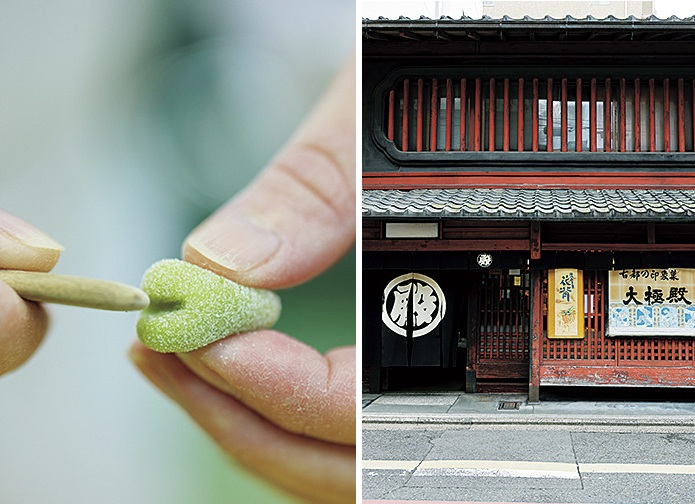
●’Daigokudenhonpo Rokkakumise’ (大極殿本舗 六角店) Shop Info
Address: 120 Horinouecho, Nakagyoku, Kyotoshi, Kyoto
Telephone: 075-221-3311
Opening Hours: 9:30 – 18:00
Closed: Wednesdays
Instagram: @daigokuden.seien
Nijowakasaya (二條若狭屋) and their ‘Chirashizushi’ | A spring-only boxed lunch box (orizume (折詰)) with Domyoji (道明寺)-made mochi sweets likened to sushi
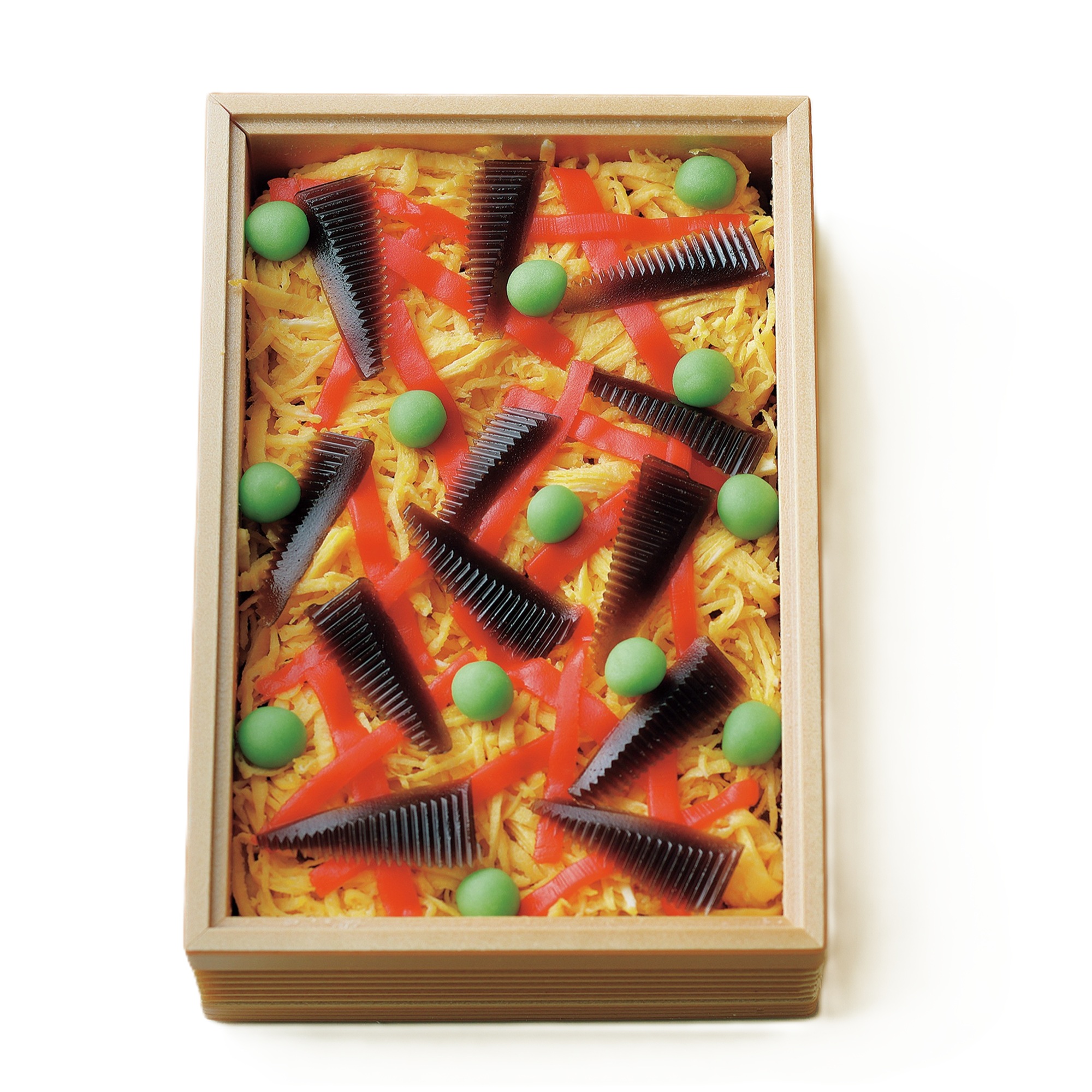
Orders for ‘Chirashizushi’ begin when the signs of spring can be heard. The green peas and pickled red ginger are made of konashi (a pliable sweet bean paste), the simmered shiitake mushrooms are brown sugar-flavoured bean jelly (yokan (ようかん)), and beneath the kinshitamago are six generous mochi sweets made of Domyoji containing coarse sweet red bean paste.
You might think, “Egg omelette on top of red bean paste?” But the egg omelette neutralises the sweetened mouth like a “palate cleanser.” It provides a sense of satisfaction, is playful, and is perfect for an adult’s amusement.
When speaking of Nijowakasaya, the arrowroot starch drink (kuzuyu (葛湯)) ‘Furosen’ (不老泉) is famous, but the wrapping paper features a new drawing by Kamisaka Sekka (神坂雪佳). Through a connection with the first-generation owner, there are several works by Sekka in the shop, and perhaps influenced by that, the shop’s characteristic charm is its heartwarming and lovable sweets. I feel the same spirit in the scenery depicted in ‘Chirashizushi’.
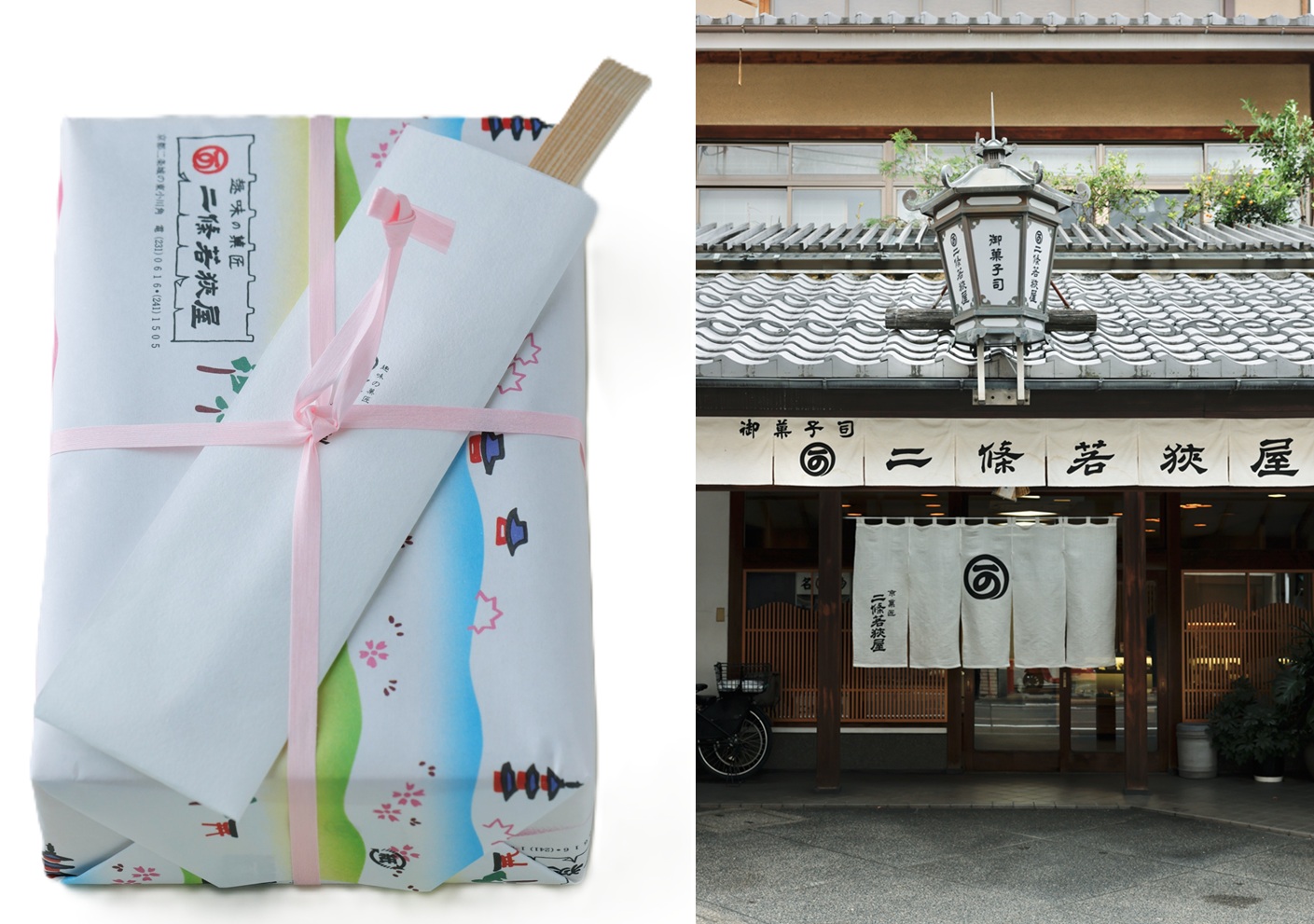
● ‘Nijowakasaya Honten’ (二條若狭屋 本店) Shop Info
Address: 332-2 Nishidaikokucho, Nijodoriogawahigashiiru, Nakagyoku, Kyotoshi, Kyoto
Telephone: 075-231-0616
Opening Hours: 8:00 – 17:00
Closed: Wednesdays, 1-3 January
Official Website: http://www.kyogashi.info/
*All listed prices include tax.
This article is translated from https://intojapanwaraku.com/travel/302285/