






Father and son keeping the spirit of Japan live through seasonal ayu
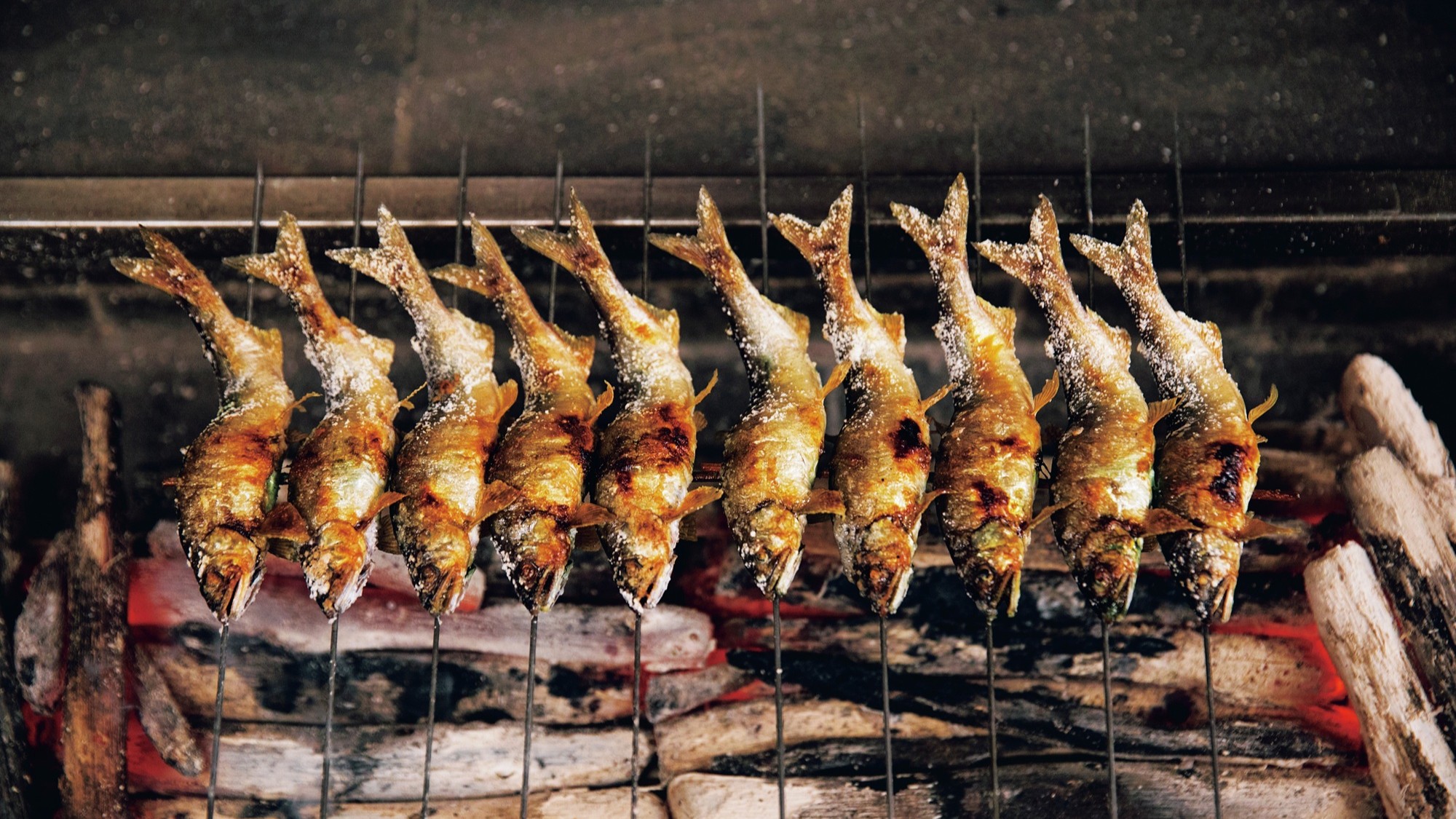
Ayu on skewers occupy the grilling station.
From the morning, the yakikata (Father and son keeping the spirit of Japan live through seasonal ayu the person in charge of grilling) fans the flames with a red face, constantly tending to the grilling of the ayu.
“In July and August, the main restaurant serves morning rice poridge, so ‘Ayu no Shioyaki (grilled salted ayu)’ is always included there.
Even at the annex, which serves this rice porridge throughout the year, ‘Ayu no Shioyaki’ can be added as a separate order during this season.
The grilled dish for evening guests is also ayu, so during the summer, we spend our days grilling ayu from morning to night.
Ayu must be grilled over a high heat, so it is incredibly hot in front of the grill. As if the summer in Kyoto were not hot enough already,” says Yoshihiro with a wry smile.
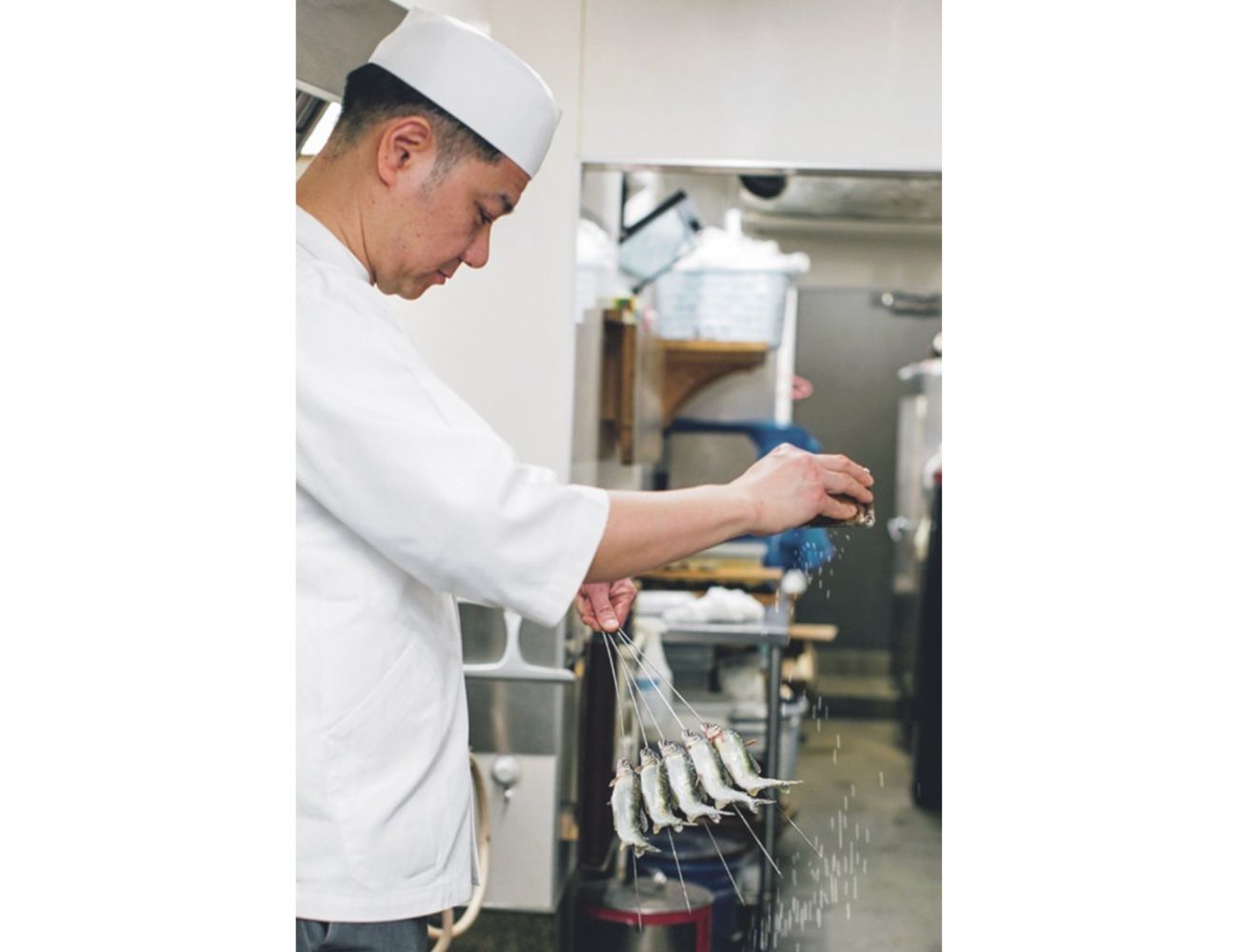
[Summer] ‘Ayu shioyaki’ (鮎塩焼き)
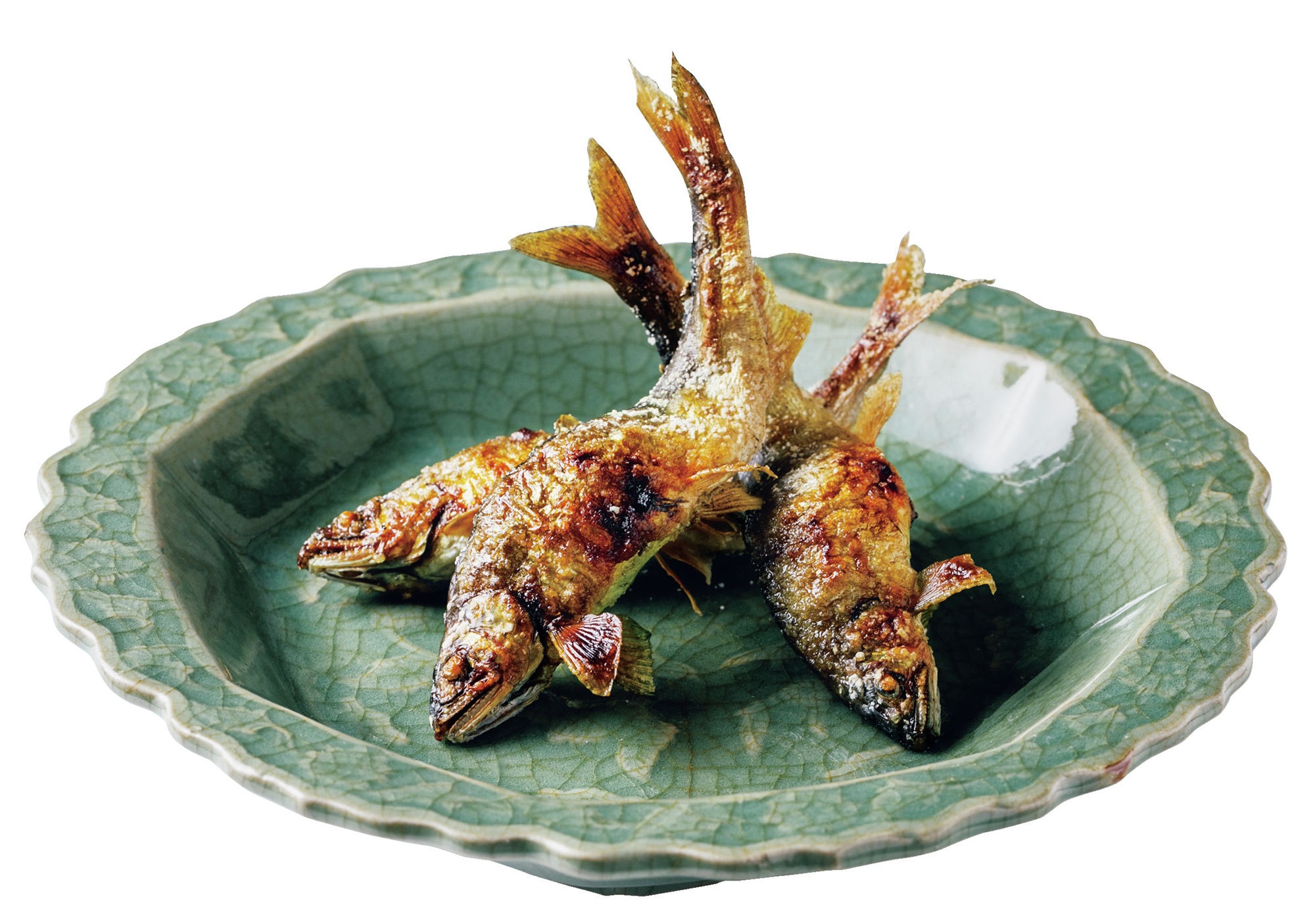
Hyotei’s ‘Ayu no Shioyaki’, renowned as “unforgettable once eaten”.
The skin is fragrant, yet the flesh is moist and fluffy. Because it is grilled right down to the bones, it can be eaten entirely from head to tail.
Where lies the secret of its deliciousness?
“For a chef, it goes without saying—something so fundamental we rarely feel the need to preach it—but it all starts with grilling the ayu sweetfish while it is still alive.
The bitterness of the innards accounts for much of the ayu’s flavour, but the taste is completely different.
Furthermore, if it is not grilled whilst alive, it will not attain such a beautiful shape, nor will the fins stand up crisply.
It was the culinary philosopher, Rosanjin (魯山人) who first spoke of the deliciousness of grilling live ayu, and I think he was absolutely right.
Since Kyoto has a culture of eating river fish, live ayu is easy to obtain, and we can choose between wild and farmed ones, but I try not to be particular about how they were raised.
Rather, ayu is so delicate that if it rains, they might not be caught that day.
More than their upbringing, I value being able to grill any ayu in the same way and serve it to the guests who are looking forward to it.”
[Late Summer] ‘Ayu dengaku’ (鮎田楽)
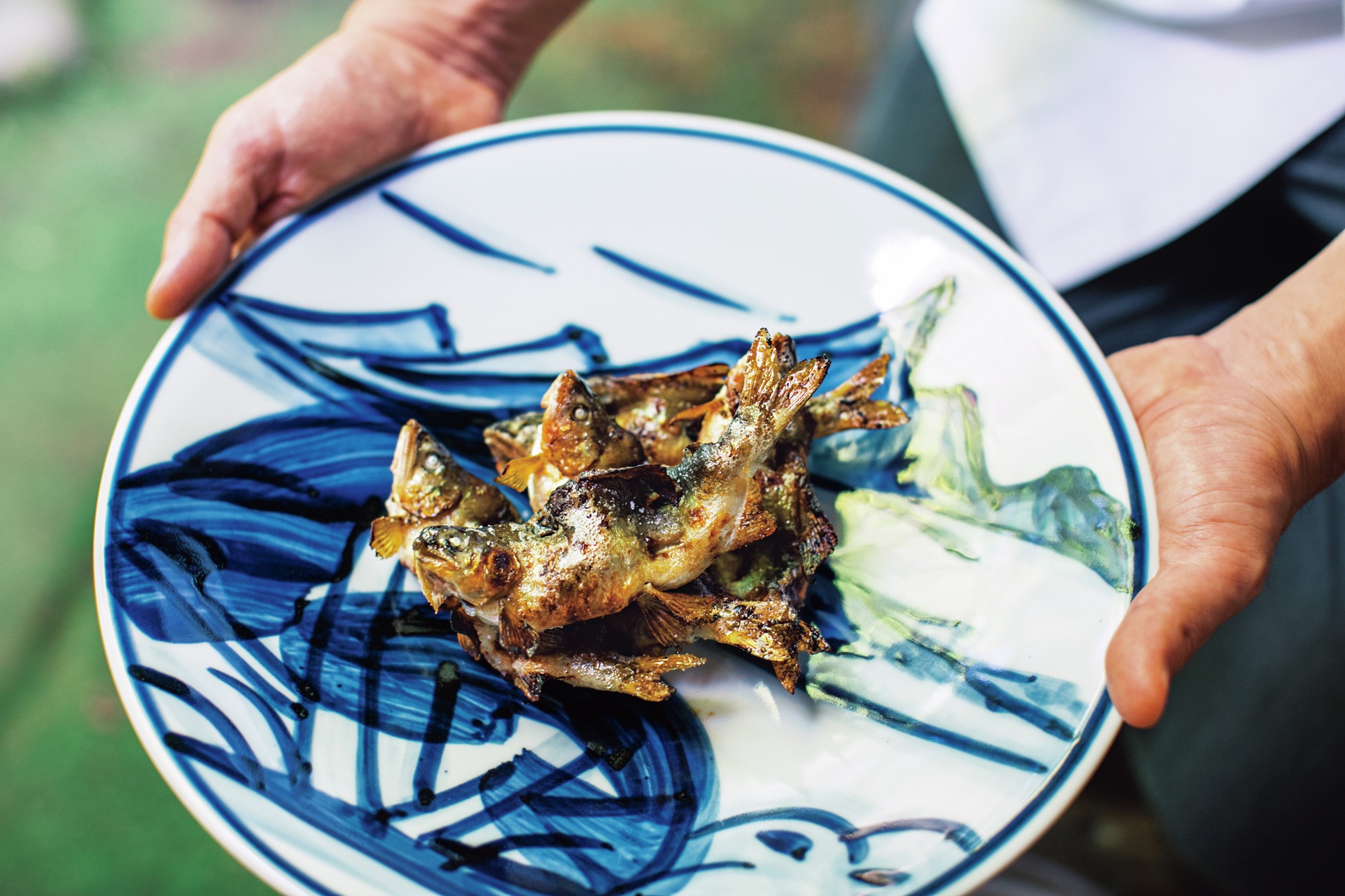
In October, the komochi ayu (子持ち鮎) (roe-bearing ayu) finally makes its appearance, and as a “bridge” before serving grilled dishes and ayu gohan (鮎ごはん), ‘Ayu dengaku’ appears on the menu for just a few weeks from late August and early September.
This is in response to the voices of regular customers who say, “I am starting to get tired of ‘Shioyaki’”, and is an elaborate dish where the ayu’s innards are stir-fried with miso, returned to the belly, and grilled; it is said to capture the hearts of those who enjoy alcohol and is highly acclaimed.
Even after the season ends, our relationship with ayu continues.
The homemade seasoning ‘Uruka’ (うるか), made by salting the innards of the ayu, is used from autumn to winter to add depth to the flavour, demonstrating that ayu is an essential ingredient for Hyotei.
“Above all, the appearance of the ayu is beautiful. Japanese painters of the past were highly skilled at drawing ayu, weren’t they?
When I see that, I think ayu must have been a special fish for Japanese people.
Receiving the life of an ayu that grows day by day brings a certain emotion to the person cooking it. That is exactly why I want to grill it beautifully, and I am truly delighted when it is grilled well.
The culture of eating ayu exists only in Japan. We should carefully preserve it,” Yoshihiro concludes.
[Spring] Fried and Grilled Young ayu Served with Pickled Wild Vegetables
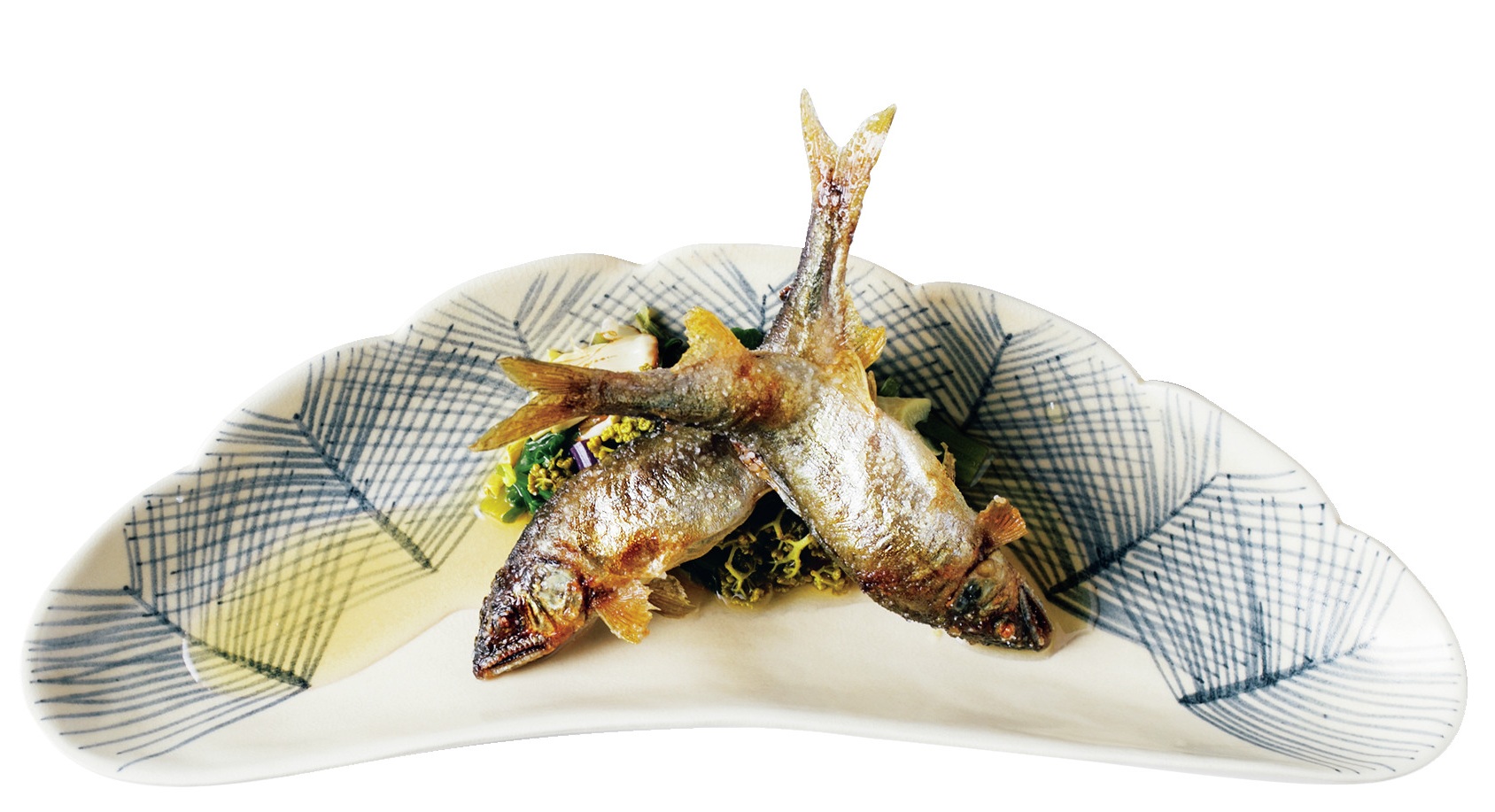
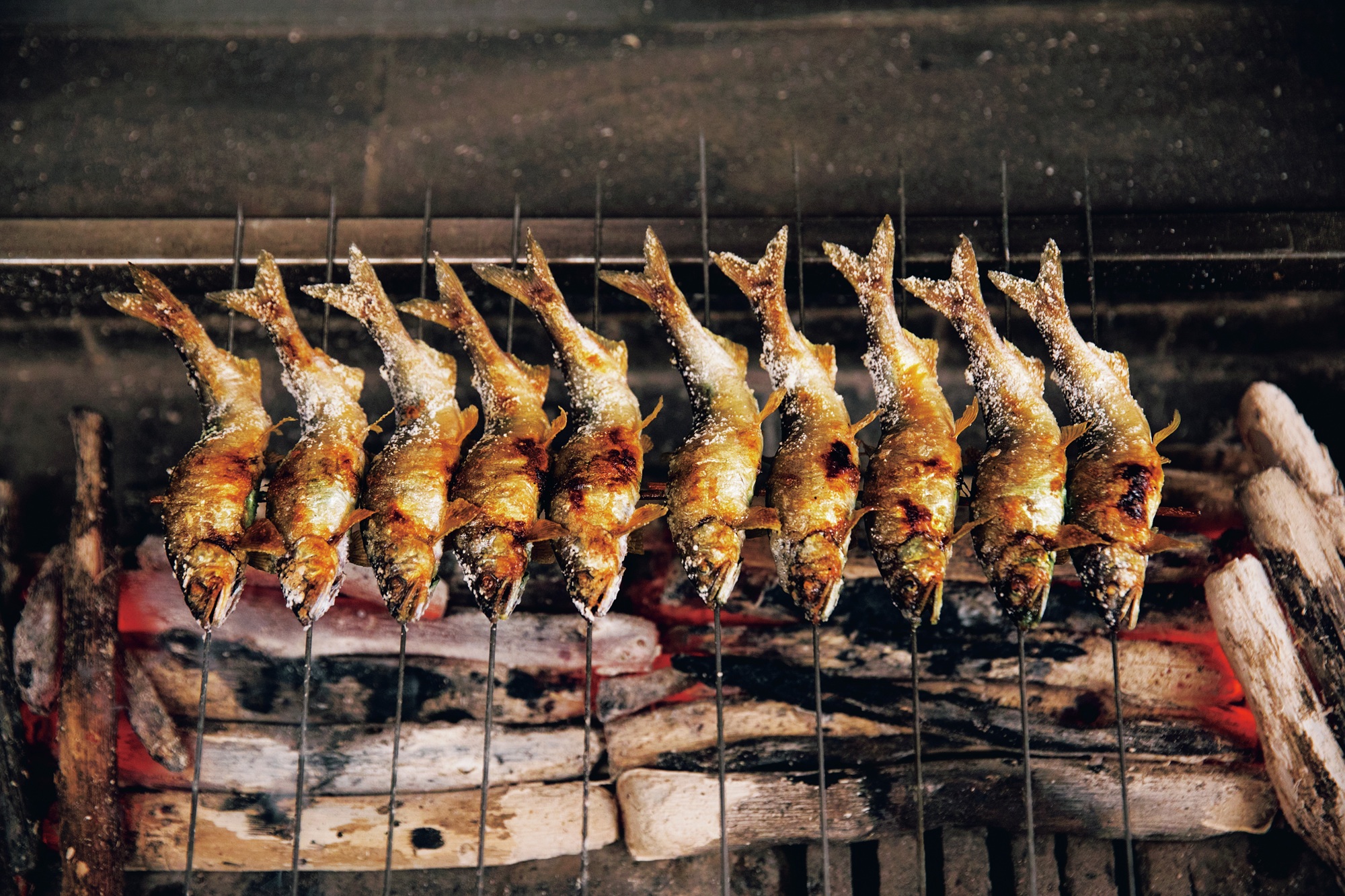
Next is the ingenuity in the grilling method.
Starting with the 14th generation proprietor, Eiichi, who believes that “Ayu is delicious when eaten whole with the bones,” the unique heating process begins with a “charcoal arrangement exclusively for ayu”, where thin pieces of charcoal are piled high.
The heat level is basically “high heat from a distance”.
On top of that, whilst turning the skewers, the fat in the flesh of the ayu is distributed evenly from tail to head, and from belly to back.
When it is nearly finished, fine adjustments are made from there, such as rearranging the charcoal and changing the way of fanning.
“With fried foods, you raise the temperature at the very end to remove the moisture, don’t you? It’s the same idea,” says Yoshihiro.
When fat floats to the surface of the flesh, it is the sign that it has been grilled right down to the bone.
All fish at Hyotei are grilled over charcoal, but it is said that ayu is the only one that is carefully grilled for as long as 15 minutes!
Finally, there is also a “Hyotei preference” for the size of the ayu.
“I do not like it when a single fish is too splendid and guests fill their stomachs on ayu alone, so I think it is best for them to be satisfied with a serving of two portions.
Those who love our ayu will order a serving of three instead of two, anyway (laughs).”
An ayu sweetfish lives for just a single year. In that brief lifespan, it transforms through distinct stages—from tiny fry and young lake sweetfish to mature river fish and egg-bearing females.
At Hyotei, chefs work with these fish at each stage, crafting tailored recipes that highlight the unique character of each seasonal phase.
Takahashi Eiichi Born in 1939. After training at ryotei in Tokyo and Osaka, he succeeded as the 14th generation proprietor of Hyotei at the age of 28. In 2013, he became the first chef to be certified as a holder of the Kyoto Prefecture Designated Intangible Cultural Property ‘Kyoryori / Kaisekiryori’ (京料理・会席料理). In 2025, he was selected as a Person of Cultural Merit (Bunkakorosha / 文化功労者).
Takahashi Yoshihiro: Born in 1974. After training at a ryotei in Kanazawa (金沢), he succeeded as the 15th generation proprietor of Hyotei from 2015. He opened ‘Hyotei Hibiyaten’ (瓢亭日比谷店) in 2018 and dedicates himself to cooking whilst travelling back and forth between Kyoto and Tokyo.
Hyotei Honten (瓢亭本店) Shop Info
Address: 35 Nanzenjikusakawacho, Sakyo Ward, Kyoto City, Kyoto Prefecture
Telephone: 075-771-4116
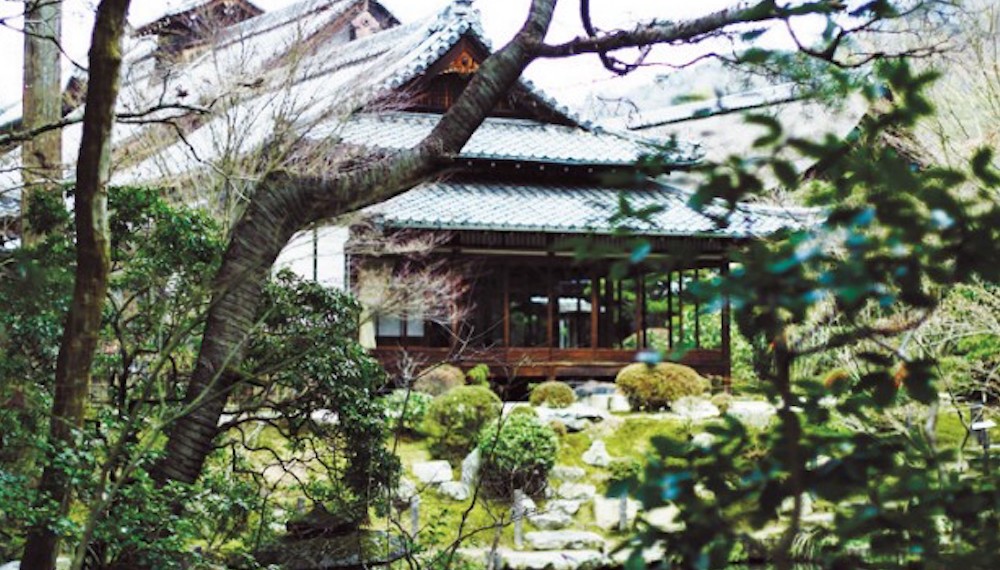
It serves kaiseki (懐石) cuisine following the cha-kaiseki (茶懐石) style across four pavilions, each with a different atmosphere.
Official Website: http://hyotei.co.jp/
*A seasonal food dispatch service has started at the Hibiya (日比谷) branch.(https://www.umai-mon.com/)。
This article is translated from https://intojapanwaraku.com/travel/309786/