






An Impregnable Castle
The origins of Odawarajo date back to the 15th century, initially serving as the residence of the Omorishi (大森氏), a powerful local clan.
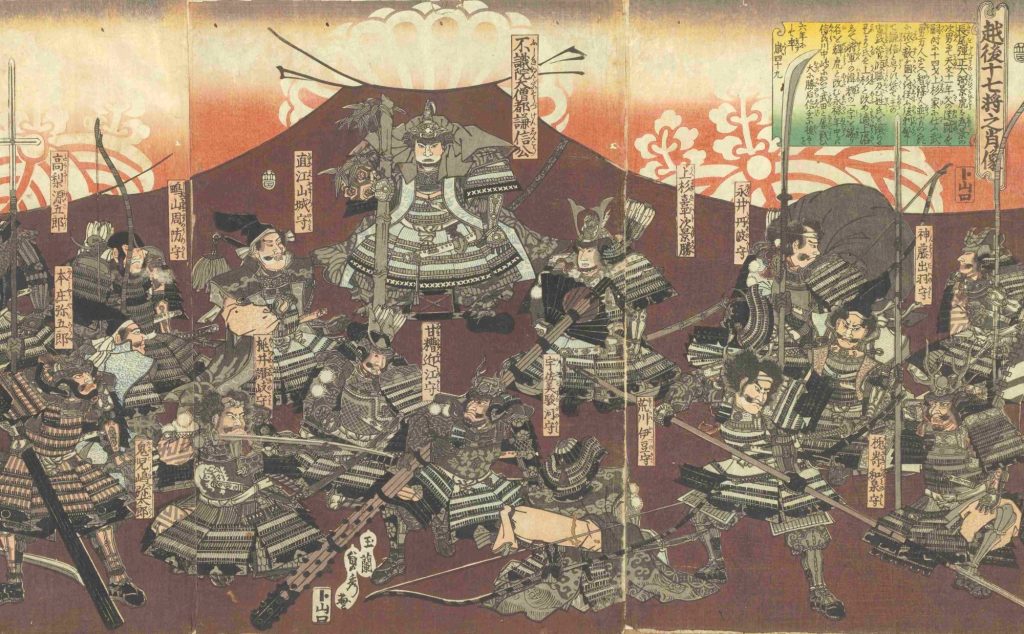
Later, Ise Sozui (伊勢宗瑞)—also known as Hojo Soun (北条早雲)—captured the castle, marking the beginning of its history as the stronghold for five generations of the Gohojoshi. Under the successive family heads who followed—Hojo Ujitsuna (北条氏綱), Ujiyasu (氏康), Ujimasa (氏政), and Ujinao (氏直)—the castle underwent continuous expansion. It eventually featured a massive defensive structure known as the Sogamae (総構え), stretching for a total length of approximately 9 kilometres and enclosing the entire castle town.
This made it one of the largest fortified cities in Japan at the time, and it was feared as an impregnable castle. Its formidable strength was proven when it successfully repelled attacks by Uesugi Kenshin (上杉謙信) in 1561 and Takeda Shingen (武田信玄) in 1569.
However, in 1590, Toyotomi Hideyoshi (豊臣秀吉), aiming to unify the country, besieged Odawarajo with a massive army said to number around 200,000 troops. This campaign is known as the Odawara Seibatsu (小田原征伐). After a siege lasting about three months, the Gohojoshi surrendered, and the Hojoke (北条家) perished as Sengoku Daimyo. This battle is regarded as a pivotal event in Japanese history, serving as the finishing touch to Hideyoshi’s unification of Japan.
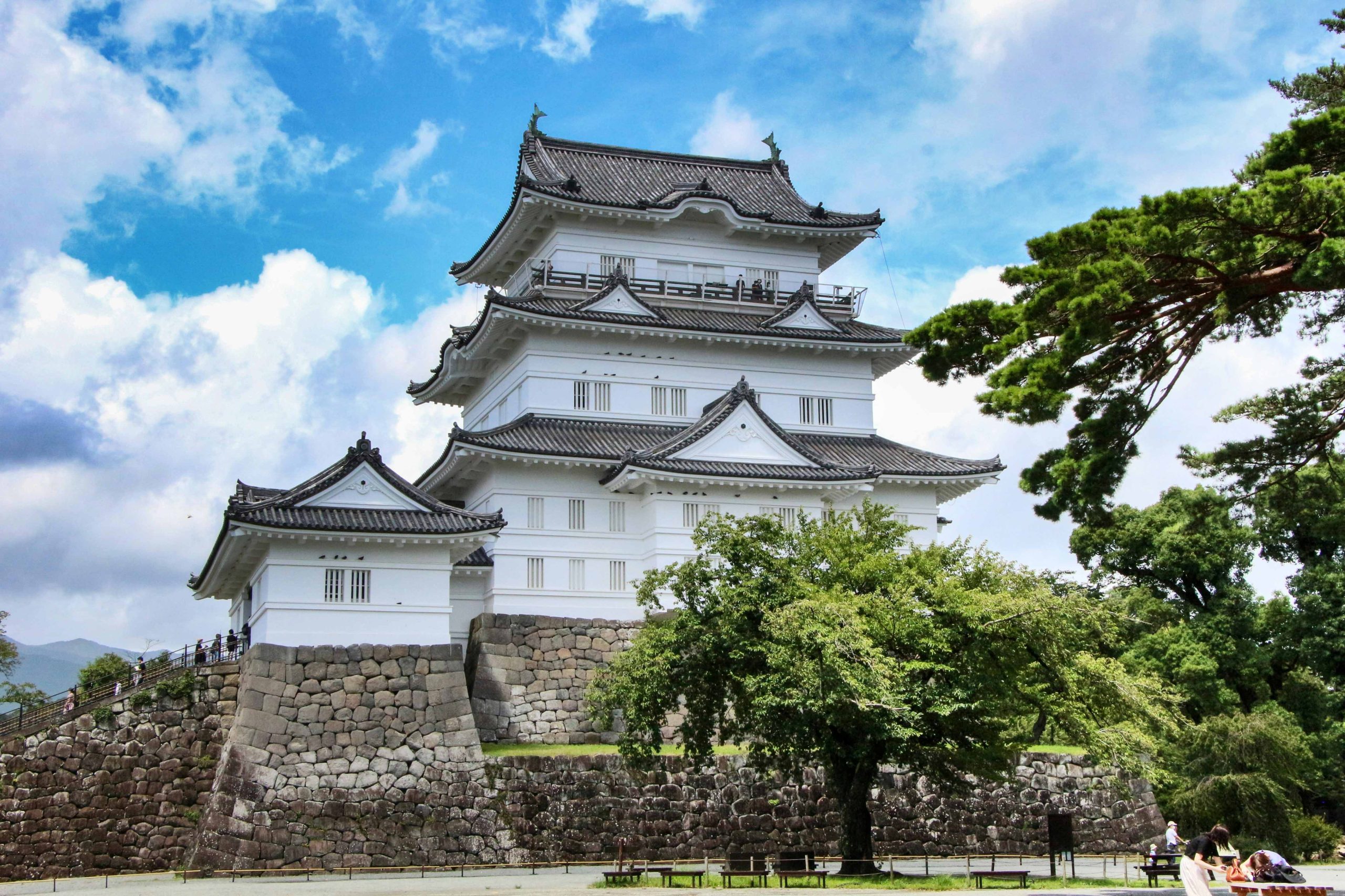
Entering the Edojidai (江戸時代), Odawarajo saw the Okuboshi (大久保氏) and Inabashi (稲葉氏) serve as lords of the castle under the Tokugawa Bakufu (徳川幕府), and it was maintained as a fortress to protect a strategic point along the Tokaido (東海道). The Tenshukaku (天守閣) was also constructed during this period. However, the Tenshukaku burnt down following the Genroku Daijishin (元禄大地震) in 1703. Although it was rebuilt in 1706, it was dismantled and removed when the castle was decommissioned in 1870. During the Kanto Daishinsai (関東大震災) of 1923, although the Tenshukaku itself no longer existed, the remaining structures, such as the stone walls of the Tenshudai (天守台), sustained damage.
The current Tenshukaku was reconstructed in 1960 using reinforced concrete, with its exterior reproduced based on architectural plans from the Edojidai. The interior is open to the public as a historical museum, where visitors can learn about the history of the Gohojoshi and the evolution of the castle. In the surrounding area, several original gates, the Tokiwagimon (常盤木門), Akaganemon (銅門), and Umadashimon (馬出門) have been restored, to restore the histori layout of the fortress.
The Tenshukaku with Views of Fujisan and the World of Fuma Ninjas
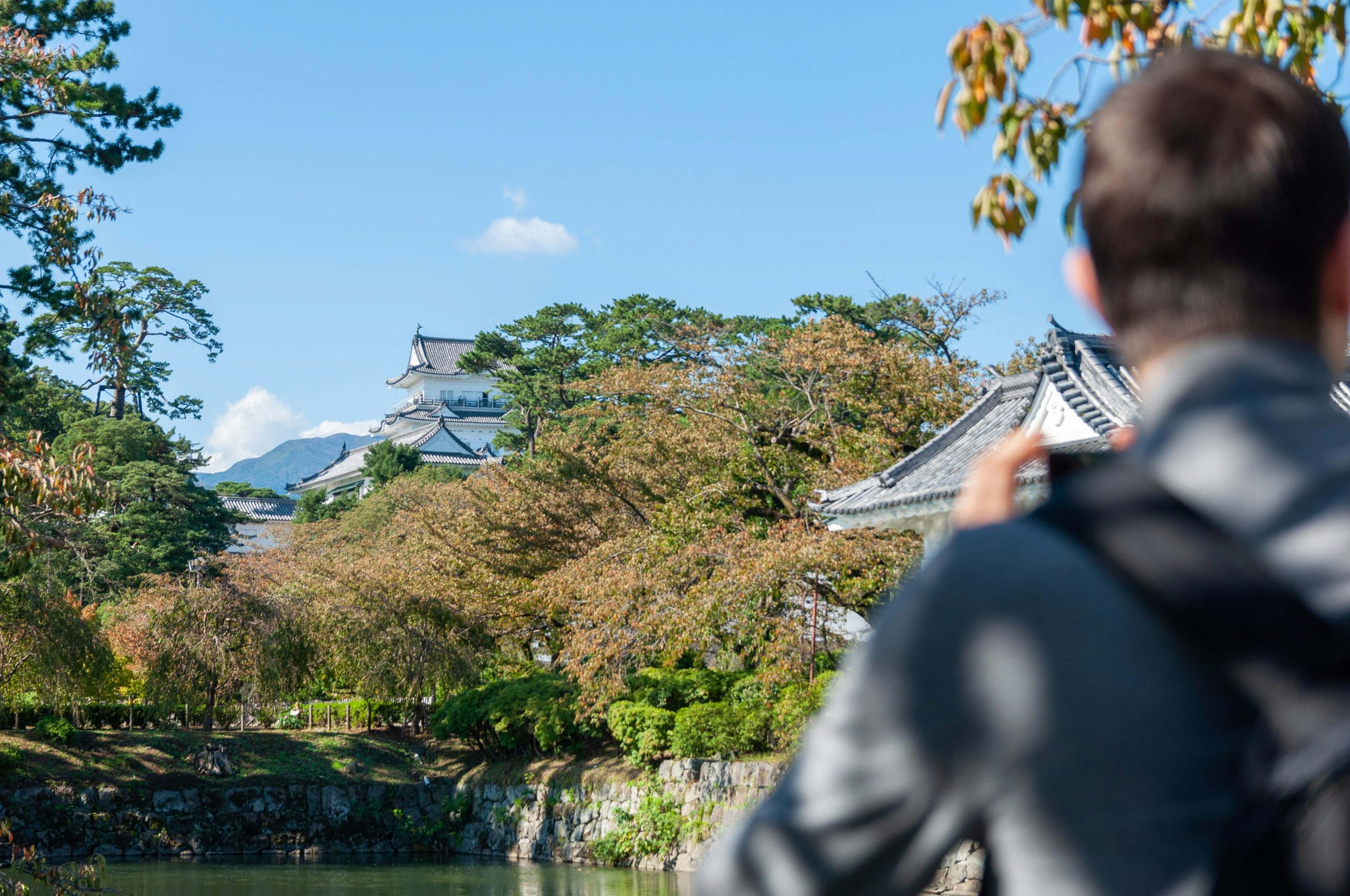
From the Tenshukaku, visitors can enjoy sweeping views of Odawara city, Sagamiwan (相模湾), and, on clear days, even Fujisan (富士山). It serves as an excellent photography spot. The seasonal scenery is also a major draw, featuring cherry blossoms in spring, Japanese irises in summer, and illuminations in winter.
Furthermore, within the castle grounds lies the Ninja-kan (NINJA館), an interactive ninja-themed facility. It is well-stocked with attractions popular among foreign tourists, such as Ninjutsu (忍術) and armour-wearing experiences based on the Fuma (風魔), a group of ninjas said to have served the Odawara Hojoshi.
Boasting excellent accessibility—just about a 10-minute walk from JR Odawara-eki (JR小田原駅)—the castle is frequently visited by travellers who combine it with sightseeing in Hakone (箱根).
Odawarajo Facility Overview
Opening Hours: 9:00 am – 5:00 pm (Last admission at 4:30 pm)
Closed: 31st December, 1st January, The second Wednesday of December (for facility maintenance)
Admission Fee: Tenshukaku Admission Ticket
(Individuals) Adults: 1,000 yen, Primary and Junior High School Students: 300 yen
Note: The Tenshukaku Admission Ticket also grants entry to the Samuraikan (SAMURAI館).
Access: Approximately a 10-minute walk from Odawaraeki (小田原駅) on the JR Tokaido Shinkansen (JR東海道新幹線) and Tokaido Honsen (東海道本線).
Note: There is no public car park at Odawarajo Joshi park (小田原城址公園). Please use the paid car parks in the surrounding area.
This article is translated from https://intojapanwaraku.com/culture/311016/