













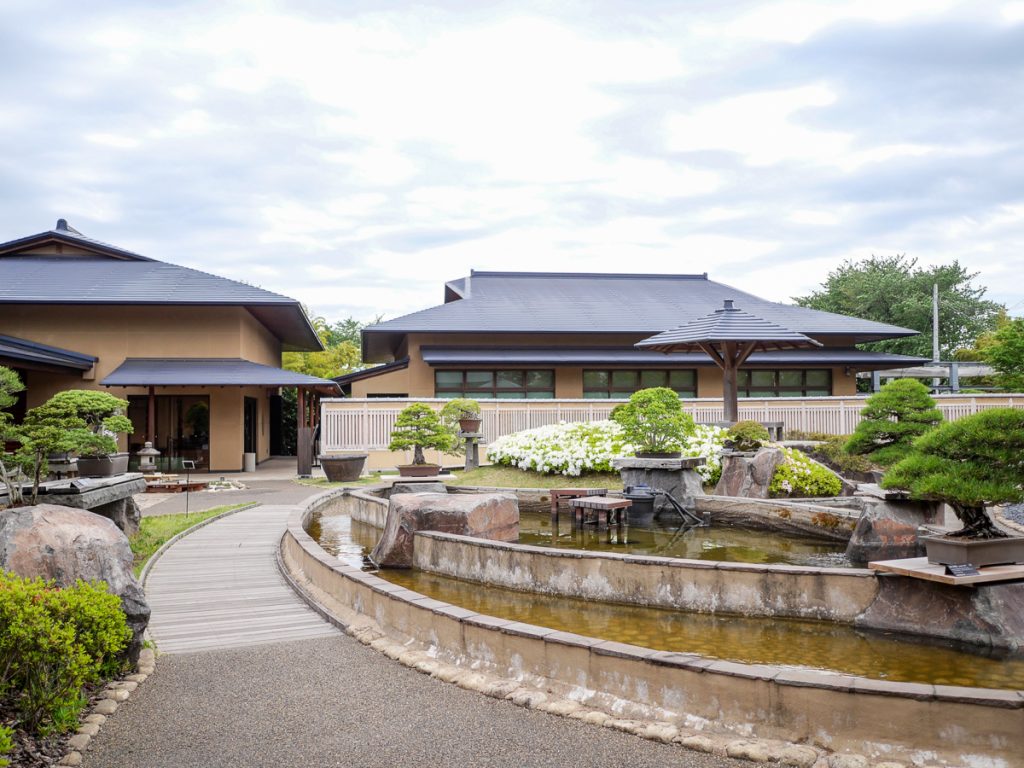
Even in the art museum, it is a rare art museum that specializes in bonsai, a living art work, to be introduced this time. We will deliver a visit report of "Saitama City Omiya Bonsai Art Museum".
What is Saitama City Omiya Bonsai Art Museum?
Opened in Kita Ward, Saitama City, Saitama Prefecture in 2010, it is the only public museum dedicated to bonsai in Japan . The museum displays bonsai, bonsai-related works such as basins, water stones, and tables *, painting materials, historical and folk materials, and more. The annual number of visitors is approximately 72,000 people (FY2010). Many people, including bonsai fans from home and abroad, come from afar.
※ table · · · stand to put the bonsai
Why a Bonsai Museum in Omiya?
The reason why the Bonsai Museum is in Omiya. That is because Omiya is " the sacred place of bonsai ".
During the Edo period, horticulture became very popular, and there were many planters who built daikon houses and other gardens around dumpling slopes (Sendaka, Bunkyo-ku). From the beginning of the Meiji period, a bonsai teacher was born, but from the problems of water, soil, and places, I began to seek more suitable places for bonsai. Then, with the Great Kanto Earthquake of 1923, the Bonsaiers moved to Omiya as a group. We pioneered a mountain forest that had nothing and created " Omiya Bonsai Village " as an autonomous community.
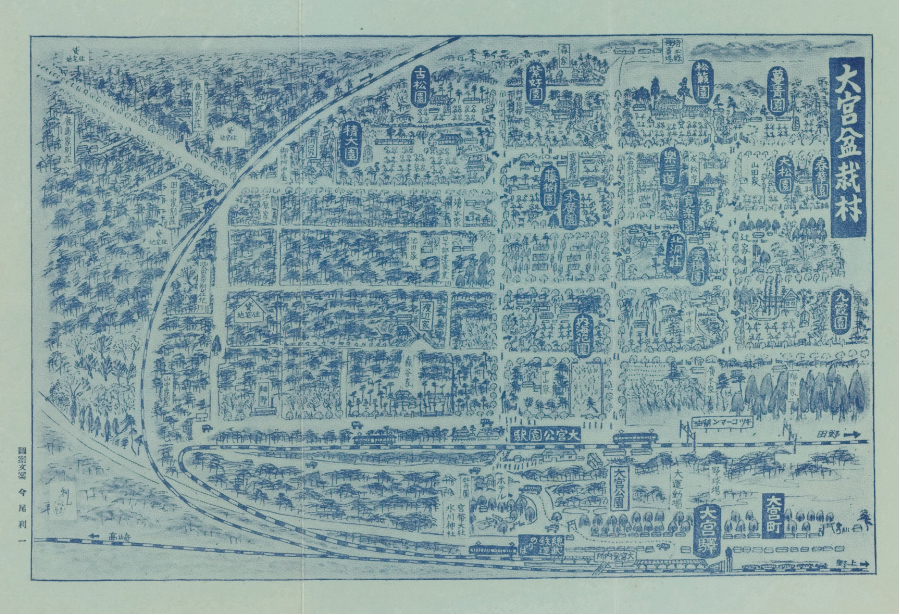
A tourist map of Bonsai village made around 1935.
Omiya Bonsai Village not only makes bonsai, but also works as a place for researching tree growth, and has produced numerous specialties until today. There were about 30 bonsai gardens around 1935 at its peak, but it has now been reduced to six. However, even now, this area is known as one of the world's unique " sacred places of bonsai ", and many bonsai lovers from around the world as well as Japan are visiting.

The World Bonsai Conference, which has been held every year in the world from four years since 1989, the first to be commemorated will be held in Omiya. It was held again in Omiya at the eighth contest in 2017. The photograph is the eighth tournament.
How many bonsais are in the Omiya Bonsai Museum of Art?
This bonsai art museum in such a holy place of bonsai. About 130 pots of bonsai are in stock. Many bonsai trees with an estimated age of 100 years or more are also held, including some 1000-year-old trees. About 60 pots in the garden and 10 pots in the hall, about 70 in total, are on display in the beginning of May. In summer, the number of bonsai exhibits may decrease due to the special feature exhibition of water stone, but you can always admire about 60 pots of bonsai.
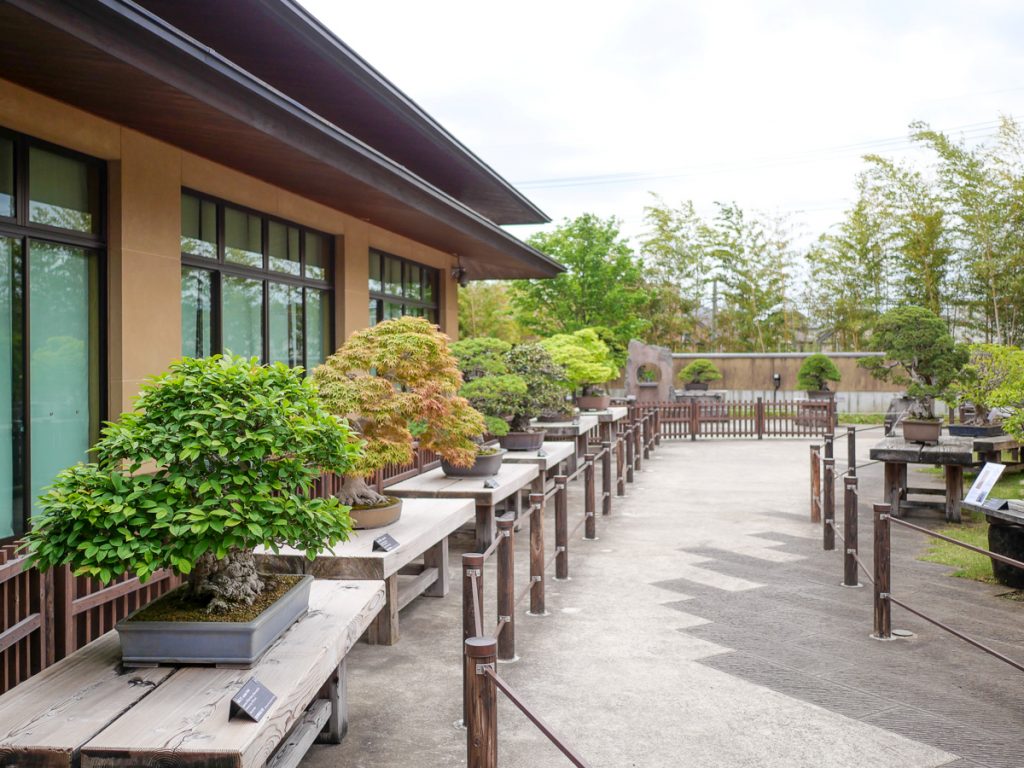
About 130 pots are being cleaned every day, with the help of two bonsai engineers dedicated to the museum and bonsai teachers from Bonsai Village.
Permanent exhibition and plan exhibition of Omiya Bonsai Museum of Art
A major difference from the general art museum is that the contents of indoor permanent exhibitions are changed in one week . Because bonsai is basically grown outside with wind and sunlight, the one week exhibition is the limit. The bonsai trees are displayed seasonally, including outdoors, so you can watch different works each time you visit.
As for the exhibition, in addition to the contents tailored to the season, such as the “Spring Flower Bonsai Exhibition” in March and the “Satsuki Exhibition” in June, plans focused on bonsai teachers for the past two years are also being implemented. In 2017, Mr. Takeyama, the owner of Gion in Bonsai Village, held a solo exhibition of Mr. Hiroshi Takeyama, and in 2018, a solo exhibition of global bonsai teacher, Masahiko Kimura. In this fiscal year, a solo exhibition by the owner of Bonsai Village is also planned in February 2020.
■ List of exhibitions and workshops scheduled to be held at Omiya Bonsai Museum of Art
Omiya Bonsai Museum of Art
From here, let's introduce around the museum.
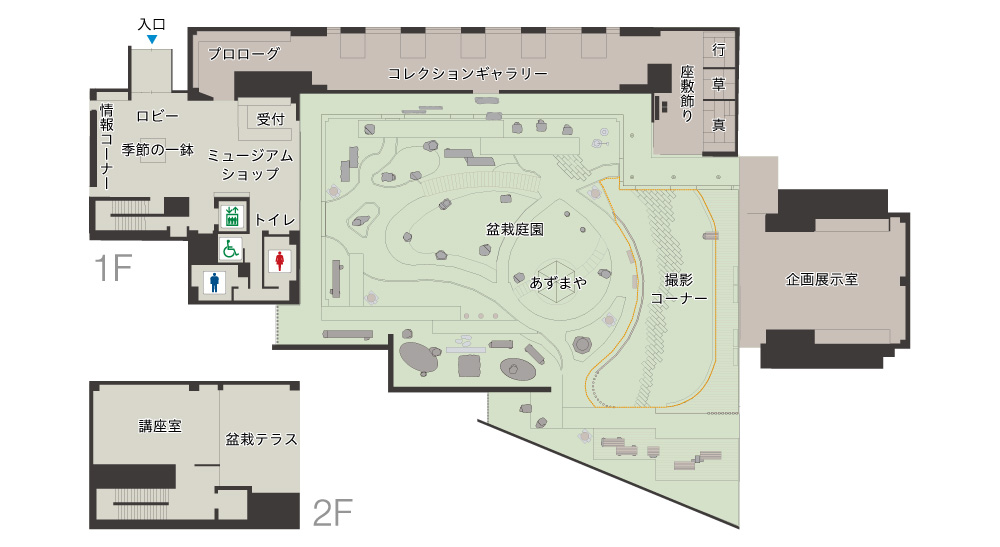
1. Prologue and gallery
Once inside the hall, you will enter the prologues and galleries that follow the corridor.
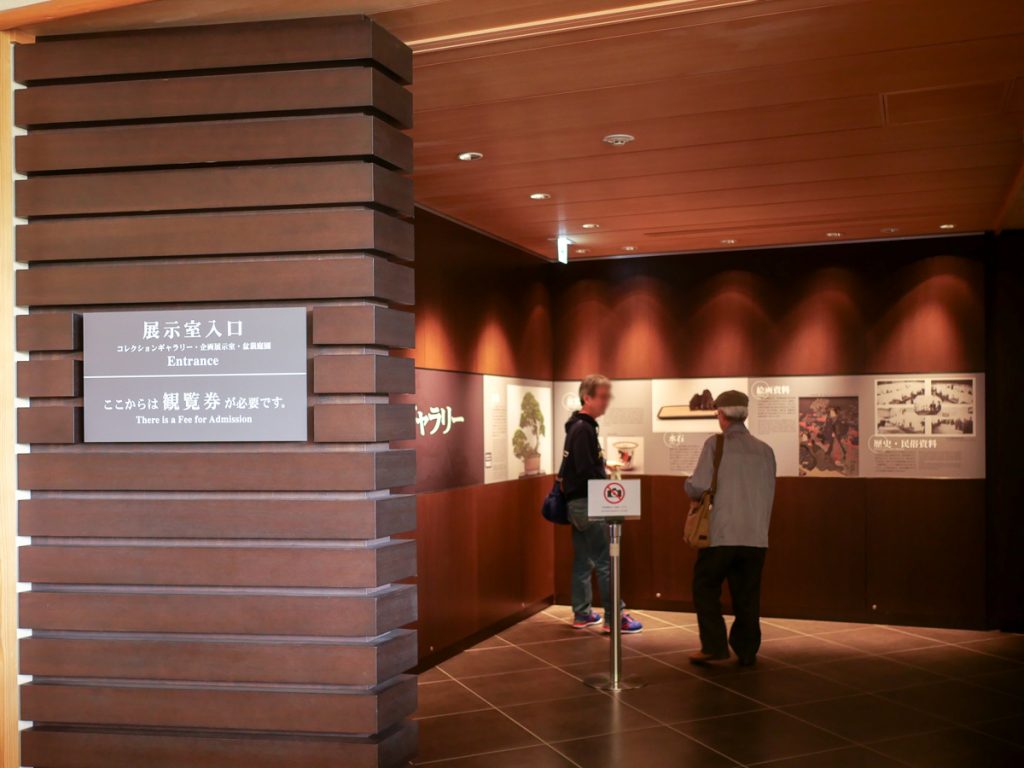
The prologue will be filled with descriptions of the collection, such as basins, waterstones and pictorial materials, and the walls of the gallery will be lined with a number of commentary panels of photos and text. The contents are "the view of bonsai" and "the skill of bonsai". The Bonsai Noroha is described in English and Japanese so that beginners and foreign visitors can enjoy the exhibition.
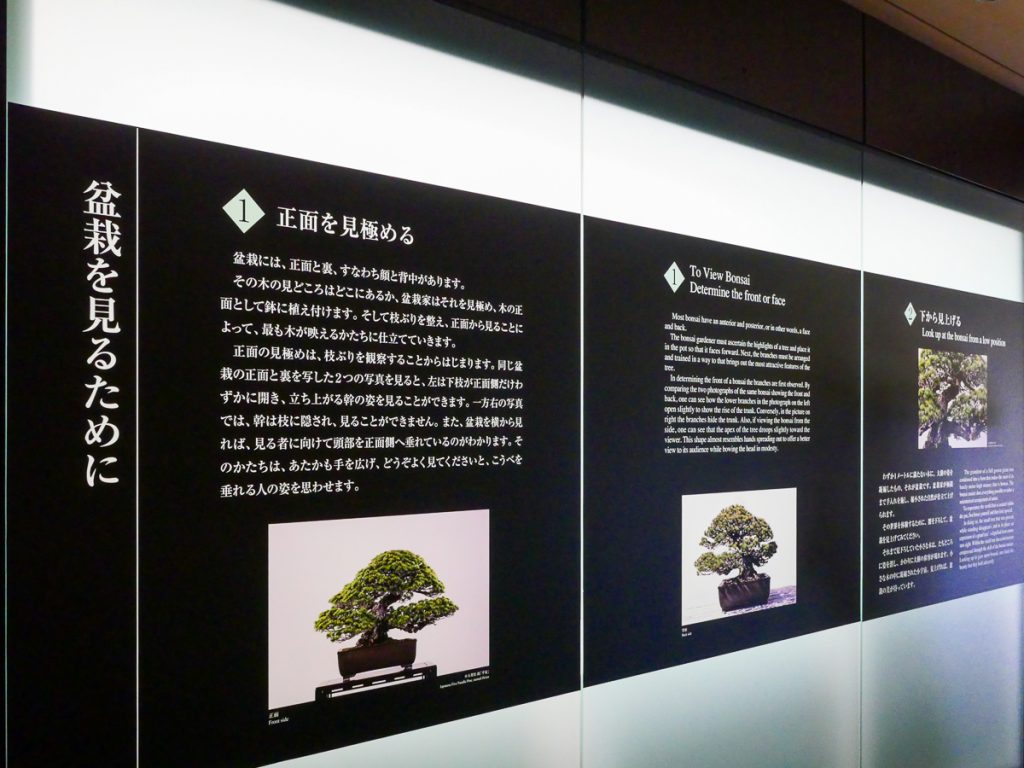
The kind of hospitality that is unique to the Bonsai Art Museum is also explained to the tips of appreciation.
The gallery has five seats of exhibition space . This exhibition consists of a unit of space called "seats", in which five small rooms with partitions are arranged in a row.
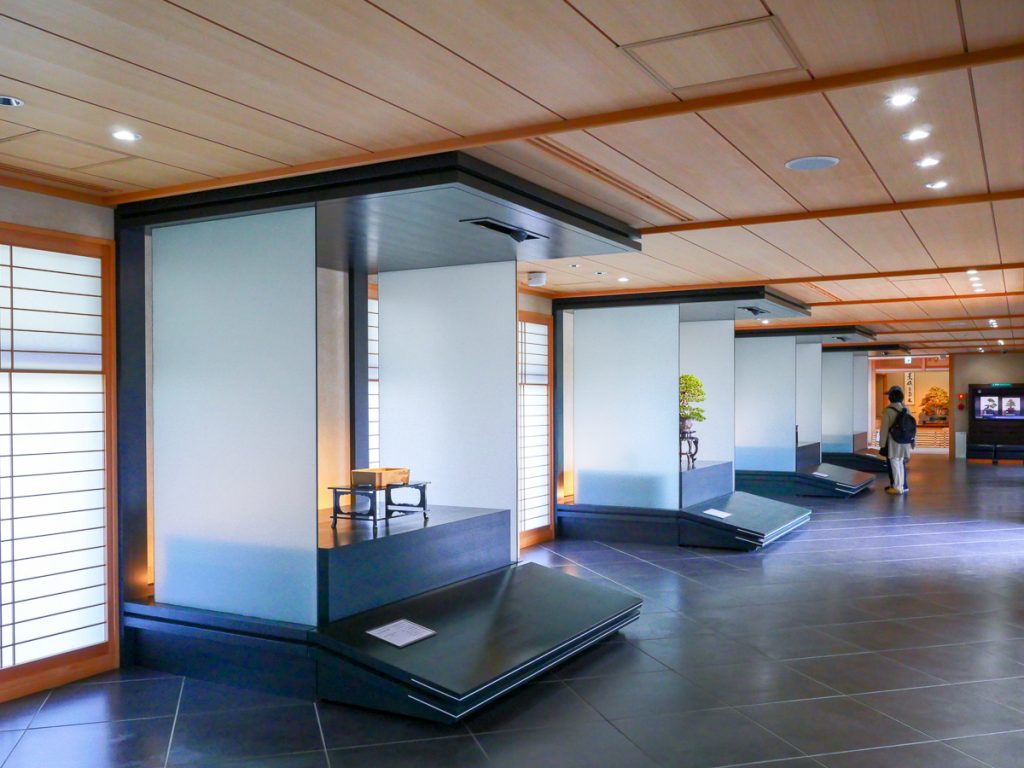
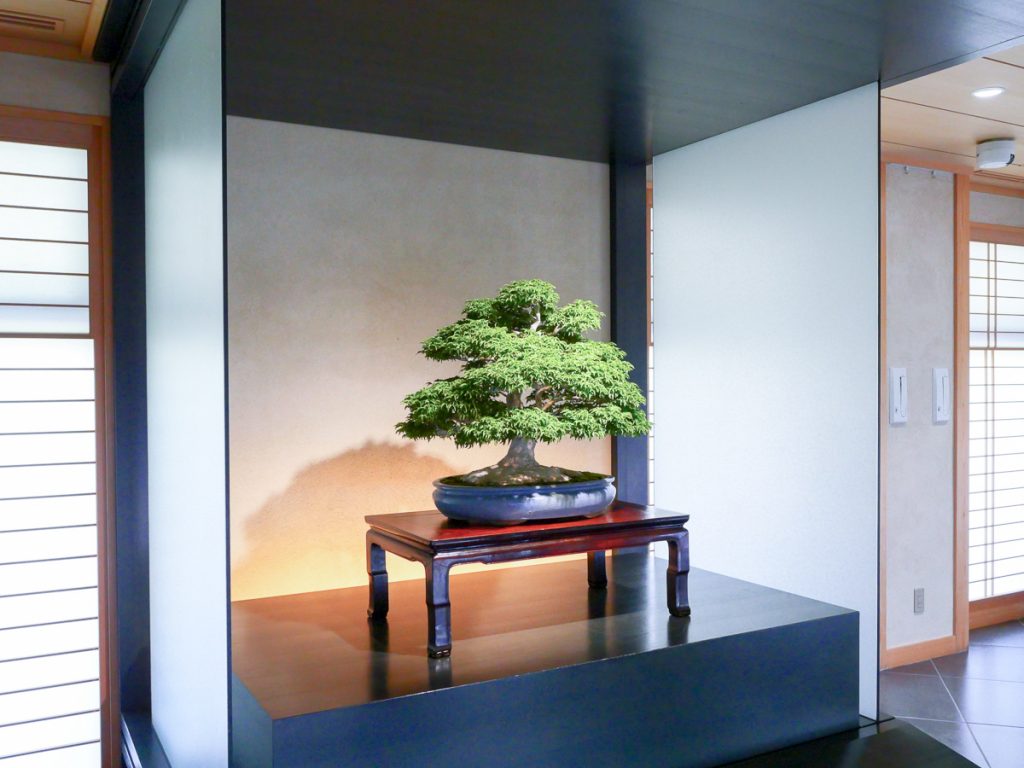
Bonsai is very important not only in its own artisticity but also in how and where it is placed on space. Each seat can enjoy not only bonsai but also the margin around it. This is a maple called "Samurai Head". Spring is beautiful with lush leaves. Looking up from below, I can recall the view of the spring mountain, which shines sunlight from among the leaves of a large tree.
2.3 types of rooms
At the back of the gallery is a sitting room divided into three types . Bonsai, Suiseki, and calligraphy are displayed among the three different traditional rituals that derive from Shin, Gyou, Grass , and Chinese calligraphy.
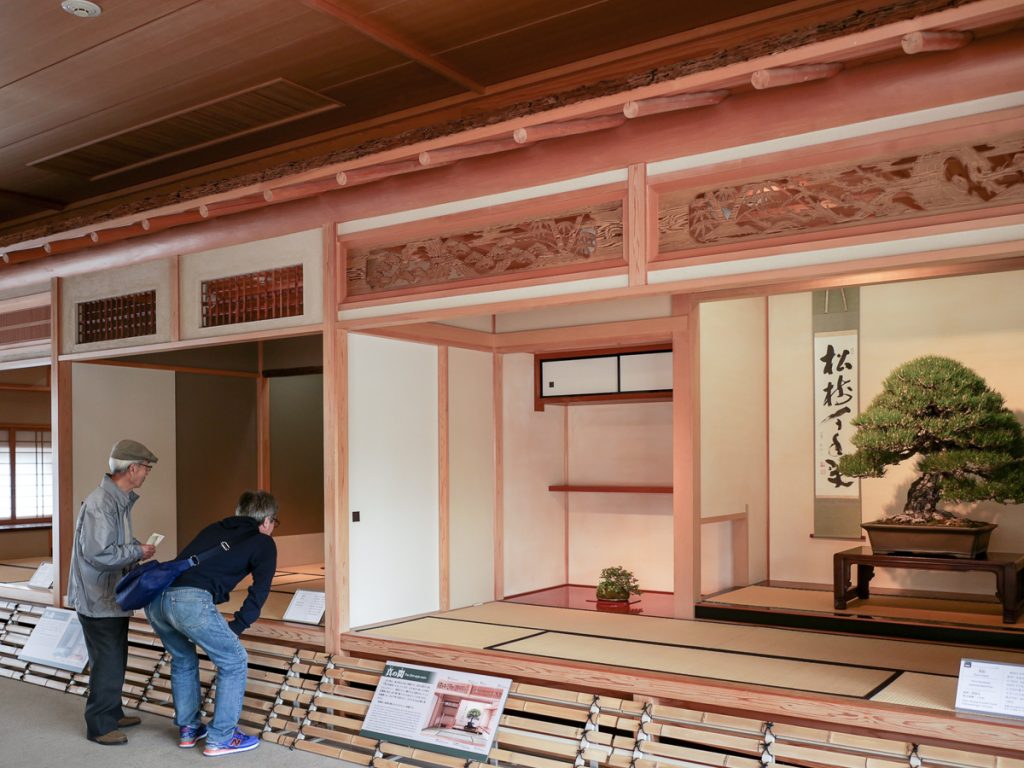
The first thing is " between rows ". It is a standard form found in most of the rooms made after modern times. It is suitable for decorating pattern trees and bonsai flowers.
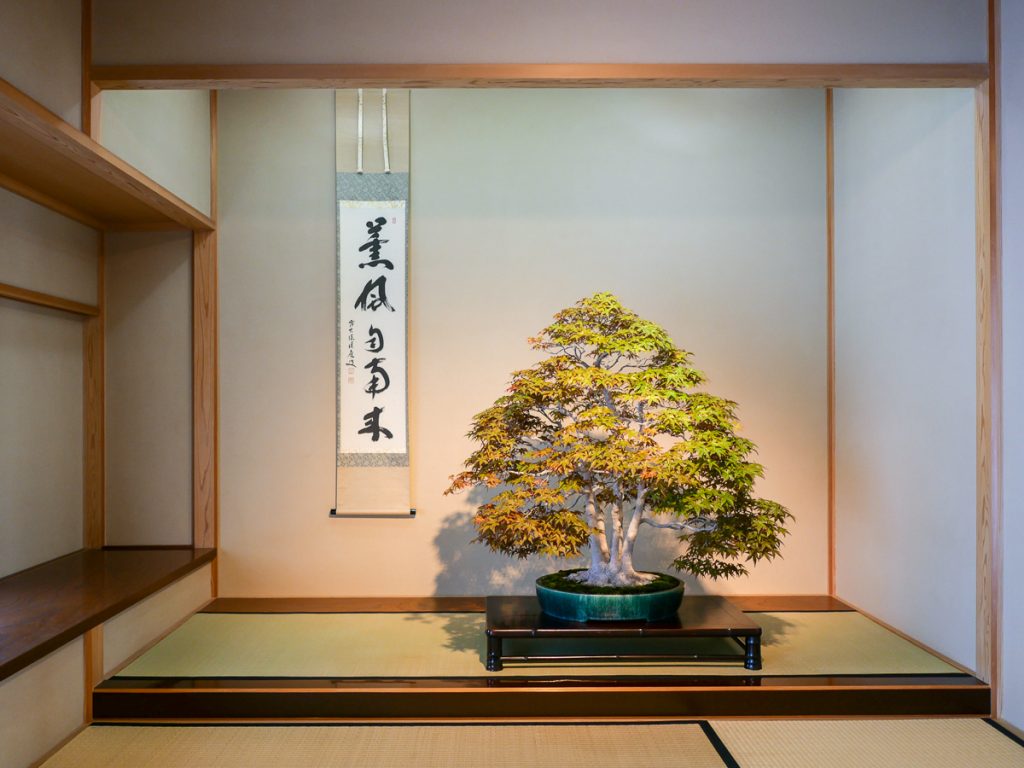
It is maple called "debiting people" to have been displayed. Express the coolness of early summer with the beautiful bonsai and folding style of green leaves.
Next is "the grass ". It is a space that is full of change by selecting different trees for pillars and bushes, though it is a limited space, in the form found in tea rooms. A bonsai with a brisk movement, such as a literate tree, is suitable.
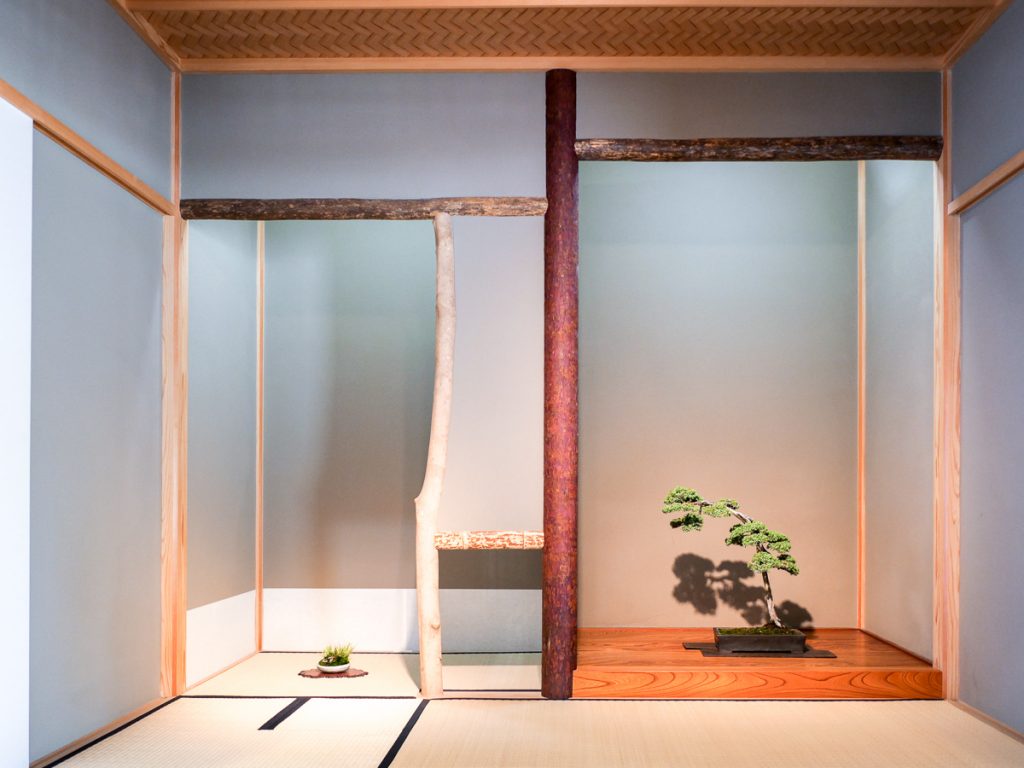
And the last thing to appear is "the true period ". It is the most prestigious room with floor pillars of cedar and cedars with black lacquer. On the floor shelf, various items such as water stone and incense tools are placed. Many bonsais with a profound feeling are displayed according to the high-style space.
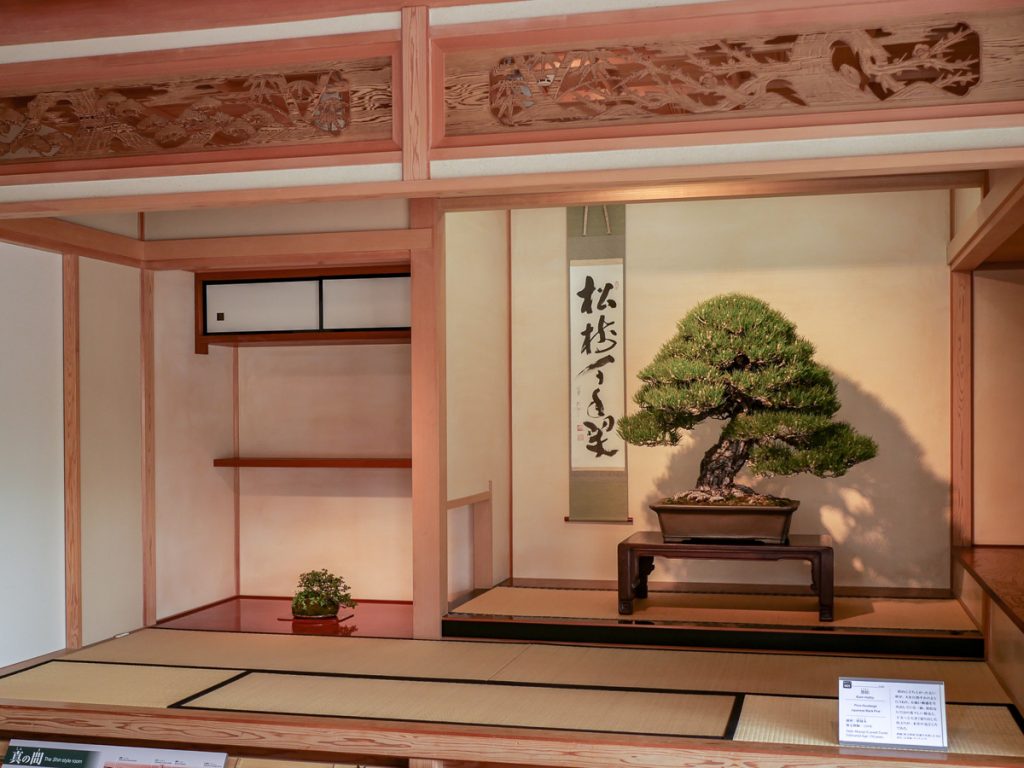
These three types of lounges are also areas where you can learn "bonsai as space" which is different from the exhibition in the gallery. For Bonsai, it is also essential to have an artistic sense similar to interior and architecture. There are many overseas visitors who say, "How to create a Japanese-style space is the most difficult!"
3. Planning exhibition room
Leaving the main building on the left side, there is an exhibition building of materials related to bonsai and works of art.
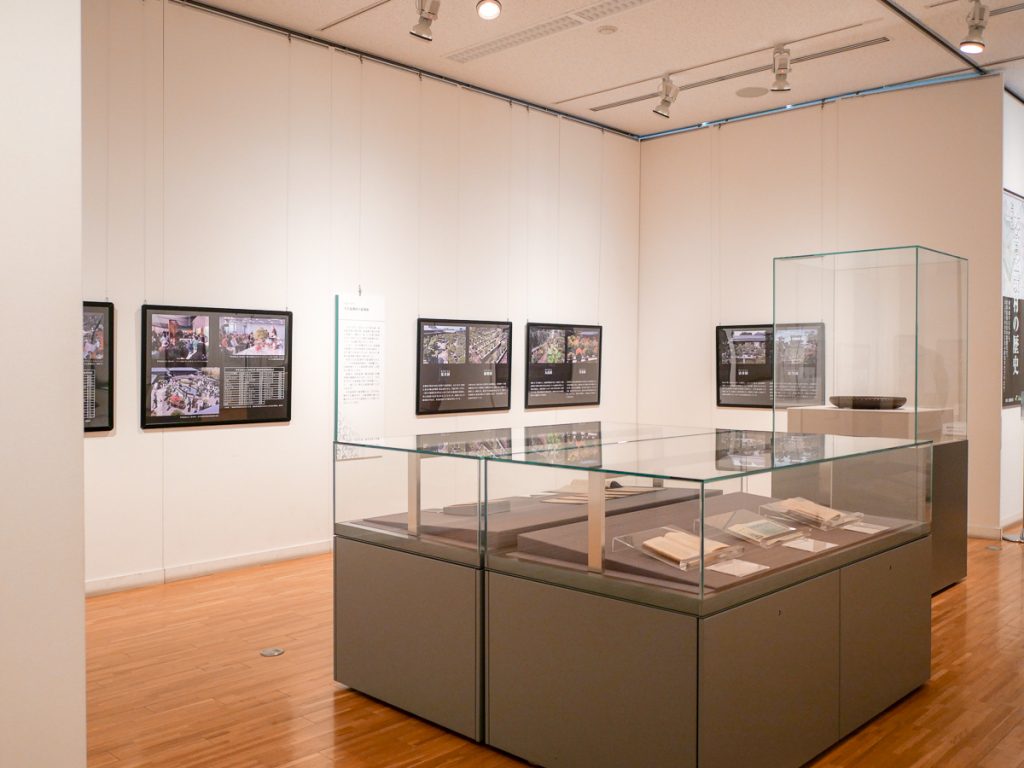
At the time of visit, the exhibition "History of Omiya Bonsai Village" is being held. A scene of the current bonsai garden from the beginning of the bonsai village, and valuable materials related to the 1964 Tokyo Olympics, which led to the spread of bonsai worldwide, were also displayed.
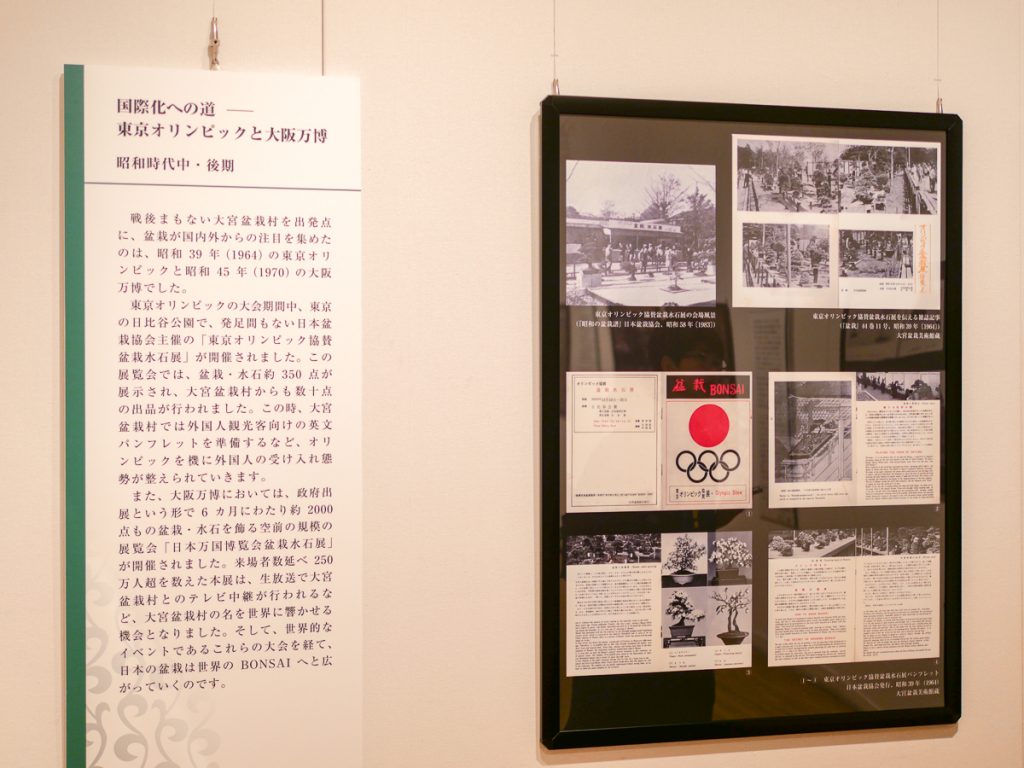
4. Bonsai garden
The Bonsai Garden is located in the courtyard of the main building and planning exhibition room. The first thing that appears is an exhibition corner where shooting is OK.
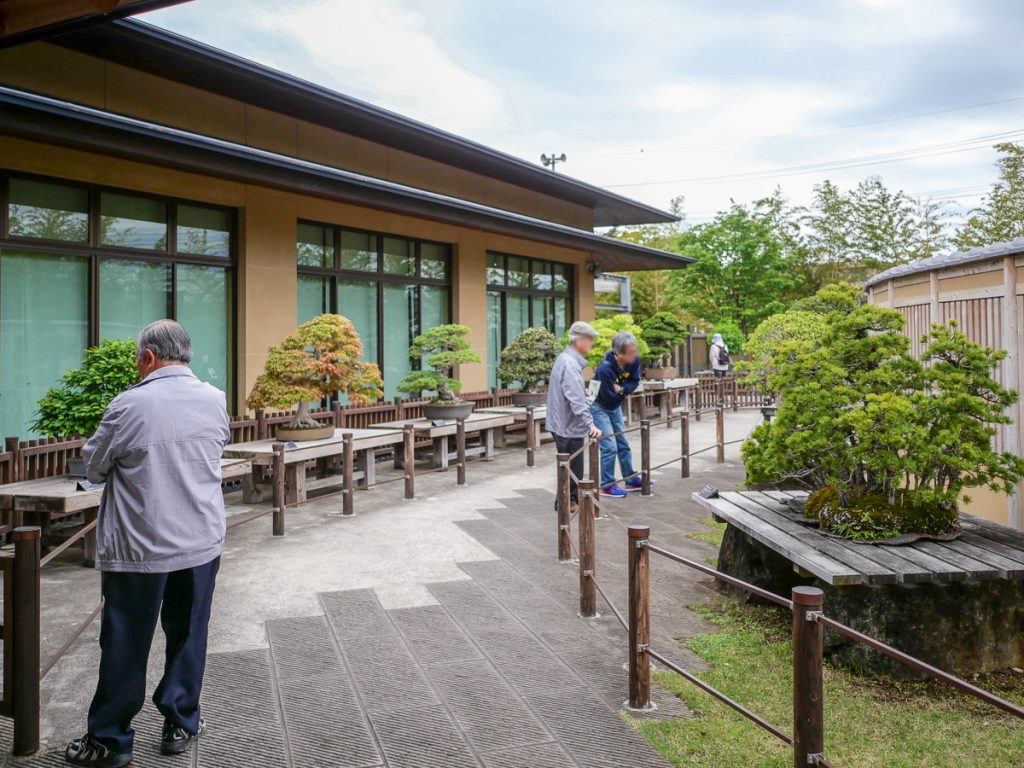
The May 2019, when I visited, entered a time of reluctance, and a special display of bonsai with a connection to each era was held.
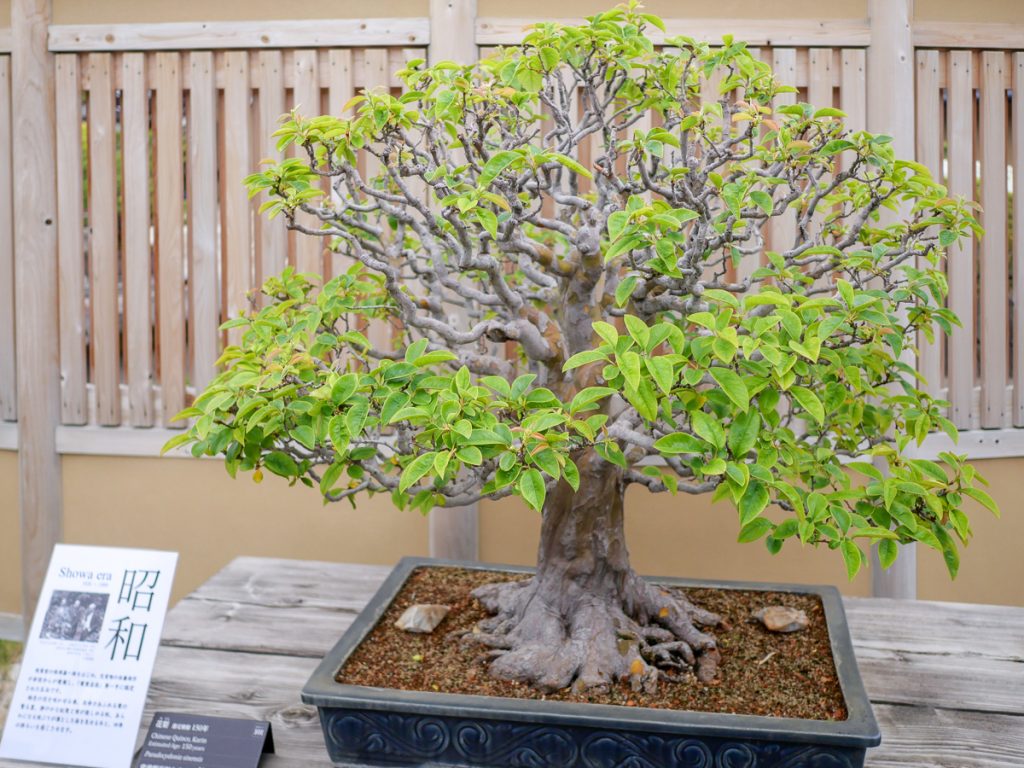
"Showa" is Karin. Bonsai that has been treasured by great Showa great people such as Shinsuke Kishi who served as Prime Minister.
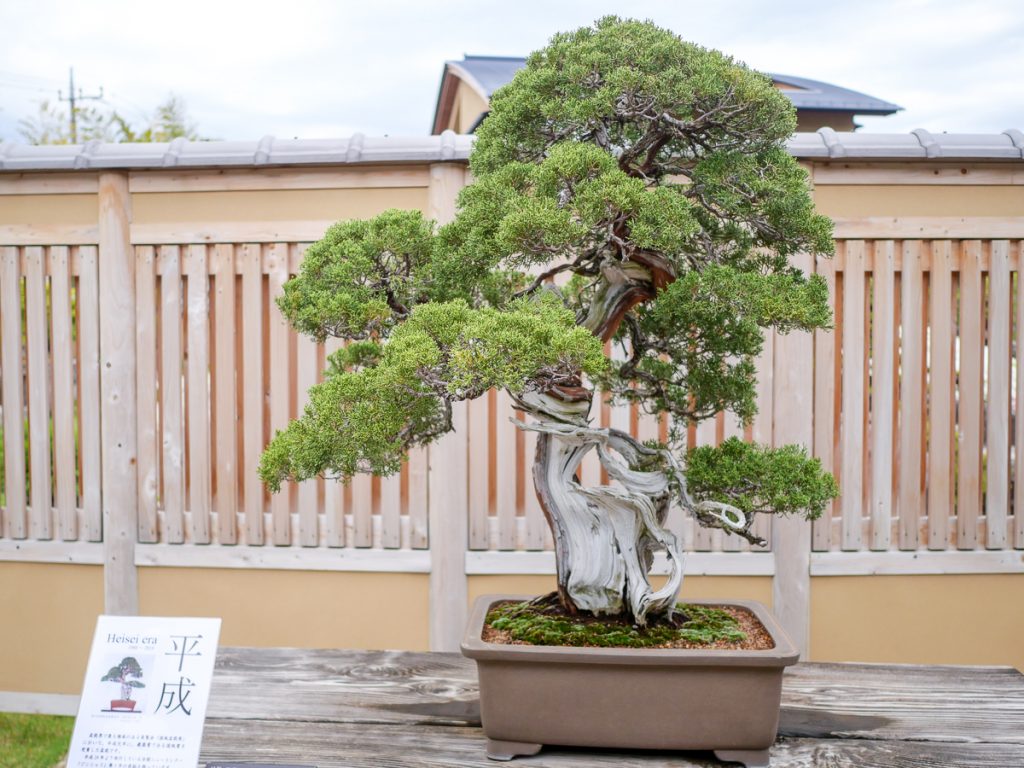
"Heisei" is an estimated 800-year-old tree. A work that received the highest award in 1989 in the Bonsai world's most prestigious exhibition "National Bonsai Exhibition".
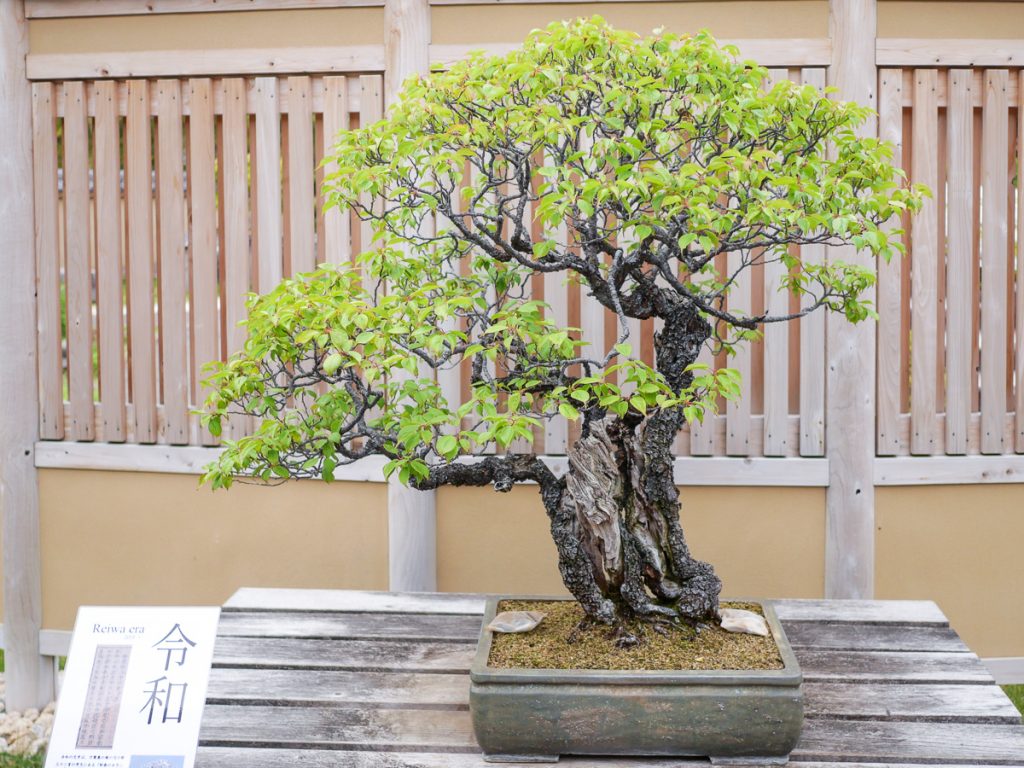
And “Rehwa” is an elegant plum blossoming old tree, named after the Manyoshu plum blossom song. Its estimated age over 100 years.
Going to the back of the garden as you proceed through the shooting OK area. ※ This area is normal shooting NG.
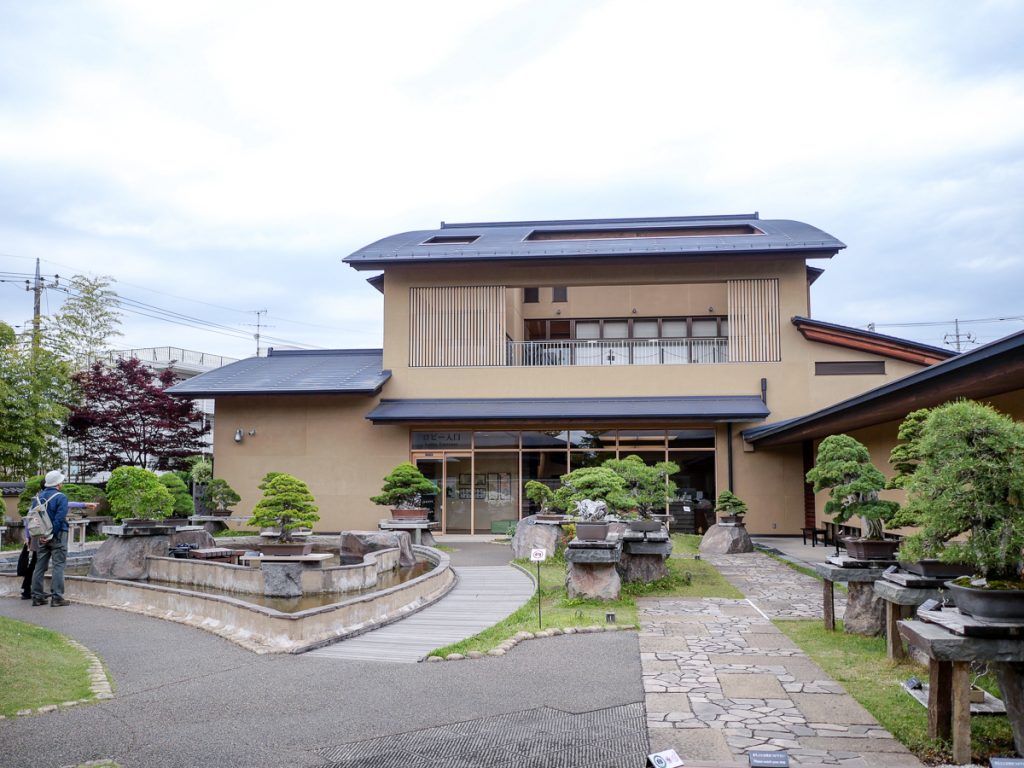
When you look at the captions, there are a few bonsais that are named "inscription". For example, the "blue dragon" of the Fukamatsu is shaped like a flying dragon as its name suggests, and one of the most popular bonsai trees from children.
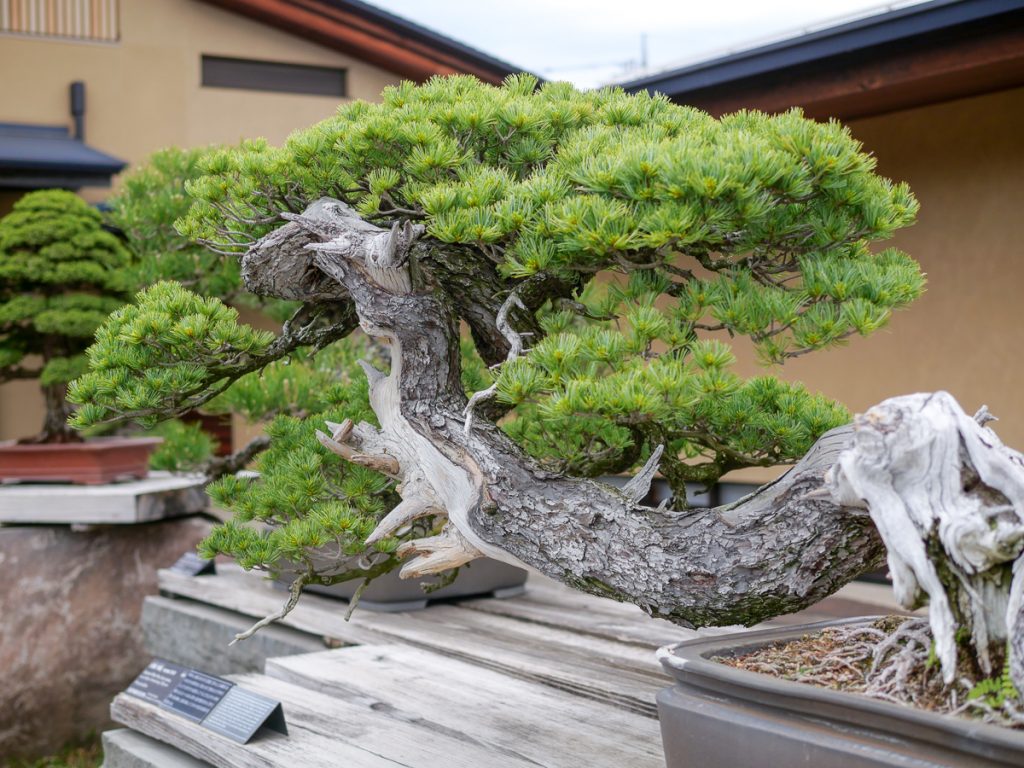
Some bonsais are also named after a public offering.
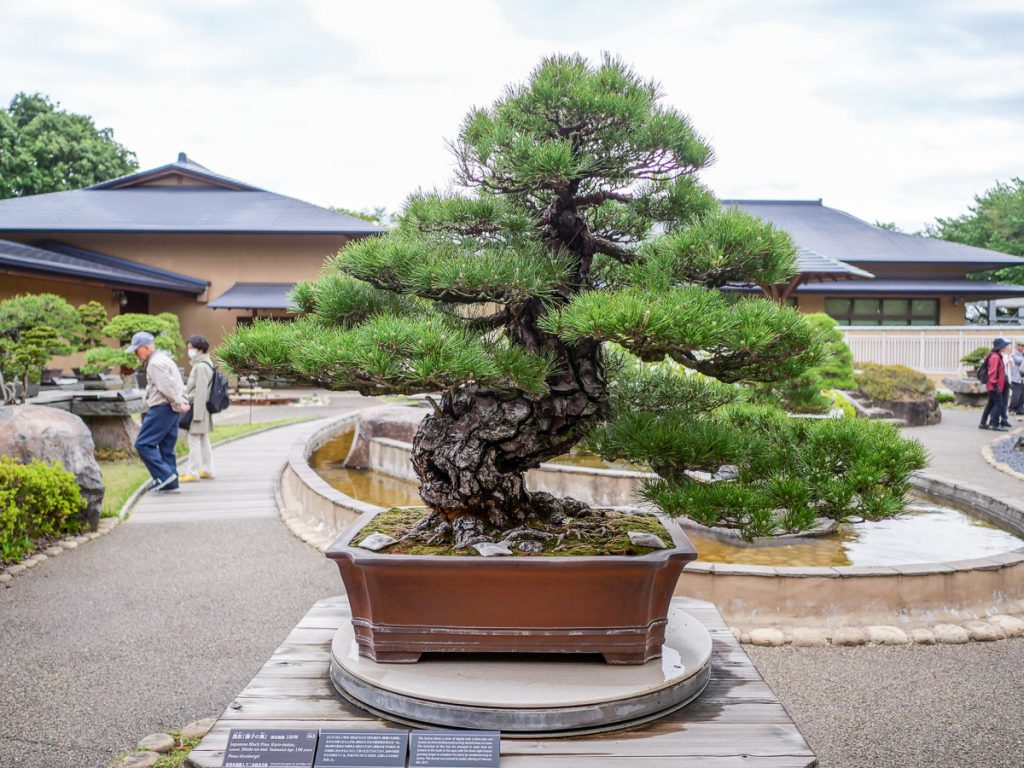
Kuromatsu "dance of lion" named by public offering in 2015.
Some of the bonsais that are exhibited outdoors are works that can be viewed from all directions in 360 degrees. You can also enjoy the difference between the front and back of the bonsai.
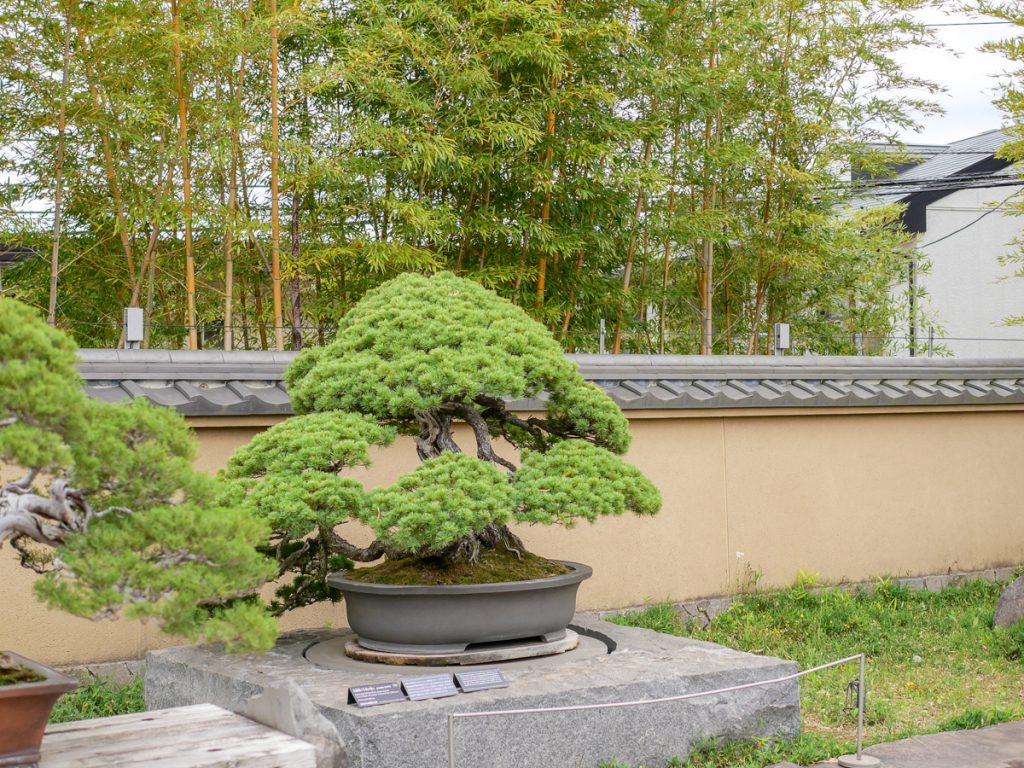
Omiya Bonsai Museum of Art's largest work, five leaf pine "Chiyo no Matsu". It is decorated on a rotary display to adjust the day.
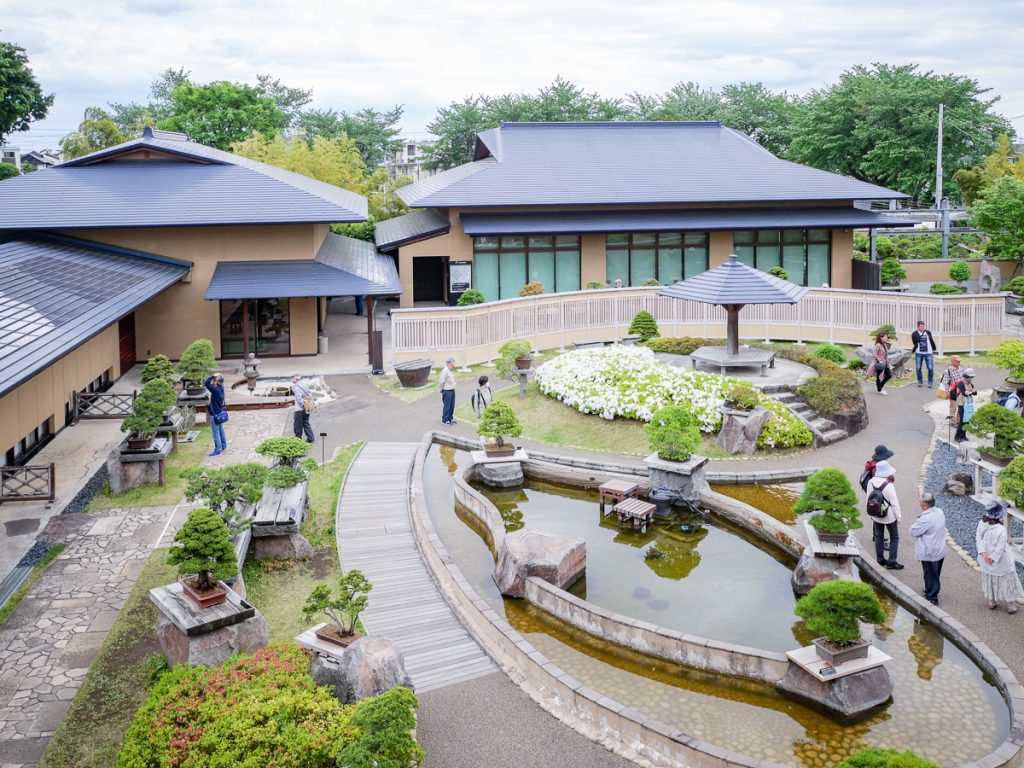
You can also look out over the garden from the terrace on the second floor of the main building.
Limited goods and souvenirs of the Omiya Bonsai Museum of Art
The museum shop concludes with the end of the museum. Popular souvenirs are washcloths and clear files. There were many unique goods from standard goods such as post cards, to mini tatami mats for pruning shears and bonsai.
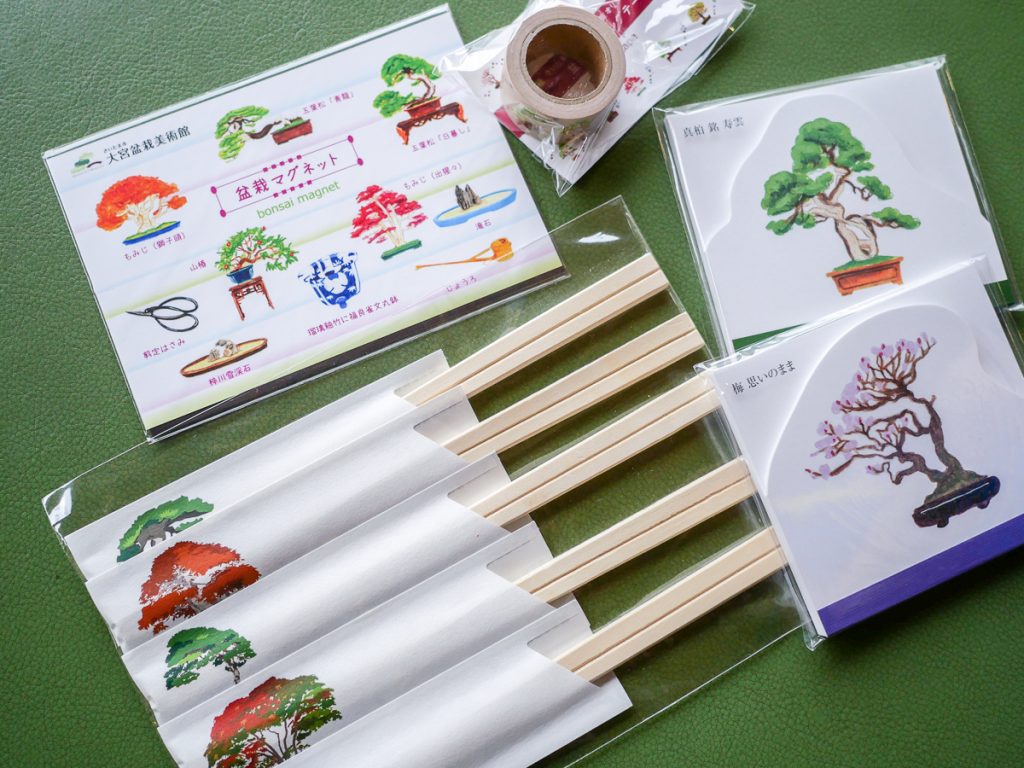
Magnet, masking tape, chopsticks set, memo from the upper left.
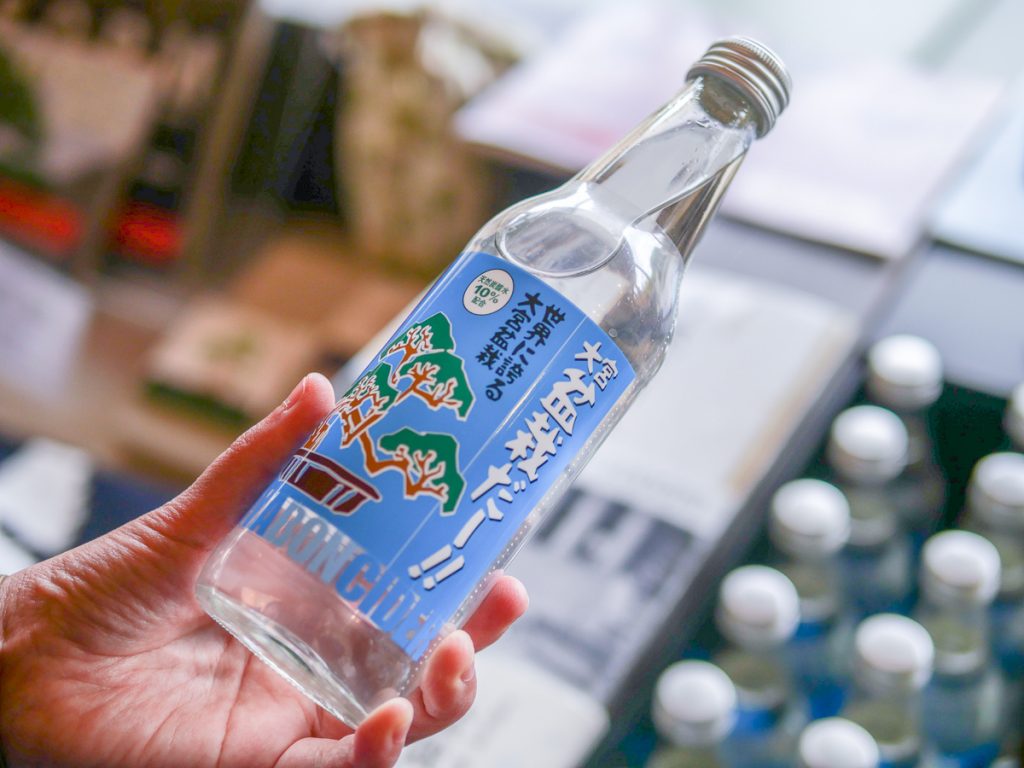
"Bonsai da!" Somehow, I feel the smell similar to the goods being developed in the lab between the teases of Japanese tea ...!
Explore the Omiya Bonsai Museum of Art
I visited the Omiya Bonsai Museum this morning on weekdays after the holidays. I wondered if it was a short time for people, there were a lot of customers from Japan as well as from overseas, and I saw the height of the popularity of bonsai at world level.
The museum is a content that can be enjoyed not only by bonsai fans but also by commenting carefully from the point of view of the exhibition with the commentary panel and the audio guide. As you take a walk through the garden, the Bonsai Art Museum has a variety of exhibits and attractions that change with the season. Please visit us once by all means.
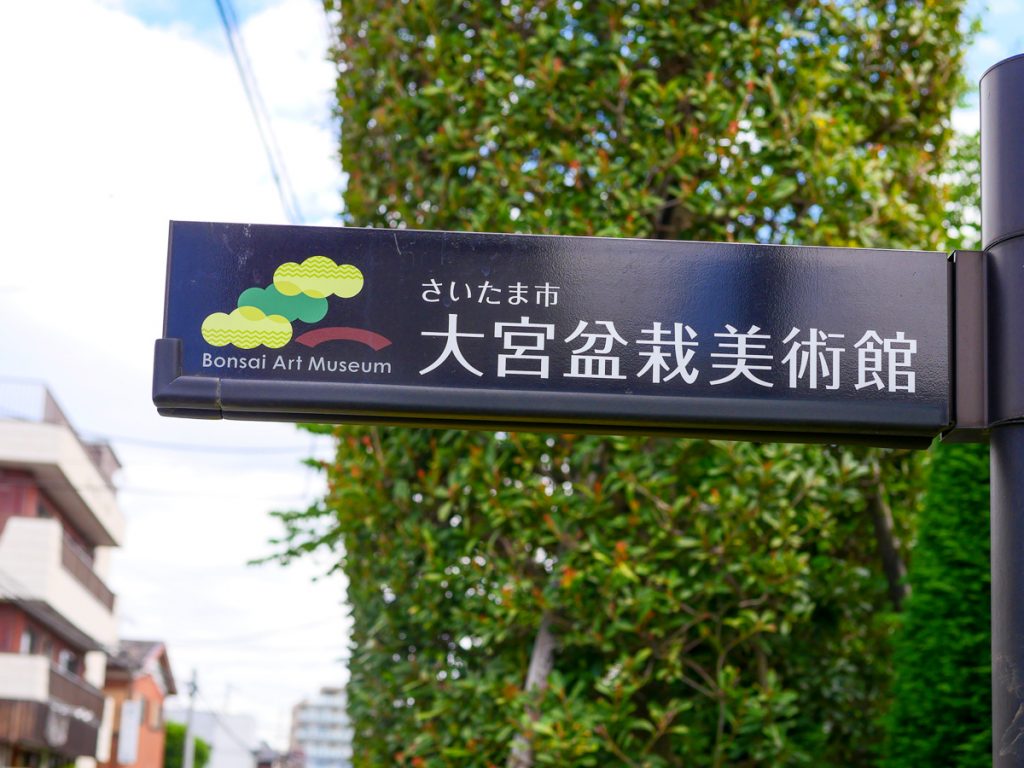
Saitama City Omiya Bonsai Museum of Art Facilities Overview
Address: 2-24-3 Torocho, Kita Ward, Saitama City, Saitama Prefecture 331-0804
Telephone: 048-780-2091
Website: http://www.bonsai-art-museum.jp/
Closed days: Thursday (opened for public holidays) ※ The year-end and New Year, there is a temporary closed day Opening hours:
March-October 9:00-16:30 ※ Admission is until 16:00
November-February: 9:00 to 16:00 ※ Admission is until 15:30
access:
JR Utsunomiya Line "Toro Station" get off 5 minutes walk from the east exit Tobu Urban Park Line "Omiya Park Station" get off 10 minutes on foot
Photo / Yu Kimura