













"National Treasure" which can be said to be the highest achievement point of Japanese art 2017 is 120 years since the word "national treasure" was born. At Shogakkan, "Weekly published Nippon National Treasure 100" rediscovers its hidden beauty and cultural history On sale.
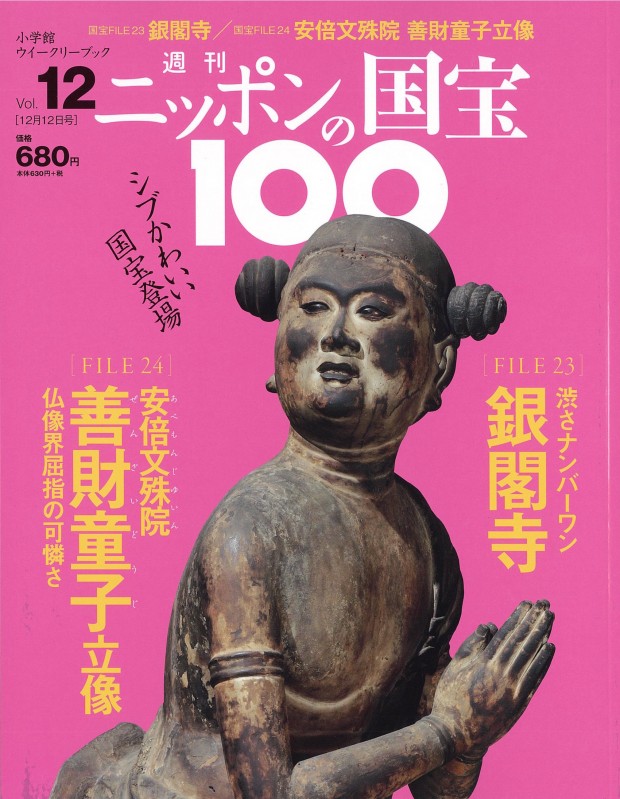
As digest of each issue, we introduce profile of famous treasure.
This time, it is the beauty of Shiga Masayoshi Ashikaga built, "Ginkakuji" and the boy Abe Bunshu-in according to Bunshu-in, "Good-goods-Doshi standing statue".
Shibusa number one "Ginkakuji"
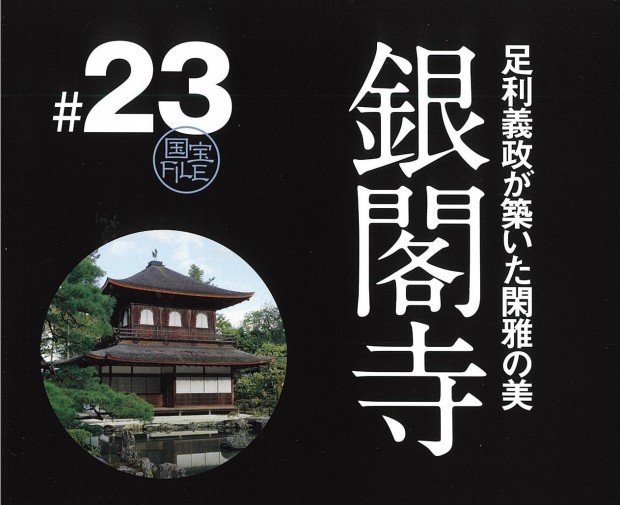
Ginkaku-ji Temple built in Higashiyama, Kyoto. It is officially called Higashiyama Jishuji. The name Ginkakuji was used from the Edo period in response to the so-called Kinkakuji of Kitayama Shikaji Temple built by the third Muromachi Shogunate and Ashikaga Yoshimitsu.
Ginkakuji was built by Ashikaga Yoshimasa, who became the 8th General of the Muromachi Shogunate at the age of 14 in 1414. During this time, the Shogunate's power declined and the local warriors rose, and the world was very unstable. Yoshimasa, who failed to take effective measures against the civilization's upset that began with his own successor, creates a mountain cottage in Higashiyama following his grandfather, Yoshimitsu, to escape from reality. It started civilization 14 years (1482). It is believed that Yoshimasa, who had been working on his late years, has built a Sanso Higashiyama-dono by sticking to Ichiki Ikusa. After Yoshimasa's death, he was changed to a Zen temple in Rinzai by his will.
It is Nishihoji (Kyoto), also known as Zen temple, that Yoshimasa used as a model for Higashiyama. I visited the temple many times by myself and studied hard, and I set the Higashiyama-den garden in two steps like Saihoji. In addition, following the Saikyodo of the temple, and built in 18 years of civilization, Toshodo of the Buddhist temple (the hall that houses the Buddha statue to worship). It is a one-storey, elegant study house architecture with a roof that has been ground with a maple skin.
On the other hand, Ginkaku (Kannon Hall) is a two-story building, and the first floor is a residential-style building, and the second floor is a complex towering building of a Buddhist temple where a statue of Kannon is seated. Ginkaku was erected the latest in the Higashiyama Hall building, and the year following the start of construction, Yoshinashi died of disease in 1490, and could not see its completion.
Following the Higashiyama where Ginkakuji is located, the culture of the period of Yoshimasa is called Higashiyama culture. Its feature is that the influence of Zen Buddhism is widely seen. I respected the withered taste which removed the decoration and the old-fashioned taste. This is the source of Japan's unique sense of beauty that will later be expressed by the words "wabi" and "sabi". The other is that a wide range of people became a cultural and economic basis. Yoshimasa ran a Higashiyama hall, attracting people who had excellent talents in specific arts, regardless of his position. Their activities have led to a culture that continues to this day, such as gardening, architecture, ink painting, calligraphy, tea bath, Tachibana and Noh.
National Treasure Profile
Ginkakuji (Jishuji)
Tosuido / Civilization 18 (1486) Single Irimo Building Facing Area Front 3.5 Between Side 3.5 Between Ginkaku / Yonde First Year (1489) Double Treasure Shape Building Front 4 Between Side 3 Between Ginkakuji Kyoto
Jisho-ji (commonly known as Ginkaku-ji) is that the 8th Shogun of Muromachi Shogunate Ashikaga Yoshimasa started the construction of Higashiyama-dono, which started construction in 1482. Tousido and Kannon Hall (Ginkaku) are designated as national treasures.
Buddha statue world's foremost beauty Abe Wenshuin
Abe Wenshuin, where the "good-goods Doshi figurines" are located, is located in Sakurai City, Nara Prefecture, and was built as Mr. Abe's temple in the year of the Dakai's Renovation (Moon's Transformation) (645) . The Monju for Hundred is a Buddha that symbolizes wisdom, known by the saying of "If three people come together, the wisdom of the monarchy". It is said to have been constructed based on the Buddhist paintings of the Chinese Qing Dynasty, representing the scene of "Honju Tokai" crossing the sea on the way of spreading Buddhism, accompanied by four siders including good-goods children. The other side wail axes are Yu-Qing Wang, the most successful old man (Yamaishi), and the three sons of Buddha Toshisanzo (Sudai Bo), all five national treasures including the most successful old man who is a supplementary work of the early Edo period.
Good fortune children are boys who appear in the "Legend Goods" of the leading scripture of "Kayukei" in the Mahayana Buddhism. There is a narrative that a good good who has awakened to Buddhism, visits various people (good knowledge) one after another in order to gain enlightenment, asks for a lesson, and finally fulfills the way of Zen. Is written. This story was drawn to many Buddhist picture scrolls from the height of literary nature.
It is known from the ink inscriptions written in the statue that the middle-precious Fuminshu statue was built by Kaikei in the year of Kenhito (1203). The same year is also the year that Kaikei built luckier statues of Todaiji Nandaimon along with luck.
The statues of the good-goods children's statues and the statues of the Yusu-O-Bangha Tosanzo are characterized by their style and color that are inferior to those of the Bunshu-tei. These four tiles are rovings made of oak wood, and the sculpted eyes carved by Hyun-shizou from wood, while the wakizaki has an eyepiece with crystal.
The Kamakura period sculpture has changed from a noble and elegant form during the Heian period to a powerful expression with sharpening. It was also a restoration of the Tenping sculpture, and it was the Buddha image of the Nara period, mainly that Kaikei modeled it. In order to create a sculpture with a sense of presence and three-dimensionality, we used a parlor that carved out a Buddha image of a complex shape by combining bars, and also incorporated the technique of jade for a more realistic and realistic expression.
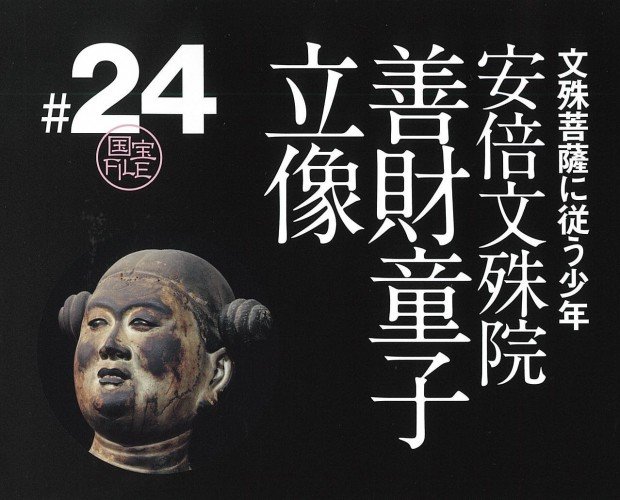
Looking back at the front of the chest and looking back at the Bunsyu, the "good-goods Doshis Statue" with an impressive face. It has been designated as a national treasure in 2013 as a masterpiece of the late Qing Qing, and is attracting attention.
National Treasure Profile
Good fortune children
Kaikeisaku Hakuhisa 2 years (1220) Wooden Coloring Gold Gold Eyepiece Eye height 134.7 cm Abe Bunshuin Nara
One of the four armpits of the statue of Moonlight Equestrian Bodhisattva, the main honor of Abe Moonlight House. This is a work made by the Buddhist priest Kaikei in the early Kamakura period. It is estimated that it was produced from the year of 1203 when the image of the middle-precious literary majestic moxibustion was produced to the year of 1220 (1220). It is made of oak wood, and eyes are set in the eyes.
My motto is "I'm serious about being stupid", and I am having fun and having fun every day.