













"National treasure" which can be said to be the highest achievement point of Japanese art. 2017 is 120 years since the word "national treasure" was born. At Shogakkan, "Weekly published Nippon National Treasure 100" rediscovers its hidden beauty and cultural history On sale.
As digest of each issue, we introduce profile of famous treasure.
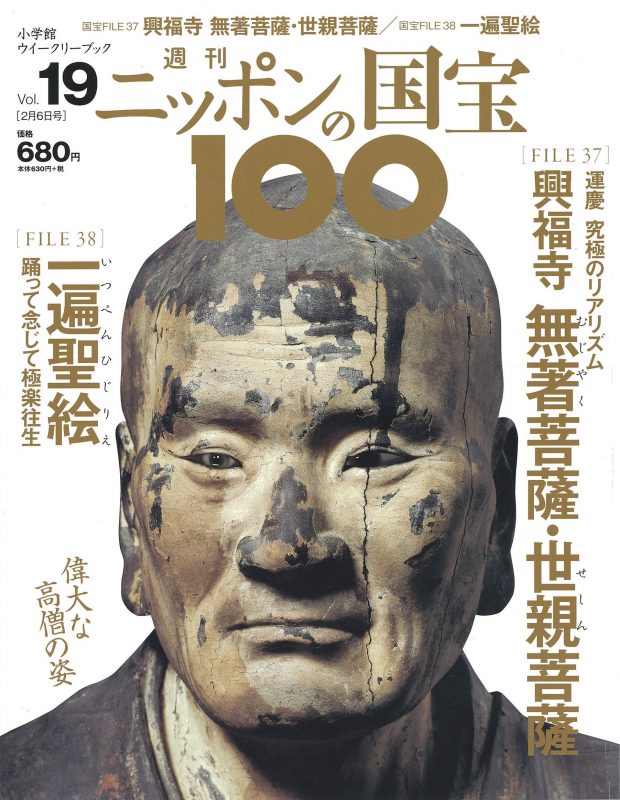
This time, it is a great pastry, "Ippin Choi picture", dancing with the ultimate realism of Ungyeong, "Kofuku-ji Temple 菩薩 ・ 菩薩 菩薩".
Kamakura Sculptor's Masterpiece "Mr. Unseen"
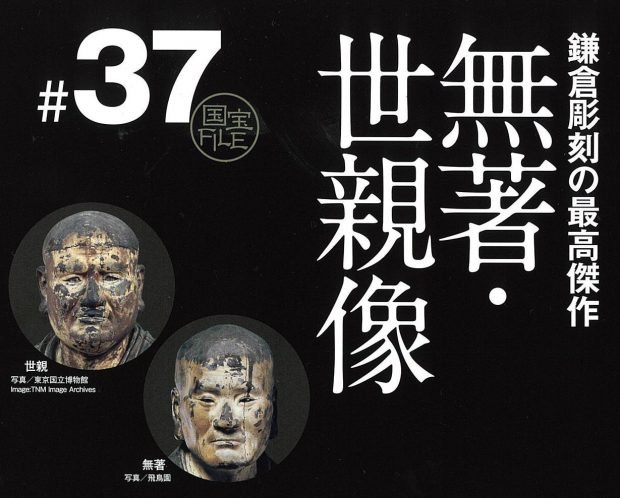
Innocence statues and statues of relatives built during the Kamakura period are two wooden sculptures enshrined in the Hokuen-do Temple of Kofuku-ji Temple, which is the Ohonyama of the Honso-shu. The model of the statue is the author and brother of the 5th century India who is a brother and brother of the indian names Asanga and Vasbandu, a Buddhist monk who represents the Indian Buddhist monks. It is said that his brother's no-author wrote a lesson from his nephew and put it together with his parents.
The center of its achievements is the generation of "law = all phenomena" and "phase = its characteristics", which is conveyed to Tang by Xuanjing Sanzou, and becomes "Homoron." The teaching is brought to Japan and passed down to Kofuku-ji.
The author is Hun-kei of the Buddha who represents the Buddha sculpture of the Kamakura period. His father, Yasukei, is a group of Nara Buddhist teachers, and luckily he leads a family and works as a part of a group of Buddhist monks called Keio. Yunqing made a series of Buddha statues that let you feel the spirituality with realistic strength like never before.
The era when Ungyeong lived was a time when the nobles prospered from the Heian period to the Kamakura period when warriors hold power. The Buddhist statues are also noble and gentle style, and they have been asked for the powerful and powerful shapes that the warriors prefer. Yunkei, based in Nara and Kyoto, has had a relationship with Higashikuni warriors early on, and has also created Buddha statues for them.
The damage of the southern capital (Nara) grilling performed by Heihege et al. (1180) was huge. For the revival, Lunqing worked on the making of Buddha statues in one unit, but as a result, the Buddha statue sculpture of the new era was established and spread. Under such circumstances, when Hokuen-do's reconstruction begins at Kofuku-ji, Unkei will work on nine ships, including the Zen Buddha statue of the Honson, the Unauthorized Statue, and the Statue of the Relatives, and will be completed around 1212. .
Unpainted statues and statues of relatives are made of wisteria wood, and the eye is a technique in which the crystal is embedded in the eye. The sight as if the soul is staying, and the force that comes from being a huge body nearly 2 meters. Outstanding workmanship and passion for new expression are the highlights of Kamakura sculpting.
National Treasure Profile
Unqing Standless statue / relative statue
Wooden calendar colored eyeball Statue height / no arrival: 193.0 cm Relatives: 190.9 cm Kofuku-ji Temple Nara
It is an image of ancient Indian school monks and brothers, and a highly spiritual image can be seen from the image created in a clear manner. There is a rich presence in the appearance of loose appearance and loose clothing, and is considered to be a masterpiece of the Kamakura period Buddha statue sculpture.
Nembutsu holy country trips "one time holy picture"
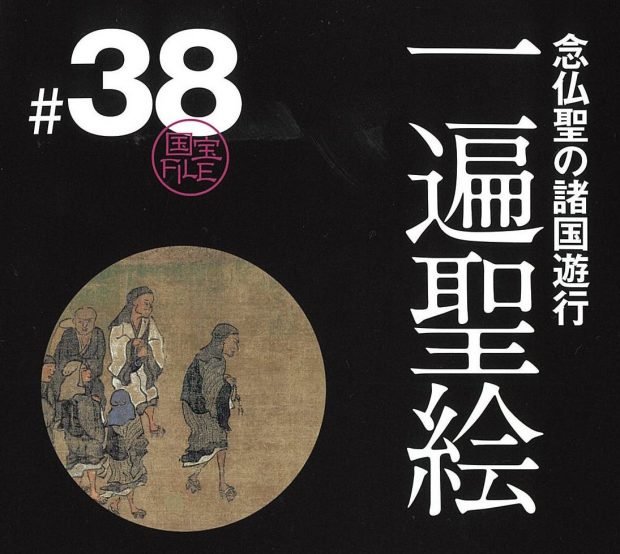
During the Kamakura period, when I established a format to guide the people through enthusiasm, with a return to Amida, I established a form to guide the people by the Nembutsu. While traveling all over the country, they handed out their bills, performed dance Nembutsu and spread Nembutsu. It will die in the year 2289 (1289), but most of the books will be burned down just before death, and the remaining ones will be handed over, leaving nothing behind.
Completed in 1299, the "One-time Holy Painting" consists of 12 volumes and 48 columns. The holy book, which is said to be a mere brother, drafted a lyric, and the Seisonji (Fujiwara) Keigo wrote the external subject, and the enlightenment and enlightenment drew the picture.
The holy pilgrimage was accompanied by a tour of the same time, but we will reunite in Bunkyo 11 (1274) by reunion about 15 years later, we will meet again near the end of the same day. During the period when I was not accompanied, I would have carefully collected and organized the coverage from such things as Shinkyo (the father of Tokimune) who did not leave even a side of the same time. Since the person who is considered to be a close relative is supervised, it is also possible to trust the contents of the text and pictures. Even today, it is an essential basic material to know the whole story.
It is also valuable as the oldest existing silk book coloring picture winding. Silk is an expensive material, so it was unusual to use it for picture scrolls. It is a luxury picture scroll that took time and effort.
"Ippun Choi Picture" is a high priestess picture scroll depicting its life, but since it is actually painted in a vivid color, it can be enjoyed as a landmark picture. Shitennoji, the first to "pay" the bill, and Kumano Hongu, who received a deity from Kumano Gongen, are scenes that turned into a turning point, but they are also outstanding as a Sansui painting, so that the scenery is detracted doing.
In addition, it can be said that the vivid depiction of the person is a great attraction. People who lived in the Middle Ages, from warriors and monks to poor commoners, are depicted with detailed touches and expressiveness. Of course, I can feel the gentle eye for people, although the sharpness of the eye of the circle and the eye that I used a brush for writing is, of course. Because of the polite description, it is an excellent source of information to know medieval culture and customs.
National Treasure Profile
En i
Shoan 1 year (1299) Silk coloration Volume 1-12 / 38.5-39.3 x 927.4-1179.0 cm Sikkouji Temple (Yugyo-ji Temple) Kanagawa All photos provided for "Ippin Seijo" (except 7 volumes) are Yugyo-ji Temple 7 / 37.9 × 633.2 cm
In the Kamakura period picture scroll, he copies the achievements of Tokushu's founders and allies in the form of rich landscape depictions and vivid people.