









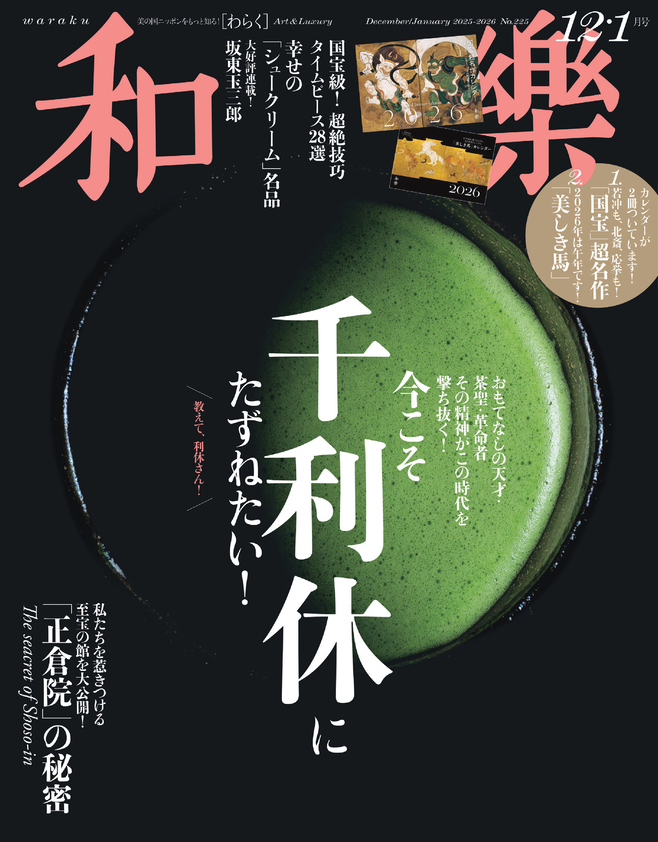




"National Treasure" which can be said to be the highest achievement point of Japanese art At Shogakkan, "Weekly published Nippon National Treasure 100" rediscovers its hidden beauty and cultural history On sale.
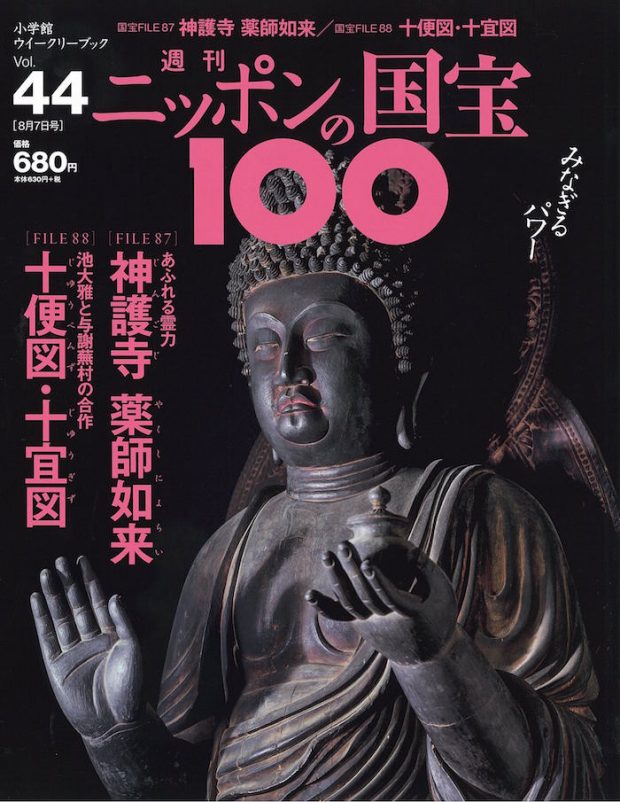
As digest of each issue, we introduce profile of famous treasure.
This time, the masterpieces of the early Heian sculptures "Jingoji Yakushi Nyorai" and the highest peak of the literary painting "Twelve drawings, ten figures".
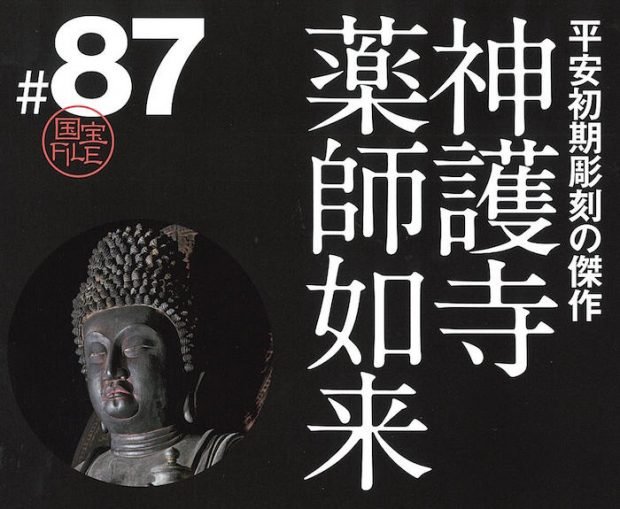
Overflowing spiritual power "Jingoji Yakushi Nyorai"
Jingoji is located in the middle of Takaoyama, west of Kyoto city. In this place, there was a private temple, Kaohsiungsanji of Waki who buried the duke and Waki Seimaro who had achievements in Heian-Ky 遷 capital. This temple is the important stage of the development of Japanese Buddhism, especially the practice of Japanese Buddhism, such as the Sumida who created the Tendai sect in Japan giving lectures on Hokkekai and giving a clear outline before the Kukai opens Konosan. have become.
Kaohsiungsa Temple merges with Jinganji Temple (old location unknown) built by Waki Seimaro and Tencho first year (824) to become Jagoji Temple. It is believed that the Yakushi Nyorai standing statue, the present principal of Jingoji, was originally built at the end of the 8th century as the principal of Shinganji. In the case of Jinga Temple Soken, when a monk and a dojo mirror at the end of the Nara period aimed at the throne, Waki Seimaro was able to get rid of the dojo mirror of Usa (Oita) Hachiman God, There is a history of having been erected to make
Yakushi Nyorai is a Buddha that has been worshiped since the Nara period as a Buddha that gives comfort except for people's ill health. The ancient people believed that the cause of their illness was their own sin department or a bribe from others, and in particular, the spirits of those who died of misfortune in powers would bring great harm. Because of this thought, the yakuza-nadarai confession of guilt, a ritual "Yakushi-Conpentance", was carried out, and Yakushi-Nagai was believed as a powerful Buddha to take care of evil.
The statue of Yakushi-nuri in Jingoji has a body that is carved out of a lumber with a sense of mass, revealing the wood surface with a bare finish. That face, unlike the general Yakushi-nuri soft face, makes you scare the viewer with a harsh look that has anger. It is believed that such wooden statues and statues were created in connection with the ancient Japanese spirit tree religion, which expected that the spirituality would dwell by carving out the Buddha statue from the spirit tree where the gods live.
Furthermore, it is said that the figure of the wooden sculpture Buddha with a large sense of body which can be seen in this statue is influenced by the Buddhist statue style of the Tang brought by Monk Kanjin who came to Japan from China in the middle of the eighth century. The Yakushi-nuri statue of Jingoji is a masterpiece that forms the top of a wood-carved Buddha, where the visiting art forms are connected to Japanese spirit wood faith and see the prosperity from the early Heian period.
National Treasure Profile
Shingoji Yakushi Nyorai
Wooden background The end of the 8th century Image height 170.6 cm Shingoji Kyoto
The main temple of the temple that is enshrined in Jingoji Kondo. It is believed that it was originally the main shrine of Shingenji Temple, which was founded by the late Hara period and the early Heian period. Carving out of the lumber except for the forearm. A masterpiece of an early Heian period wooden carved Buddha, characterized by harsh expressions that connect lips and an expression of the body with an overwhelming sense of mass.
Joint work of Ikeda Daimasa and Yosaku-mura "Ten-bye Figure / Tonji Figure"
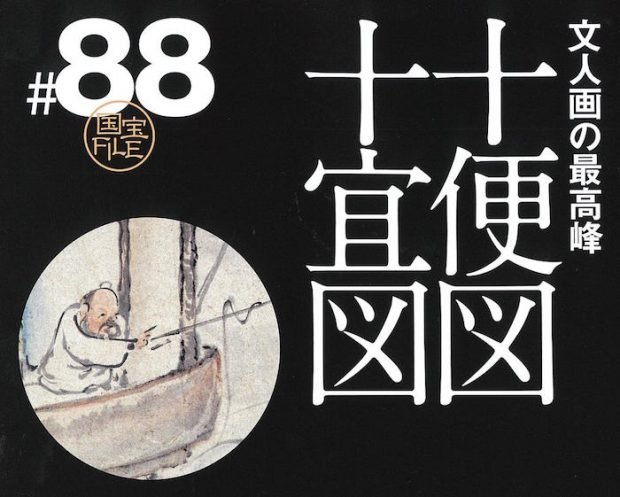
“Ten-shi-to” and “To-gi-gi-to” are the joint works by Ikeda Taiga (1723 to 76) and Yoseki Mura (1716 to 83), who are said to have achieved literary drawings in the middle of the Edo period. Daimasa was in charge of "ten flight drawings" 10 figures, and Samura was in charge of "ten figures" images. It is said to be the best masterpiece of literary paintings of the Edo period (Minami).
The literary paintings were drawn by the highly educated bureaucrats with great skill in China, and in Japan the Han scholars who were admired for Chinese culture began to draw, and they also produced professional painters.
The theme of the painting is taken from the end of the Ming Dynasty of China, from the beginning of the Qing era to the literary writer Li Ying ("Lee Wei") "Ison's Ten Flight Twelve Poems". This poetry changes with seasons, time, weather with "ten flights" that Li fishing who built villa "I en" in the foot of I mountain (Zhejiang province) admired convenience of life in villa in the country What consists of "Tokigi", which admires the beauty of nature. The title of the poem is "12 poetry", but there are only 10 poems left, so the picture was also produced 10 figures with the title "ten figure".
In both Ten Figure and Foremost Figure, a picture is drawn with ink and yellowish red or a pale pigment mainly on paper of the same material and dimensions, and writing Chinese poems on the edge of the screen, pressing multiple large marks You are Only one point of "Gi-Den-Gu" in "Tsingying" in Kashimura has the yearbook of Maywa 8 (1771), and both ten-day and ten-gi are both considered to be productions of the same year. It is believed that Taiga's "ten flight drawings" focusing mainly on people's lives was completed first, and that Kasamura had a high possibility of later producing "ten figs" on the subject of nature.
The theory that ordered the picture is the theory of Owarakikuni (Aichi Prefecture) Narumi Shimogo Gumi (1742-90). Gumikai was a rich hobbies who owned sake breweries and preferred haiku and painting. Although Daimasa and Tsujimura were active in the same Kyoto, it did not mean that they had a close exchange. The bold attempt to make them compete has produced a rare and valuable piece of work, a collaboration between the two leading literary painters in Japan and in the future.
"Ten-shi" and "To-gi-gi-go" are owned by literary author Yasunari Kawabata after the Pacific War, and are now in the possession of the Yasunari Kawabata Memorial Society, which honors Kawabata's achievements and works.
National Treasure Profile
Ten flight drawings Ikeda Daika Ten Gig Yossai village
Paper book sumi painting paleo 8 years (1771) each 10 figures each 17.9 x 17.9 cm Kawabata Yasunari commemoration meeting Kanagawa
In the middle of the Edo period, a painter who worked together in Kyoto together with the artist and artist Ikeda Ikeda and Yoseki Mura. 10 figures for Taiga 's ten flight diagrams and Kashimura' s ten diagrams, with the title of “Ion's ten flights twelve rituals” drawn by China's Mingsue Qing's first literary writer, Lee fishing (Li 笠 翁) Is drawn.
Kawabata Yasunari Memorial Party
My motto is "I'm serious about being stupid", and I am having fun and having fun every day.