












History of Zen-How did you come to Japan? ~
In the first place, what kind of history did Zen go through? And what is the person who supported the wolf and told it now? Here, let's take a look at the big flow of firewood.
There are several denominations in Buddhism currently transmitted to Japan, but most of them learn teachings by relying on the characters and words of scripture. On the other hand, Zen practice is intended to relive the Buddha's enlightenment with its own body through practice such as zazen. In the process of training, you will learn something that can not be expressed in words, and learn the teachings of Buddha. By the way, the word 禅 itself is an abbreviation of ぜ ん (Jenjo), one of the three practice lines in Buddhism, and means to pour one's mind. In other words, it can be said that it is a kind of mental unification.
The beginning of the wolf
Well, when is the beginning of Zen as a religion? About 2500 years ago, the Buddha formed enlightenment under the Bodhi tree of Bodh Gaya, India, and realized enlightenment. It can be said that the persimmon in a broad sense starts from here, but the general beginning of persimmon is considered to be from Daruma (Daruma). He counts from Buddha and is the 28th disciple. It is believed that Daruma, who was born as a prince of South India, entered China after carrying out the pottery he learned at the end of his training. I am well known for the anecdote "Face wall nine years", which went to the wall for nine years at Shorinji Temple and continued to sit still. It is also a word that Takuma has brought to you, "Furong Monji," which shows the way of Zen to reach from the actual experience of zazen to enlightenment without relying on the scriptures. It is a teaching that there is a limit to what can be told in the text, and there is nothing better than experience.
Birth of the Zen sect
In China, in a long time, the persimmonism that was different from the scripturalism Buddhism that had been transmitted before that pervaded, and a unique persimmon sect was born in various places. However, the gradual decline, 禅 was transmitted to Japan, has been inherited until today.
In Japan, Zen became independent as a sect in the 13th century and the early Kamakura period. The leading actors were Eisai and Dogen who studied at Tendai sect and studied abroad at the time. Eisai opened the first Rinso sect, the first Zen sect in Japan. The feature is a special question and answer called "Kanbu". It is called "Kanna" to devise a draft and to work on it, and hence the Zen style of the Rinzai sect is called "Nikaru". Linzai sect has gained the upper class support such as nobles and warriors, and has left many famous Zen temples. Currently, it is divided into several groups, the largest of which is the Myoshin-ji school, with Kyoto Myoshinji as the main mountain. After 30 years from Rinsei Sokai, Dogen opened the Soto Soun. As the word "Shinkan-za-za" means, the scripture that just enthusiasm is called "Mokusho" for the Rinzai sect's "Nenjo". You
Establish the style of Zen sect
By the way, the Zadon of the Soto Dominoku will be done towards the wall like Daruma. On the other hand, in the case of Rinzai, the practitioners meet and form a zazen. The style of each denomination is established even if it is one of the basics of the practice. Seodong is still one sect and one of the largest denominations of all Japanese Buddhism. Currently, there are two major hills of Eikeiji Temple in Fukui Prefecture and Sojiji Temple in Kanagawa Prefecture.
Further down the period, high monks, Agen, who inherited the genealogy of Edo and China Linzai sects, turned to Japan, and created the Obaku sect, the nephew's nephew, in Japan. Currently, there are three major Zen denominations in Japan: Linzai sect, Soto sect and Huang Zen sect. Not only the founders but also the nuns listed below have produced a great variety of excellent characters.
Japanese nuns who pioneered Zen culture
Elite monk "Sakae" who built the foundation of Rinzai sect
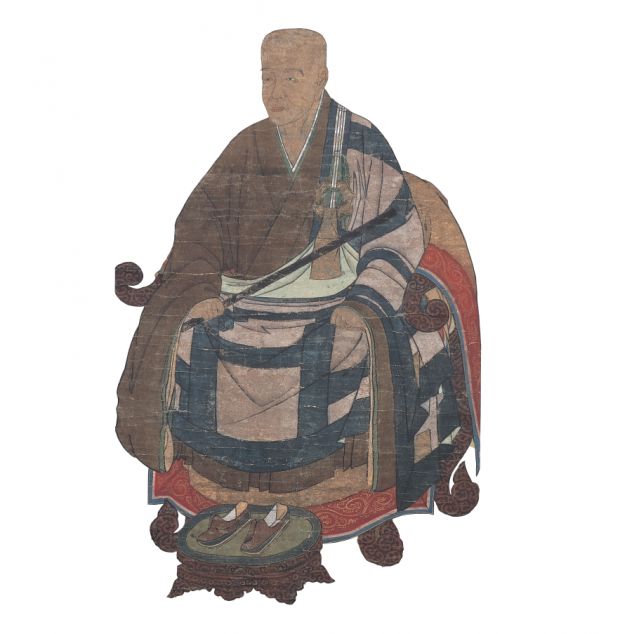
1141-1215. Founder of the Japanese Rinzai sect. Born in the house of a priest in Kichitsunomiya (Okayama Prefecture), she studied the Tendai Confucianism at the age of 14 and was persecuted at Hieizan Enryakuji Temple. He is an elite monk who has traveled twice in a row and receives the Linzai Soonglong dragon tradition at a study abroad destination. After returning to Japan, he begins to promulgate Zen, but receives pressure from the traditional sect. On the other hand, the political ability to seek asylum from the Kamakura Shogunate was demonstrated, expanding the power. He opened the Kotobuki-ji Temple, which marks the death of Gen Yoritomo in Kamakura, and opened the Ken-nin-ji Temple in Kyoto, to lay the foundation for the development of Rinzai. (Photo courtesy of Kenninji Ryosoin)
Founder "Dogen" of the Cao-Dong sect who lived strictly and strictly based on Zen
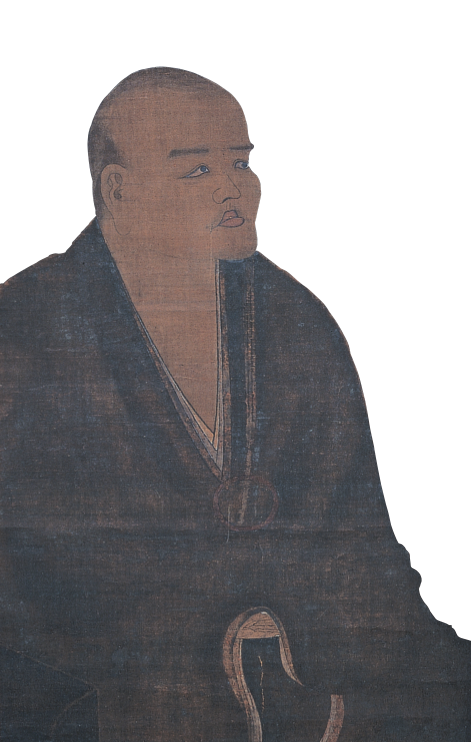
1200 to 1253. Founder of Nippon Sado Dojo. My father was an inner minister, Michichi Kuga, and my mother was a woman of Sekiraku Motobo. He climbs up Mt. Hiei at the age of 14 and gains under the Heavenly pedestal. After visiting Eisai, he studied at Kenninji Temple, then went to the shrine and returned to Japan following the law of Nyojyo in Soto. Opened Koshoji Temple, Japan's first specialized training school for Zen, and at age 45, founded Ehohei Dojo and Eikeiji Temple in Echizen (Fukui Prefecture). A strict character, in contrast to Sakaishi, kept the teachings of Rojo and never approached the Kamakura Shogunate. For example, Shobogenzou is the author of the book. (Photo courtesy of Hokeiji Temple)
Ichi's Ikichi-san actually is an anti-frame love law teacher "Ikkyu"
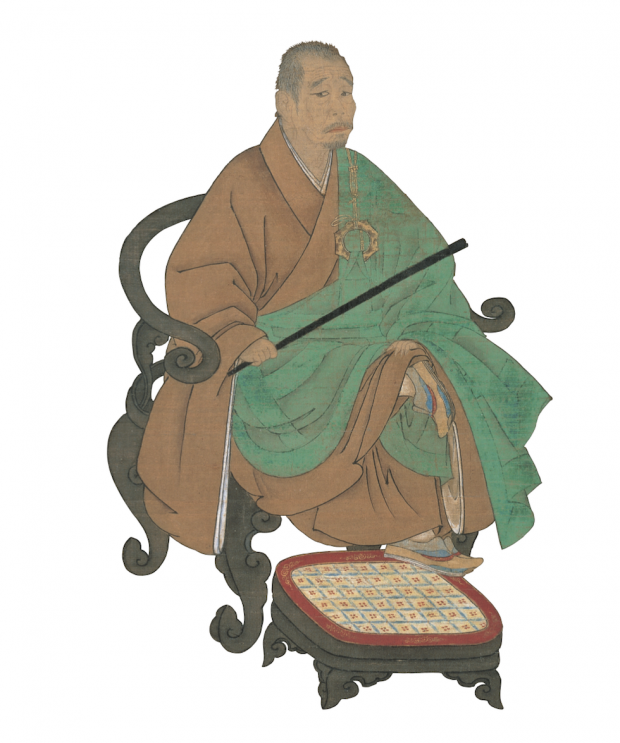
1394-1481. A priest of Rinzai. Born as a private child of Emperor Go Komatsu, the mother is Mr. Fujiwara in the south asia. At the age of six, she became a child of Angukuji and later studied under Chinese style. After being enlightened, I will live a life of cloud water without staying in a temple. At the age of 81, he became Daitoku-ji Sumo by Sakai, but Sumiyama did not. The free life style fascinates people over time, such as making a self-made "Kyokumo" and performing a female prisoner meat diet (Nyobon) while being a monk. Unsophisticated statements are legendary and give birth to "Ichikyu Satoshi". (Photo courtesy / Reciprocal rewards Ikuji Temple)
The high priest of the jade who came from China
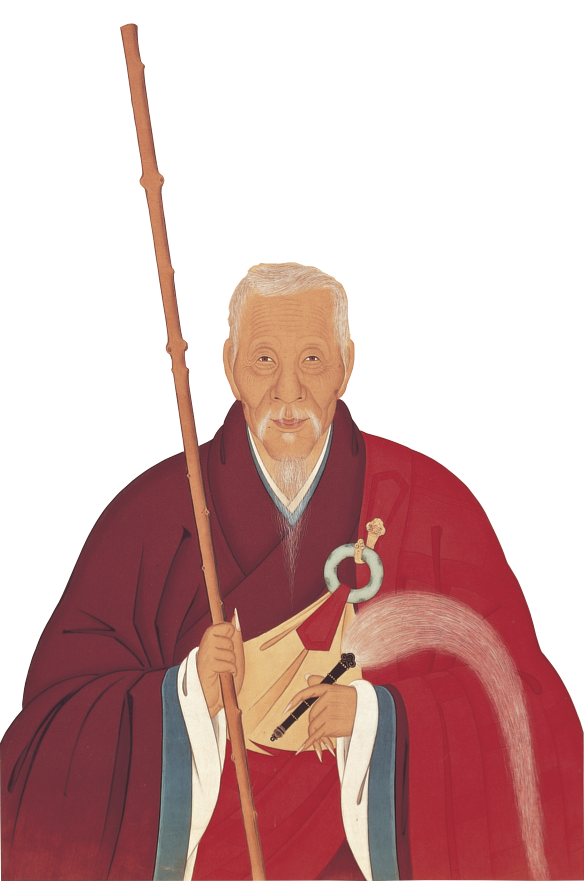
1592-1673. He is the founder of the Japanese twilight sect, a popularizer of Amo-bean. Born in Fuzhou (Fujian Province) in Ming, climbed Huangshan at the age of 29 and earned a good deal. He was a clerk at Huangfei Temple in China, but after the war of Ming, he came to Japan with 30 disciple when he was 63 years old. Meet Shogun Tokugawa Kazushi in Edo, and establish Ujisan Hakufu-ji Temple in Uji, and open the Hojo Zenk 檗. It was prosperous, such as the reign of the Emperor Gomizuo. It also contributes to the culture, such as promoting Chinese cuisine "Bucho cuisine" using oil and rice flour, and spreading senchado and calligraphy. (Photo courtesy of Shimofukuji Temple)
The painter "Hakuin" who contributed to the reorganization of Japan Rinzai
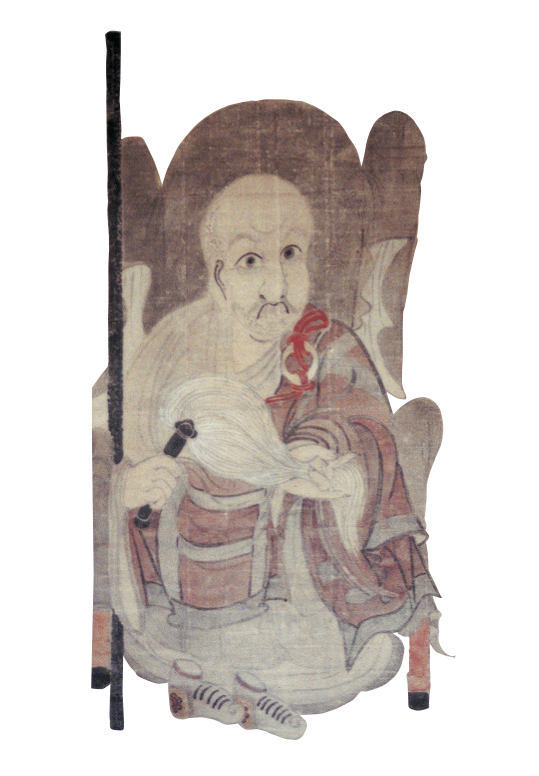
1685-1768. The ancestors of the early modern period Rinzai Sonakako. A person from Suruga Country (Shizuoka Prefecture). After leaving the house at the age of 15, he travels with his masters, and is given the essence of Zen by Shinshu Iiyama's full-fledged elderly man and opens enlightenment. After living in Matsubuchi Temple, he spread the teachings throughout the area, as well as writing, drawing, and other creative activities. The free-flowing calligraphy is especially famous. In addition, he worked on the reorganization of the Rinzai sect by devising new proposals such as "Sekishuonjo" and defining the focus of the study as the focus of the study. (Photo provided / Mishima City Board of Education)
A poet "Yoshihiro" who loves children and pierces nothing
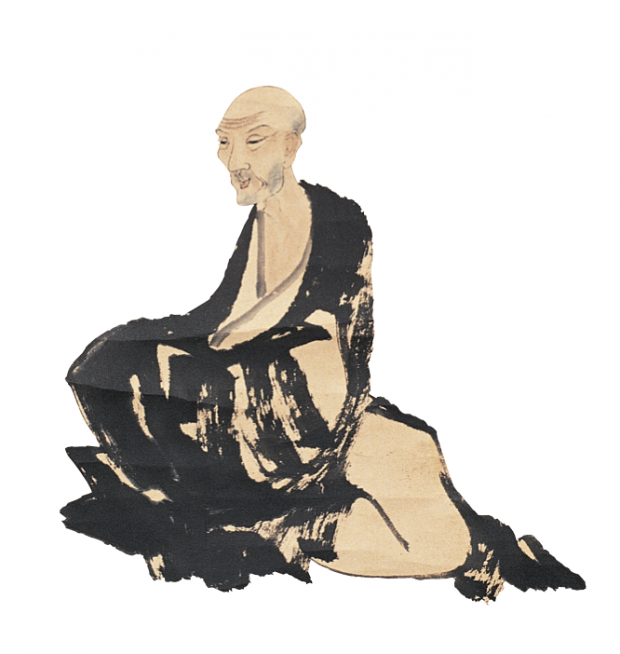
1558-1831. A monk and a poet from the late Edo period. Born in Echigo (Niigata Prefecture). He has been at home at the age of 18 and has been with Daishinkunsen for over 20 years. After the death of Kunisen, he returned to his country after the country pilgrimage, lived in Kusanagi, etc., and did not have a temple, and lived a life of nobility in a pot. The figure that loves children and plays with them in undressing is also considered odd. He is also a family of calligraphers, and has excellent talents in Chinese poetry and Waka. There is a song book "Lotus Dew" edited by the disciple's 貞. (Photo courtesy / Yoshikan Memorial Hall)
The Evangelist of Japan
Outside of Japan, "DAISETSU SUZUKI", Daisuke Suzuki is probably the first person who seems to go up first when asked "What is the name of the person who comes to mind thinking about ZEN?"
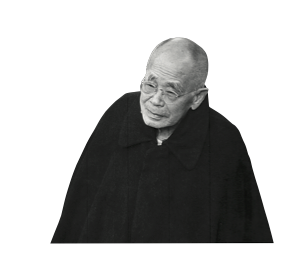
While studying for Tokyo Imperial University, Otsune, who studied Zen under the shakusouen of Kamakura and Engakuji, went to the United States at the end of the 19th century. As an assistant to the philosopher Paul Kerus who published the thought magazine, he will be involved in the editing of magazines related to oriental philosophy and Buddhism. He concentrated on the English translation of Zen books and introduced Buddhism and Oriental thought to the world. Among other things, the translation of "the theory of Osamu Osamu" and his work such as "Introduction to Buddhism" is highly regarded.
During my research life, I met Beatrice, an American woman who will be my future mate. She studied at Columbia University. The two who deepened their friendship through research on the bream raised a wedding ceremony at the Yokohama consulate after returning home to Daegu. Staying for eight years after World War II. He teaches lectures on Buddhist philosophy and Zen thought at Harvard University and Princeton University. These various activities triggered the so-called "ZEN" boom. His huge collection of books is now stored in the Matsugaoka Bunko, which was established in Kita Kamakura and Tokeiji Temple.
◆ Daisuke Suzuki
1870-1966. Buddhist philosopher. I am from Kanazawa City, Ishikawa Prefecture. Proceed to Tokyo Technical College and Tokyo Imperial University Elective Course. Imagawa Hongkawa and a member of the Buddha practice, received the issue of "Daegu". Even after returning from the United States, he holds a teacher to preach Zen. The friendship with philosopher Nishida Kitaro in the same year lasted for the rest of his life. (Photo provided / Matsugaoka Bunko)