













In Nishijin, which flourished as a textile town from the ancient times of Heian, there are still many Kyomachiya houses with beautiful lattice doors. In such a "town house town", I have experienced that alley town house of this street. We introduce recommended townhouses that can meet the usual beauty of Kyoto, which is different from scenic spots and shrines and temples.
Machiya is fun! A tour of the town houses soaking in Kyoto's architectural culture
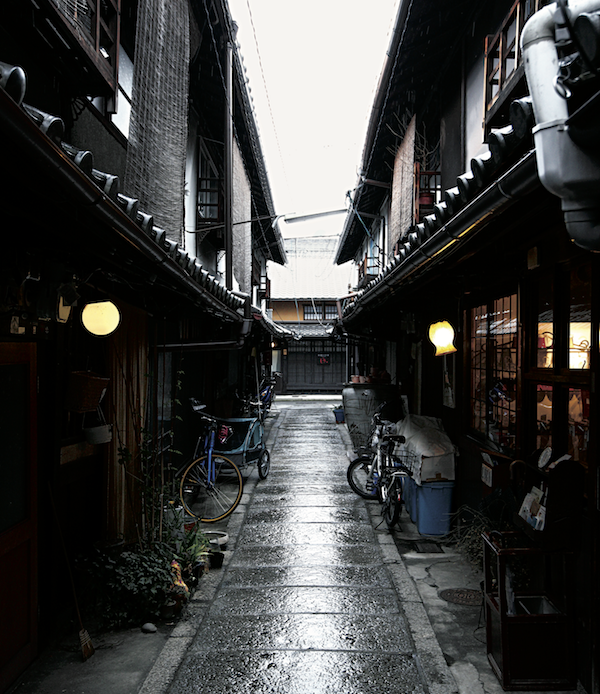 Nishijin, Mikami-keshi in Monoya-cho. A ladder is a small alley. The Mikami, who used to run a textile trader in this area, is protecting this alley now. A longhouse townhouse along the alleys used to be a residence for textile craftsmen.
Beautiful townhouse architecture with delicate grid doors and dull tiled roofs. Above all, the “professional-inclusive type” Kyomachiya where merchants and ordinary people live is packed with the wisdom and aesthetics of Kyoto people who are beautiful geniuses. The town of Nishinojin is a textile town where many such Kyomachi houses remain. Take a walk in this town with the three basics ( "Know at the townhouse, buy at the townhouse, eat at the townhouse" ).
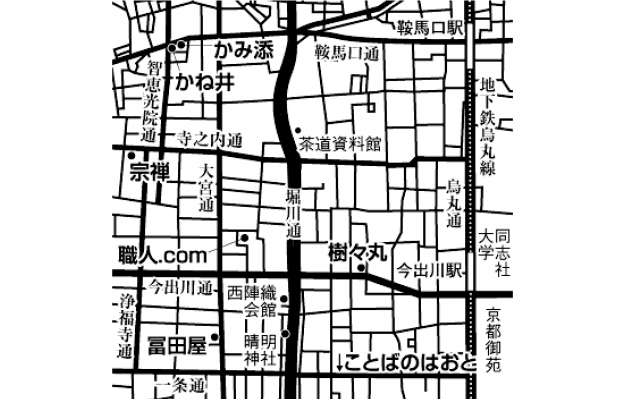
To introduce this time ...
・Nishijin Living Art Museum "Shibataya"
・Hidden famous store "craftsman. Com"
・90-year-old store and workshop "Kamiso"
・Hand-made soba noodle shop "Kanai"
・3 cafes and shops that have renovated Kyomachiya
Know the townhouses Visit the Kyomachiya house of the Nishijin Living Museum "Shibataya" cultural property
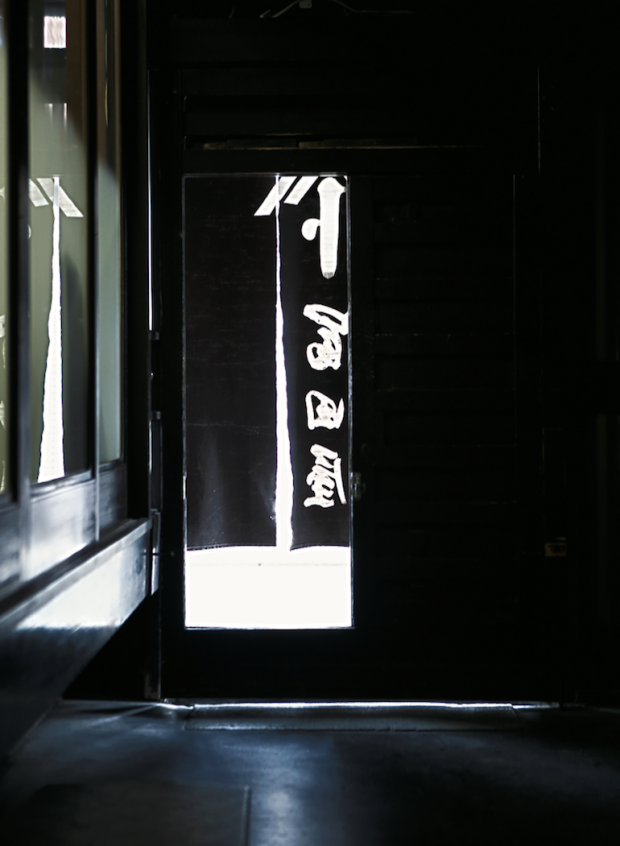
Imadegawa Omiya, now the center of Nishijin, was once called "Senryogaji" and is a town where 1,000 silks moved in a day. Shibataya is a long-established store clothing retailer built around this area in 1869. It is designated as a registered tangible cultural property of the country in 1999 as a cultural asset that conveys the Meiji Period "making the front" (the making of the front) made of stores and houses, and families are still in the residential part I live.
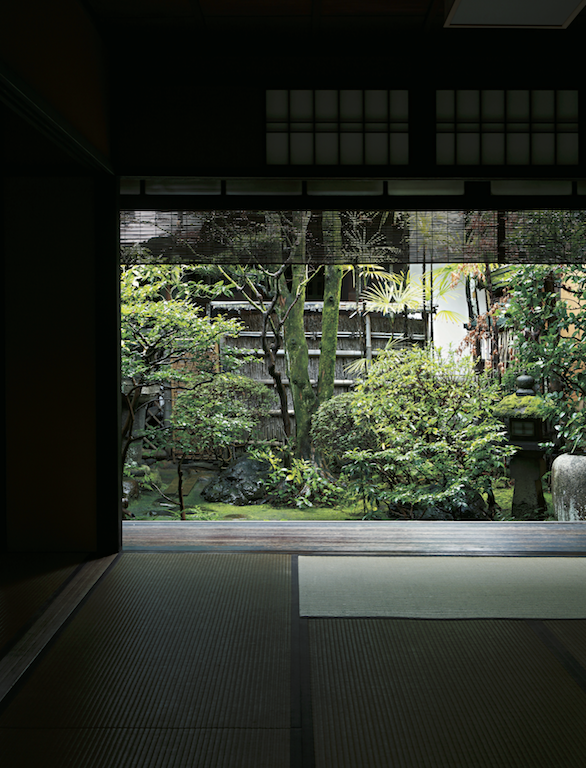 Long-established store clothing store "Shuta-ya" of Nishijin, Senrigagan. Opened the “Nishijin Living Museum of Art” as a one-man-in-one type Kyomachiya built in 1887. See the green garden wet from the parlor of the store part called "Mise".
Speaking of Kyomachiya, it is typical that it has a narrow front door and a deep interior, the “Eel's Sleeping Bed” format, but in the case of a large store (Oda), there is a style “Otoya-zo” that connects the store and the back residence building with a garden. Many were seen. Here you can see the Kyoto-machiya of the front house. "Machiya is an architecture that conveys culture and wisdom," says Ms. Tanaka, the 13th owner. While guiding the building, he taught me about the lifestyle and seasonal events in the Kyomachiya.
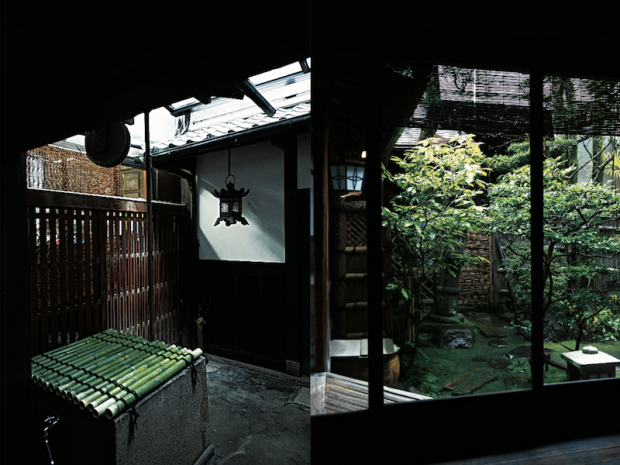 Left / Well, used for pouring water. Right / Shibataya has a total of six gardens, so you can see nature wherever you are indoors.
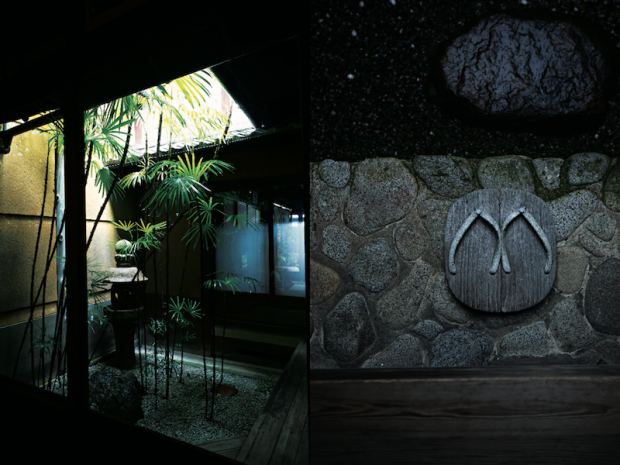 Tsubiwaya where left / Shibuchichi (shurochiku) and stone crab (Ishirou) were arranged. Right / Tsubiwa's dew basement.
"There are six gardens in this house. By arranging a small garden in each place, you are taking in light and wind to every corner of a long, thin and dim indoor space. That creates an air flow, and the wind flows from garden to garden. It is a device to carry cool indoors. "(Mr. Tanaka)
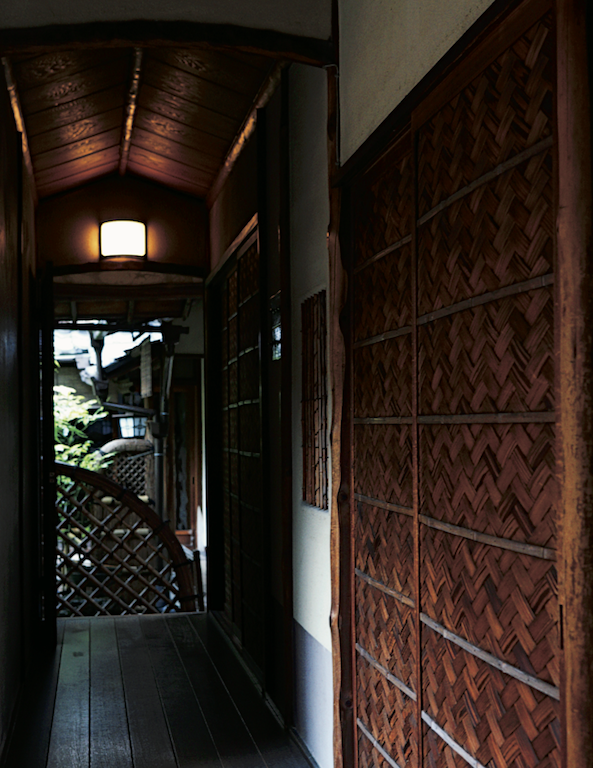 Corridor leading to away. The floorboard is 10m in length, red pine, and the ceiling is shaped like a house-shaped rattan.
Furthermore, when you head to the corridor that leads to "away", the ceiling is in the form of a haunted house! I heard that it was designed with the image to be taken to a special space by riding a boat, and the floorboard is Akamatsu 10m in length. I'm surprised at the seamlessness.
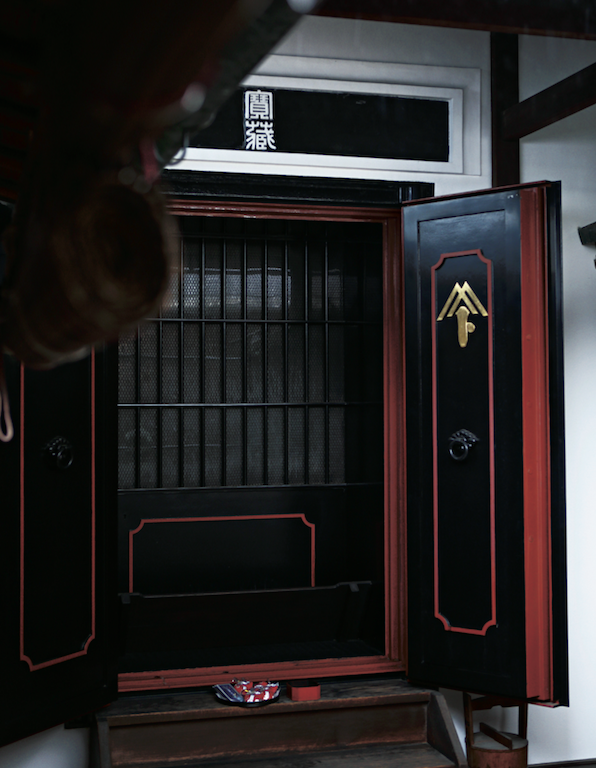 A lacquered "Tatara no Kura" where God sings. Mr. Tanaka says, "The sense of living with God is the starting point of a beautiful life."
"I'm the 10th generation Shibataya who built this house, I heard that they went into the mountain and chose wood to use in the corridors and floor columns. Those" Pins of the West "kept the culture of Kyoto through townhouses, It has been sent out "(Mr. Tanaka)
◆ Shibataya Address Kyoto-shi, Kyoto-ku, Omiya, 1 Jojo
Tel 0754326701
Business hours from 10:00 to 17:00 ※ Reservation system regular holiday no day ※ Basic plan (course on town house visit + course to learn Kyoto rules) 2,000 yen. There are options such as tea ceremony experience and kimono experience.
Official site
Buy at Japan's townhouse Buy Japanese handicrafts at the hidden shop "Craftsman.com"
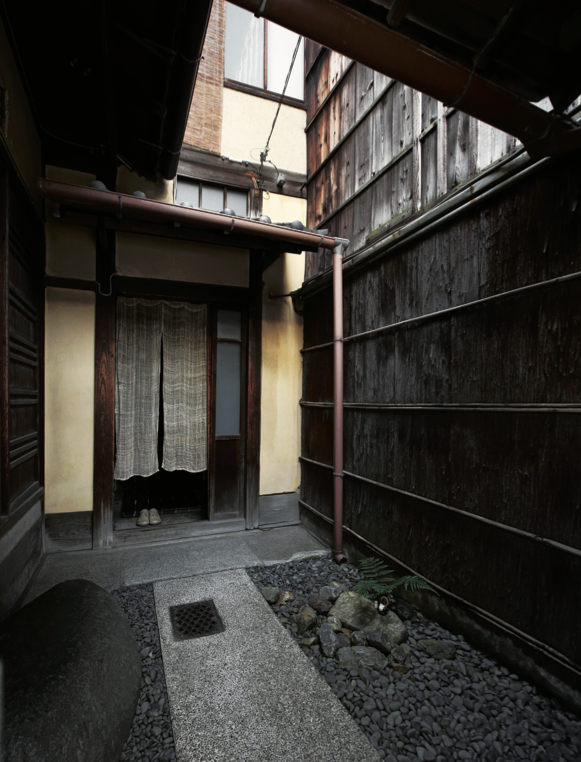
Southern iron pans and cast iron cutlery, Kishu's scallops, and colorful pieces of Nagasaki and Hasami Yaki (scissors). This is an online shop that finds and sells beautiful tools created by artisans from all over Japan. I have made two 90-year-old neighboring Kyoto-machiyas into a showroom / dwelling house with almost no renovation.
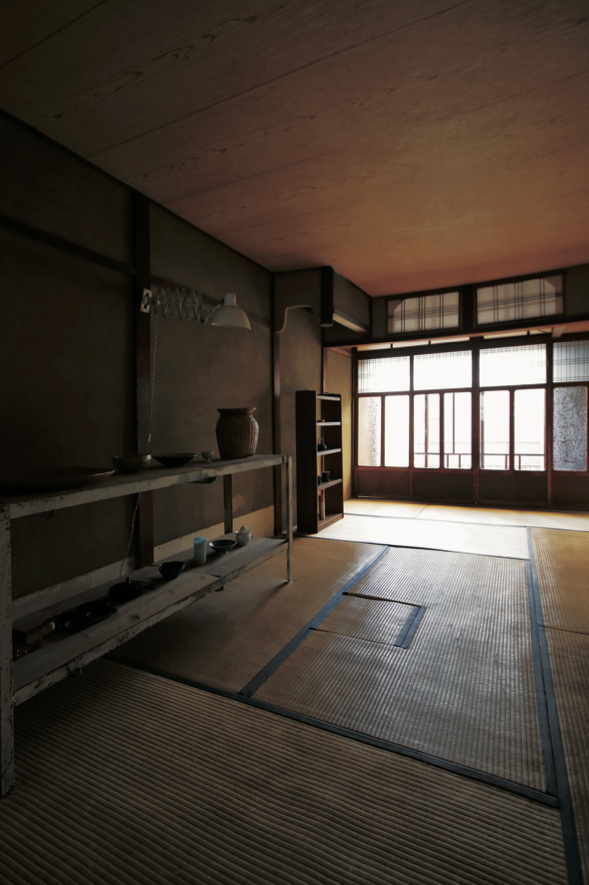
A few minutes can be found in the space where the margin was spacious and spacious. It returned to me by the person full of architectural love that "I love the sense of beauty that beauty stands out by pulling down of Japanese architecture" by the owner, Shinya Sakurai. Certainly, the fresh and simple beauty of this space may lead to the beauty of the tea room. Also, the reason that all the hand-held tools in front of you look attractive seems to be the "living space" in which the townhouse should use those tools.
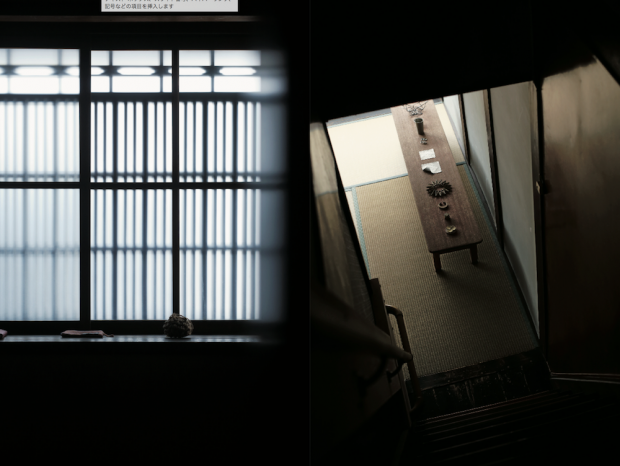 Products from the online shop "Craftsman.com" handling Japanese handicrafts are lined up. The townhouses are beautiful in detail, such as the walls of the entrance garden covered with cedar skins, and the lattice windows that convey the signs of the street.
"The thinker Yanagimuneyoshi said," The private house is a folk song in the building. "The townhouse is also a collection of natural materials and traditional craftsmen. The townhouse itself is a big folk song "I think" (Mr. Sakurai)
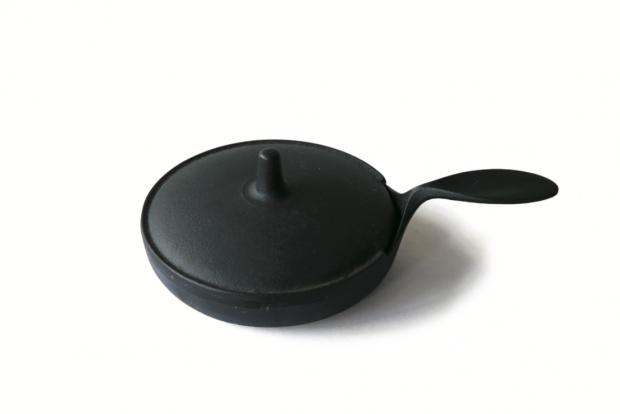 Southern iron masterpiece. "Mini bread with land sign Ogasawara". For fried eggs and hot cakes. Diameter 14.5cm, total length 23cm 6,000 yen.
◆ artisans. Com
Address 795-2 Fujikicho, Kamigyo-ku, Kyoto City
Tel 0754150023 ( 9am to 6pm excluding Saturdays, Sundays, and holidays)
Business days / hours Open only on Tuesdays, Wednesdays and Thursdays from 14:00 to 17:00 (except holidays, Golden Week, Obon, and New Year holidays).
Official site
A 90-year-old shop-and-workshop “Kamisoe” handcrafted paper stationery for souvenirs
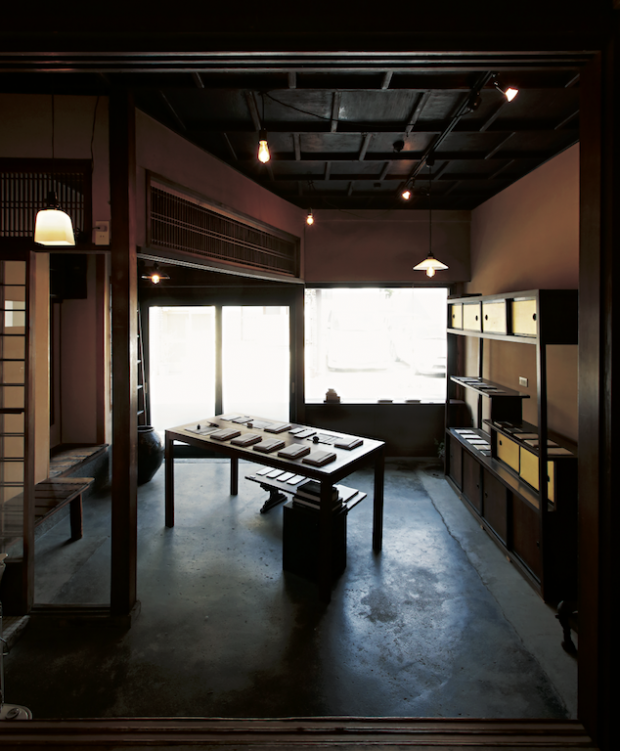
The landscape with latticed doors in the center of Nishijin is also good, but if you walk close to Shishino, the appearance of the townhouse will also change. Aim at Kuramaguchi Dori (Kuramaguchi Dori), it is a good view that buildings with various expressions line up along the street about 50m. Soba noodle shop "Kanai" which renovated rice store and cafe "Surasaki Nishijin" which renovated public bath. Next to it is "Camizo", a renovated old barber shop.
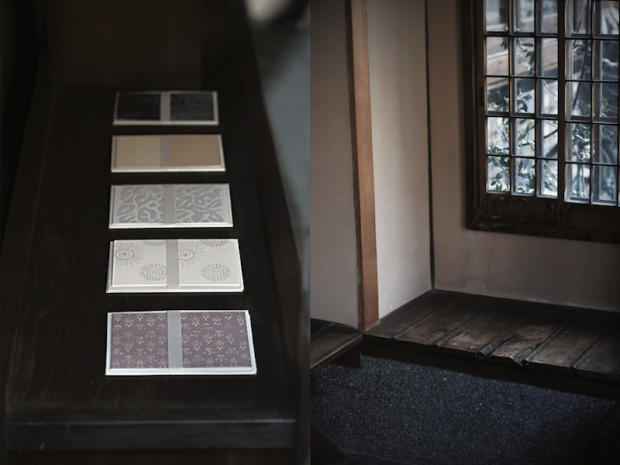
"Kamiso" is a workshop and shop by Hiroshi Kado, a craftsman who creates hand-painted paper using embossing techniques. There is a large space with a sitting area and a white tiled water area, and if you look up, you will find a glacial ceiling in the diagonal column. We use the design of a rare townhouse where there are architects who come to visit from overseas. Kado-san put his hand in the wall with a beautiful paper, and the front door with glass to overlook the street.
"I feel that it has been a building loved by my neighbors for a long time," says Kaido-san, who worked as a graphic designer in the United States and then studied at a long-established Japanese paper studio in Kyoto. We dye Japanese paper with pepper powder and use mica powder to emboss it with woodblocks.
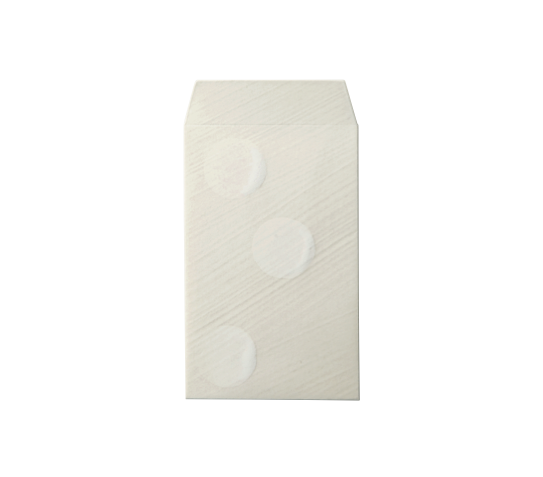 One by one, hand-paste, and hand-paste a paper bag. Three pieces of the same pattern 1,000 yen.
"Because there are Daitokuji Temple in the north and Urasen House Hall in the east, people with high cultural awareness such as temples, teachers of tea, craftsmen of textiles are walking around. It is a place where such people gather." Mr. Nishijin is deep because some people go to a public bath with a bath tub if they think about it. I got a poti bag with a white pigment on white washi paper.
◆ Kamizoe address 11-1 Kitano-ku, Kyoto Shino Higashi-Fujimori-cho
Tel 0754328555
Business hours from 12 o'clock to 18 o'clock Regular holiday Mon.
Official site
Eating in a townhouse A heart-warming Kyomachiya with hand-made buckwheat noodles "Kanai"
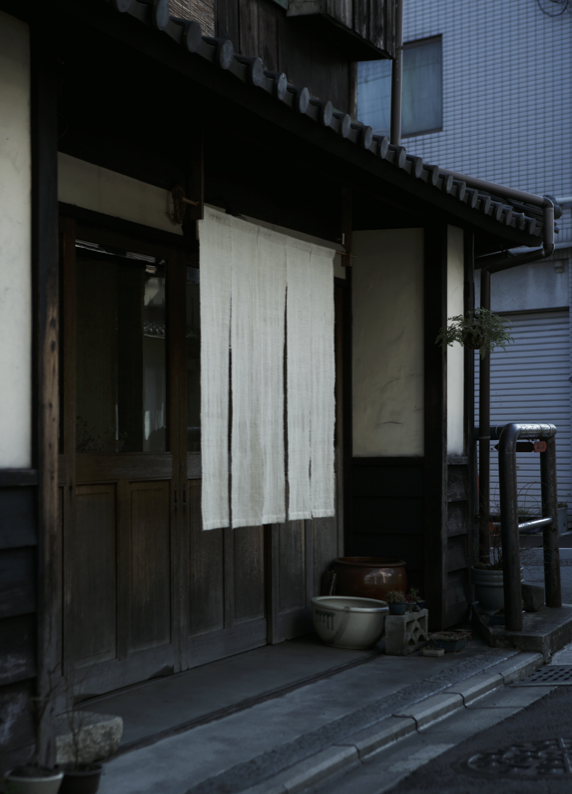
"Kanai" is a soba restaurant opened by a shopkeeper renovating a 90-year-old townhouse with a carpenter. As you take off your shoes, sit on a cushion and wait for your soba, you will see the face of a townhouse you haven't noticed before.
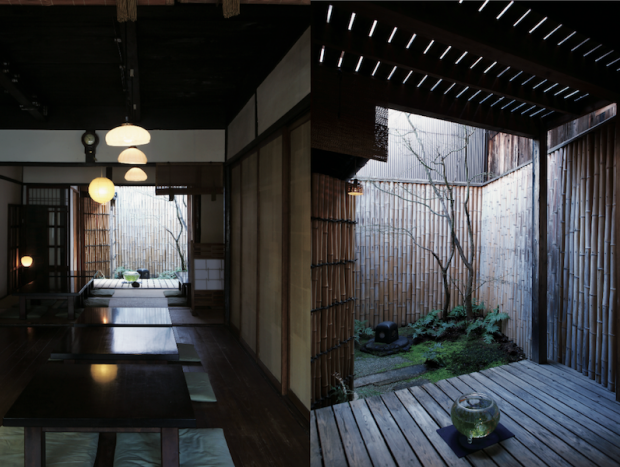
Wooden pillars to wooden beams (beams). Earthen wall and plastered wall. Bamboo, washi paper and tatami mats ... All of them are getting old with nice salted plums. Not only do they use natural materials abundantly, but they continue to live as living spaces, so the way of ripening trees is different, after all. The taste of buckwheat noodles in a sense of moderate tension and a feeling of relaxation like a friend's house. It will be an unforgettable memory.
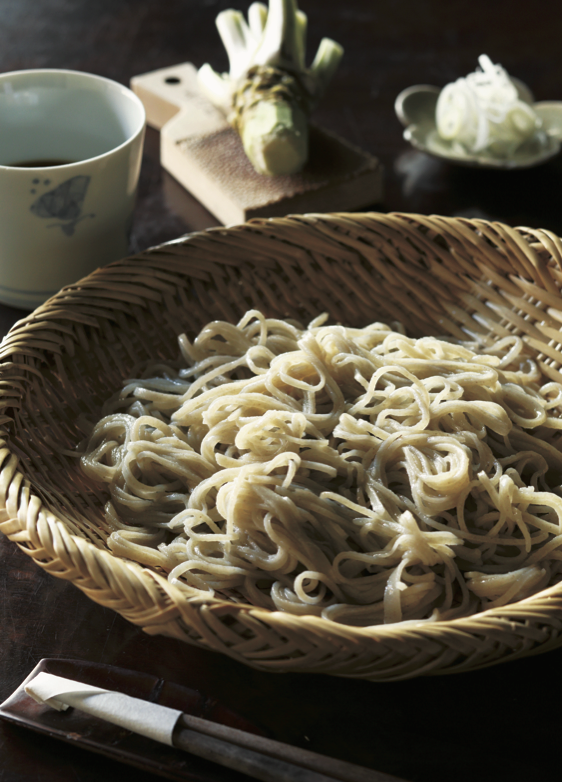
Here, Mr. Toshio Kanai, who is the shop owner, uses domestically produced buckwheat flour in a mortar to make home-made flour and hand-beats it at 10%. Good smell and good taste. I want to eat side by side. Tsuyu and soba hot water are also excellent.
◆ Kanei Address 11-1 Kitano-ku, Kyoto Shino Higashi-Fujimori-cho
Tel 0754418283
Business hours from 11:30 to 14:30, from 17 to 19 pm ※ Closed as soon as it is sold day or night. If the oats are sold out at noon, the night is closed. Because it is a popular store, it is safe to check by phone in advance on the day. Reservation is not possible.
Regular holiday Monday (Tuesday for public holidays, with temporary closure)
Just a short walk ... 3 nice cafes and shops that have been converted from the townhouses
Nishijin has many cafes and shops that have renovated Kyomachiya. From that, I chose a quiet space where adults can enjoy slowly. All three houses and stores by a shopkeeper with a love for the townhouse. It is cozy and warm.
1 "Kei Nishijin Confectionery Soshu"
The fine arts hail that Kyoto boasts is a specialty. Store & cafe which renovated Obi-ya
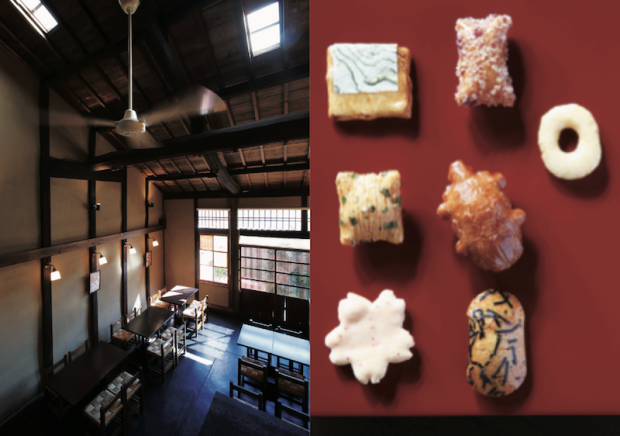
The townhouse of "Oriya-ken" is a textile studio that has an open space between the back of the house and a textile studio. A 130-year-old renovated woven storehouse, “Songsu” is a long-established confectionery who can create “Sophisticated Arale (Adoration of patterns and Ale baked in a beautiful shape)” that can no longer be seen.
◆ Kyonishijin Kasakuchi Somochi Address Kyoto City, Kamigyo-ku, Kyoto, Teranouchi Street Jofukuji East Corner Nakajima Kumacho 310-2
Tel 0754176670
Business hours from 10 o'clock to 18 o'clock (the teahouse is 10:30 o'clock to 16:30 o'clock)
Regular holiday Mon-Tue (Open on public holidays)
Official site
2 "Hijimaru"
A botanical shop in town with a tasteful taste of cute wildflowers in the garden
A good-looking plant store mainly for wildflowers, succulents and cacti. Suggestions combined with the original vases. The shopkeeper, who is attracted by the craftsmanship that remains in the townhouse, such as the details of the lattice and the finishing of the columns, carefully teaches how to grow plants.
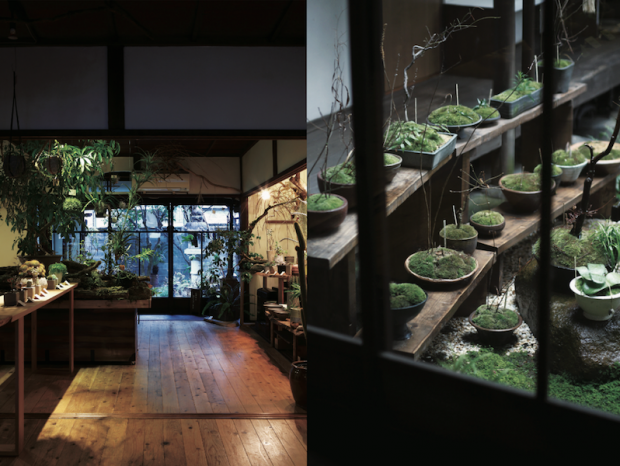
◆ Kimaru address Ikenagawa-dori Ogawa, Kamikyo-ku, Kyoto City 301-1 North Kaneyasucho
Tel 0754328607
Business hours from Tuesday to Friday from 12:00 to 16:00, Sat, Sunday from 12:00 to 19:00 Regular holiday Monday regular holiday, temporary holiday available
Official site
3 "Old books and teahouses-Word of Habits"
Novels, cat books, girl manga ... a townhouse cafe where you can read
Here you can enjoy old books and tea in a 150-year-old townhouse with a garden. Old books that can be read freely, from novels and essays, to architecture, cats, railways, manga and so on. The conversation is quiet as it is a cafe that enjoys reading.
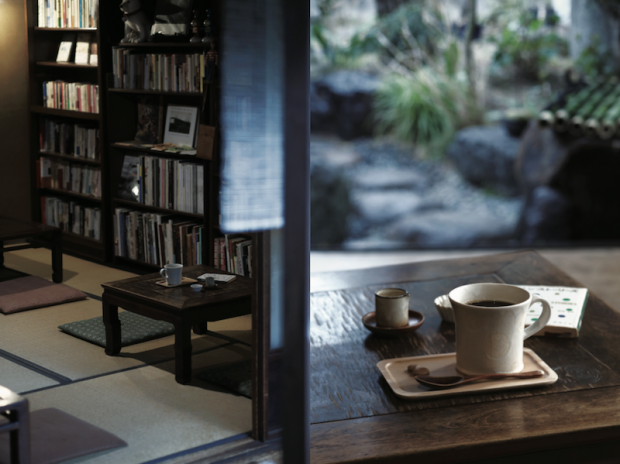
◆ Old book and tea room Word of Hato Address Address 34
Tel 0754142050
Business hours from 11:30 to 19:00 (18:30 LO)
Regular holiday Mon-Tue
Official site
I want to read together
・Recommended for day trip sightseeing in Kyoto! Funa course where you can enjoy Hino in 3 hours
・We walk Nanzenji in 3 hours! Recommended route from Kinji-in to the water channel
・We discover pretty souvenirs at the long-established store in Kyoto Gion! Half day course to walk around

Wadon web editorial department. My motto is "I'm seriously stupid", and I am having fun with all sorts of dread and fun every day. https://note.mu/warakumagazine