





First, refuel with local river fish
‘Chie no Umi Kinugawa Hachifuse’ at Kinu River, Tochigi (栃木) prefecture
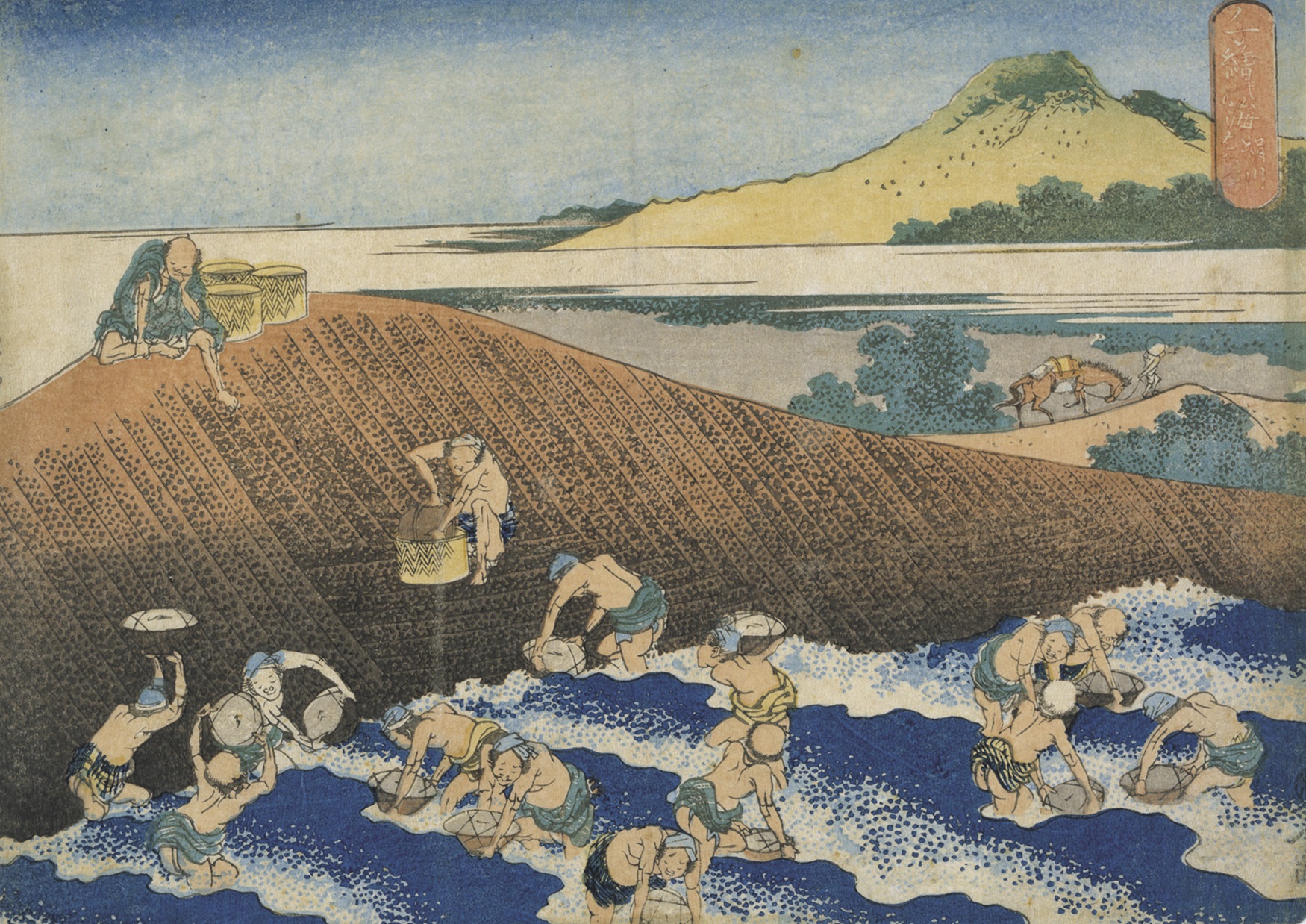
This print depicts a scene of shallow-water fishing on the Kinugawa (鬼怒川) River, which flows along the border of Shimosa (下総) Province (now northern Chiba Prefecture) and Hitachi (常陸) Province (now southwestern Ibaraki Prefecture). The animated
poses of each fisherman, combined with the landscape, create a stunning scene, while the people watching and the horse handler add a sense of peacefulness.
A break at Edo’s best view of Mount Fuji
‘Fugaku Sanjurokkei Edo Suruga-cho Mitsui Mise Ryakuzu’ @ Nihonbashi Muromachi, Tokyo
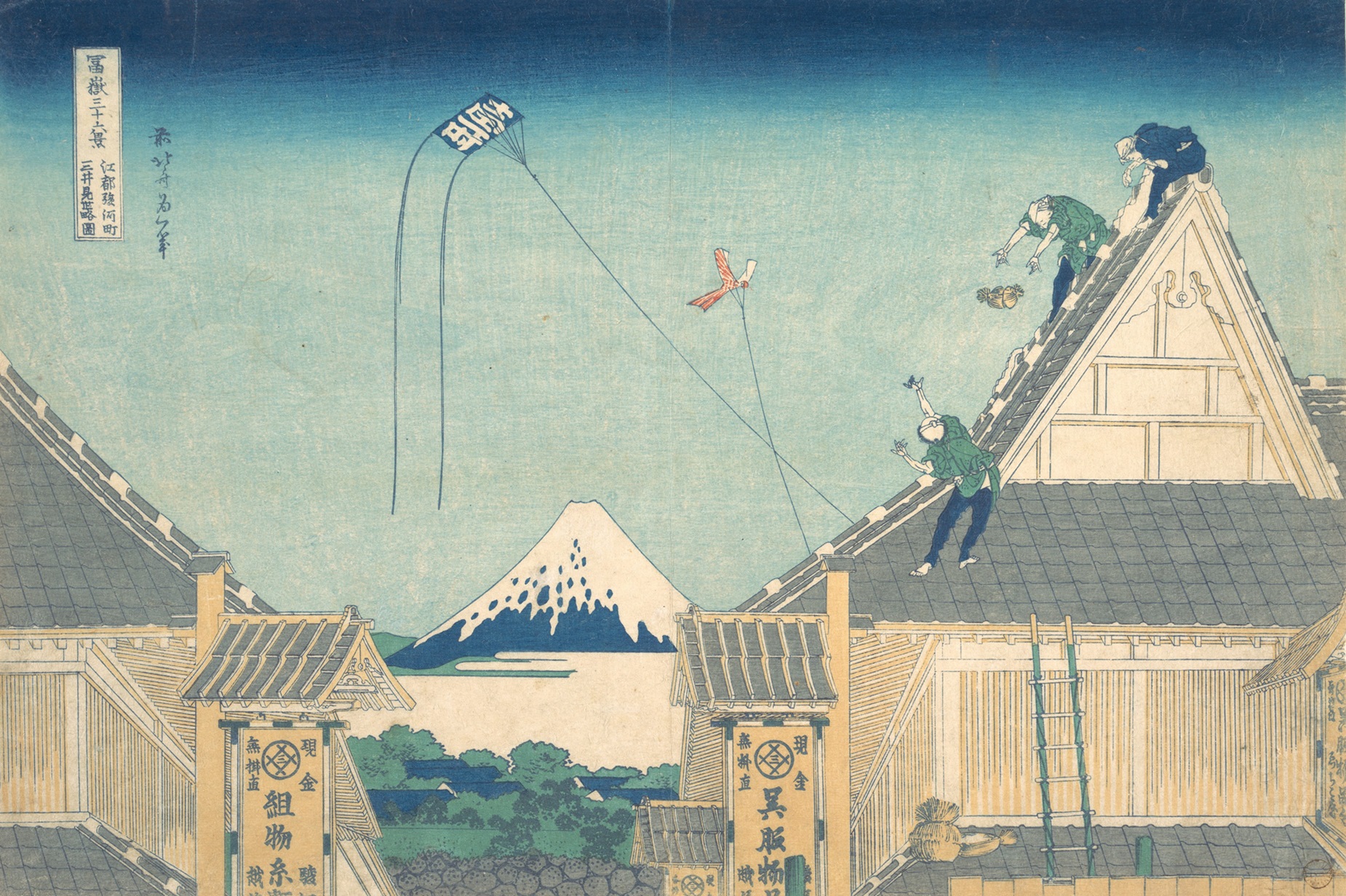
This poetic composition links Mount Fuji, roofs, and the diagonal lines of kite strings. It depicts Mount Fuji during the New Year from the perspective of looking up at the roof of the Mitsui Echigoya (三井越後屋) kimono (着物) store (the predecessor of the Mitsukoshi department store). Suruga-cho (駿河町) is the area around modern-day Nihonbashi Muromachi (日本橋室町). While it’s hard to imagine now, it was one of the best spots in Edo for viewing Mount Fuji. The term ‘Ryakuzu (略図)’ (abbreviated view) in the title is believed to mean that the Edo Castle was omitted or only partially depicted.
Getting sidetracked and making slow progress…
‘Ehon Sumidagawa Ryogan Ichiran’ at Takanawa, Tokyo
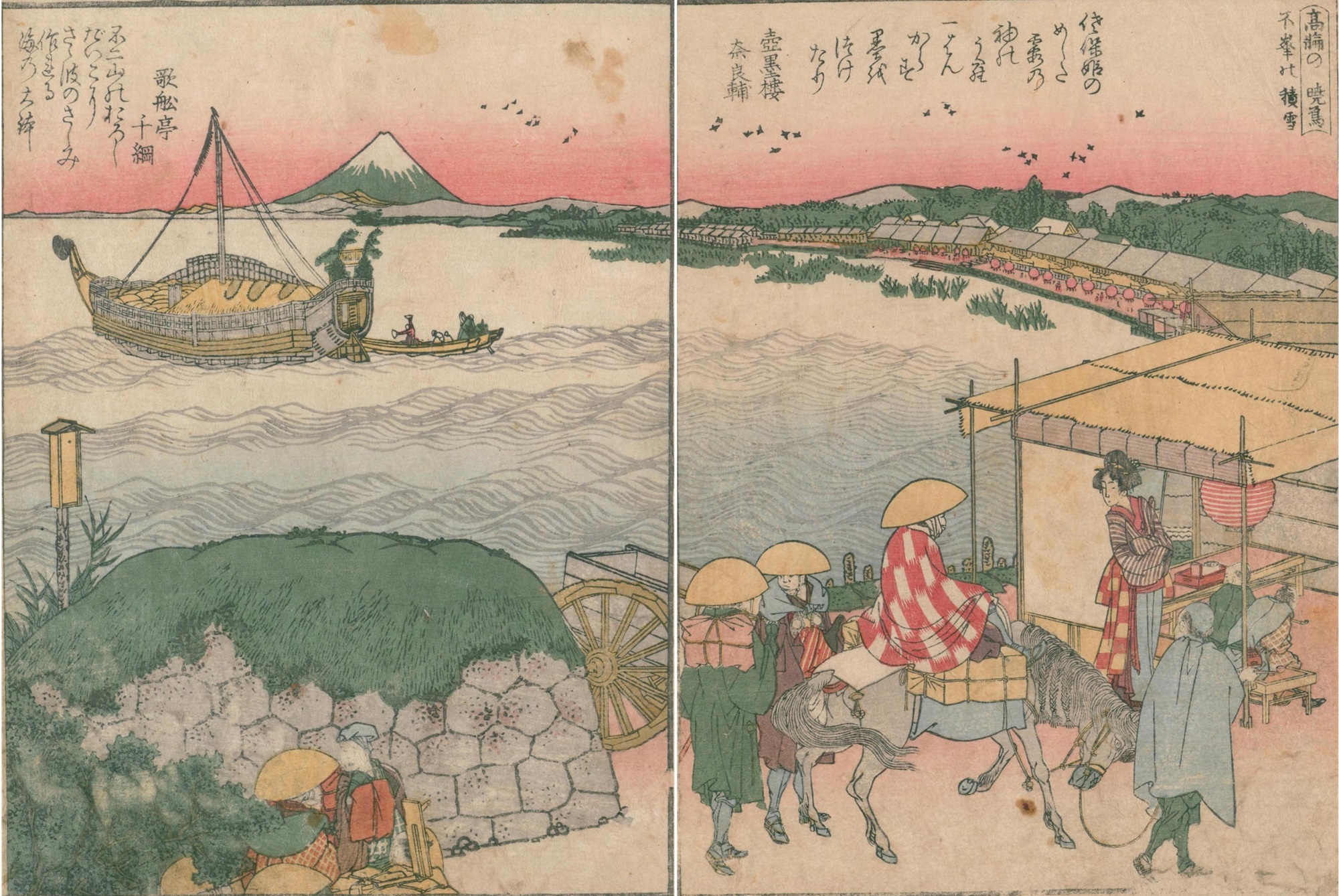
This work traces the scenery on both banks of the Sumida (隅田) River as one travels upstream: the first volume from Takanawa (高輪), the middle volume from Ryogoku (両国), and the final volume from Sensoji (浅草寺) Temple to Shin-Yoshiwara (新吉原). In addition to the scenes of Edo, it also captures the changing seasons from the start of the year to the end. This work is considered one of Hokusai’s four great landscape collections, alongside titles like ‘Toto Meisho Ichiran (東都名所一覧)’ (List of Famous Views in the Eastern Capital).
A quick leap to a view of Mount Fuji!
‘Fugaku Sanjurokkei Kanagawa Oki Nami Ura’ at Sagami Bay, Kanagawa Prefecture
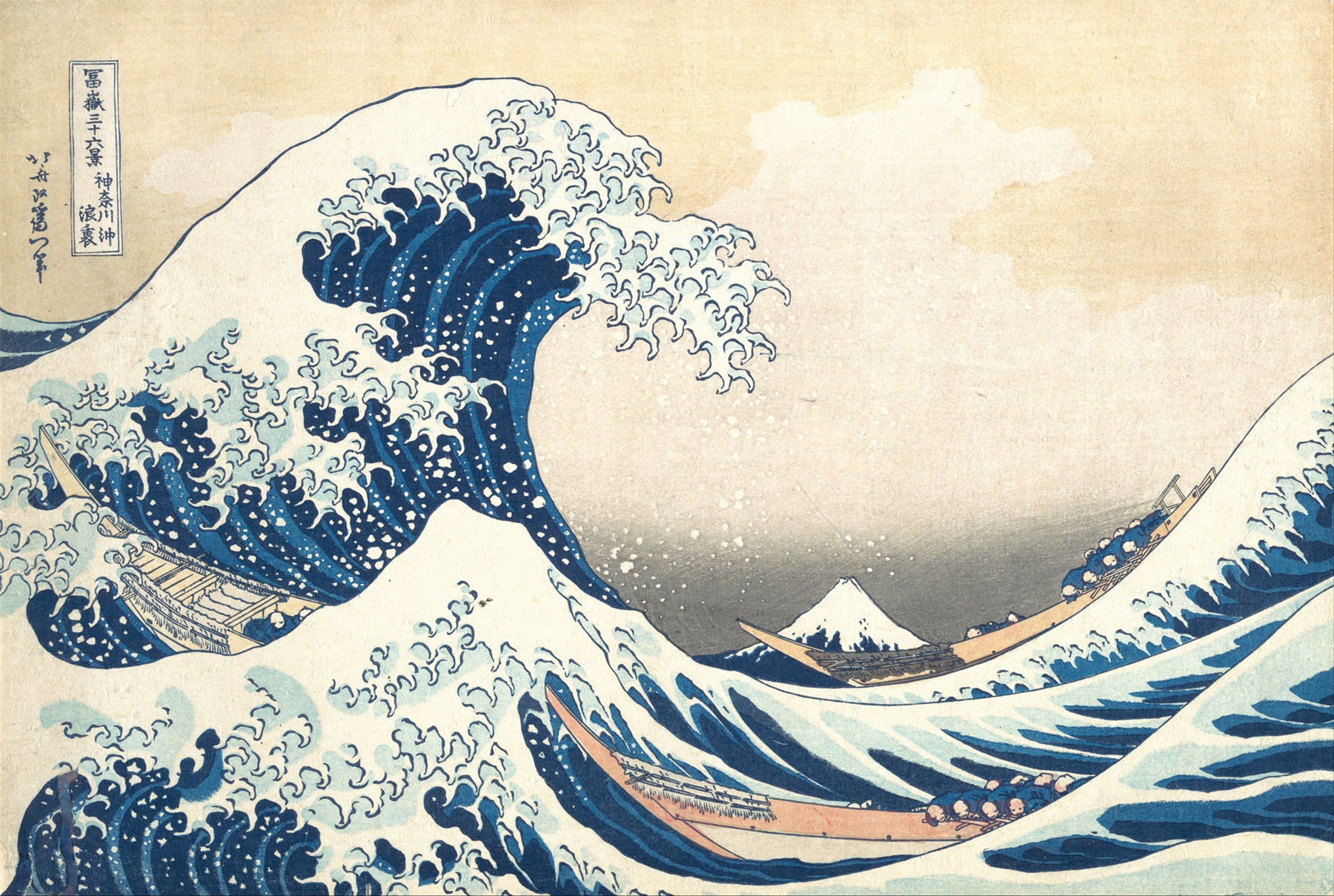
This is one of the most globally recognised Japanese prints and is popular both in Japan and Globally. The great wave is poised to engulf oshiokuribune (押送船), small boats used to transport fresh fish to Edo. The dramatic movement of the gigantic wave and the small boats is contrasted with the static stillness of Mount Fuji, watching from a distance.
Climbing Mount Fuji at a snail’s pace
‘Fugaku Sanjurokkei Shonin Tozan’ at Mount Fuji, Shizuoka Prefecture
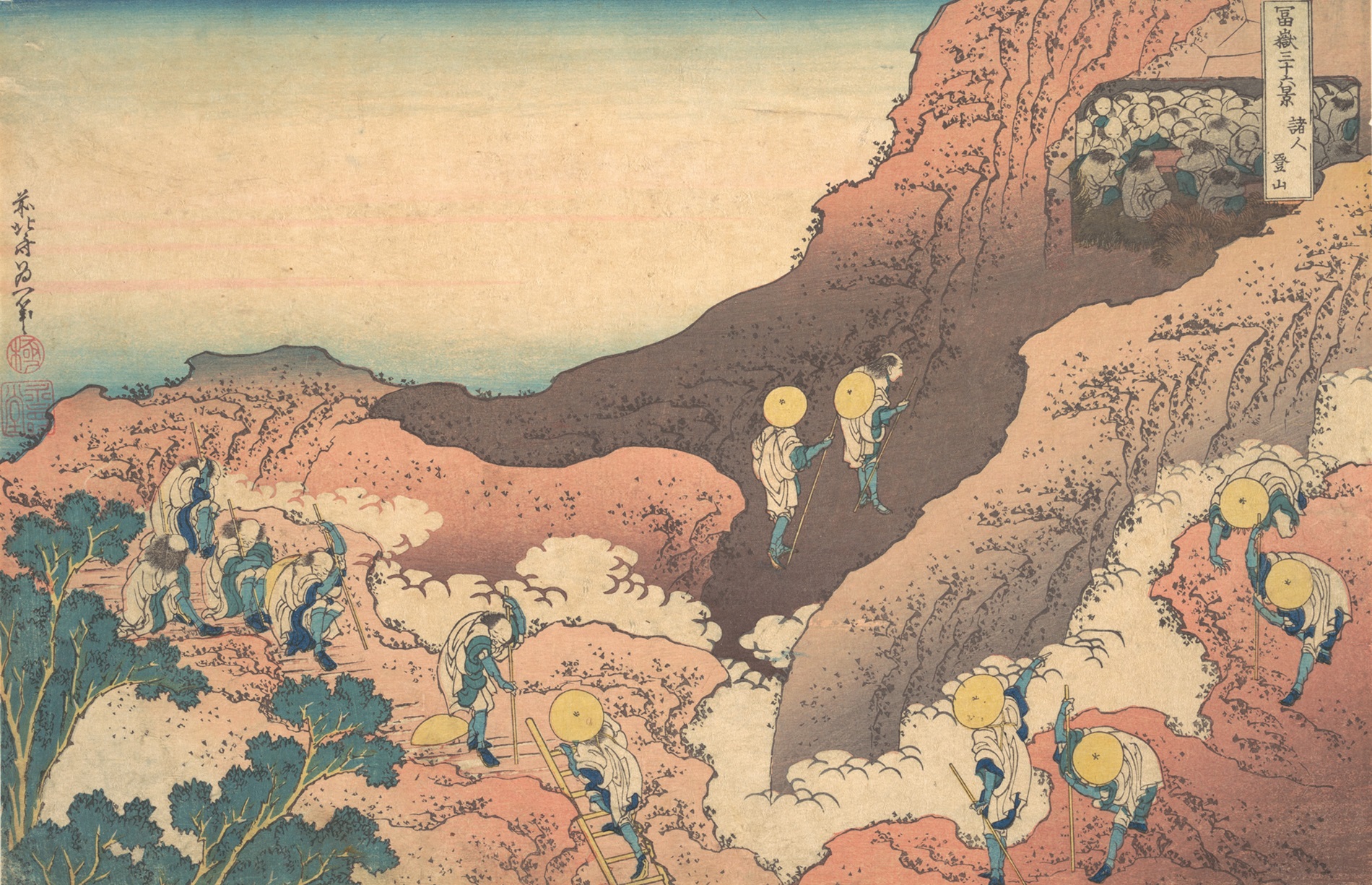
Mount Fuji has been an object of worship for a long time, but during the Tenpo (天保) era, Fuji-ko (富士講, Fuji pilgrimage associations) became extremely popular among the common people of Edo. This print, which depicts pilgrims ascending Mount Fuji, is the only one of the 46 prints in ‘Fugaku Sanjurokkei’ that does not show the full panorama of the mountain. The line of jagged rocks and rising white clouds creates a stunning landscape.
Hurrying on, but with a heavy heart
‘Fugaku Sanjurokkei Koshu Misaka Suimen’ at Lake Kawaguchi, Yamanashi Prefecture
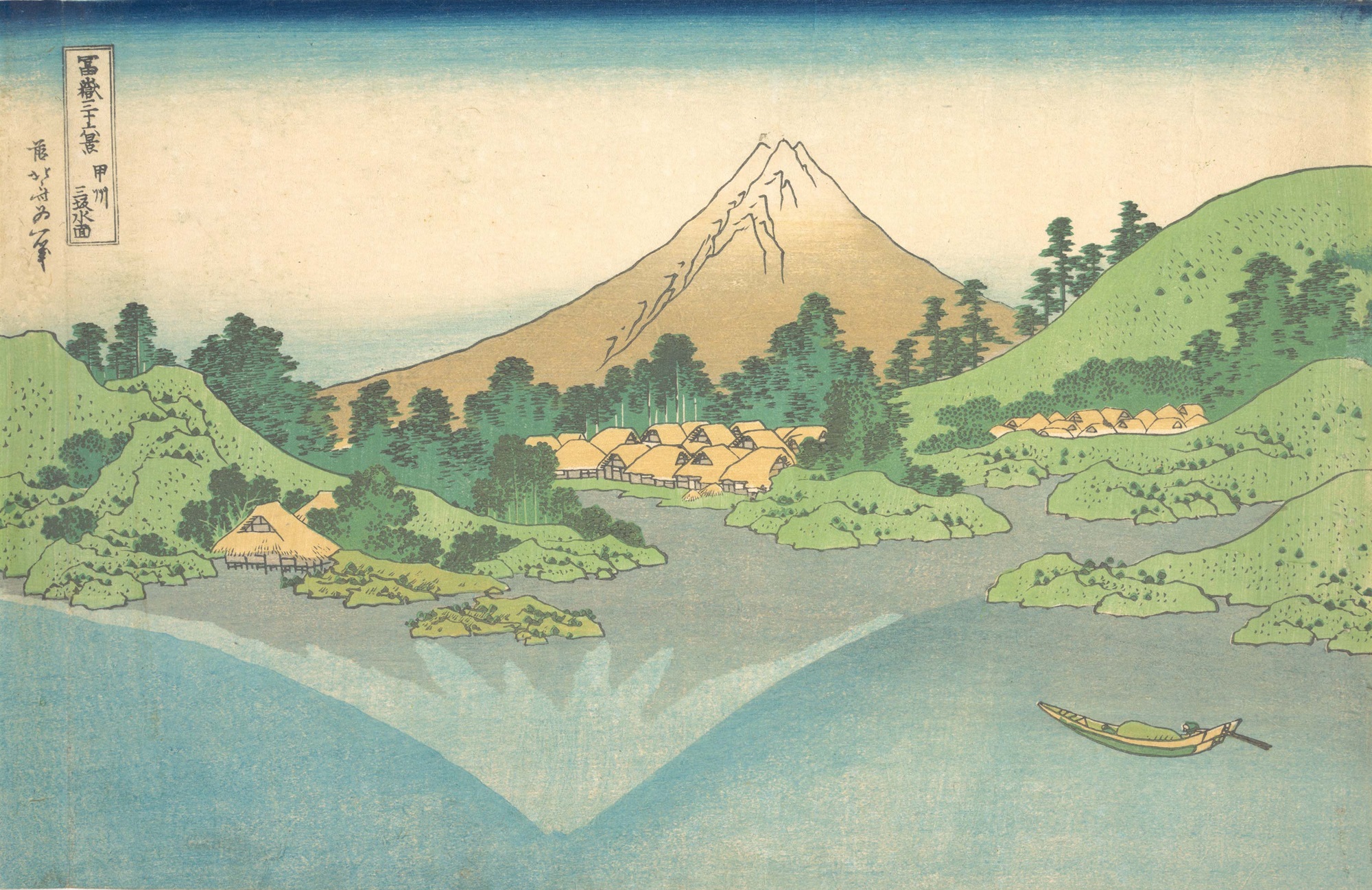
This print shows Lake Kawaguchi (河口) from near the Misaka (御坂) Pass, which connects Kofu (甲府) and Fujiyoshida (富士吉田). The summer-green Mount Fuji is depicted in the foreground, while its reflection on the lake shows the snow-capped peak of winter. The unnatural positioning of the two peaks is a deliberate feature, a testament to Hokusai’s artistic skill. The upside-down reflection of Fuji in the lake evokes the image of Mount Fuji in other masterpieces from ‘Fugaku Sanjurokkei’ such as ‘Gaifu Kaisei (凱風快晴)’ (Fine Wind, Clear Morning) and ‘Sanka Hakuu (山下白雨)’ (Rainstorm Beneath the Summit).
Time for an explosive adventure?
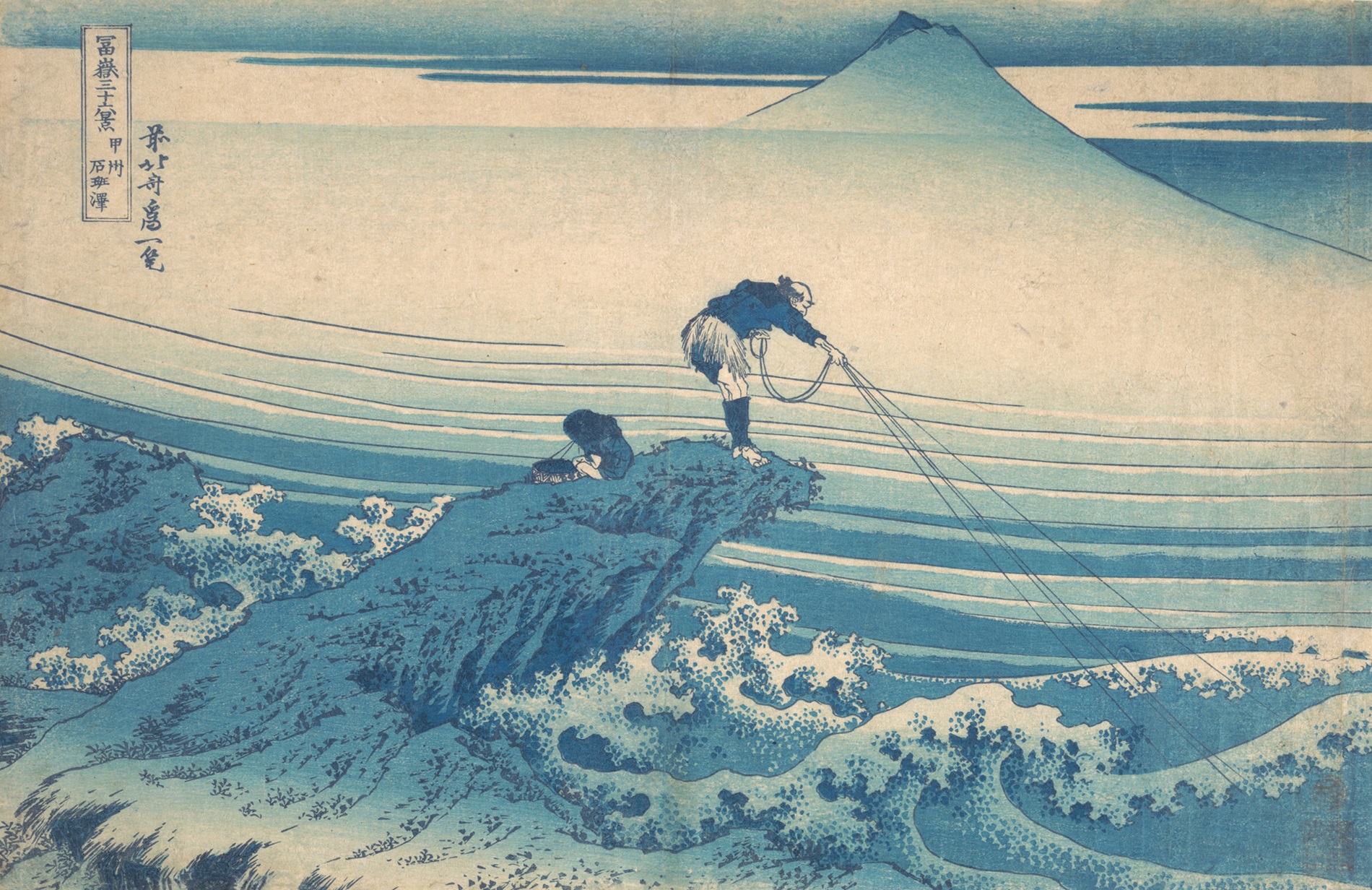
‘Fugaku Sanjurokkei Koshu Kajikazawa’ @ Kajikazawa, Yamanashi Prefecture
Kajikazawa (鰍沢), located to the northwest of Mount Fuji, is where the Fuefuki (笛吹) and Kamanashi (釜無) rivers merge to form the Fuji River. The rocky outcrop in the turbulent river, the person standing on it, and the triangular shape created by the casting net form a similar shape to Mount Fuji, hazy in the distance. This ‘triangular link’—a favourite of Hokusai’s—creates a sense of both stunning scenery and exhilarating dynamism.
The mountain scenery eases the traveller’s fatigue
‘Shokoku Taki Meguri Kiso Kaido Ono no Bakufu’ at Kiso, Nagano Prefecture
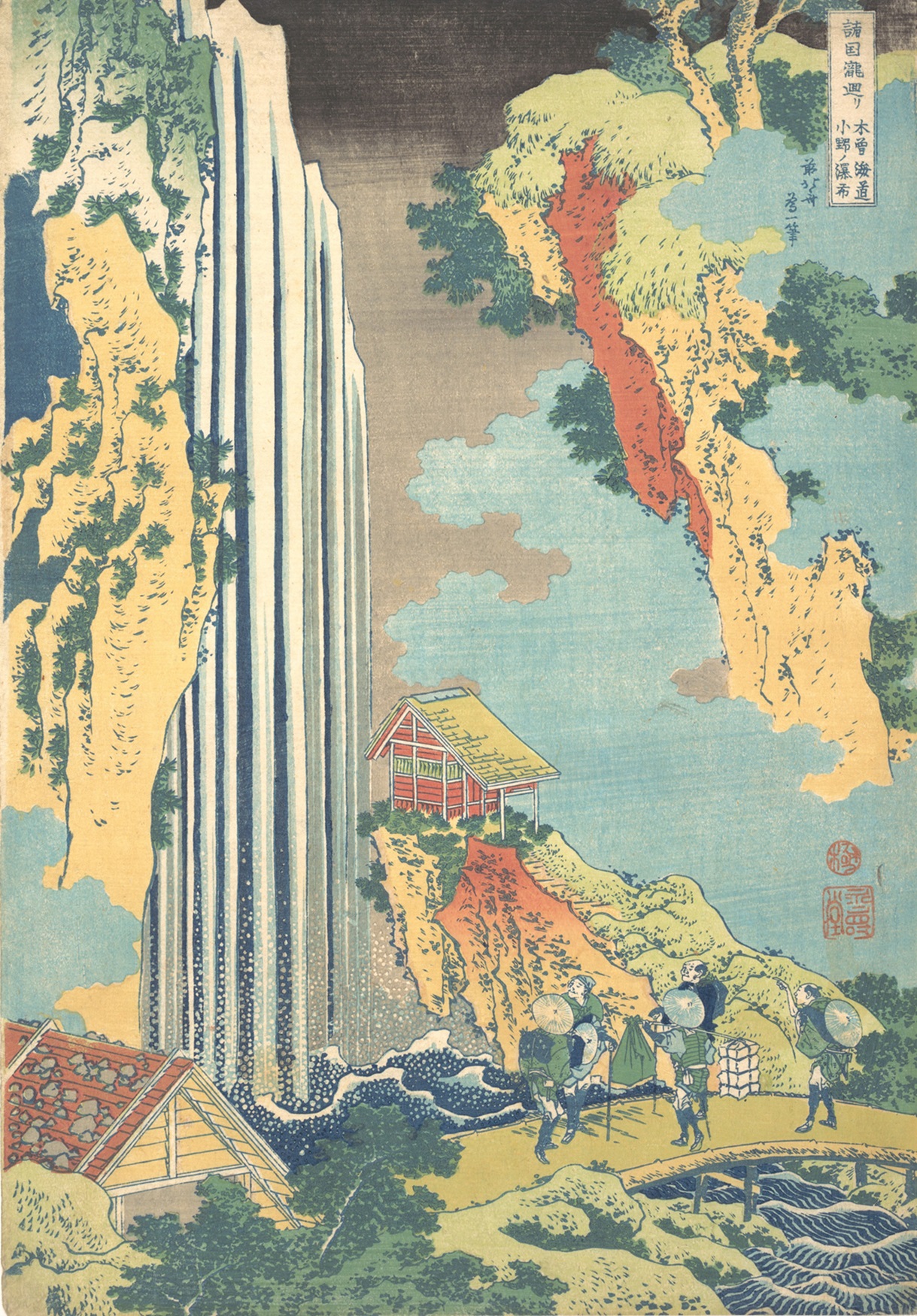
This print depicts the Ono (小野) Falls, known as the ‘famous waterfall of the Nakasendo (中山道),’ which remains in Agematsu (上松) Town, Kiso (木曽) County. By depicting a traveller looking up from a bridge, Hokusai emphasises the grandeur of the waterfall. Unfortunately, this view has been lost due to the Chuo Main Line now running over the falls.
Bonus Chance! A leap to Kyoto
‘Tokaido Meisho Ichiran’ at Tokyo to Kyoto
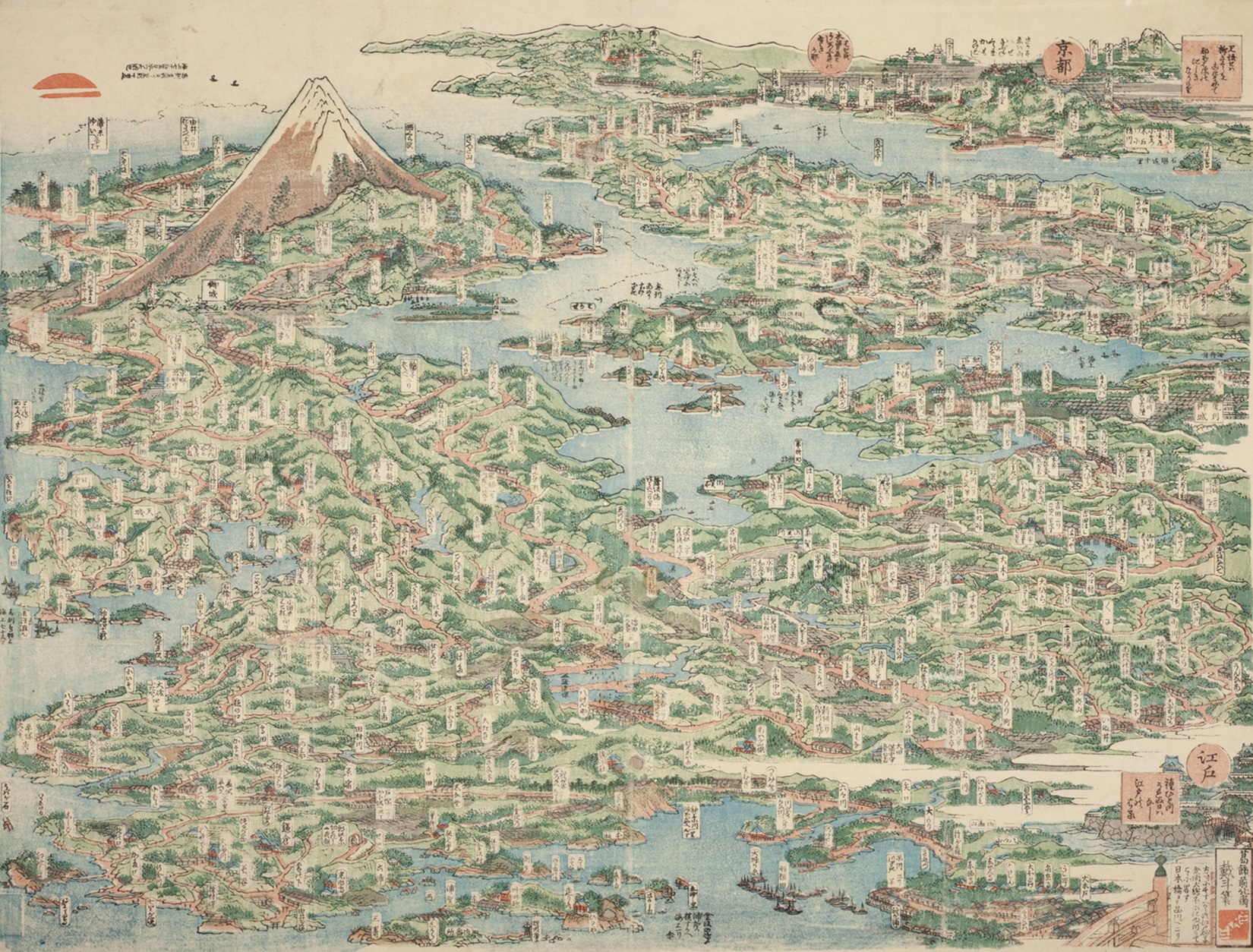
This is a bird’s-eye view that fits the entire Tokaido road into a nearly square frame, from Edo in the bottom right to Kyoto in the top right, via Mount Fuji in the top left. The ingenuity of the composition, which allows the entire Tokaido to be depicted, is a testament to Hokusai’s genius. He intricately includes the names of the 53 post stations and famous spots along the road, while also depicting both natural scenery and man-made structures like bridges and ports—truly a stunning piece!
The end goal
Arriving in the Far-Off Ryukyu Kingdom!
‘Ryukyu Hakkei Jogaku Reisen’ at Naha, Okinawa Prefecture
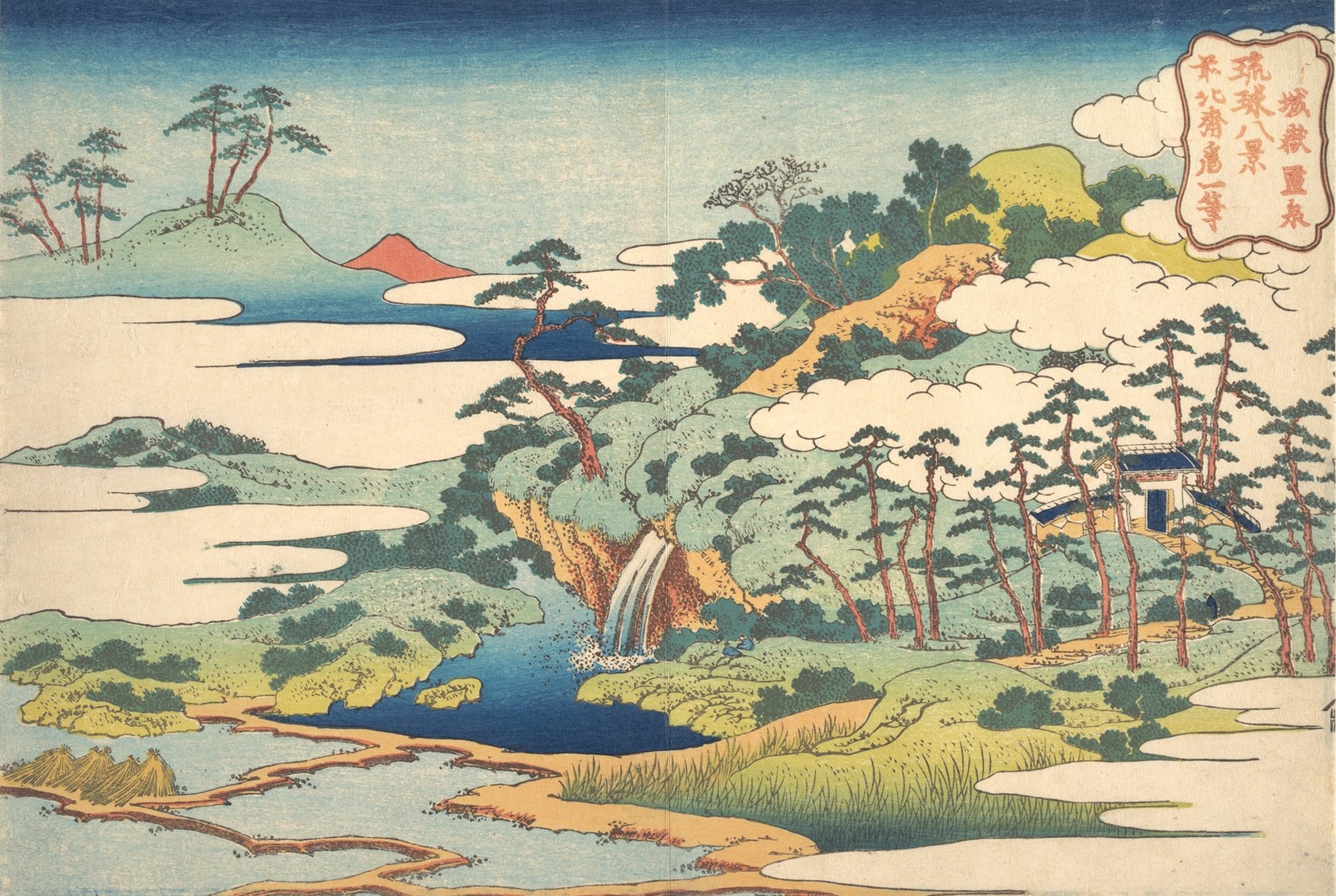
This is one of a set of eight prints depicting Okinawan (沖縄) landscapes. There are no records of Hokusai ever visiting Okinawa, so he is believed to have based his work on the illustrations in the ‘Ryukyu Koku Shiryaku (琉球国志略)’, a book compiled by Chinese envoys. Despite this, he added his own unique touches, such as depicting snow and adding small figures. This particular print shows Ohi-ja (王樋川), a spring in central Naha (那覇). The red mountain in the distance is also thought to be a depiction of Mount Fuji.
Article by: Kotake Tomoko (小竹智子), Suzuki Chie (鈴木智恵) (WARAKU Magazine)
*This article has been reprinted and edited from WARAKU Magazine (August/September 2024 issue)
This article is translated from https://intojapanwaraku.com/art/279476/