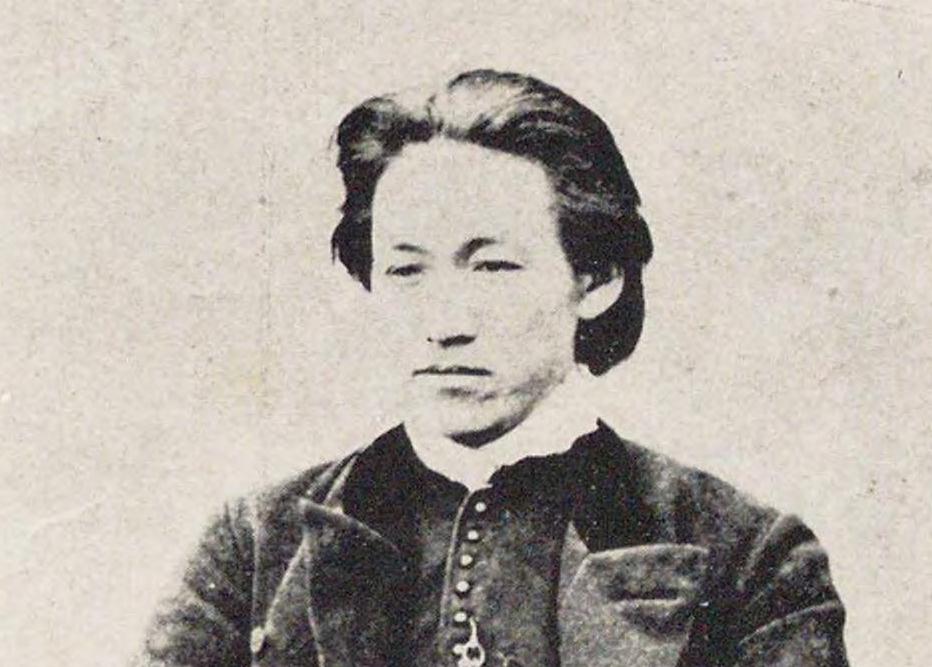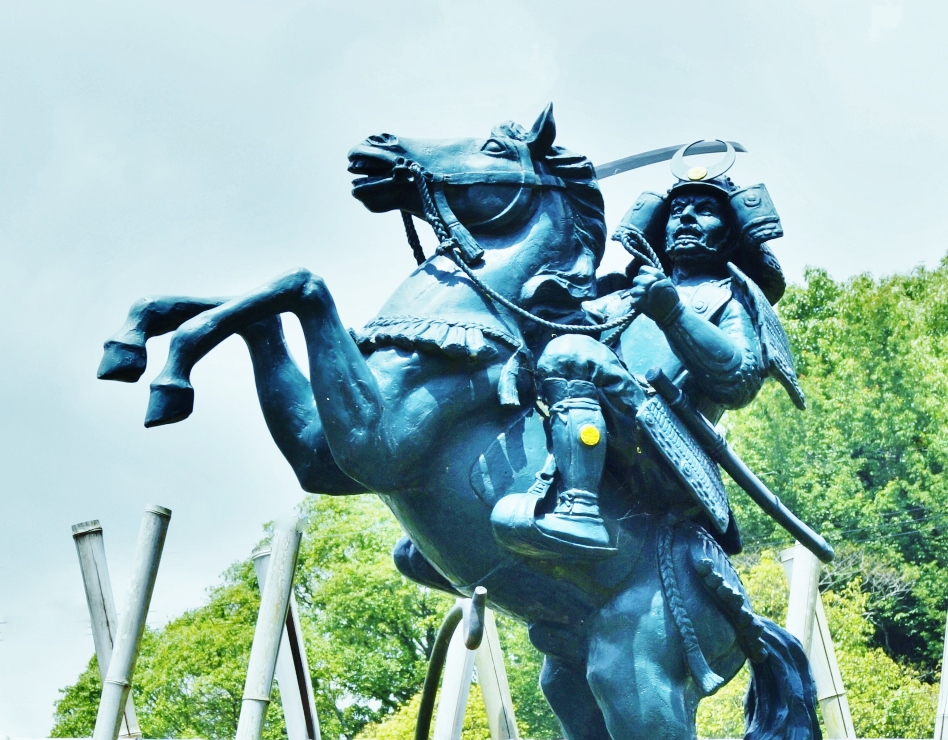








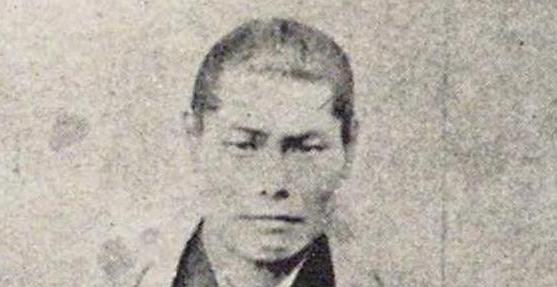
Kondo Isami (近藤勇) was the man who served as the Commander of the Shinsengumi (新選組, also written as 新撰組), an organisation active during the late Edo period (江戸時代).
The Shinsengumi was a group that functioned as a special police force or a public security unit for the Edo Shogunate in the turbulent Kyoto of the final years of the shogunate. Its primary members consisted of Roshi (浪士; masterless samurai) from various regions. They suppress radical individuals plotting to overthrow the shogunate and sought to maintain the existing shogunate system.
The person in charge of managing this Shinsengumi was Kondo Isami. Furthermore, Hijikata Toshizo (土方歳三), who supported him throughout as the Vice-Commander, was from the same hometown as Kondo; the two had been close friends since childhood.
The Shinsengumi has been depicted countless times in films and period dramas, with Kondo Isami portrayed by numerous actors. Over time, a wide variety of portrayals of Kondo Isami have been created. However, many of them share a common impression that could be described with words such as “bold” and “larger-than-life.” So what kind of life did he actually lead?
The Five Years of the Bakumatsu Through Which Kondo Isami Rushed
Kondo Isami lived what might truly be called a short but intensely lived life amid the tumultuous history of the Bakumatsu period. With due humility, here is a brief highlight summary of his life (ages are given in the traditional Japanese kazoe-doshi system).
Age 16: Becomes the adopted son of Kondo Shusuke (近藤周助), the third-generation head of the Tennen Rishin-ryu (天然理心流) school and master of the Shieikan (試衛館) training hall.
Age 26: Takes the name ‘Kondo Isami’. In the same year, he marries Matsui Tsune (松井つね) and succeeds as the fourth-generation head of the Tennen Rishin-ryu school.
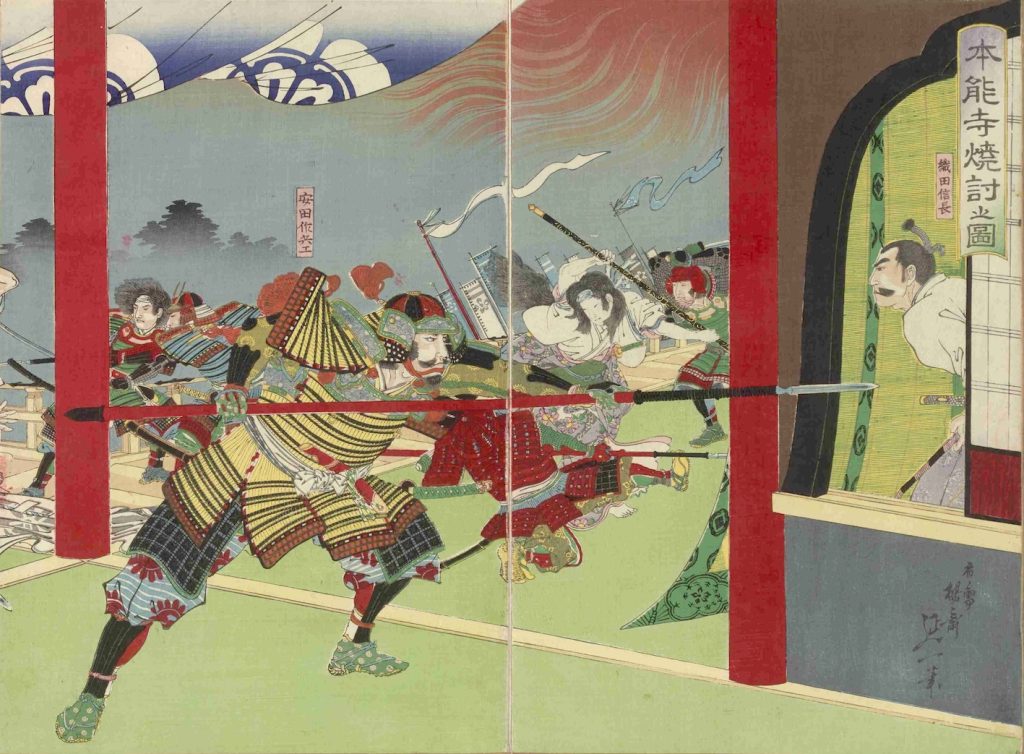
Age 30: Joins the Roshigumi (浪士組), formed to coincide with the Shogun Tokugawa Iemochi’s (徳川家茂) journey to Kyoto. He breaks away from this group to form the Mibu Roshigumi (壬生浪士組). Coming under the control of the Lord of the Aizu (会津) Domain, Matsudaira Katamori (松平容保), who served as the Kyoto Protector (Kyoto Shugoshoku, 京都守護職), he establishes the Shinsengumi.
Age 31: Distinguishes himself in the Ikedaya Incident (池田屋事件).
Age 34: Appointed as a Mimawarigumi (見廻組頭取) chief and becomes a direct retainer of the Shogun.
Age 35: Kondo himself is unable to participate in the Battle of Toba-Fushimi (鳥羽・伏見) due to injury. After retreating to Edo, he leads the remnants of the Shinsengumi to organise the Koyo Chinbutai (甲陽鎮撫隊). Becoming its captain, he continues to fight under the name ‘Okubo Yamato’ (大久保大和), but is captured by the Imperial army in Nagareyama (流山), Shimosa (下総) Province (now Nagareyama City, Chiba Prefecture) and is beheaded at Itabashi (板橋), Edo.
A mere five years passed from the establishment of the Shinsengumi to his death during the Boshin (戊辰) War. Has there ever been another man who made such an impact on Japanese history in such a short period? Perhaps the reason the Shinsengumi continues to fascinate people today is that they rose to prominence through sheer skill, confronted the anti-shogunate forces with nothing but their swords, and scattered like cherry blossoms.
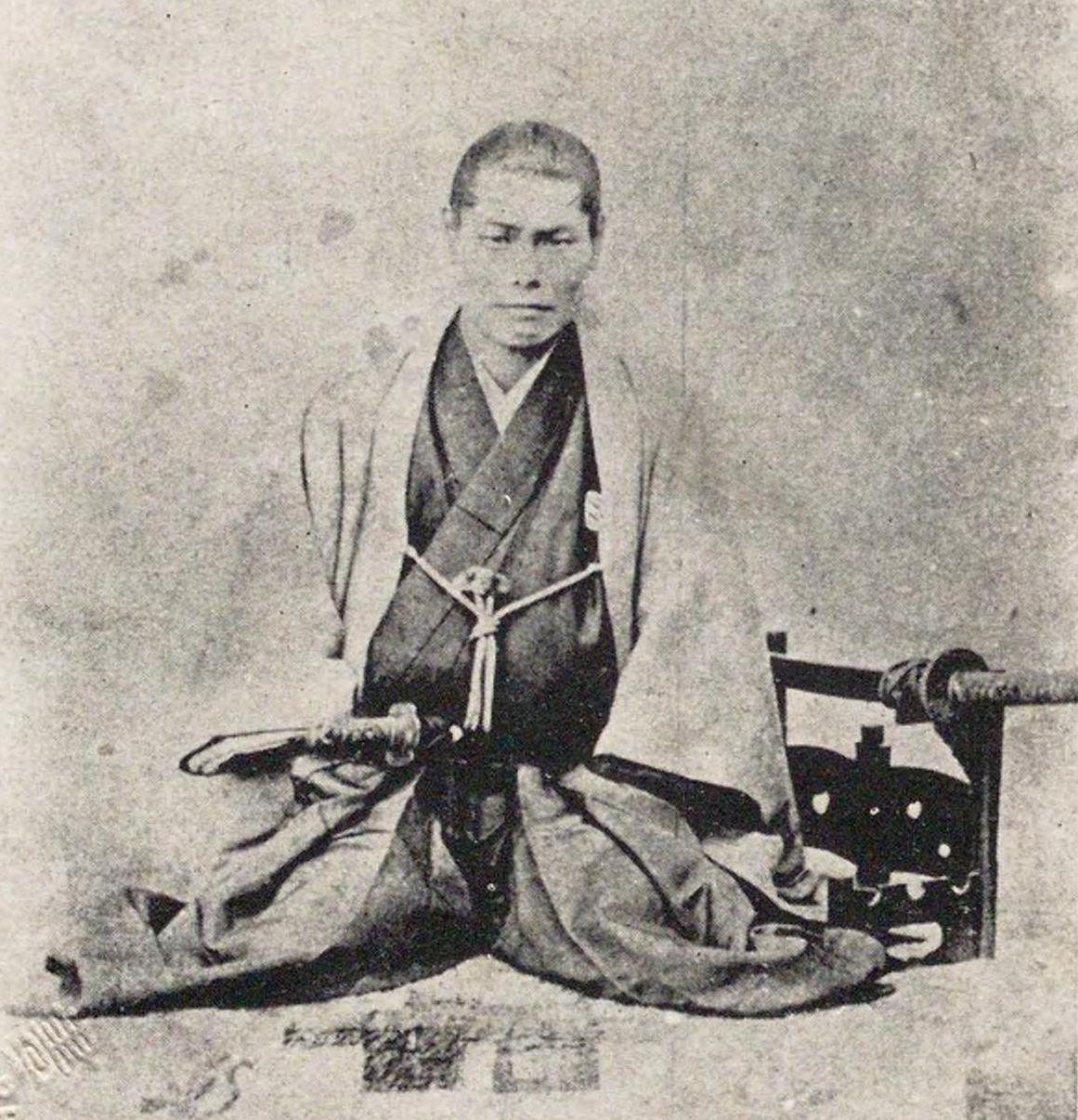
What was the Shinsengumi? A Unique Security Force Made up of Non-Samurai
Kondo Isami was born in 1834 in Kami-ishihara (上石原) Village, Tama (多摩) District, Musashi (武蔵) Province (now Chofu (調布) City, Tokyo) as the third son of a man named Miyagawa Kyujiro (宮川久次郎). His childhood name was Katsugoro (勝五郎).
The Miyagawa family were farmers, not of the samurai class, but he studied the Tennen Rishin-ryu style of swordsmanship. He became the adopted son of the school’s head, Kondo Shusuke, honed his skills at the Shieikan dojo, and eventually succeeded to the headship. Among those who frequented the Shieikan at the time were figures who would later become key members of the Shinsengumi, such as Hijikata Toshizo, Okita Soji (沖田総司), Inoue Genzaburo (井上源三郎), Yamanami Keisuke (山南敬助), and Nagakura Shinpachi (永倉新八).
In 1863, when Kondo was 29, the Shogun Tokugawa Iemochi was to travel to Kyoto. Consequently, the Shogunate recruited ambitious Roshi in Edo to protect the Shogun. Kondo, Hijikata, and others volunteered; the Roshigumi travelled to Kyoto and took up quarters in a place called Mibu (壬生) on the outskirts of the city.
The formation of the Roshigumi was called for by a man named Kiyokawa Hachiro (清河八郎). In truth, Kiyokawa had an objective for forming the group other than protecting the Shogun. Upon learning this, Isami and Toshizo decided to part ways with him. This was the moment the Mibu Roshigumi, the predecessor of the Shinsengumi, was born. Subsequently, they came under the command of Matsudaira Katamori, the Lord of the Aizu Domain who was then the Kyoto Protector, and were granted the name ‘Shinsengumi’.
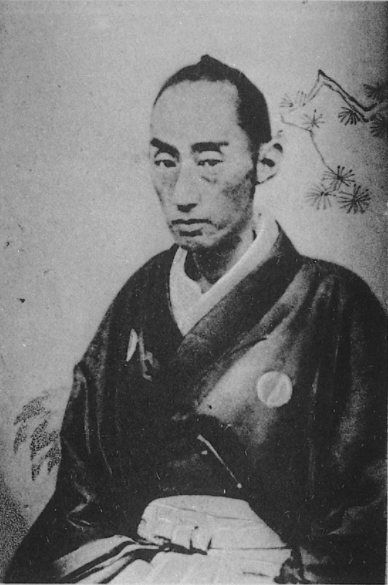
Initially, the position of Lead Commander was held by a man named Serizawa Kamo (芹沢鴨). However, Serizawa and his faction behaved poorly, significantly damaging the Shinsengumi’s reputation, and were subsequently assassinated or executed internally. It was through these events that Kondo became the sole Commander.
The organisational structure of the Shinsengumi changed over time, but it is said to have been highly innovative for its day, incorporating a squad system. At the top was the Commander (Kyokucho, 局長), supported by the Vice-Commander (Fukucho, 副長). A Military Advisor (Sanbo — Ito Kashitaro (伊東甲子太郎) as of 1865) was added in a consultative role. Under the Vice-Commander were the Vice-Commander’s Assistants (Fukucho Jokin, 副長助勤) and the Investigators/Inspecters (Shoshi Shirabeyaku ken Kansatsu,諸士調役兼監察).
The Assistants aided the Commander and Vice-Commander in internal affairs and led individual squads as captains in actual combat. Familiar names from films, such as Okita, Nagakura, Saito Hajime (斎藤一), Takeda Kanryusai (武田観柳斎), Harada Sanosuke (原田左之助), Inoue Genzaburo, and Todo Heisuke (藤堂平助), held this rank of Assistant.
Meanwhile, the Investigators conducted external intelligence activities and reported gathered information to the Vice-Commander. The Kansatsu (Inspectors) were tasked with monitoring the internal conduct of the unit.
What was the Ikedaya Incident? The Shinsengumi’s Greatest Battle and Its Shocking Aftermath
To the people of Kyoto, the members of the Shinsengumi must have appeared as uncouth men. Indeed, it is said that some residents loathed them. What silenced such voices instantly and made their name famous overnight was the Ikedaya Incident (Ikedaya Jiken) in June 1864.
This was an attack by the Shinsengumi on radical Sonjo (尊攘) extremists at the Ikedaya inn in Sanjo (三条), Kyoto. The Sonjo faction refers to the Sonno Joi (尊皇攘夷; Revere the Emperor, Expel the Barbarians) supporters — activists who ‘valued the Imperial command (Chokumei, 勅命) over the Shogunal command (Bakumei, 幕命) and sought to act upon it’. At the time, Miyabe Teizo (宮部鼎蔵) of the Kumamoto Domain and others were central to a plot to assassinate Nakagawanomiya (中川宮; Prince Asahiko, 朝彦), Hitotsubashi Yoshinobu (一橋慶喜), and Matsudaira Katamori, and were orchestrating their plan while hiding in Kyoto.
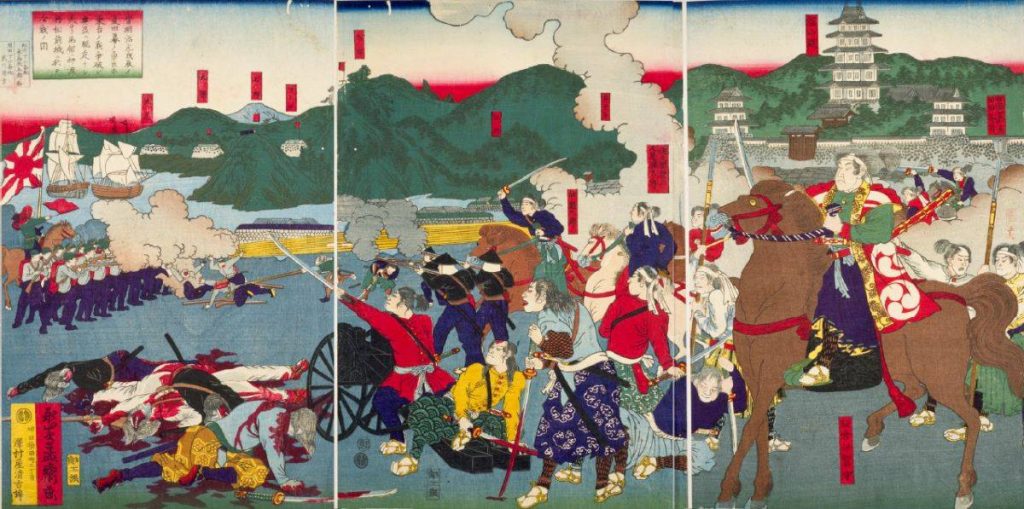
On 5 June 1864, about 20 samurai from domains such as Choshu, Tosa, and Kumamoto, including Yoshida Toshimaro (吉田稔麿) and Miyabe Teizo, gathered at the Ikedaya to deliberate on the uprising. Earlier that morning, a large cache of weapons had been discovered at the home of a captured Roshi. Alarmed, Kondo and his men split into two groups and conducted an exhaustive search around Gion (祇園) and Kiyamachi (木屋町). Shortly after 10:00pm that same day, Kondo, accompanied by Okita, Nagakura, and Todo Heisuke, stormed the Ikedaya.
As this was a fight to the death with swords inside the cramped rooms of a Japanese house, one can imagine the horrific scene. The Hijikata group, which arrived later, also joined the fray; nine were killed and four were captured (estimated; the following morning, a mopping-up operation for activists who had fled was carried out in cooperation with the Aizu and Kuwana domains, resulting in approximately 20 more arrests).
The commotion quickly spread through the city of Kyoto during the night, and it is recorded that many onlookers flocked to the scene.
The End of Kondo Isami: The Reason for His Decapitation and the Mystery of His Head’s Location
Kondo’s favourite sword was by the Edo swordsmith Nagasone Kotetsu Nyudo Okisato (長曽祢虎徹入道興里). It was commonly called ‘Kotetsu’ and was said to have the ‘sharpness of four bodies’ (yotsudo). In other words, it was a powerful blade capable of cutting through four human torsos stacked together in a single stroke.
With such a famous sword and outstanding martial skill, the Shinsengumi continued to crack down on activists aiming to overthrow the shogunate in Kyoto. However, the tide towards the end of the Shogunate could not be stopped, and the era plunged into the Boshin War.
Kondo was defeated at the Battle of Toba-Fushimi and returned to Edo on a Shogunal warship with the remnants of the Shinsengumi. There, he was ordered by the Shogunate to ‘Koyo Chinbu’ (甲陽鎮撫) and headed for Kofu (甲府) via the Koshu (甲州) Kaido highway. However, one theory suggests that Katsu Kaishu (勝海舟), aiming for the bloodless surrender of Edo Castle, sent the Shinsengumi away from Edo, anticipating they would fight to the bitter end.
Regardless, by order of the Shogunate, they clashed again with the New Government army (led by Itagaki Taisuke (板垣退助), the staff officer of the Tosando Vanguard) at the Battle of Koshu-Katsunuma (甲州勝沼) in March 1868, but were defeated again. After retreating to Edo via Hachioji (八王子), they reached Nagareyama (流山) in Shimofusa (下総) Province (Nagareyama City, Chiba Prefecture), where he was finally captured by the New Government forces. At this time, Kondo persistently used the name ‘Okubo Yamato’ (大久保大和), but someone within the New Government army knew him well. He was taken to Itabashi-shuku in Edo as Kondo of the Shinsengumi.
After his treatment was considered, he was beheaded at the Itabashi execution grounds in May 1868. The fact that he was not permitted to commit Seppuku (切腹; an honourable death for a samurai) may reflect how the New Government forces viewed him. His head was transported to Kyoto and put on public display (Kyoshu, 梟首) at Sanjo Kawara. The subsequent whereabouts of Kondo’s head remain shrouded in mystery to this day.
References:
Yoshikawa Kobunkan, Kokushi Daijiten
Kodansha, Nihonjinmeishi Daijiten
Shogakukan, Nihon Daihyakka Zensho
Ito Seiro, Shinsengumi 2245-nichi no Kiseki
Kikuchi Akira et al. (eds.), Shinsengumi Nisshi (Vols. 1 & 2)
Kikuchi Akira, Hijikata Toshizo Nikki (Vols. 1 & 2)
This article is translated from https://intojapanwaraku.com/rock/culture-rock/196462/