






The Relationship Between Swallows and Humans Dates Back to the Jomon and Yayoi Periods!?
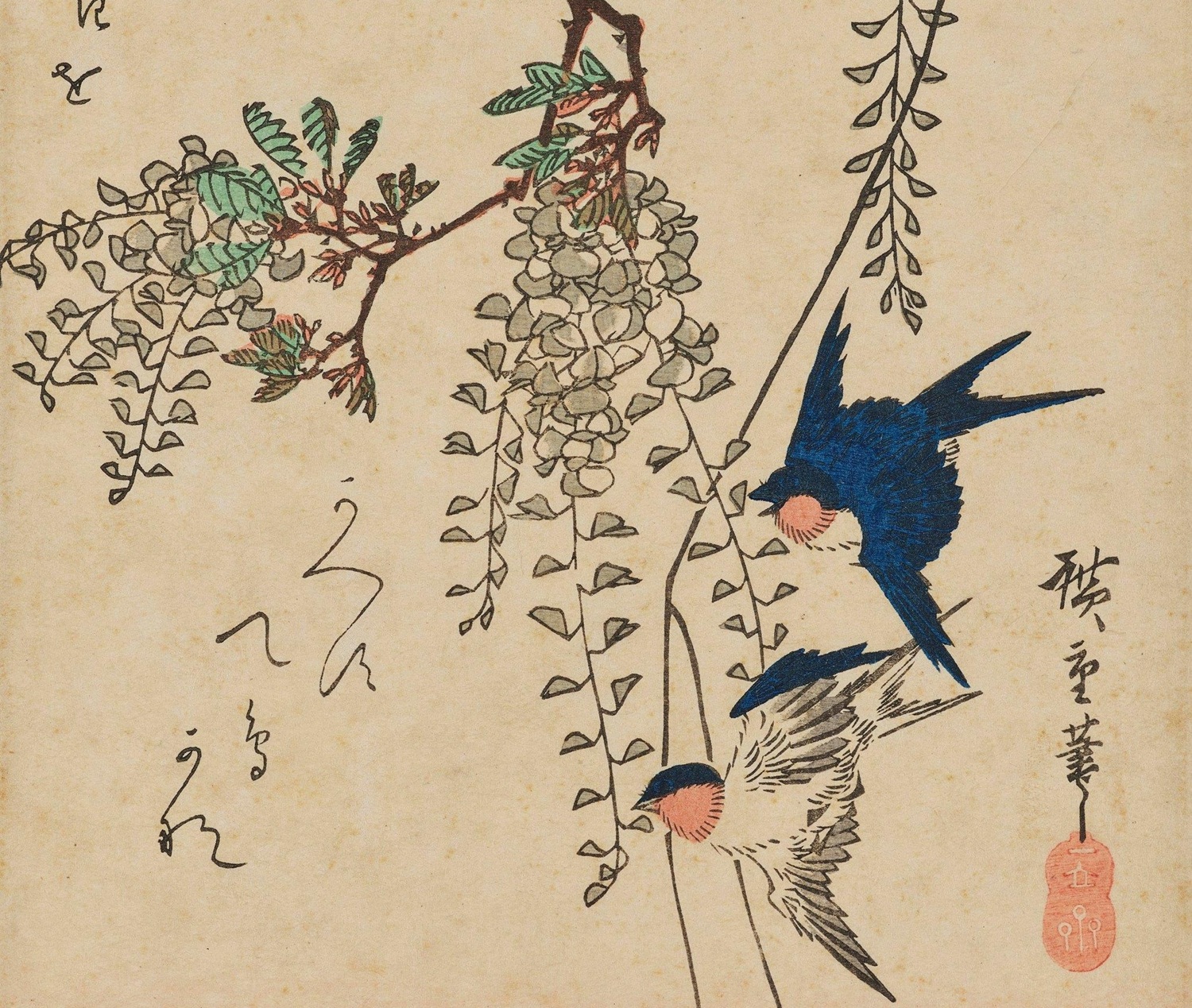
They have inhabited Japan since ancient times, and it is believed that they were already building nests in human settlements during the Jomon (縄文) and Yayoi (弥生) periods. Entering the Edo period, painters began to frequently depict them as motifs in Ukiyoe (浮世絵). It was said that homes with a swallow’s nest would ‘be visited by happiness’, and they seem to have been loved by the people as an auspicious symbol of prosperous business and domestic harmony.
Where Do Swallows Come From?
Swallows come to Japan from far down south, from places such as the Philippines, Vietnam, Malaysia, and Indonesia. In terms of distance, this can be anywhere from 2,000 to 5,000 kilometres! Truly astonishing, isn’t it?
So, why do they travel all the way to Japan? A swallow’s diet consists of flying insects, and it is said that during their child-rearing period, they prefer Japan because it is abundant in these insects. As there are no rival birds, there is plenty of food to feed their chicks. Therefore, they spend the period from spring to autumn in Japan, and when winter arrives and the insects disappear, they migrate back to warmer countries.
What Countermeasures Should You Take if They Build a Nest at Your Home?
While swallows have a positive image, we also hear from people who are troubled by the nuisance of droppings when a nest is built at their home. Parent birds raising their young try to spend time as close to their chicks as possible, which means they often leave droppings near the nest. As a result, the area beneath the nest becomes covered in droppings. As a countermeasure, placing newspaper or cardboard in the area where the droppings fall will help keep the floor clean. By replacing these frequently, you can also keep the damage caused by the smell to a minimum. Incidentally, swallows are protected under the Wildlife Protection and Management Act. As it is prohibited to remove a nest containing eggs or chicks without permission, as a general rule, one must simply watch over them.
In fact, a swallow once built a nest at the writer’s home, and we struggled to come up with countermeasures against the droppings. However, being able to witness the birth of the chicks and the moment they leave the nest was an invaluable experience.
References: ‘Sekai Daihyakka‘ (世界大百科), Heibonsha (平凡社); ‘Nihon Daihyakka Zenshu‘ (日本大百科全集), Shogakukan (小学館)
Header image: ‘Fuji ni Tsubame’ (藤に燕) by Utagawa Hiroshige (歌川広重), colbase
This article is translated from https://intojapanwaraku.com/culture/303498/