






From samurai lineage to the wandering life of an artist
First, let us trace Eisen’s profile. It seems he led a highly turbulent life, one that makes perfect sense when you consider the bewitching bijinga (美人画, pictures of beautiful women) he is so famous for.
Eisen was born in 1791. His father was a bushi (武士, samurai) and also a cultured man who enjoyed haikai (俳諧) poetry and the tea ceremony. Eisen himself might ordinarily have lived a stable life as a bushi.
However, reality is harsh. He lost his biological mother at the age of six, and around the age of twenty, his father and stepmother also passed away one after the other. The family was poor, and he had to survive whilst looking after his young sisters. There was a time when he served the Mizuno family as a bushi, but that did not last long either, and he ultimately chose to make his living through art.
Eating Live Butterflies in a Hot Pot? Eisen’s Outrageously Unconventional Private Life
In his own autobiography and the testimonies of those around him, one anecdote after another emerges that could be described as entirely defying common sense. For instance, there is a story of him drawing the preliminary sketch for a woodblock print halfway, only to suddenly vanish. His publisher would search desperately for him, and upon finally finding him, would discover him “dead drunk” in a yukaku pleasure district (遊郭) or a tavern.
His dietary habits were also far from ordinary. There is even a record of him consuming the feared poisonous pufferfish whilst they were still alive in a hot pot along with butterflies and other fish, and then eating them. He was truly a man of bizarre culinary tastes and entirely reckless with his life.
Moreover, just when you thought he had popped out “just down the road” wearing his haori jacket and geta sandals, he would board a night boat and end up all the way in Kisarazu (木更津) in the Boso (房総) region. No fixed abode, with a habit of wandering. He was a far cry from a sensible member of society.
Eisen’s Shunga, Born at the End of Debauchery
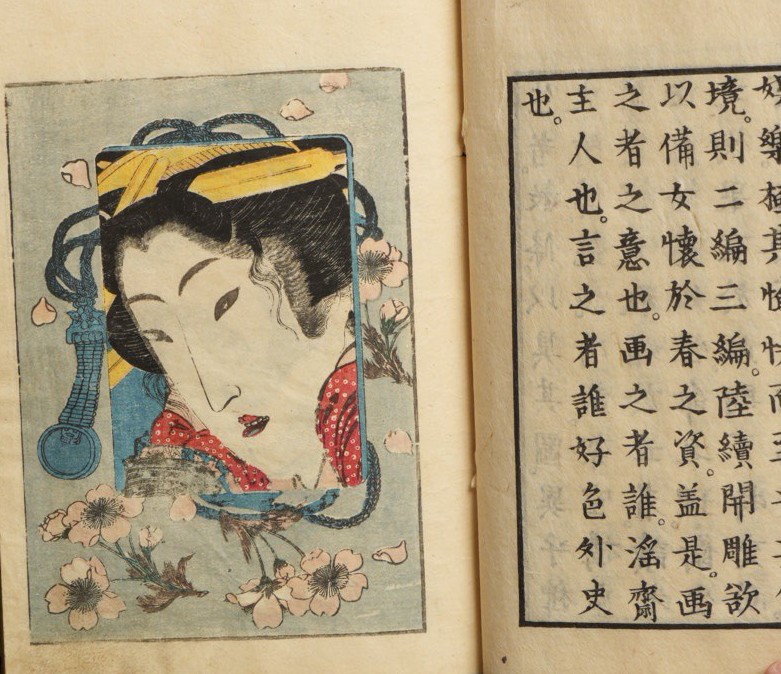
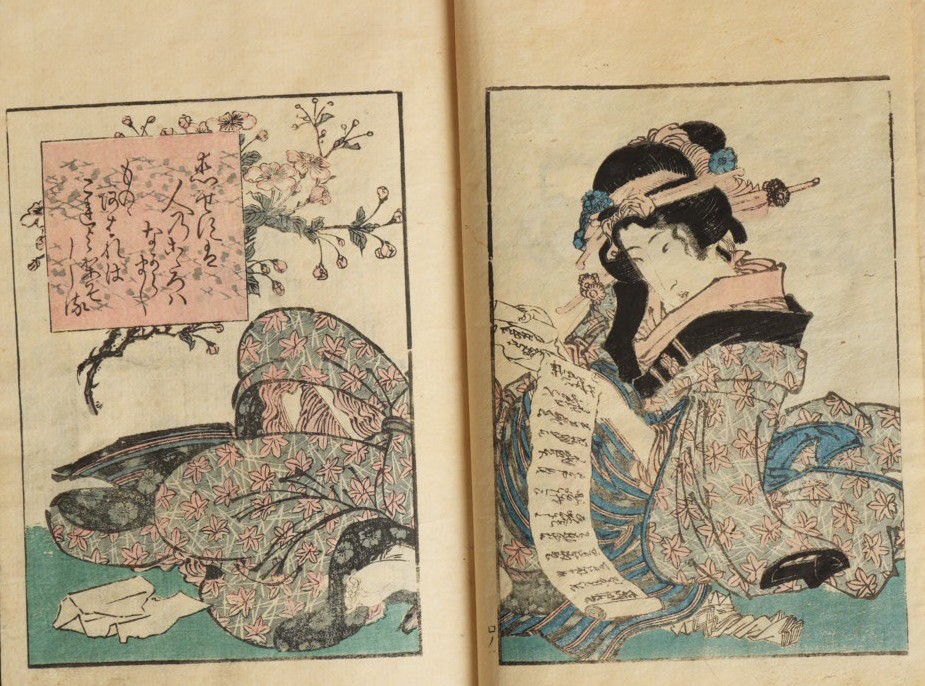
Perhaps it was this very life of debauchery and lawlessness that endowed Eisen’s art with its unique sensuality. Eisen studied ukiyo-e under Kikukawa Eizan (菊川英山), and initially, he painted elegant, sweet bijinga portraits inherited from his master. However, his style eventually underwent a dramatic transformation. Taut expressions, intense gazes. The series of okubie (大首絵, large-head portraits) published during the Bunsei era are brimming with a passion that overwhelms the viewer. He produced pictures that make one feel raw desire and even the very scent of the Edo night.
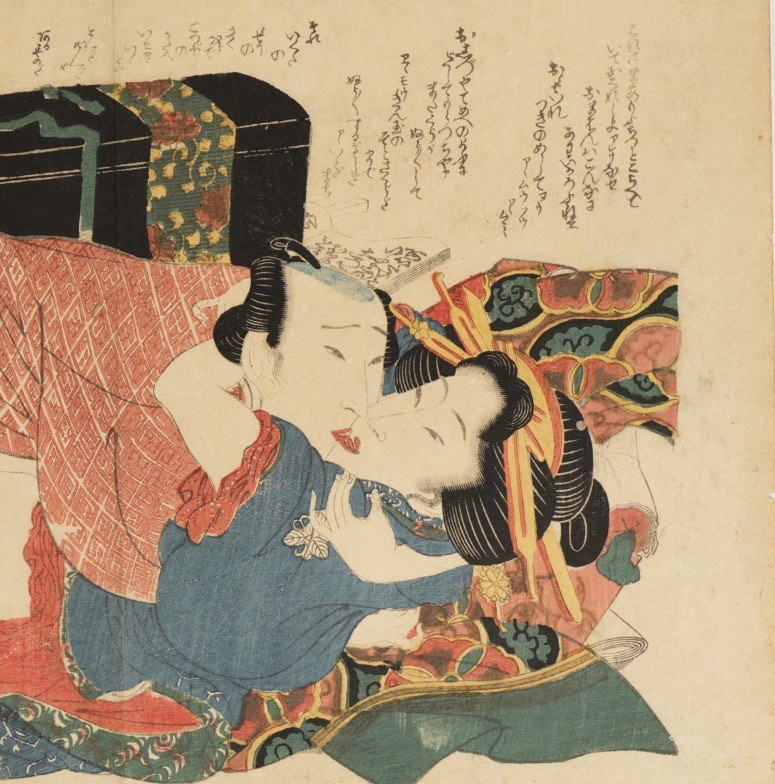
In the field of shunga, too, Eisen was truly outstanding. He produced dozens of multi-coloured shunga pieces, and his output surpassed that of Hokusai. In particular, ‘Makura Bunko’ is one of the largest sex manuals of the Edo period, a magnum opus that took him ten years to complete. Eisen was an artist who depicted the gritty, unvarnished side of Edo. Desire, hesitation, the darkness of the night… his work overflows with a bewitching charm!
The Genderless icons depicted by Eisen are breathtakingly beautiful
Now then, let us finally take a close look at the shunga by Eisen collected by Uragami Mitsuru.
“There are no rules on how you must view shunga. Each person looking at it should simply react freely,” smiles Uragami, known as a world-class shunga collector.
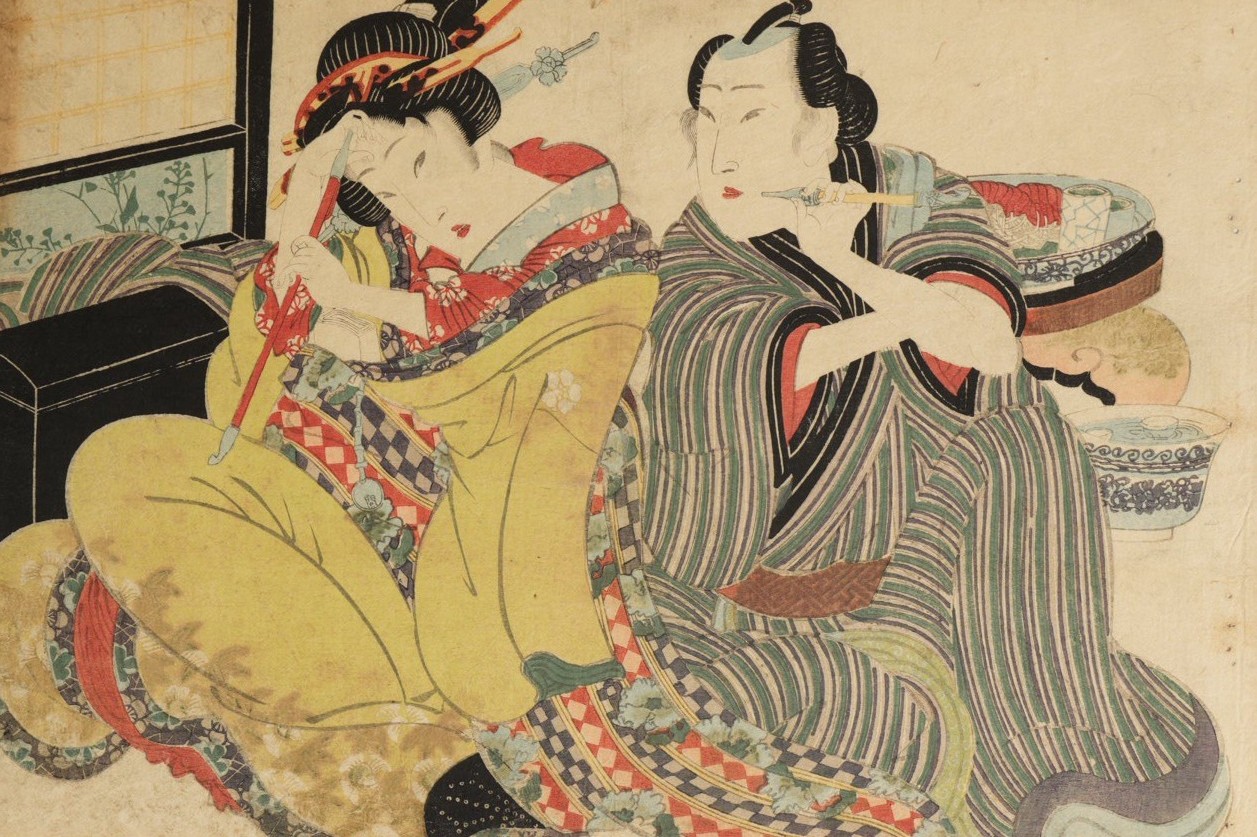
The words of this man, who has amassed a vast collection of works over many years, are truly broad-minded. That warmth put me at ease, and as I examined the Eisen shunga in front of me, I made an unexpected discovery. It was the undeniable beauty of the men themselves!
Hokusai and Eisen’s Shunga… Is the Difference in Their Depictions of Men ‘Fuzzy Eyebrows’ or ‘Sharp Eyebrows’?
Katsushika Hokusai painted shunga energetically during the Bunka Bunsei eras. With his bold compositions, such as the octopus and the beautiful woman, and his overwhelming drawing skills, he is highly acclaimed worldwide. However, when compared side-by-side with Eisen’s shunga, the difference is surprisingly stark.
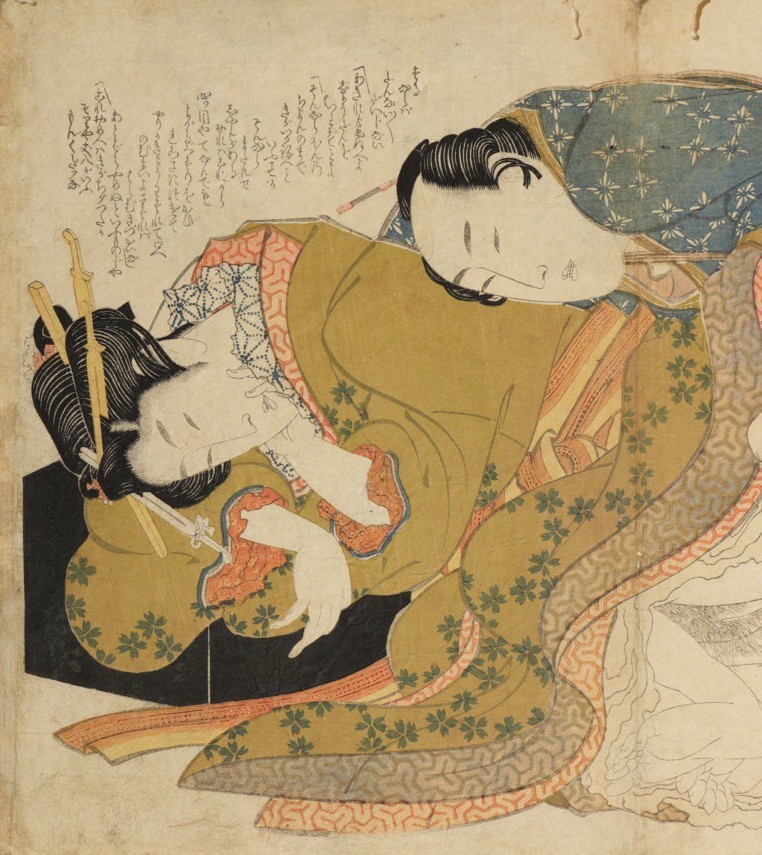
The faces of the men drawn by Hokusai have thick eyebrows and give off a rather vague impression. They possess a presence that feels somewhat like an “extension of reality”. Ordinary men of average height and build are brought to the forefront. On the other hand, what about Eisen’s male figures?
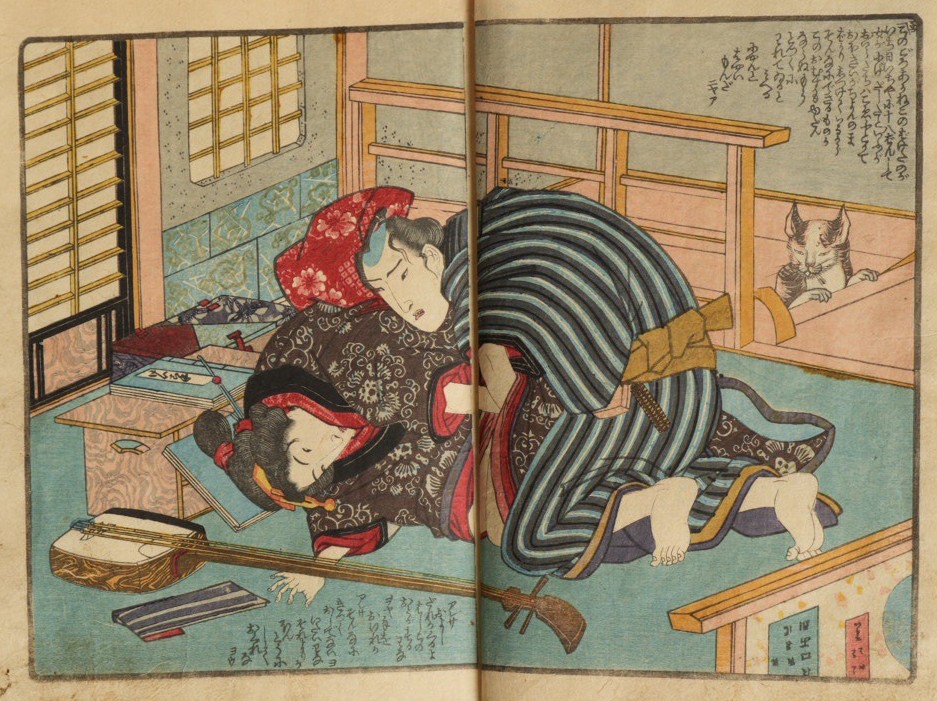
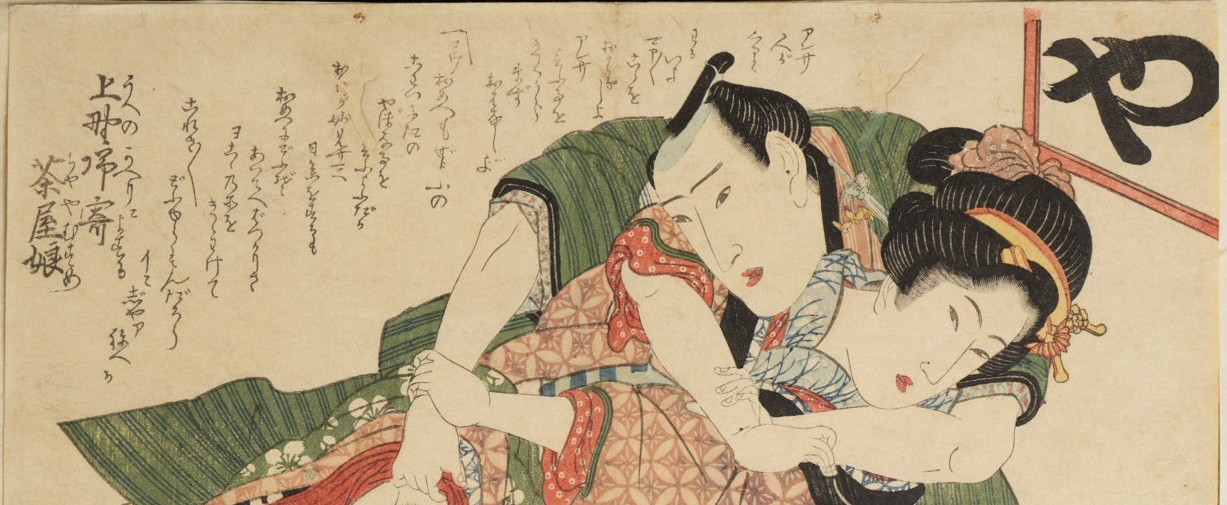
They have striking eyes, straight noses, and are truly beautiful. Their eyebrows are thin, revealing exquisite expressions. Despite both being shunga, one cannot help but catch one’s breath at how drastically different their aesthetic sense towards depicting men is.
Eyeliner, Eyebrows, Lipstick—Eisen’s Shunga, which Masters the Beauty of Androgynous Men
The genderless, handsome men in Eisen’s shunga feature absolutely beautifully depicted facial features.
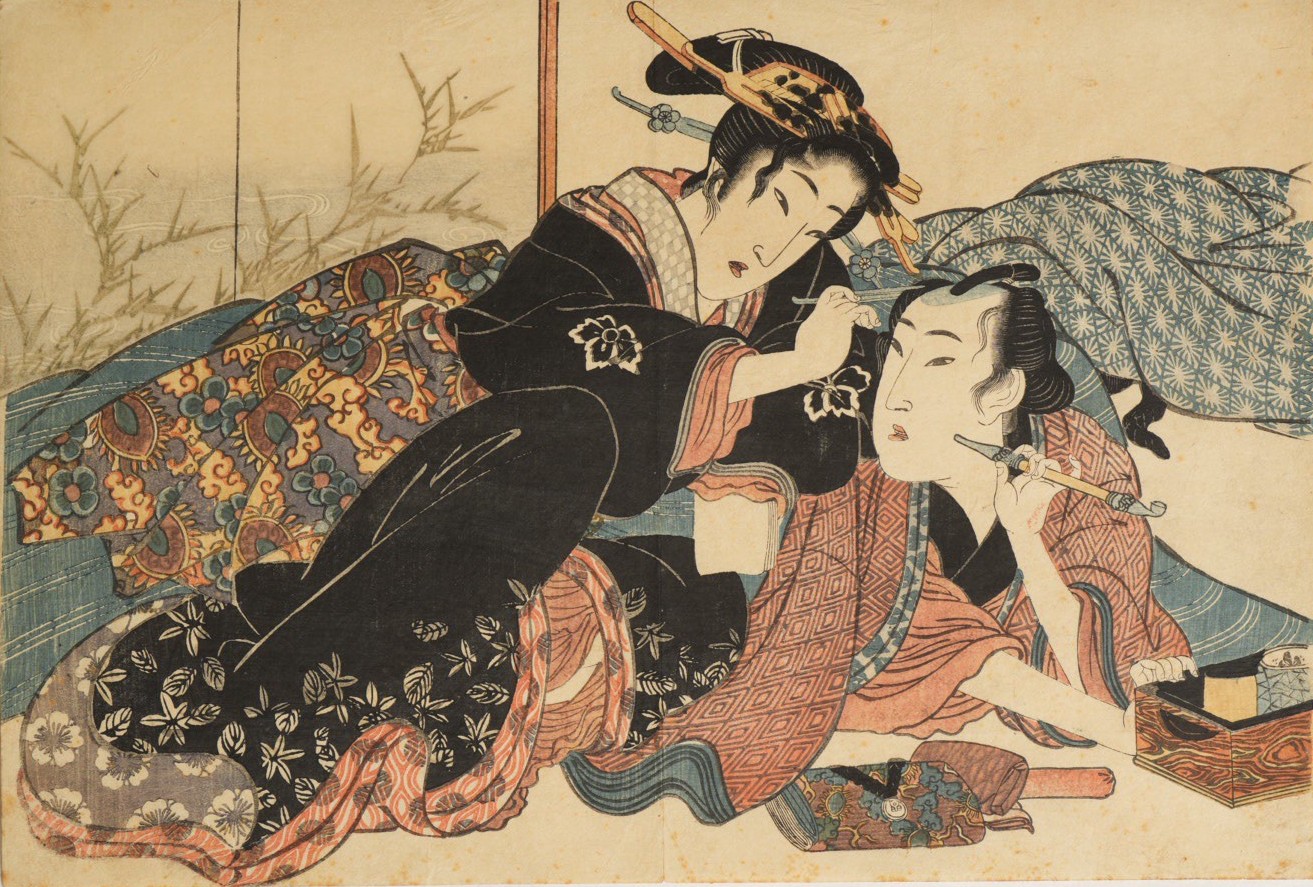
Distinctively dark eyeliner.
Thinly and neatly shaped eyebrows.
Red lipstick, just like the women.
And at times, sensual, dishevelled hair.
When speaking of shunga, one’s eyes tend to be drawn to the pictures of women, but Eisen’s shunga is a parade of beautiful men. Suppleness rather than ruggedness. Sensuality and fleeting fragility waft from them, rather than any sense of intimidation. Eisen’s shunga is highly recommended even for beginners who might be resistant to looking at pictures of exaggerated genitalia. This is because with Eisen’s shunga, you can enjoy simply gazing at the faces of these genderless handsome men while they are “doing the deed”.
References: ‘Ukiyo-e Meisaku Senshu Eisen‘ (浮世絵名作選集 英泉) (Yamada Shoin / 山田書院), ‘Meibutsu Soroimono Ukiyo-e 7 Kuniyoshi, Eisen‘ (名物揃物浮世絵7国芳・英泉) (Suzuki Juzo / 鈴木重三), ‘Bessatsu Taiyo Shunga‘ (別冊太陽 春画)
Header image: Keisai Eisen, oban nishiki-e, ‘Goin na Otoko‘ (強引な男) (detail) / 1804–1830
All Images: Collection of Uragami Mitsuru
Katsushika Hokusai & Keisai Eisen Tsuya Kurabe – Kabukicho Hanamozakari – Shinjuku Kabukicho Shungaten WA (新宿歌舞伎町春画展WA) is being held
An exhibition focusing on Hokusai and Eisen, featuring the shunga collection amassed by Uragami-san, will be held this spring in Shinjuku Kabukicho (新宿歌舞伎町).
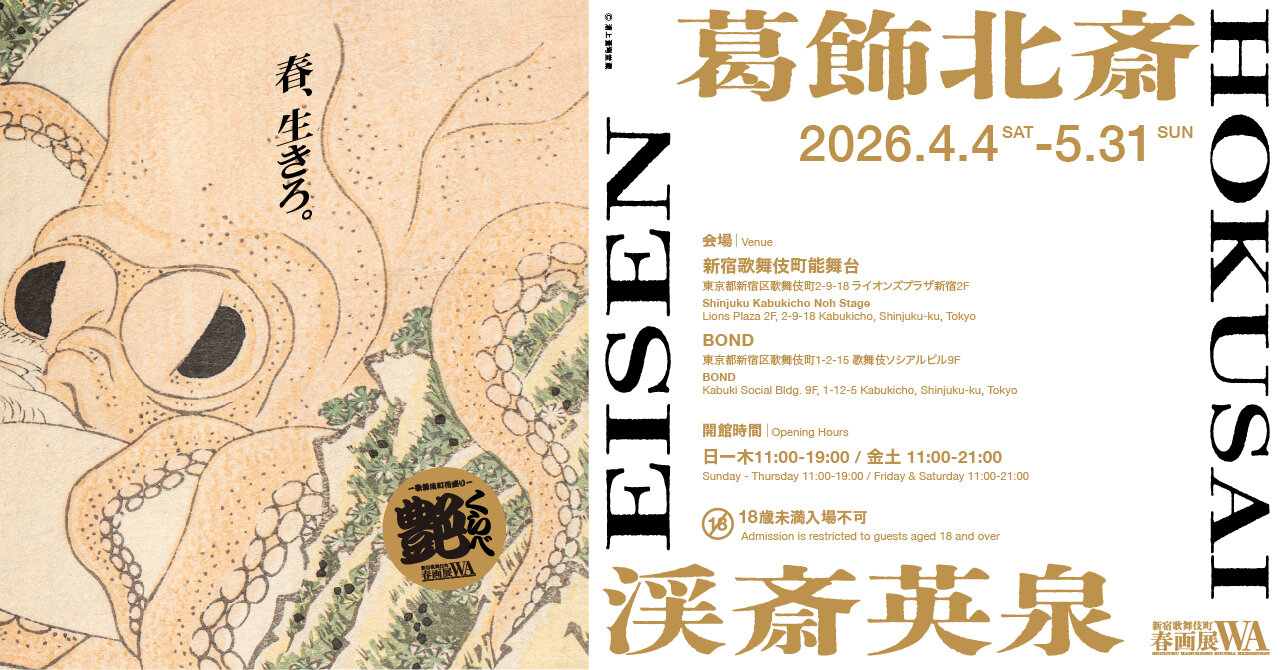
Dates: Saturday, 4th April – Sunday, 31st May 2026 *Open daily during the exhibition period
First Term: Saturday, 4th April – Thursday, 30th April
Second Term: Friday, 1st May – Sunday, 31st May
*Note: Some exhibits will be rotated to protect the artworks.
Hokusai’s shunga masterpiece, ‘Tako to Ama‘ (蛸と海女), confirmed for display!!
Display Period: Friday, 1st May – Sunday, 10th May
Ticket Information (Specified Date System)
Same-day Tickets: General 2,200 yen / Students 1,500 yen
Ticket Purchases: https://www.smappa.net/shunga/ticket.html
This exhibition is a project focusing on the ukiyo-e artist Japan proudly presents to the world, Katsushika Hokusai (1760–1849), and Keisai Eisen (1791–1848), who carved out his own unique aesthetic sense whilst admiring Hokusai’s painting style. The bold and uninhibited Hokusai, and the decadent and bewitching Eisen. Please fully enjoy the competing ‘allure’ of these two men who, whilst influencing and being influenced by one another, directed distinctly different gazes towards human desire and vitality.
This article is translated from https://intojapanwaraku.com/art/301525/