












Kukai's life was full of upset
Kobo Daishiku Kukai is known for its “Koho writing pen” as well as Mt. Takano, To-ji in Kyoto, Shikoku 88 or more places pilgrimage. Even if you know the name, when you ask about its life and achievements, I think that there are not many people who hesitate to answer. For such a person, I will introduce a little bit in detail.
Jindo, raising voice in Sanuki (now Kagawa prefecture)
Kukai was born in Sanuki-no-kuni, Tadogun County (Tadogun) Bifu-gaura. In Zentuji, the city of Kagawa Prefecture, the birthplace is said to be close to the Shikoku, the 88th place, the 75th place, Zentuji.
My name is Mao. My father, Saaki Nao, was a countryman, but he was not wealthy.
Kukai, who was known as a prodigy, was the uncle of the maternal side from the age of 15 and later a scholar, Ado, who became a lecturer to advance learning to the prince of Emperor Takeshi, and Iyo patriarch. You will receive an introduction to learning.
Three years later, Kukai climbs up to the capital and then to the university that was the highest educational institution at the time. Mr. Saiki had great expectations for Kukai who had run up the stairs to the elite, but he dropped out of the university in just over a year. I was suddenly left home when I was told by a monk, Gonjo, that "the truth of life is in Buddhist law."
Decided to study abroad to receive advanced education
After turning to a career and choosing to live in Buddhism, Kukai wrote "San Shishiiki", which is said to be the book of a declaration of birth, and then went to a great temple in Nara to study the scriptures of the southern capital Rokushu. Learn and practice Chinese while learning Chinese and Sanskrit. The life of Kukai as a monk will be greatly changed by the fundamental scripture "Dai Nikkei" of secret religion encountered in such a day.
Kukai understands that esoteric religion is not something that can be learned from the scriptures, and that it is necessary to use secrecy tools for the practice, but you will find that there is no monk who knows the mystery of esoteric religion even if you learn directly from the teacher.
Determined to head to Tang to overcome the dilemma. Occasionally, after knowing that the 16th dispatch ship was dispatched, Kuhkai wishes himself and succeeds in boarding as a study abroad monk. At this time, another envoy was aboard a Shinmon, a return student from the Imperial Court.
Became recognized as the best teacher
It was only four and a half months after leaving Kyushu, that the Chinese-to-Dango envoys that Kukai got on arrived at Tang's capital, Chang'an, from their lives. Soon as you settle down to Semyo-ji Temple, where the study monks were lodged, Kukai will begin to search for a monk that is worthy of being a secular teacher. And Kukai, who received the information that Ayashiri (Ajari) and Keika (Keika) of Seiryu-ji Temple are the first people, visits immediately.
Despite her first meeting, Echi had already known Kukai's talent, and welcomed him, "I was waiting to come." Able to accept the teaching of sectarianism, and two months later, it is a squeeze that is permitted only to Amitashi pear that conveys the law of sectarianism. I will receive it.
This means that Kukai was given the second highest priority in the secular world. In addition, treasures such as stupas, mandalas, pots, and secret tools were given to Kukai from Efu.
Kukai, who was finally wished, returned home after rounding up the 20-year stay period set by the study abroad monk in two years. Therefore, it will be kept in Kyushu Hakata where it landed. The one who saved it was Sumi, who returned home a little while ago and became a star in the Heian period Buddhism world, and the Satsuma Emperor who was seeking a new Buddhist leader.
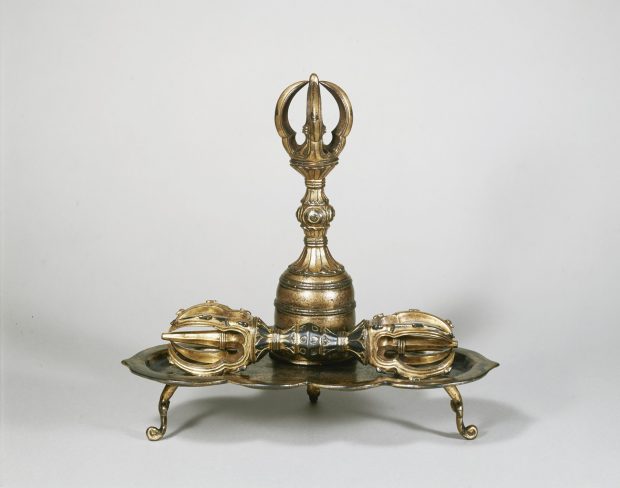
"Ecogical tools" National treasure China Tang era · 9th century Tojizo "Kongo" with "Gokan" and "Gokosho" on "Kongo" The most important tool of Aishiri (Daillari). It is said that Kukai has been transferred from Erika, and it is a famous treasure from the great treasure that has been used for important law meetings. ※ Exhibited at the special exhibition "National Treasure Toji Temple-Kukai and Buddha Statue Mandala" (Tokyo National Museum-June 2, 2019).
Shingon secular religion root temple, Toji Temple and place of training, Mt. Takano
Returning to the capital, Kukai will perform Kechien irrigated at Kaohsiungsan-ji (now Jingo-ji) in 3 (812), and it will be regarded as the best of the Heian Buddhism lined with Shinsumi. In addition, in the case of Hirohito 7 (816), Kishu Takanosan, which is far from the capital, was recognized as a dojo for secrecy training, and an overture was recognized. On the other hand, in Kukai, who has made great efforts to restore Manno-no-ike in Sanuki, and has been extremely busy, the life is to descend from Toji, which was a public temple from the Emperor.
Kukai had always been warm after returning home, and he decided to set up a basic dojo at Toji Temple that would deliver Shinto secrecy “teachers convictions” in the closed room to deliver teachings from the teacher to his disciples, and Konoyama would be the site of religious practice.
On the occasion of the construction of To-ji Temple, Kukai will work vigorously, for example, transferring all the stupas and mandala figures inherited from Erika Amitashi of Seiryu-ji, and creating a three-dimensional mandala with 21 figures of various statues in the auditorium. However, Kukai was admitted at the age of 62 in 1983, when he was at the age of 62 (it was originally meant to enter meditation, but in the case of Kukai it is used in the sense of obtaining immortality). It will not be in time for the completion of the Sakai, the Five-storied Pagoda, and the Shallow House.
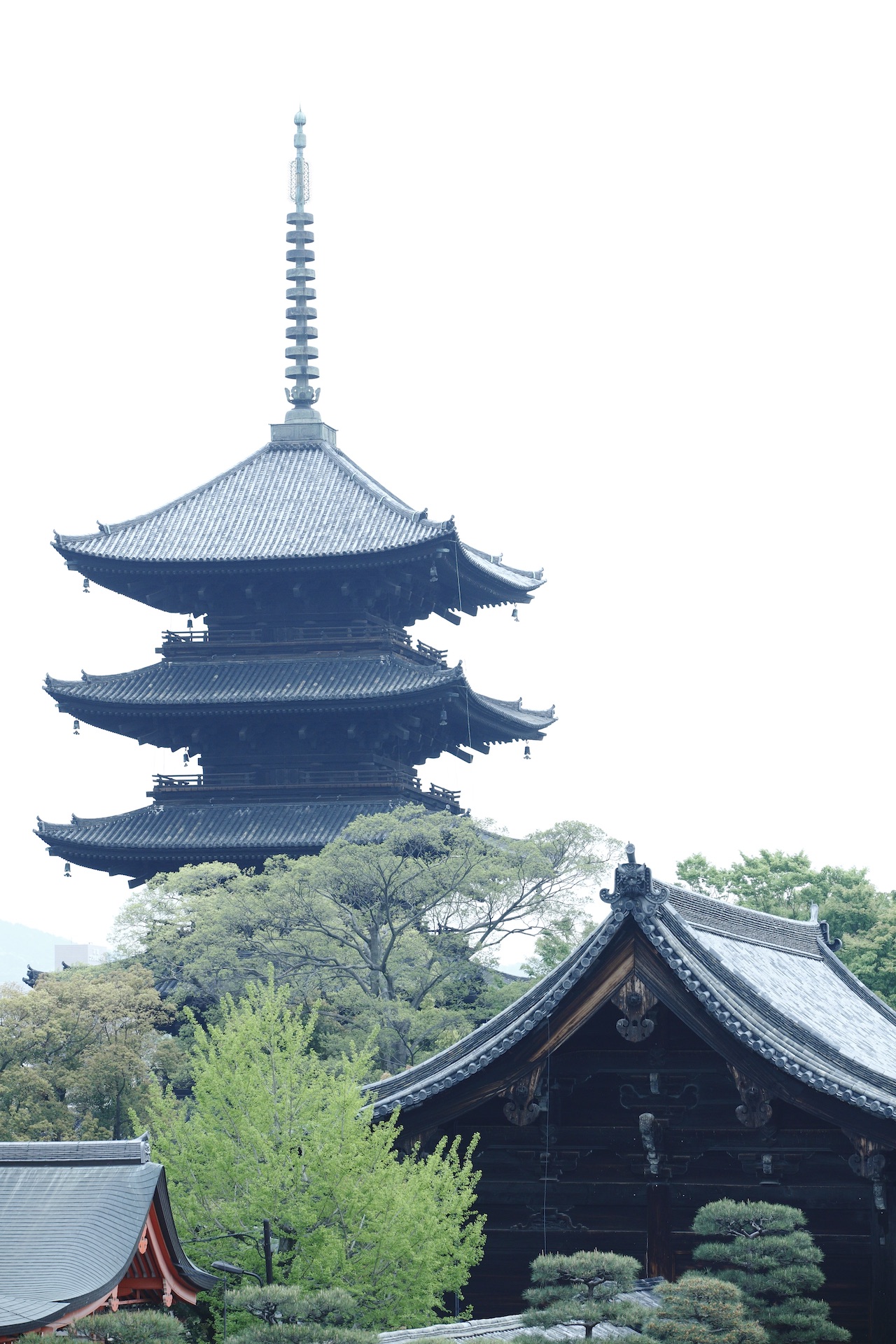
Todera shooting / Ito Shin
Five reasons why Kukai was a genius superstar

Alamy (PPS communication company)
Born in the Sanuki country, studying abroad in Tangle, gaining secularism, and spreading Shingon secularism in Japan, Kukai is believed to have not only a religious home, but a genius who excelled in all things. Of course, the five points that tell of the exceptional qualities of Kukai that will continue to be worshiped even after being appointed are the proof of the superstar that Kukai is a genius.
It was a well-known writer who can be counted in "three strokes"
As there is a saying that "choose Kobo writing", Kobo Daishiku Kukai, known as a writing brush, is called "Sanbo" together with Tachibana Issei and Sakai Emperor. Kukai's writing, which is supposed to have learned the writings of Tang's King Ougeshi, is a writing style that mixes slavery and cursive writing, and "hihakutai" that waves in the air. There is no such thing as anything else, and the vivid brushstrokes are unique.
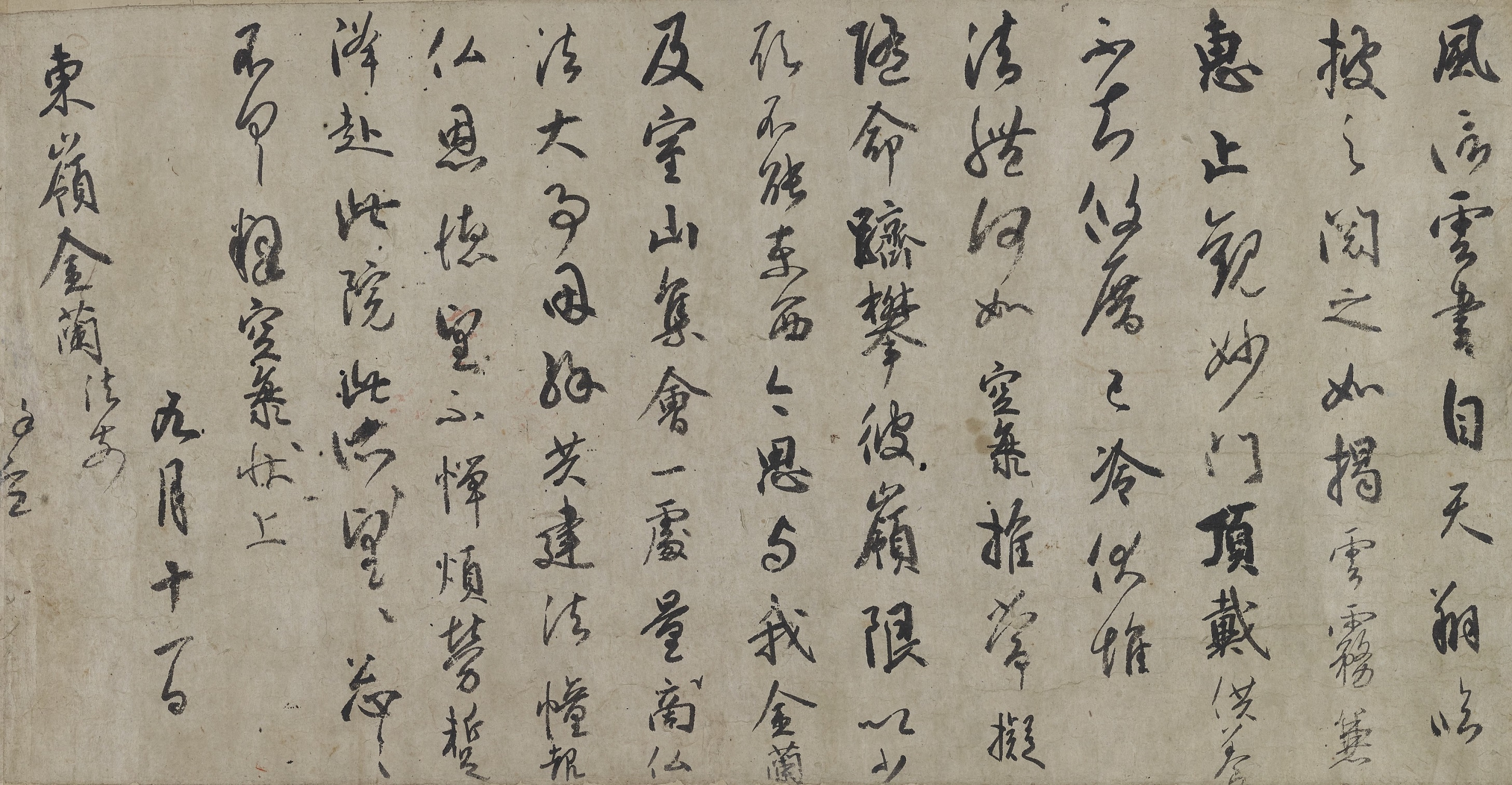
"Fushinjo" Sorakai Writing National Treasure Heian Era, 9th Century Tojikura This book, which has been handed over three letters written by Enkai-ji Temple's Shimei, is known as "Seishinbi." It is a valuable historical material that conveys the state of Buddhism during the Heian period, and is a representative handwriting of Kukai. ※ Exhibition until May 19, 2019 at the special exhibition "National Treasure Toji Temple-Kukai and Buddha Statue Mandala" (Tokyo National Museum).
It was trilingual to manage three languages
During the two years that Kukai stayed in Tang, I was able to learn all sorts of studies because I was fluent in Chinese and Sanskrit. It is said that Tachibana Enso who went to Tang together had troubles with words, and that Sumisho had put on an interpreter, and everyone uniformly struggled with words. On the other hand, there was no language barrier in Kukai, which led to the completion of study abroad, receiving an unusually short period of practice.
He also acquired civil engineering and construction technology
Kukai, who returned from Tang, is known to have made quick work on the restoration of the Manno pond in Sanki, the country of birth. Kukai actually directed to Manno pond as director and worked to spread water around the area. Kukai had an unusual knowledge of science such as geology and civil engineering, as there were many hot springs opened by Kukai in many parts of Japan.
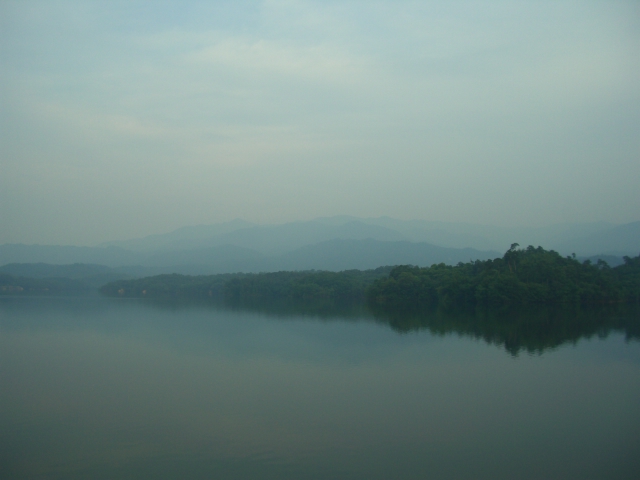
Manno pond now
It was an educator who created a popular school during Heian period
The “Rakugei Type Chi-in,” opened by Kukai near Toji Temple when only limited people were able to receive education, was a school for commoners who was opened for the first time in Japan. It is no exaggeration to say that the foundation as a cultural nation of Japan was built by the execution power of Kukai, who was early aware of the importance of education, and has been handed down to this day
Kukai is immortal, still alive!
Kukai was announced saying, "5, 670 million years later, will appear on earth in order to rescue people with the wolf." The body was put in the Joraku, and it was built on it is Koho Daishi Gyoen of Mt. After that, 80 years later, since the Emperor Hoki presented the issue of Kobo Daishi and the leather-colored coat, the change of clothes is carried out once a half year, and a pottery is provided twice a day. In other words, Kukai is still alive in Koyasan and Okunoin.
Re-edited the articles in "Wagu" May 2004 issue, July 2013 issue, 2019 April / May issue