













The special exhibition room of " Edo-Tokyo Museum " has been renewed and returned to the 2019 Golden Week! The museum has held various exhibitions related to "Edo and Tokyo", but after the summer of 2017, the special exhibition room was closed for renovation work. Of course, Edo Hiroshi is a permanent museum, there are many realistic models with plenty of atmosphere and experience-based exhibits, and it is a valuable museum that can return to the Edo period whenever it goes. However, aren't there many fans who recently had no special exhibitions and were sad?
The special exhibition that has been held with full satisfaction after about a year and a half is "Going along the Edo Highway-Generals and Princesses' Journey" . (April 27-June 16, 2019) Japanese have always loved traveling. Of course there are people in the Edo period. In this exhibition, we will follow the Edo period "trip" through materials related to the journey of the general, princess, and princess, who will be the kitchen. The number of exhibits is 133 in all! Highlights include the huge number of Ukiyo-e paintings and beautiful picture scrolls that bring Japanese art fans to life, as well as the many works of art that will be unveiled at this exhibition. The content was extremely rich, suitable for the first exhibition after the renewal, so we will deliver the report from the site of great excitement.
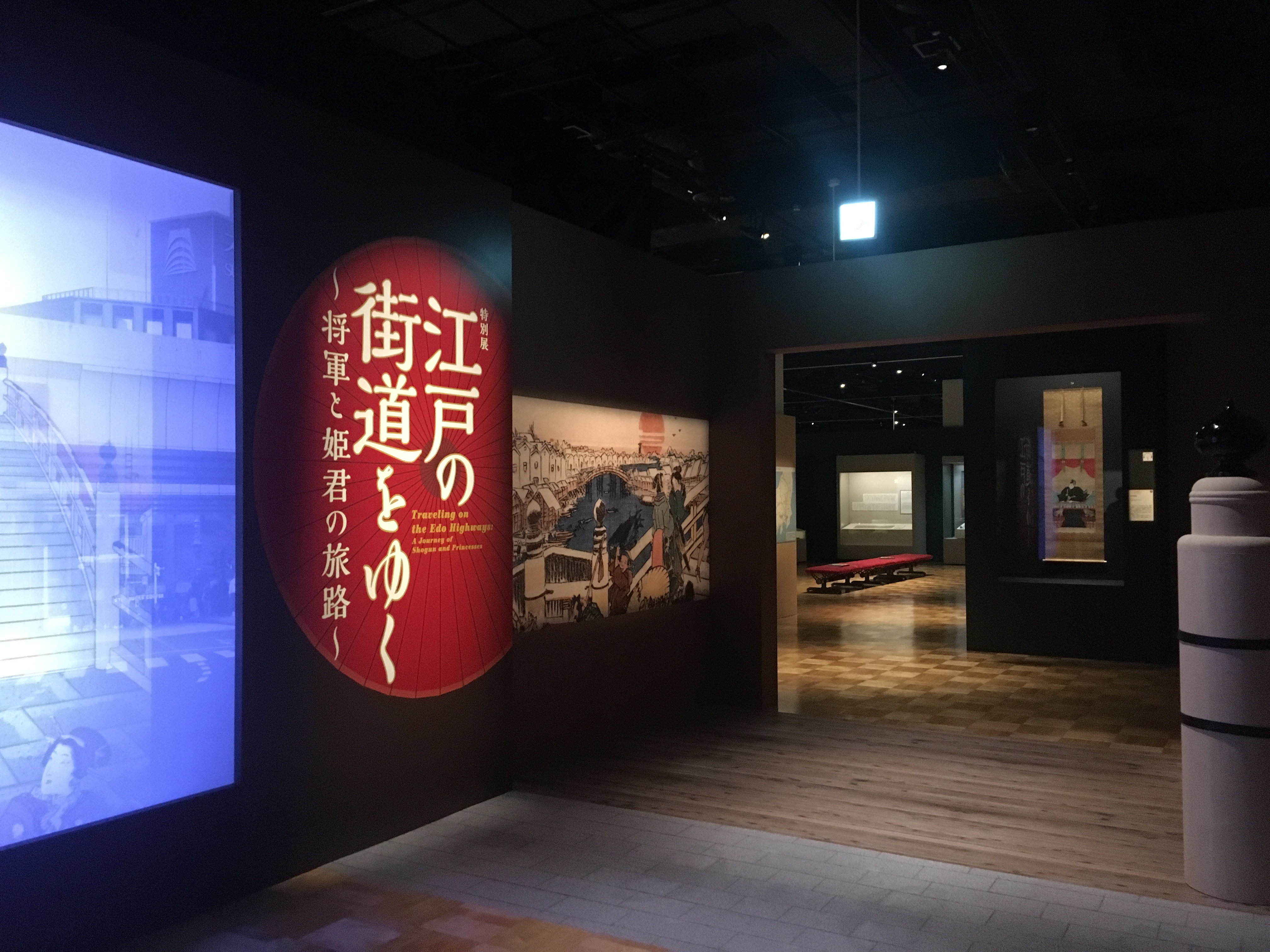
Outline of the exhibition: What is the "Five Avenue" maintained in the Edo period?
Ieyasu Tokugawa, who won the battle of Sekigahara, has promoted the development of the Five Highways from the year following Keicho 6 (1601). Five highways are the Tokaido, Nakasendo, Nikko Dochu, Oshu Dochu, Koshu Dochu, which extend from the Nihonbashi in Edo to the whole country. What developed this path was a change of duty to Daimyo, and a trip to generals Kyoto and Nikko. Many highways were set up on each highway, and it was said that it was very popular. 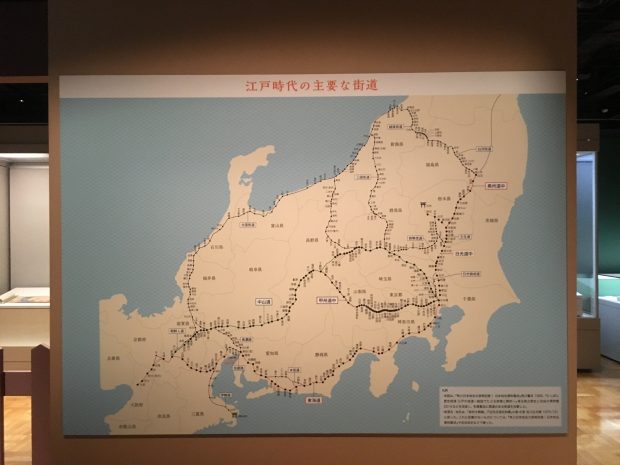 In this panel, you can check the route of each of the five highways on the map. It is like the route map of the Shinkansen.
In this exhibition, we will talk about the journey through the Five Avenues, focusing on Shogun's Kamijima, Nikko-shajin, Daimyo's change of duty, and Hime-kun's Edo downturn . It makes you feel like you are traveling with them, it is an exciting and enjoyable exhibition. Now, let's introduce the sights at once.  Kiyoi Eisen "Kiso Highway Shinonoi Nihonbashi Yukinoshima" Tokyo Edo-Tokyo Museum Collection * Late (5/28 to 8) Starting of the Five Highways, Nihonbashi became an Edo landmark.
Highlight 1 Know the circumstances behind the change in attendance!
Well, speaking of the Edo period, it is a change of work hours . "Going to work" means going to Edo from your home country in order for each group to worship the general. "Alternate" refers to the return to the government of the country. The third Shogun Ikemitsu institutionalized the change of attendance at the “Mukei Laws” in 1635, and it was obliged that the lords of the lords then reciprocate between Edo and the state every other year.
This is a daunting task as the lords of Japan all over the world make a daimyo procession every other year. At the exhibition, through Ukiyo-e, old documents, picture scrolls, etc., it becomes possible to understand the detailed circumstances of the change of attendance, such as the route taken by each group. 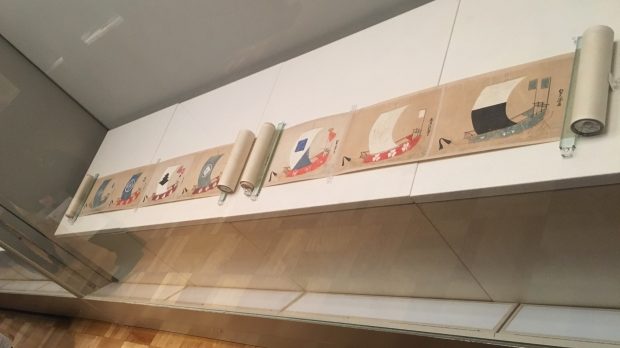 "Ryokan boat picture drawing" (there is a scene change in the first half) Tokyo Edo Tokyo Museum storehouse
Here are picture scrolls of various ships used by the lords of Western Japan, far from Edo. The family banner was attached to the banner, and the ship's seal was given its own design.
The Daimyo matrix drawn in the picture is all very gorgeous. However, behind that, there were some difficult circumstances and hardships unique to Edo period warriors. I will introduce the facts a little.
Even Daimyo is not easy! Care to the top like a medium-sized office worker
Above the daimyo, there is the Tokugawa family, the "Samurai's Mujiri". It seems that the change of office hours had to be in accordance with the rules of the Shogunate. For example, here. 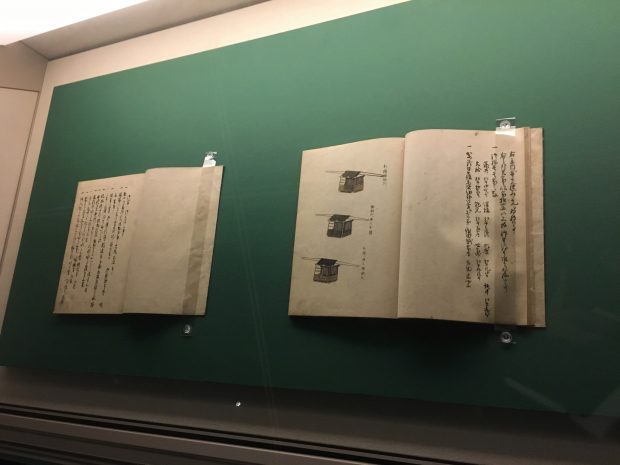 "Mr. House Courtesy Courtroom" Tokyo Edo-Tokyo Museum Collection
Here are the rules and regulations in the samurai society. The specification of the gate position of the samurai residences in Edo is specified, the costumes are specified, and the vehicles used for the change of attendance are illustrated and illustrated. This is fine! In addition, I would like to ask the shogunate about the time when the daimyo will come to work from the government, wait for a letter of instructions, and also send a letter of advice so that I can move for the first time, and the samurai in the Edo period is difficult. There were lots of materials that could be sent. 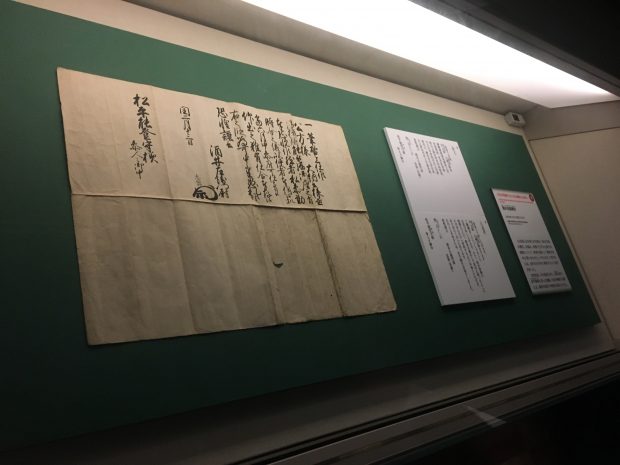 "Sakai Taki Letter of Letter," an acknowledgment sent by Daimyo to the instructions of the Tokyo Metropolitan Edo-Tokyo Museum Library. (It is a transliteration!) "I am thankful and fortunate to know" for what is indicated. While being a social appointment in a modern office worker.
The reality of "Samurai is eating food Takanie" is too serious
In the Edo period of Teijin Taihei, prices in Edo town soared along with the increase in population, and it was often the case that warriors were forced to live in harsh conditions. However, no matter how financially strict, only the pride as a samurai should be maintained.
There is a wealth of material that shows the efforts to maintain the tearful “pride maintenance” of such warriors in the entry-to-service section of this exhibition.
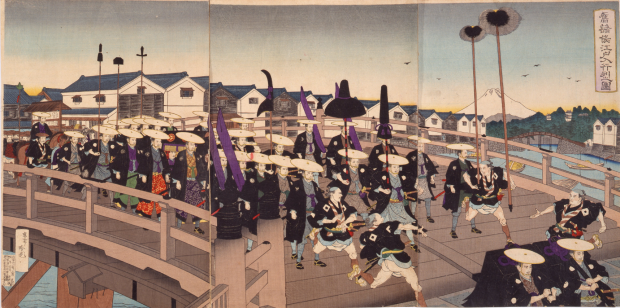
Yuko Adachi "Old Morogo Edo entrance procession line map" Tokyo Edo Tokyo Museum storehouse ※ It will be an exhibition of the first half (5/26) only! Do not miss it!
For example, in this Makie, the most glamorous scene of the Daimyo procession, including Edo, is depicted, but it is said that more than half of the procession was part-time job of the day . The daimyo procession is most important in its glamorousness, so even if it is financially difficult, there will be no "haiku" if the procession is small. It is also people who are called " intermediate " hired by a part-time job, who are performing a performance to throw and replace hairs at the head. It is said that cheers came from the sighters when the flashy performance was decided upon.
Armor is fashion
It is not only the size of the matrix that determines the dignity of the Daimyo matrix. The tools used for the trip are also beautifully decorated and decorated. Above all, the weapon was a trademark of samurai, and I was particular about it. However, in the Edo period, which seemed to be much peaceful compared to the present age, there is almost no opportunity for battle armor to play an active part, so it is not practical but fashion (with prestige for maintaining pride). 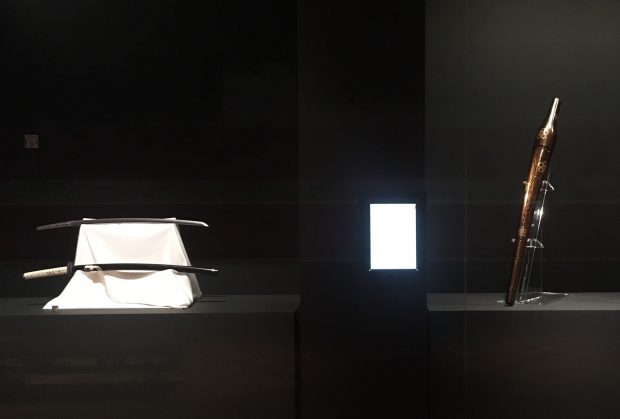
"Riko ground star Umeboka-mon-Ko-Gan Bunto-tsue" Tokyo Edo-Tokyo Museum collection This is a sword and sword-sleeve of Hisamatsu Matsudaira family. 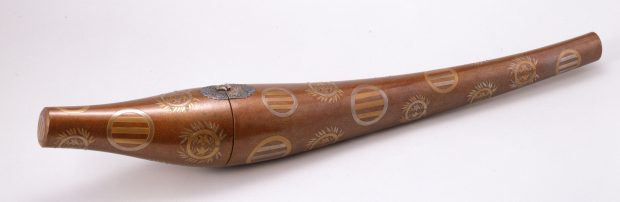 "San Chikuzoku Jakurin-mon-Sen-Ei-Ten" The Edo-Tokyo Museum of Tokyo, Japan. A sword is a storage tool for carrying a sword. Even if you don't have the opportunity to use it, it's a cool item that every boy wants.
Highlight 2 A must-see for Japanese art fans! General's street! A variety of screens and ukiyo-e pictures show the atmosphere of that time
It is not only Daimyo who traveled the Five Avenues. Shogun Shogun also traveled on "Nikko Onarido" and other places for the purpose of the company, and used Tokaido to go to Kyoto. In the case of generals, the number of people used is not unique. The scale of the procession also greatly surpassed that of Otaki.
Above all, the spectacular trip that made the people amazed is the “ Shinjo ” where the Shoguns join Kyoto from Edo. Of the 15 Generals Tokugawa, the ones who got up are the first Ieyasu, the second generation Hidetada, the third generation Iemitsu, and the 14th generation Iamemo. At that time, I'm on the board three times to overcome political unrest at the end of the Edo period.
At the venue, there will be a row of pottery drawing on the top of Iemo. The “ Takaido famous spot scenery ” (Bunkyu 3rd year, the first upper class) that “ Takaido famous scenery ” that the number of painters published on the occasion of the upper side of Iamoshi has reached 16 painters, more than 20 originals, and the total number is over 160 pieces! It is Suehiro Fifty-Third (in Keio 1st year, the third time on the top). You can clearly see how popular people are at the top of the generals. 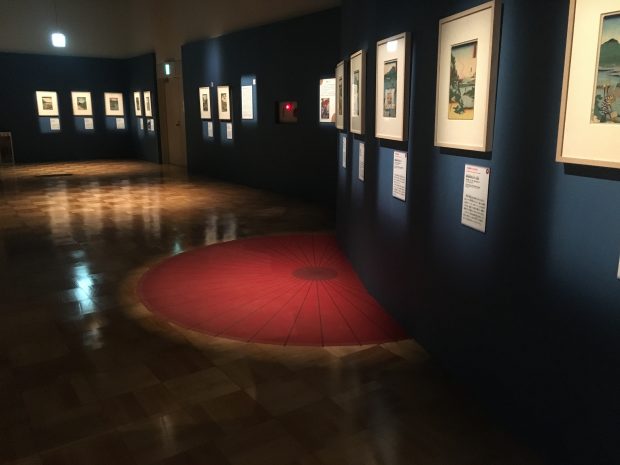
The Ukiyoe picture depicts not only the troubles that Iemo and his group have traveled with, but also the confusion of spectators and the post area, and the enthusiasm atmosphere of those days is transmitted lively.  Utagawa Yoshiki "Suehiro Fifty-three Shogogaya" Tokyo Edo-Tokyo Museum Collection This is a picture of Hodogaya in Tokaido. Foreigners are also curious.
Highlight 3 Let's search for “Hidori Umbrella”!
The title of the published Makie is "Tokaido scenic spot scenery" and "Suehiro fifty-three". Why don't you say "Ieimo no Utamu"? In addition, the title of each picture also seems to appeal to the title of the place, the purpose of saying "The Yoritomo Koen procession" and "It is not a general".
In fact, in the Edo period, it was forbidden to use the Tokugawa family as the subject of paintings and plays . Then, why do you understand that these paintings are the paintings of Imamo, because a symbol is drawn to indicate that. That is the scarlet umbrella that has been only allowed to be possessed by nobles since ancient times, the " Hail umbrella ".  Utagawa national turf (two generations) "Tokaido Narumi" Tokyo Edo-Tokyo Museum collection ※ late (5/28 ~)
The picture here is also "Tokaido Narumi", and it looks like a "spot picture" style, but it is understood that it is a picture of Iemasu, as it is drawn by the "Uryu dragon crest" which is the crest of Ubara and Genji. You In this exhibition, umbrellas appear on numerous Ukiyo-e and picture scrolls. It is also one of the fun ways to do "Oh, here too!" And "Hidden umbrellas search".
Highlights 4 Women must see! Princess wedding ceremony equipment
In the second chapter of this exhibition, we will follow the Edo era highway through the wedding journey of Princess Himeji, who will be the general's kitchen. What you should pay attention to here is a number of luxurious wedding tools that tickle the girl's heart ! Long-eared baskets, weights, combs, tea bowls, tea tables, mirrors and bowls! When surrounded by glittering tools, a girl who once admired as "one day the prince" will roar. 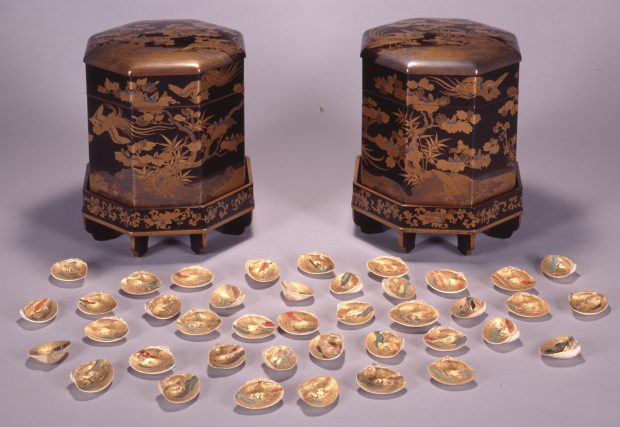 "Kurobori pattern gold and silver picture shellfish combination tool" Tokyo Edo Tokyo Museum collection
This is a real cinderella girl from Japan, who became the kitchen of the Tokugawa family from Satsumai, a shellfish tool that is transmitted to Atshime ( Atsuhime) . Shellfish and clam shells are paired and played like Trump's nervousness. Clams are not the same shellfish, and they are considered to be a symbol of marital harmony, as they do not fit perfectly. 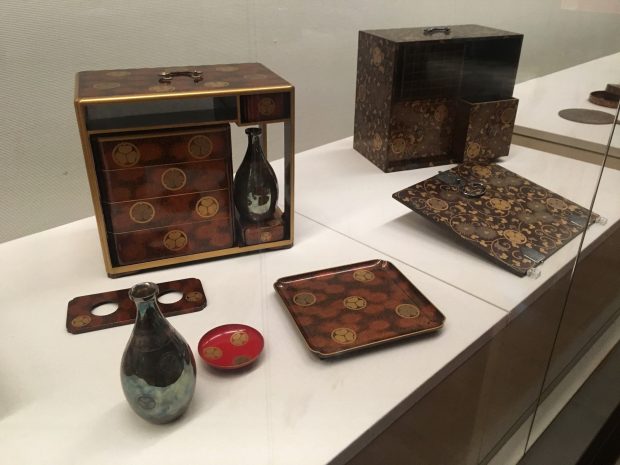 "Urashikoji Shimonsu-tan-e-bi-hei" (left) and "Nishi-shi Shimin-san-tan-tei-miku-karasu-tan-e-yaku-tan" (right) Tokyo Edo-Tokyo Museum Collection
It has a big name, but the left is a lunch box and the right is a medicine box. On the left, "Donashige" seems to be a portable tableware for vacations where dumplings, heavy boxes, small dishes, trays, etc., have become one set. In both cases the Tokugawa family's crest "Mitaha crest" is scattered.
And I definitely can not miss the items of wedding tools that will be unveiled for the first time at Edo Hiroshi.
First release at Edo Hiroshi! Shimadzu-related "girl ride"
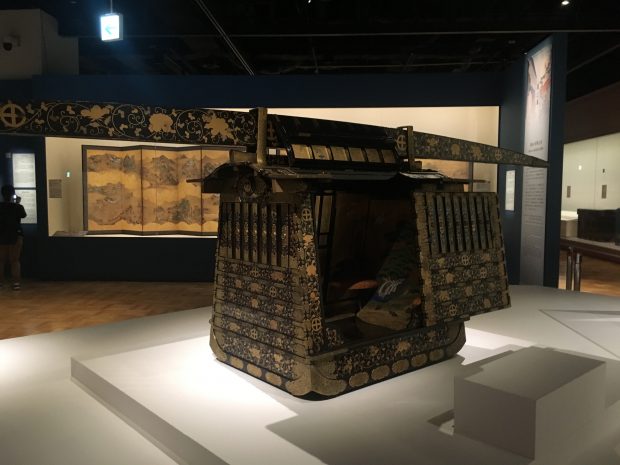 "Kurojutsumaru Tenmonsan Peony Carcass Ebene Girl" Tokyo Edo-Tokyo Museum Collection
A woman ride related to Satsumajima Shimazu House. This is pretty powerful when viewed at the venue. There are also glittering sizes and exteriors, but pictures of four seasons flower birds, Shochiku plum cranes, etc. are drawn on the inside, and luxury shines. The total weight is 71.5kg! Tears come out when I think about the hardship of the bearer.
First release! Silver teacups and tea tables for the Wamiya
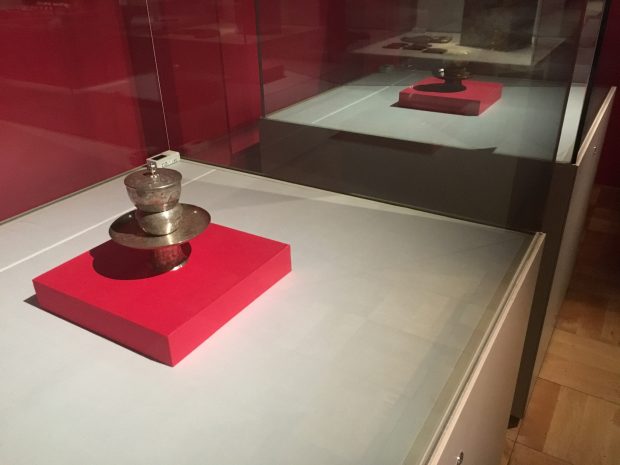 "Azalea chrysanthemum flower arrangement 桐 and tea table" Tokyo Edo Tokyo Museum storehouse
14-year-old general, it is Princess Kamiya (Kazunomiya) to marry to Ieamo . She also travels on a large scale. The number of processions was about 30,000 (!). In this exhibition, besides the picture scroll depicting the journey of Wanomiya, a large number of wedding tools are displayed.
Besides this, there are still more wedding tools to be released this time. Please check at the venue!
Highlights 5 Total length about 24 meters! A picture scroll depicting the downward direction of Rakunomiya
And this time, it is the picture scroll which drew the Edo downturn of Rakumiya (Sazamiya) , showing the overwhelming presence in the "Himeki Section". In this exhibition, all scenes covering about 24 meters in length will be released over the full year! 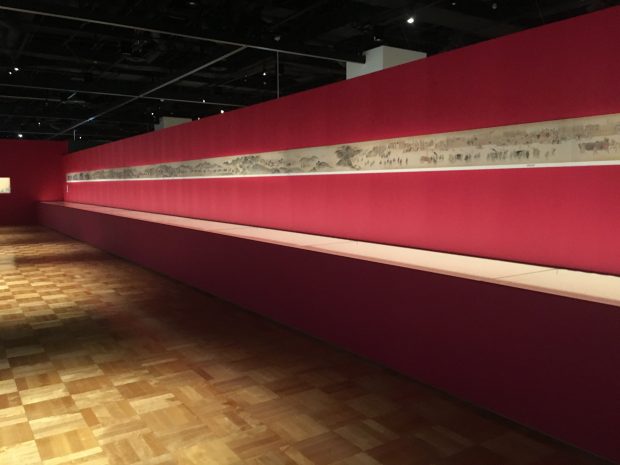
When the engagement of the 12th Shogun Ikekei and Ekunomiya was decided in 1803, a group carrying the Ekunomiya, which was only 9 years old at the time, will leave Kyoto. The record of Minokunigoi village says " It is an unprecedented passage," and the enthusiasm of the gallery is transmitted.
In the picture scroll, the appearance of the spectator who looked excited to see the procession at first glance and the state of the post town which is crowded with events different from usual are drawn. Even nowadays, when entertainers come to the local area, it's a big fuss, but people who want to be involved in such a big event, want to see the princess at first glance if you want to get a glimpse, you can see a glimpse of the people's mind. -e1556431933980.jpg) Masataka Aoki "Rakunomiya Shimomumu Emaki" (part) The Tokyo Edo-Tokyo Museum Collection is an event that has a certain atmosphere, and it looks like the procession is floating. The Rakumiya is not drawn behind the trees, but here too, it suggests the existence of the Rakunomiya by the “Koto Umbrella”.
Masataka Aoki "Rakunomiya Shimomumu Emaki" (part) The Tokyo Edo-Tokyo Museum Collection is an event that has a certain atmosphere, and it looks like the procession is floating. The Rakumiya is not drawn behind the trees, but here too, it suggests the existence of the Rakunomiya by the “Koto Umbrella”.
Highlights 6 You can see the live performance of the sand art group "SILT"!
This Edo Hiroshi is also quite fulfilling collaboration content! Especially noteworthy is the collaboration performance by SILT . SILT performed a live performance to commemorate the 300th anniversary of Ito Wakatsuki birth in 2016 in front of the national treasure "Chionin Sanmon". Apart from performing in television appearances and commercial productions in Japan, he has also expanded the field of international activities, such as appearing at the Astana Expo held in Kazakhstan. This time, how can the live performance of such SILT be seen on the ticket of the special exhibition only for each first arrival 30 people! 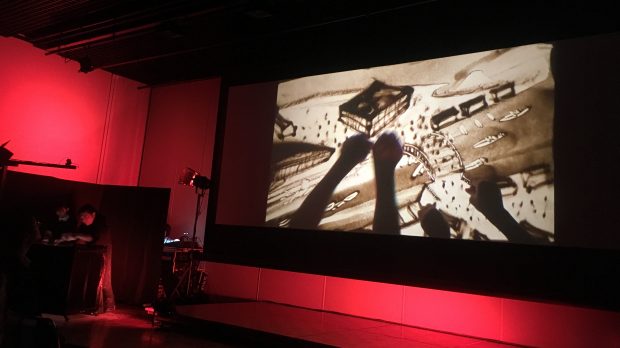
It is a masterpiece that a sand and a person and a town are drawn out in the space where there was nothing, and it changes into a completely different picture in a few minutes of things. Of course, the motifs of the works to be drawn this time are the scrolls and picture scrolls exhibited at this exhibition. If you look at the exhibition, you can also look at the world of Edo painted in sand art, or if you look at sand art and then look at the actual exhibition, it may be interesting to compare. Performance is only seen on 5/3-5/6! Don't miss the opportunity to experience fantastic sand art! 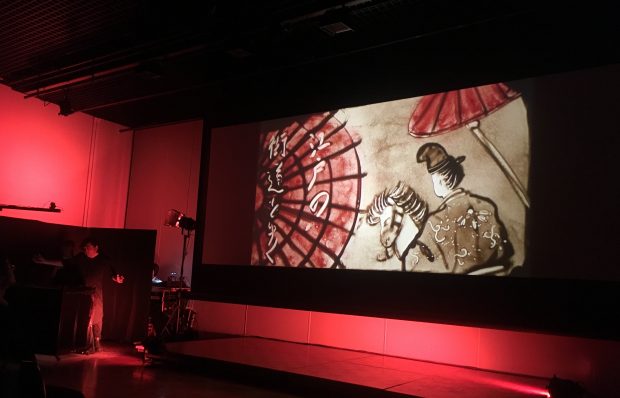
The first special exhibition after renewal is cool enough! History fans and art fans alike!
Armed with martial arts's prestige, full-time and princess's spectacular journey, and the princess' gorgeous' wedding tools'. This exhibition, which will be the first after the renewal, has a lot of content for each chapter, and it is a content that women who fall in love with princesses and men who fall in love with samurai will be very satisfied. In addition, Ukiyo-e, picture scrolls, and folding screens are also available, so I think that not only history fans but also Japanese art fans can enjoy it. By all means, please feel relaxed while feeling traveling on a long long five highway with generals, princesses and daimyos.
Exhibition information
Name of the exhibition: Special exhibition "Going through the Edo Highway-Shogun and Princess Journey"
Period: Saturday, April 27, 2019-Sunday, June 16
Previous period: April 27 (Sat)-May 26 (Sun)
Late: May 28 (Tuesday)-June 16 (Sunday) ※ Partial display changes in the second half of the previous year Opening hours: 9:30 am to 5:30 pm (Saturday until 7:30 pm)
Closed days: 5/7 (Tue), 5/27 (Mon), 6/3 (Mon), 6/10 (Mon)
Official site
Overview of sand art performance by SILT
Date: May 3 (Fri) ~ May 6 (Mon)
11:00 ~ / 13:00 ~ / 15:00 ~ (about 30 minutes for one performance, each schedule 3 performances)
Admission fee: free (must have a ticket for this exhibition)
※ 30 arrivals each time (the number of people may be changed by the situation on the day)