









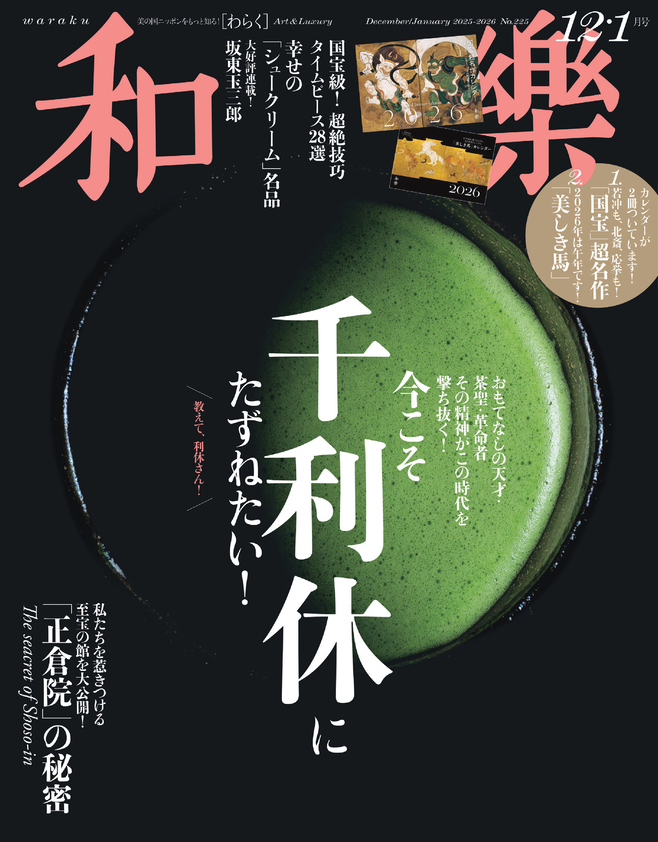




Daily wear of Kyoto, which is found in the old textile town
Nishijin used to hear the sound of weaving a machine here and there. Now there is a quiet town with a historic pastry shop, a retro coffee shop, and shops with a new sense. Here you can feel the usual Kyoto, it is a perfect town for a walk along the road. 
A town where people who protect the technique gather. Every day, beautiful things are born
Even so, "Western" is a great place name. Its origin goes back to the Muromachi period.
A reckless rebellion that began with the family crusade of Ashikaga Shoguns. The place where the warring daimyos, Yamanae Sozen set up was called Nishijin. The location is west of Horikawa-dori where Sozen residence was located and south of Kitakawa-dori. Higashijin and Hosokawa Katsumoto, on the other hand, set up a branch on the east side of the current Doshisha University Shinmachi Campus, with the Kokata (General Ashikaga) Flower Palace, across the Horikawa. The battle lasted for more than a decade, and Kyoto became a burned field.
During the Heian period, there were the inner back (the emperor's private area and palace) and the inner back (Miyagi), and the fabric used there was woven. From the Muromachi period, Japanese confectionery craftsmen lived, and in the Edo era, many tea ceremony craftsmen lived. It was the first movie city in Japan during the Meiji period, and there were about 20 cinemas and theaters in the past. Today, young people involved in crafts and arts live and the culture of manufacturing is inherited.
Textile is an industry that became synonymous with Nishijin. During the Edo period, thread shops gathered along Omiya-dori, and there were a number of shops selling neutral goods, and shops for selling daimyo clothes lined along the Shidori-dori. A general's dressing room was also in Nishijin. If you think that it was a fashionable town, with luxury textiles coming and going, I would stop in front of a store related to textiles.
In Nishijin, we see a small alley called 辻 子 (図 子). There is a small shop on a small road, which will be a punctuation mark for a walk. 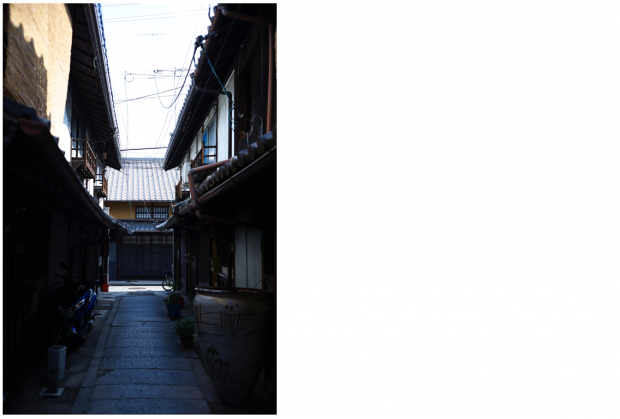 Reiko Mikami is a cul-de-sac that enters from Ayako Momoya. There is a honey shop in the middle of the cobblestone
A new shop in a small alley, small dumplings. Nishijin is full of discoveries
To walk Nishijin, from "Kitano Tenmangu". It is the general head office of Tenman-gu shrines all over the country that worship the god of study, Michishin Sugawara. The main shrine is the one to which Toyotomi Hideyori donated and is designated as a national treasure. It is close to the top seven houses, Kyoto's oldest flower street. Going east of Imadegawa Dori, a coffeehouse "Shizuka" with a retro look. Hot cakes are popular. 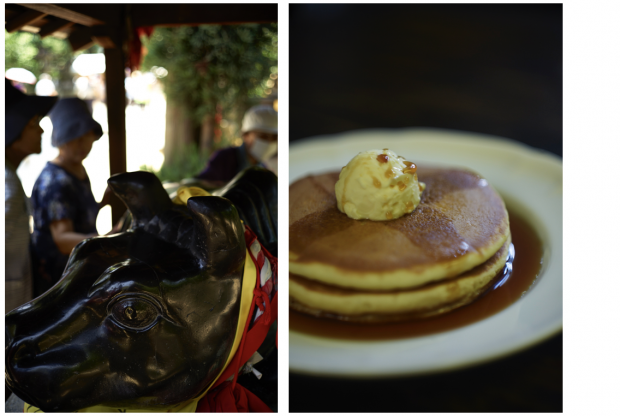 Left: The image of Tenjin's angel cow is in "Kitano Tenmangu". Right / Nostalgic style hot cake "Shizuka"
From here, take a taxi to the foot of the ship Okayama. It is a small hill with a Jianho shrine. Kuramaguchi Dori passes through the ship below Okayama. "Kamiso" is an old barber's refurbished paper product shop, and a letter set using the techniques of Kyoto Tang Paper such as Mikabiki is modern. There is also a cafe and a soba restaurant that has a renovated bathhouse nearby, as well as Funaoka Onsen, a kitsch interior for foreigners. 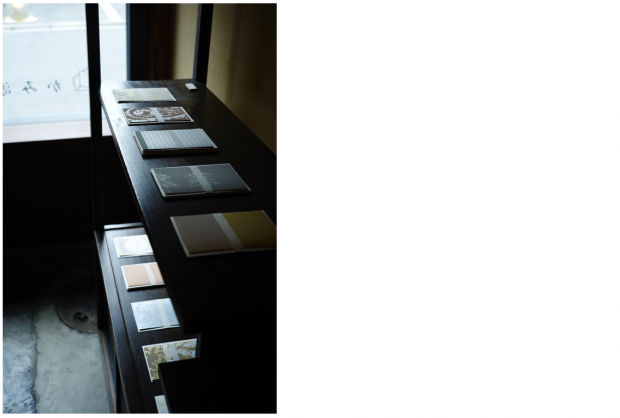 A shop for paperware "Kamizo". Beautiful letter sets and cards are lined up in a simple and chic shop that has remodeled old houses.
Crossing Horikawa Dori, which used to be a river in the past, enter Ogawa Dori. Horikawa Dori has the Uchisen tea ceremony library, and you can get green tea at the standing ceremony (the point where you sit on a chair). There are many shops related to tea ceremony nearby, but if you like clothe, the one you would like to visit is the “Kitamura Sakai Koto”. Forget about the passage of time on multicolored textiles. 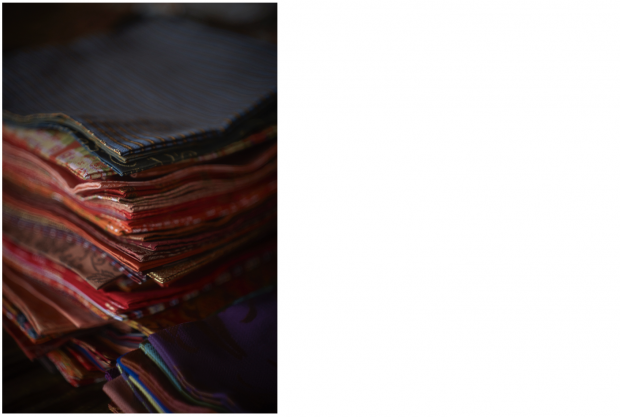 "Kitamura Sakai" is a shop where you can see one picture of each one. It is the only tea ceremony specialty store in Japan.
Down Horikawa Dori, "UCHU wagashi" is on a small alley. I was surprised at the unexpected taste of the cute design of dried sweets. The new store in Kyoto has a claim. 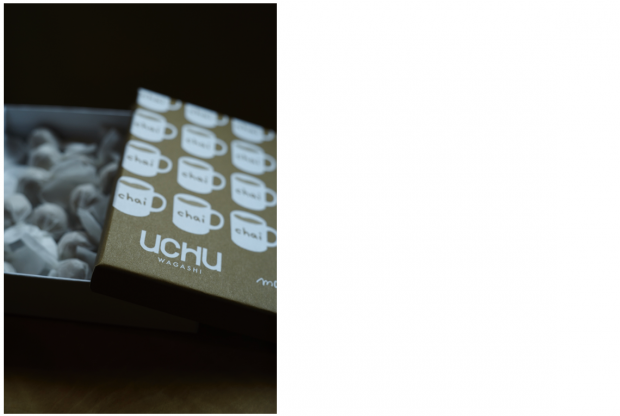 The box is also eye-catching "UCHU wagashi" chai flavor Sanbon (autumn and winter only). The owner is a designer.
With history and present. In Nishijin, I feel like traveling in overlapping time
Located in the northwest corner of the intersection of Horikawa Dori and Imadegawa Dori, the "Tsuruya Yoshinobu" head office is the mark of Nishijin. On the second floor, where there is a garden, you can see the making of seasonal sweets in close proximity.
Furthermore, “Seimei Shinto Shrine” located in the south is a Shinto shrine built on the ruins of the Heian-era Dr. Tenmon Yin-Dyo and Abe Haruaki. Became a protagonist of novels and manga, and shrines are also popular. If you like pottery, go to the "Sakai Museum of Art" next to the shochu shochu source. It is a quiet and precious space where the works of all generations come together. Close to "Tankori Tsuji Honpo" and "Mikami Ieko", for lunch, go to "Soba Nikora" in Chiekkoin Dori. Not only soba but also other dishes are delicious. 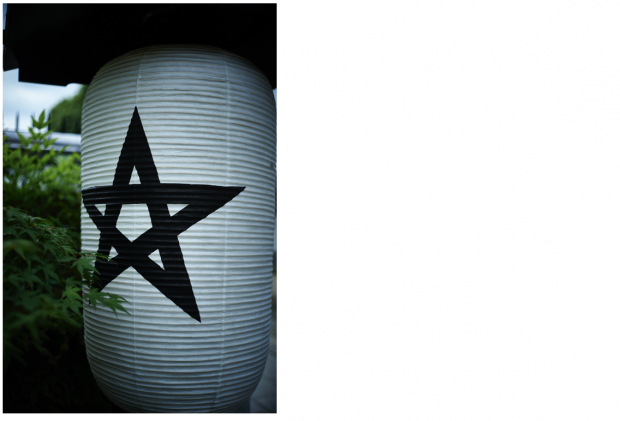 A five-pointed star is the company emblem of "Seimei Shrine". There is a one-step return bridge that hides Shikigami nearby.
I also want to know Nishijin textile work. You can take a peek at it, using the housing of the Tobari family of the Obi Manufacturing industry, "Ori-zui", and you can tour the factory on the second floor. 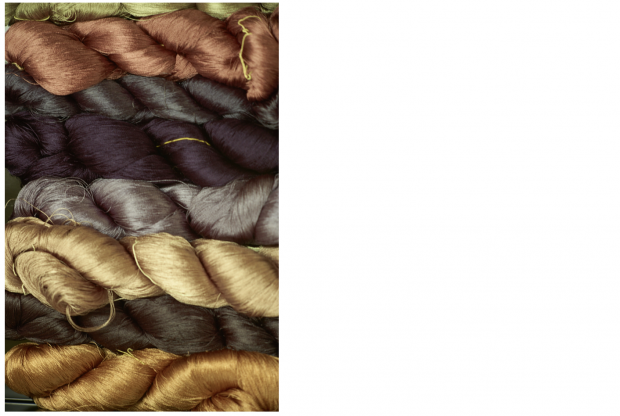 A zonal yarn dyed Japanese colors. The harmony of colors is beautiful. In the "Woven bowl".
At the end of the road, buy souvenirs at the "Yamanaka Oil Store" at Nishidate's south end and Shibata. As I walked along the Nishijin street, I suddenly thought of the vertical and horizontal threads of the fabric. A small rather than a way weaves memories, and a little by little the appearance of Kyoto of oneself is made--A way was an important time. 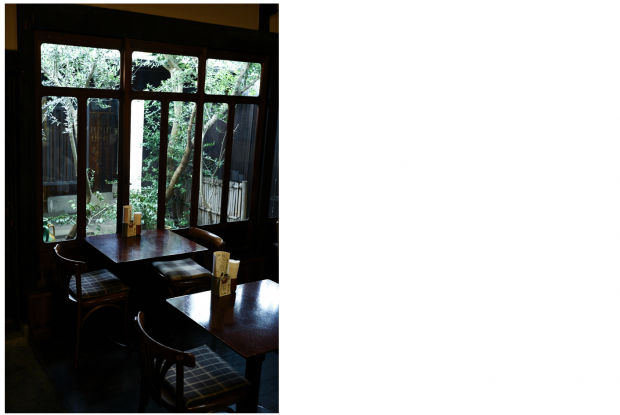 The “Yamushin-don” managed by “Yamanaka Oil Store” is a cafe that is a renovated rice shop. I am relieved by the green of the garden.
My motto is "I'm serious about being stupid", and I am having fun and having fun every day.