






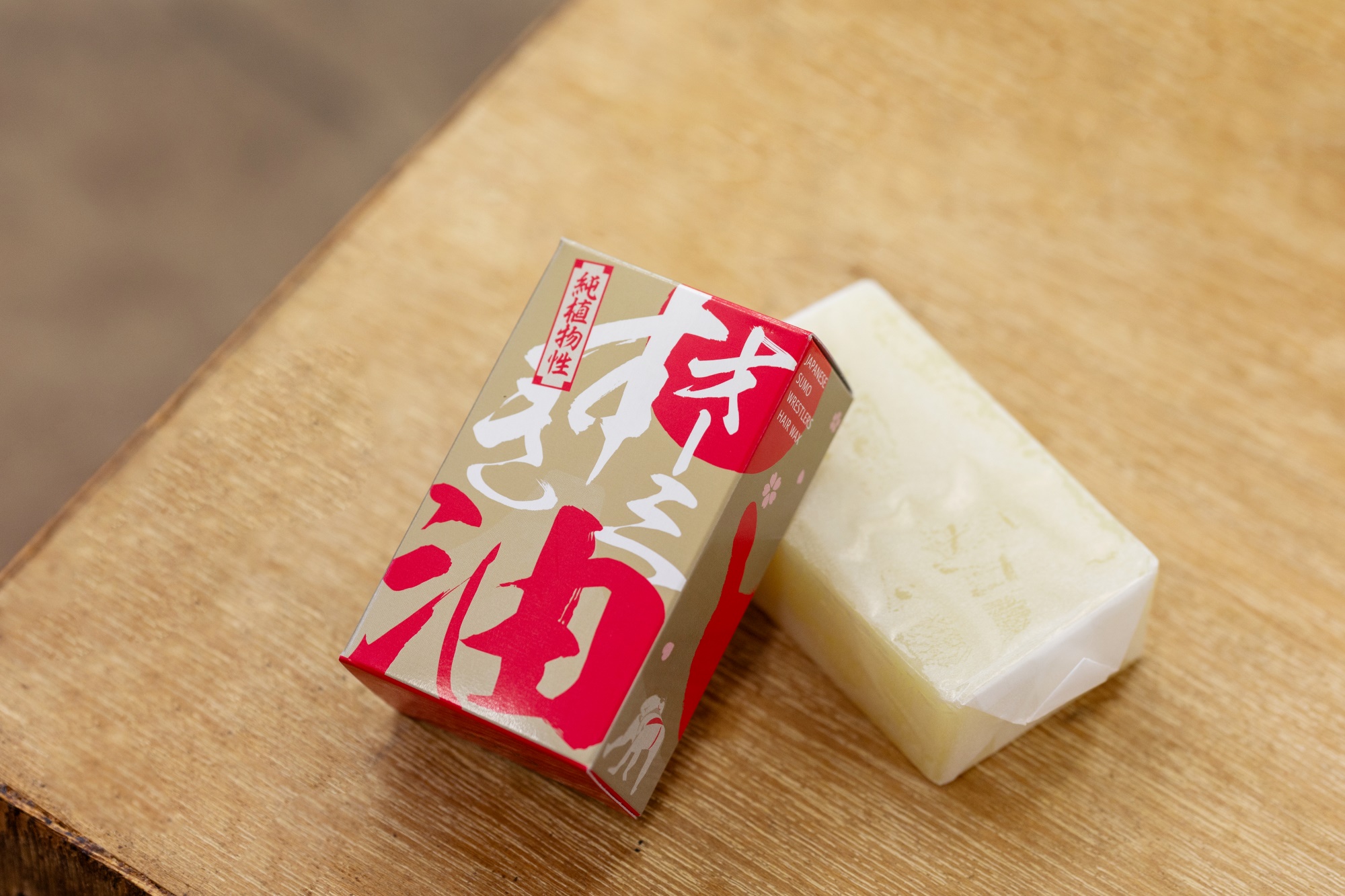
Omi Suki oil: essential for the iconic Sumo hairstyles
During the Kanbun (寛文) era (1624–1644) of the early Edo period, a solid oil was created by combining melted wax and oil with pine resin and fragrant oils. This was called Kyara oil (伽羅の油). According to the Edo encyclopedia Morisada Manko (守貞謾稿), Kyara oil was sold in Edo from the Kanbun era (1661–1673). Although no expensive kyara was actually added, it was a binzuke oil scented sweetly with cloves and other spices. Nonetheless, people, both men and women, longed for the scent of kyara and eagerly bought it.
A similar sweet-scented binzuke oil is still used in the world of Grand Sumo today: ‘Omi Suki oil (オーミすき油),’ a pomade for traditional Japanese hairstyles. It is an indispensable hair styling product for the mage—the topknot worn by all wrestlers in the form of a chon-mage (ちょんまげ, topknot folded forward), and the more elaborate oicho (大銀杏, fan shaped topknot), which only top-division makuuchi (幕内) wrestlers wear during matches and ceremonies.
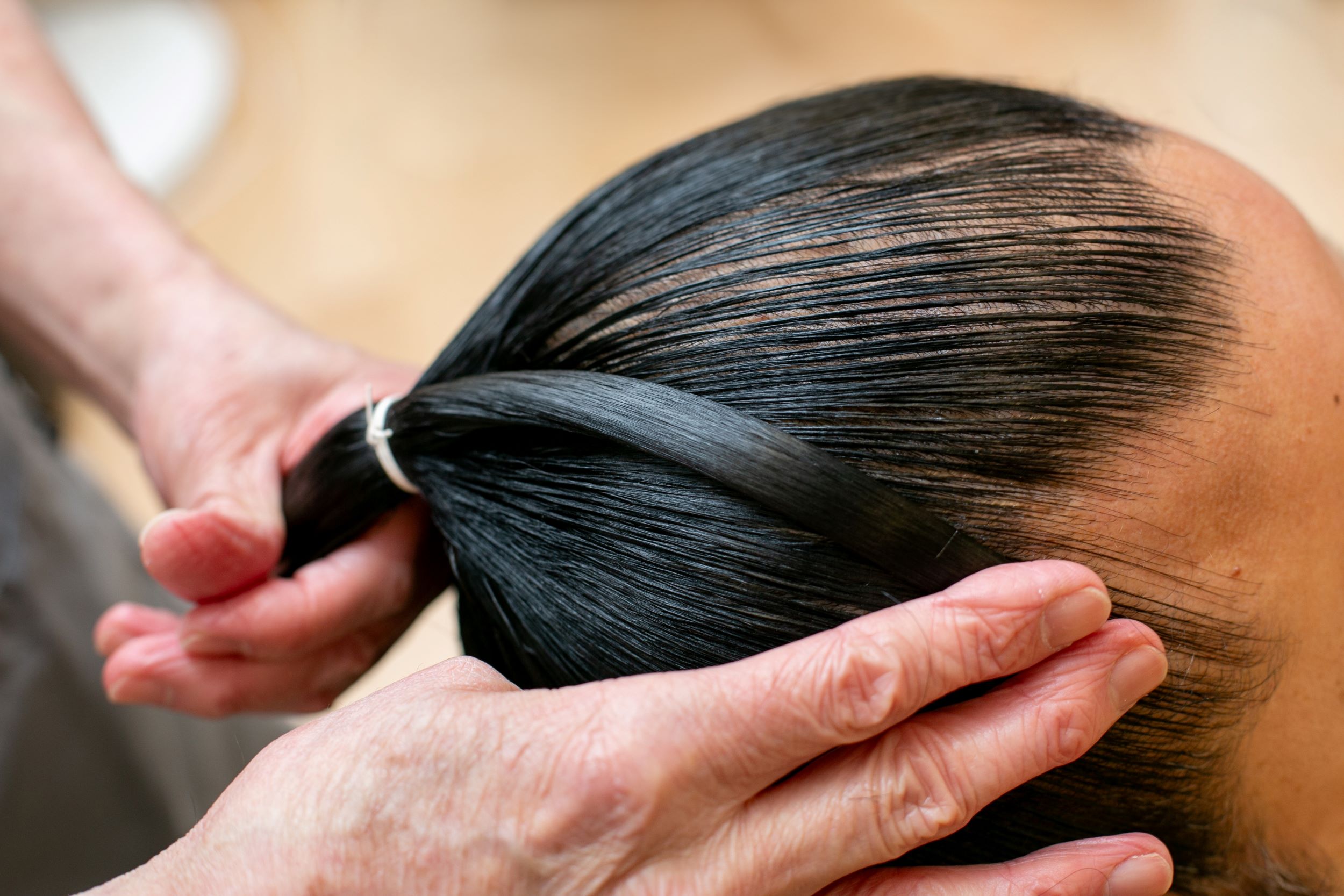
There are two main types of hair styling products used for traditional Japanese hairstyles: suki oil and binzuke oil. Generally, suki oil is applied and combed repeatedly into the hair, while binzuke oil is used to fix the hairstyle in place. However, ‘Omi Suki oil’ serves as both: it is used for combing the wrestlers’ long hair and for styling the mage. The plant oils used as ingredients are infused with fragrance, releasing a sweet, refreshing aroma when you handle the product. The impression people often have that “sumo wrestlers smell good” is attributed to the scent of Omi Suki oil.
A product developed by someone from Omi Is inherited in Tokyo’s old town
‘Omi Suki oil’ is produced by Shimada Shoten (島田商店), located in Edogawa Ward, Tokyo. It is one of the few companies in Japan that manufactures hair products for traditional Japanese hairstyles. Besides ‘Omi Suki oil,’ they also produce other binzuke oil and water-soluble styling products. The moment you step into the Shimada Shoten factory, you are enveloped in a gentle, sweet, and refreshing scent.
“Does it smell good? My family and I are always here, so we barely notice the smell anymore [laughs]. Currently, the founder, my father and mother, my wife, and I manufacture everything. It is a cottage industry, entirely handcrafted,” explained Shimada Yoji (島田陽次), the second-generation owner who leads the production process.
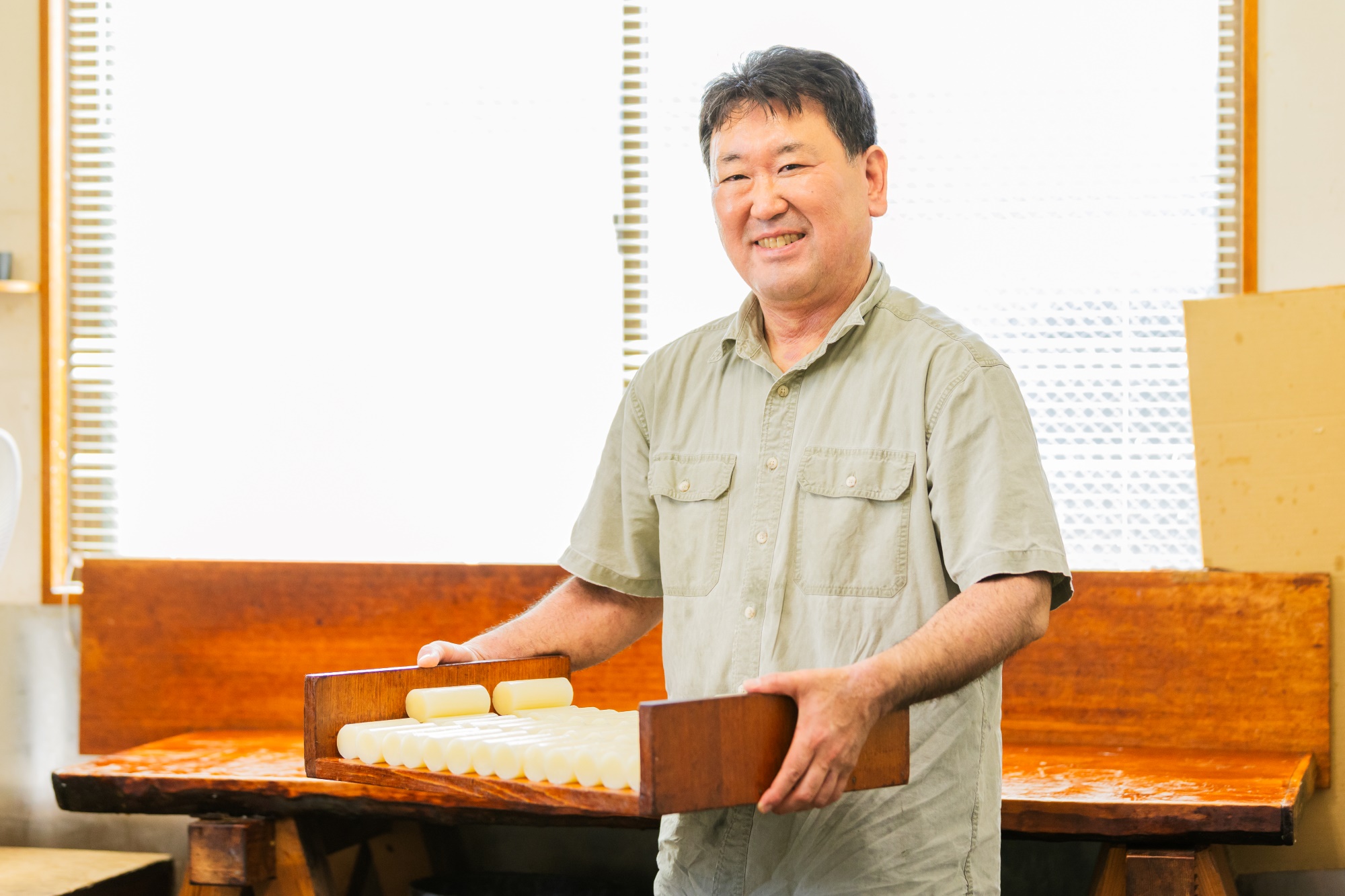
Shimada Shoten was founded in 1965, during the peak of Japan’s rapid economic growth. Yoji’s father, Akihiro (秋廣), worked as a craftsman at a company in Asakusa (浅草) that made suki oil and binzuke oil. When that company closed, Akihiro took over products such as ‘Omi Suki oil’ and started his own company, Shimada Shoten, continuing to manufacture and sell the products without changing their names.
Although various oils were used for styling mage in the past, ‘Omi Suki oil’ had already become the standard for wrestlers’ topknots around the time Akihiro became independent. The product name ‘Omi’ comes from the fact that the president of the original manufacturing company was from Shiga (滋賀) Prefecture (Omi (近江) province).
The manufacturing process is entirely manual, with kneading being the most crucial step
The ingredients and manufacturing process for ‘Omi Suki oil’ are very simple. The materials include mokuro (Japanese wax) harvested from domestic wax trees, rapeseed oil, castor oil, and fragrances. There is a specific reason for using domestic ingredients.
“Although imported mokuro looks the same, it completely lacks the required shine and viscosity. We tried making it once, but the product was not suitable for sale. Therefore, we continue to use domestic materials, just as we have always done,” Mr. Shimada explained.
The mokuro and oils, which resemble soap, are melted in a pot over medium heat and left for about three hours to cool down. Once the wax begins to solidify at the rim of the pot, vanilla and liquid fragrances are added, lightly stirred, and then kneaded with a thin, long oak stick. The mixture is blended for 20 to 30 minutes, adjusting the pressure while feeling the hardness and viscosity.
Yoji explained that kneading gives the oil its shine and adhesiveness. “We must finish it in one go, or it will lose consistency, so we cannot afford to lose focus during the blending process.”
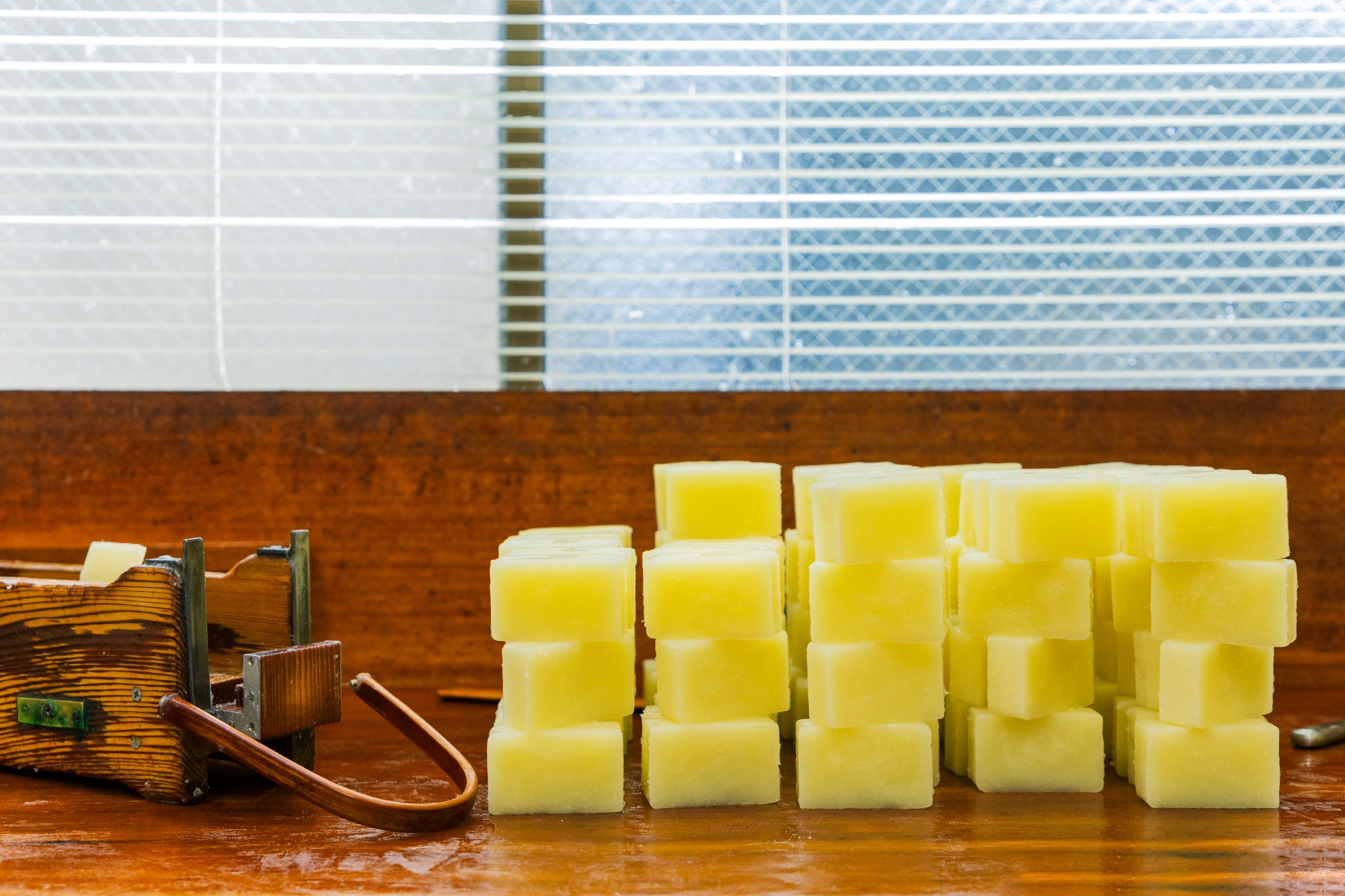
The oil transforms from a liquid into a solid, like custard cream. Once it reaches the right consistency, it is transferred to a wooden workbench. Akihiro and Yoji vigorously beat the large block of oil to remove air and form it into a log shape. Yoji’s wife, Kaoru, then places the oil in a wooden frame to shape it and cuts it into equal portions with a wire saw. Finally, Yoji’s mother, Yoko (陽子), and Kaoru work in perfect coordination to box the finished product.
The entire process from preparation to completion takes about six hours. They manufacture the product three to four times a month, using a seven-kilogram capacity pot each time. Since each product weighs 70g, approximately 100 units are produced per batch.
“We deliver products to sumo stables every two months, coinciding with the six annual tournaments. Depending on the number of wrestlers, larger stables receive about two dozen, while smaller stables receive about one dozen,” said Yoji.
Evolving fragrance and packaging: a unique, long-running success
In the past, all sumo stables used the same product, but in recent years, tokoyama from various stables have started requesting different consistencies, such as “a slightly softer product” or “a firmer one.” The father-and-son craftsmen have responded to these demands, and they now produce approximately five different varieties, including their standard product.
“Because we can only make seven kilograms at a time, we produce the same type of product in a batch. However, we also slightly adjust the standard product depending on the season. We make it firmer in summer because it naturally softens, and conversely, softer in winter when it hardens, adjusting the ingredients and process accordingly,” Yoji explained.
The Tatsunami (立浪) and Otake (大嶽) stables use the same type of product. This means that the mage of the young yokozuna (横綱), Hoshoryu (豊昇龍), and the highly anticipated West Maegashira (前頭) 1, Oho (王鵬, as ranked in the May 2025 tournament), are styled with the same specification of ‘Omi Suki oil.’
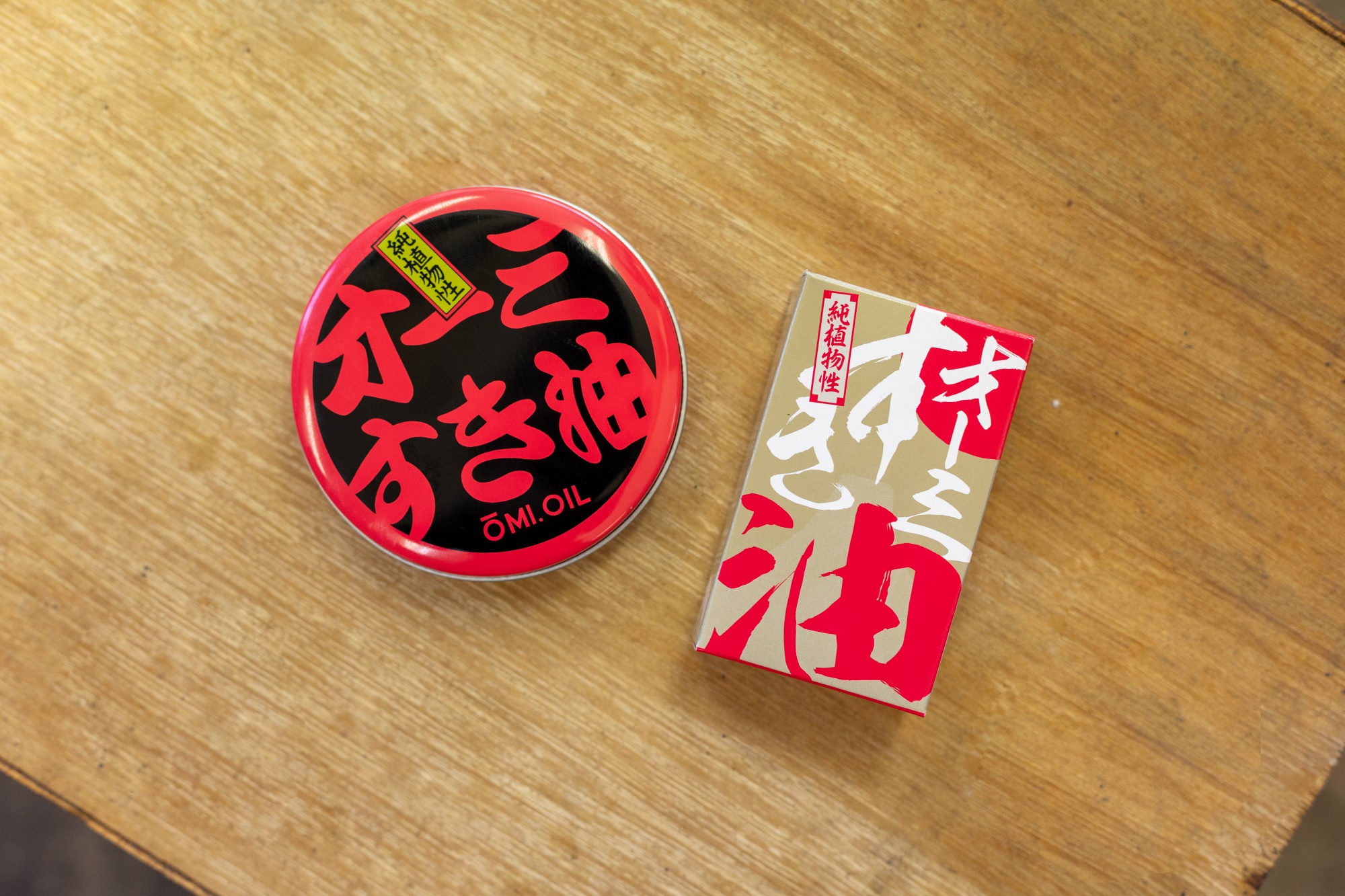
This unique, long-selling product has evolved with the times. One innovation is the packaging. The old tin containers sometimes resulted in inconsistent quality between the start and end of filling. To improve quality, they now form the oil into a bar, cut it, and place it in a perfectly sized paper box.
Another innovation is the fragrance. While the composition of the fragrance remains a trade secret, Yoji shared, “Originally, we used a blend of vanilla and two types of fragrance. About ten years ago, we reviewed this with a perfumer we work with. Now we use a blend of vanilla and three types of fragrances. I feel the aroma is deeper now.”
As sumo’s popularity has risen, the company has received proposals from businesses wanting to commercialize the ‘Omi Suki oil’ scent. However, both the first and second generations of the Shimada family insist: “Shimada Shoten specialises in manufacturing hair styling products for traditional Japanese hairstyles, not fragrances. That is not our core business, so we decline those offers.”
Supporting the tradition of mage and Japanese hairstyles for future generations
Shimada Yoji decided to take over the family business while he was in high school, and he majored in chemistry at university. “I’ve enjoyed making things since I was a child, like plastic models. So, I thought being a craftsman would be a good path.” After graduating, he apprenticed under his father. Although he had helped out before, it took time for him to become a full-fledged craftsman.
“Everything, from suki oil to binzuke oil, is handcrafted. It’s difficult to knead the melted oil to just the right consistency to solidify it. It took me ten years to be entrusted with the entire series of tasks,” Yoji recalled. When he decided to join the business, his parents told him, “This job doesn’t pay much, but you’ll have plenty of time.” He laughs, acknowledging that they were right.
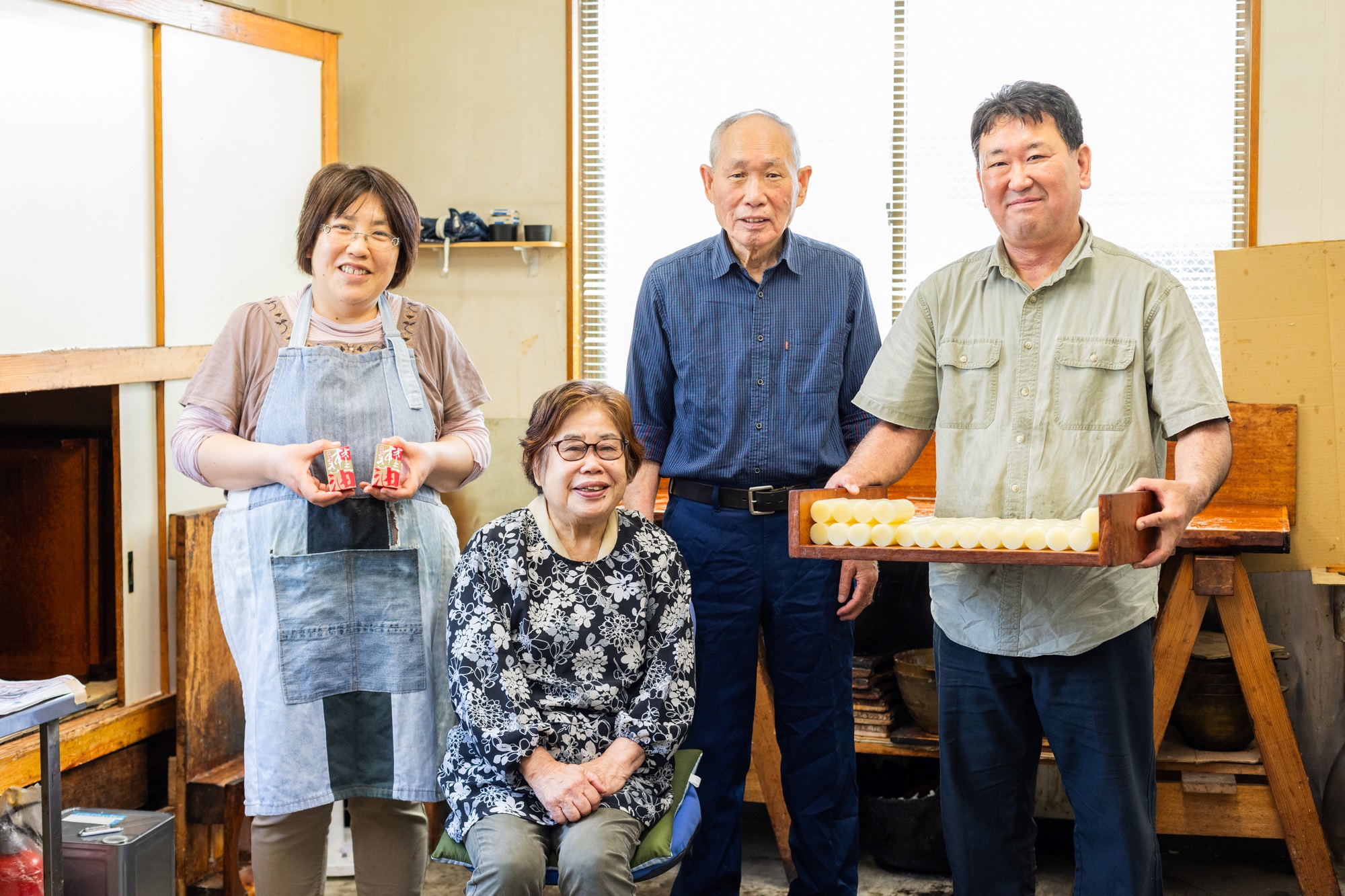
Shimada Shoten has supported Japanese culture through sumo and traditional hairstyling. While fewer women in the general public wear traditional Japanese hairstyles, they have many customers across Tokyo, Kyoto, and Nagoya. Tokoyama who create wigs for period dramas also insist that they “must use Shimada’s binzuke oil.” “We are needed by many tokoyama in the sumo world and for period drama wigs. We take pride in contributing to supporting the traditions of Japanese hairstyles. We want to consider how to pass this work on to the next generation,” Yoji stated.
‘Omi Suki oil’ is sold at the Ryogoku Kokugikan during tournaments, as well as in shops in Ryogoku and souvenir shops on Nakamise (仲見世) Street in Asakusa.
If you are fortunate enough to watch a match at the Kokugikan, we encourage you to take note of the subtle, Edo-scented fragrance of the hair oil that gently wafts from the wrestlers.
Research assistance: Shimada Shoten (島田商店)
Photography by: Umezawa Kaori (梅沢香織)
This article is translated from https://intojapanwaraku.com/culture/272708/