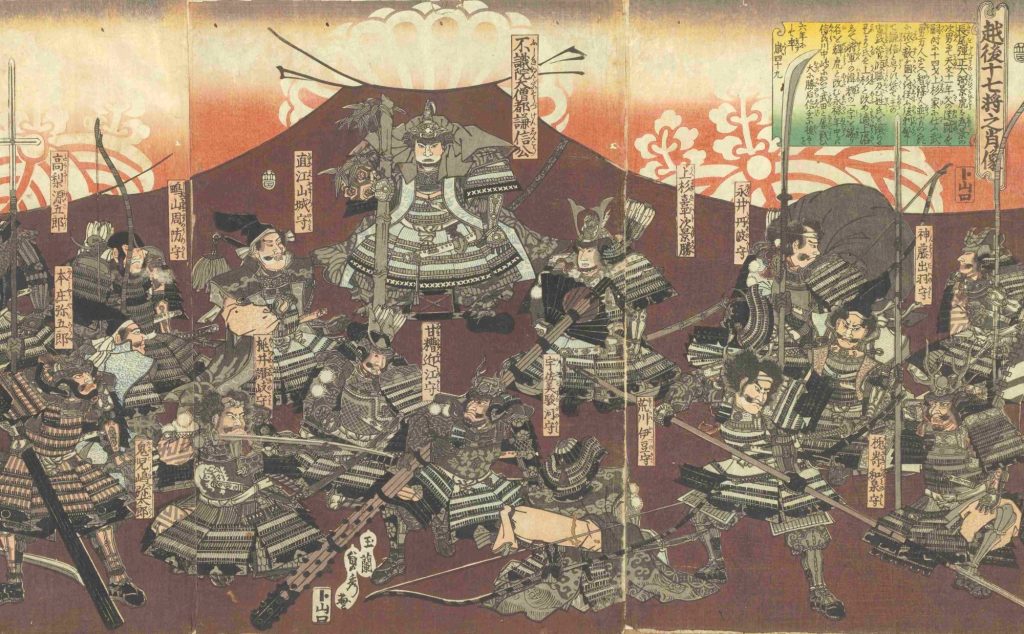







Among the multitude of Sengoku (戦国) warlords, many would name Ishida Mitsunari (石田三成) as the intellectual type. Discovered by Toyotomi Hideyoshi (豊臣秀吉), Mitsunari supported the Toyotomi administration by fully utilising his intellect. Until now, he has often been depicted in films and dramas as a villain who opposed Tokugawa Ieyasu (徳川家康), but in recent years, a movement to reassess his character has been spreading.
In the 2026 Taiga (大河) drama Toyotomi Kyodai! (豊臣兄弟!), the actor Matsumoto Reo (松本怜生) plays Ishida Mitsunari. He is an actor whose delicate performance shines, raising expectations.
Episodes of Attentiveness That Captured Hideyoshi’s Heart
Mitsunari was born in the third year of the Eiroku (永禄) era (1560) as the second son of Ishida Tozaemon Masatsugu (石田藤三衛門正継), a shigo (士豪; local samurai) of Ishidamura (石田村) in Sakatagun (坂田郡), Omikuni (近江国) (present-day Nagahama City (Nagahama-shi, 長浜市), Shiga Prefecture (Shiga-ken, 滋賀県)). Reputed to be a bright child from a young age, Mitsunari was entrusted to a temple and spent his days pursuing academic studies.
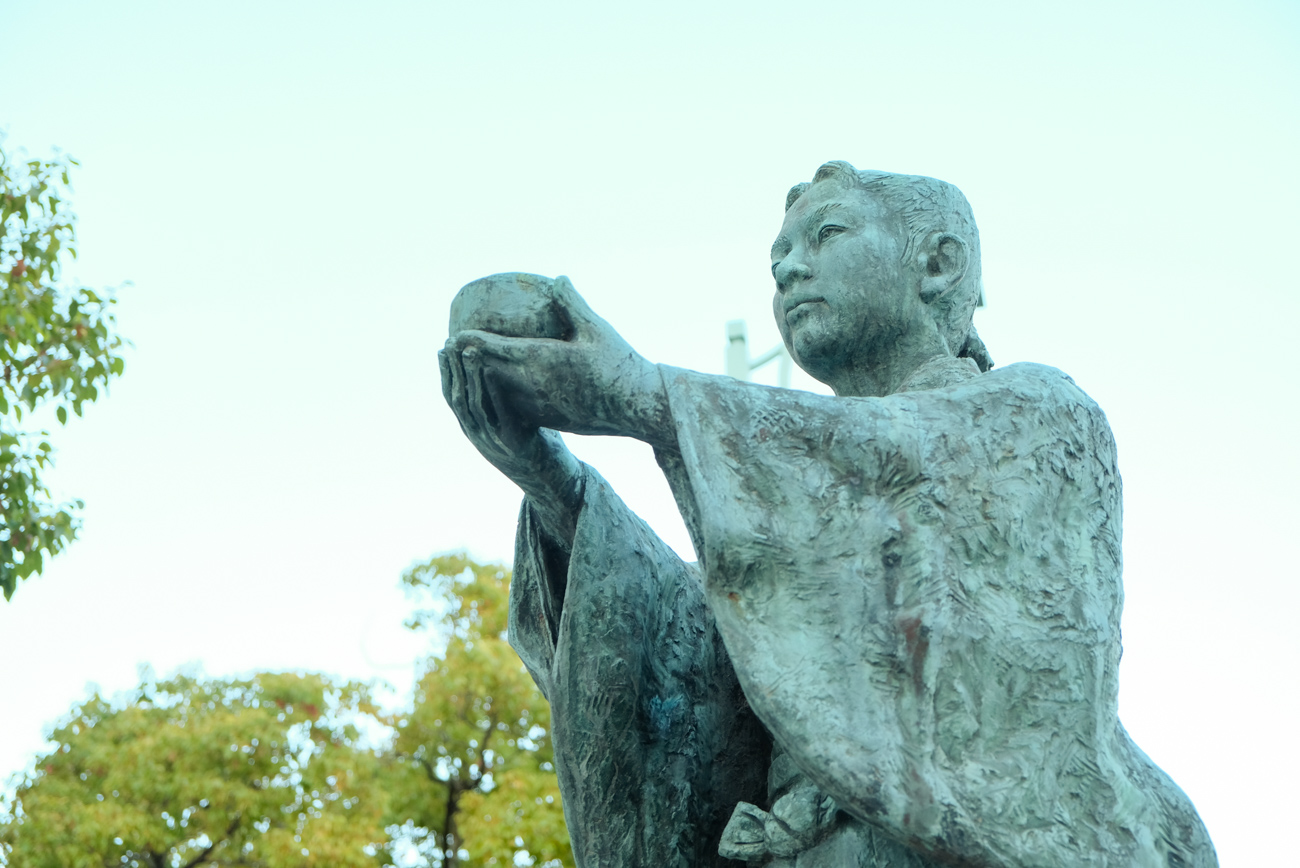
When Mitsunari was around 15 years old, Hideyoshi, who had just become the lord of Nagahamajo (長浜城), visited the temple. Hideyoshi, who was thirsty on his way back from falconry, asked for tea. Mitsunari first served lukewarm tea, then slightly hotter tea for the second cup, and hot tea for the third. Impressed by Mitsunari’s consideration for others, Hideyoshi decided to take him back to Nagahamajo as a kinju (近習; a retainer serving close to the lord). This fateful encounter between Mitsunari and Hideyoshi is famous as the ‘Sankon no Cha’ (三献の茶; Three Cups of Tea). There are various theories regarding this episode, and some theories deny its authenticity, but it seems certain that he was a clever and quick-witted boy.
An Intellectual Warlord Skilled in Practical Affairs
Upon serving Hideyoshi, Mitsunari demonstrated his abilities more in administrative roles than in battlefield combat. During the Battle of Shizugatake (賤ヶ岳) in the 11th year of the Tensho (天正) era (1583), where Hideyoshi defeated Shibata Katsuie (柴田勝家), he contributed to strategy formulation by gathering information on the enemy. He also supported from behind the scenes the ‘Mino Ogaeshi’ (美濃大返し), which became the deciding factor in the victory. The large-scale troop movement, covering a distance of 13 ri (里; approximately 52 km) from Ogaki (大垣) in Minonokuni (美濃国; present-day Ogaki City (Ogaki-shi 大垣市), Gifu Prefecture (Gifu-ken 岐阜県)) to Kinomoto (木之本) in Omikuni (present-day Kinomotocho (木之本町), Nagahama City, Shiga Prefecture) in about 5 hours, was a considerable speed for that time. Mitsunari arranged fresh horses and meals at key points along the route, guiding Hideyoshi’s army to victory. It is reported that he was active not only behind the scenes but also on the battlefield, facing enemies with a spear. It is evident how reliable a vassal he was to Hideyoshi.
Mitsunari was also involved as an executor in the ‘Taiko Kenchi’ (太閤検地), a nationwide land survey measuring land area and crop yield, conducted by Hideyoshi’s order. By establishing a nationwide standard for measurements and calculating kokudaka (石高; crop yield), it became possible to unify the collection of land tax and military service based on accurate information. This was an important policy for Hideyoshi’s unification of the country.
Welcoming Vassals with Exceptional Treatment
Among Mitsunari’s vassals was Shima Sakon (島左近), famous as a warlord. It is not exactly clear when he became a vassal. There is a theory that Mitsunari became the lord of Minakuchijo (水口城) in Omikuni (present-day Minakuchicho (水口町), Koka City (Koka-shi 甲賀市), Shiga Prefecture), and he was welcomed at this time; alternatively, another theory suggests it was during his time as the lord of Sawayamajo (佐和山城) in Omikuni (present-day Hikone City (Hikone-shi 彦根市), Shiga Prefecture).
It is said that Mitsunari gave him nearly half of his own horoku (俸禄; stipend) of 40,000 koku (石). Sakon, widely known as a fierce general, was in his late 40s at the time. He had received many requests for service but had no intention of serving anyone. However, it seems he was won over by the exceptional amount offered and the enthusiasm shown by the younger Mitsunari through a sanko no rei (三顧の礼). Sakon was such an outstanding warlord that a popular song of the Sengoku period stated, “There are two things too good for Mitsunari: Shima Sakon and the castle of Sawayama.” Mitsunari was likely aware of his own weakness in actual combat capabilities. This suggests he possessed a calm sense of judgement.
The Gears Going Awry from Hideyoshi’s Death
Having supported Hideyoshi, who established his administration as Kanpaku (関白), Mitsunari became a daimyo (大名) of Sawayamajo in Omikuni with a stipend of over 190,000 koku. In Hideyoshi’s later years, the Gobugyo (五奉行; Five Commissioners)* was formed to support his young son, Hideyori (秀頼). Mitsunari, appointed as one of them, played a central role in administration.
Then, in the third year of the Keicho (慶長) era (1598), Hideyoshi finally died of illness at Fushimijo (伏見城). Mitsunari spent busy days dealing with the remaining affairs. The invasions of Korea, which Hideyoshi had undertaken with the intention of conquering the Ming dynasty, ultimately failed, and the Japanese army was forced to retreat. Mitsunari directed this operation, which required approximately three months. This process of drawing the curtain caused friction with military-minded warlords like Kato Kiyomasa (加藤清正), who had fought on the front lines. Although Mitsunari was excellent as Hideyoshi’s assistant, his earnest nature seems to have often led to misunderstandings from those around him.
On the other hand, what did Mitsunari think of Ieyasu, whose presence grew day by day after Hideyoshi’s death? Despite being one of the Gobugyo, Mitsunari fled after being attacked by Kiyomasa and others who had become his political enemies. It was Ieyasu who stepped in to mediate the dispute. He advised Mitsunari to resign from the Gobugyo and retire to Sawayamajo. With no other options, Mitsunari reluctantly accepted this.
The Battle of Sekigahara in Opposition to Ieyasu
Although Mitsunari had thus fallen from power, upon learning that Ieyasu had begun to make a move for the unification of the country, he could not simply stand by in silence. While pretending to live quietly in retirement, he steadily advanced preparations for the subjugation of Ieyasu.
What was the actual relationship between Mitsunari and Ieyasu? Surprisingly, it is said that the person who most highly valued Mitsunari’s capabilities under the Toyotomi administration was Ieyasu. Furthermore, it was Mitsunari who first informed Ieyasu of Hideyoshi’s passing. Until Ieyasu began acting recklessly, such as breaking Hideyoshi’s will and forming marriage alliances with various daimyo without permission, they likely had an amicable relationship.

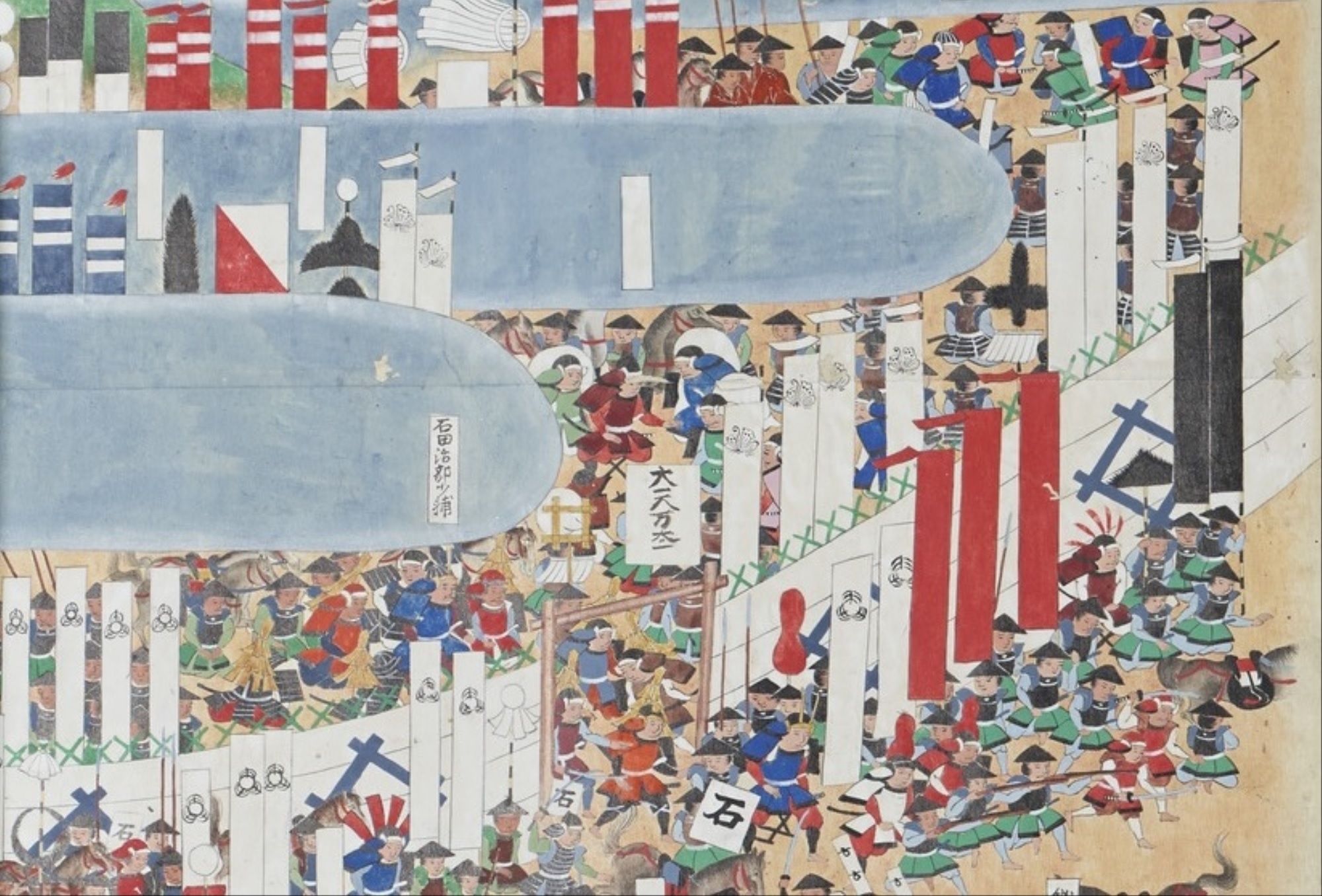
In the fifth year of the Keicho era (1600), the Battle of Sekigahara (関ヶ原), a decisive battle that divided Japan in two, broke out. It was a head-to-head clash between Mitsunari, the central figure of the Seigun (西軍; Western Army), and Ieyasu, who led the Togun (東軍; Eastern Army). The battle began with the Seigun holding the advantage, but following the betrayal by Kobayakawa Hideaki (小早川秀秋), other warlords began to defect from the Seigun to the Togun. This changed the tide, and the conflict concluded with Ieyasu’s victory.
Heroic Last Moments and Local Reputation
After the Battle of Sekigahara, Mitsunari fled and attempted to mount a comeback, but he was captured and beheaded at Rokujogawara (六条河原) as a defeated general. It was a cruel end, as he subsequently suffered the humiliation of having his head exposed to the public. He passed away at the age of 41. An episode from the time of his death has been passed down. Just prior to his execution, Mitsunari felt thirsty and asked for water. However, he was not given water, but was handed dried persimmons instead. “Persimmons are bad for phlegm, so I do not need them,” Mitsunari refused. The guards laughed, saying, “You are about to die, what is the point of avoiding poison now?” but he maintained a resolute attitude, stating, “Those who hold great ambitions cherish their lives until the very end.”
Having governed well as a castle lord, Mitsunari was adored by the people of his domain. Much of the bad reputation surrounding Mitsunari seems to have been fabricated by the Tokugawa (徳川) after his death. In Nagahama, his death is mourned, and memorial services continue to be held to this day.
References: Ishida Mitsunari – Sekigahara Seigun Jinmyaku ga Keisei shita Seiji Kozo – (石田三成ー関ヶ原西軍人脈が形成した政治構造ー) edited by Ota Hiroshi (太田 浩司) (Miyaobishuppansha (宮帯出版社)), Nihon Daihyakka Zensho (日本大百科全集) (Shogakukan (小学館))
Header image: Sekigahara Kassen Byobue (関ケ原合戦屏風絵) (Reproduction), Edo period, 7th year of the Tenpo (天保) era (1836) ColBase
This article is translated from https://intojapanwaraku.com/rock/culture-rock/228059/