






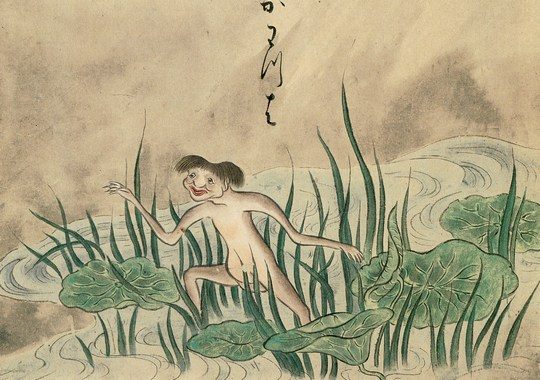
When you think of a yokai (妖怪) — a Japanese supernatural spirit — that sports a round dish on its head, carries a shell on its back, possesses a protruding beak-like mouth, and has an insatiable craving for cucumbers… yes, you are thinking of the Kappa (河童).
Said to dwell in watersides such as rivers and ponds, folklore regarding this legendary creature remains across various regions of the Japanese archipelago, from Aomori to Okinawa.
Even if they have never seen a real one, there is likely no Japanese person who does not know the Kappa. A girl’s bobbed haircut is called an okappa (おかっぱ), and the phrase he no kappa (屁の河童) — literally “a kappa’s fart” — is used to describe something which is no bother to you at all. Even a famous revolving sushi chain bears the name Kappa. If you order there, you will be served Kappa-sushi – a cucumber (Kappa’s favourite food) wrapped in dried seaweed, wrapped in dried seaweed.
While the Kappa enjoys high name recognition in both anime and literature, its true identity remains shrouded in mystery. Just how was the Kappa born? If it has a favourite food, does it also have things it dislikes? What are its special skills? Its hobbies? By exploring the personality of the Kappa, an unexpected side of the creature begins to emerge.
Kappa-like Beings Recorded in Chinese Texts
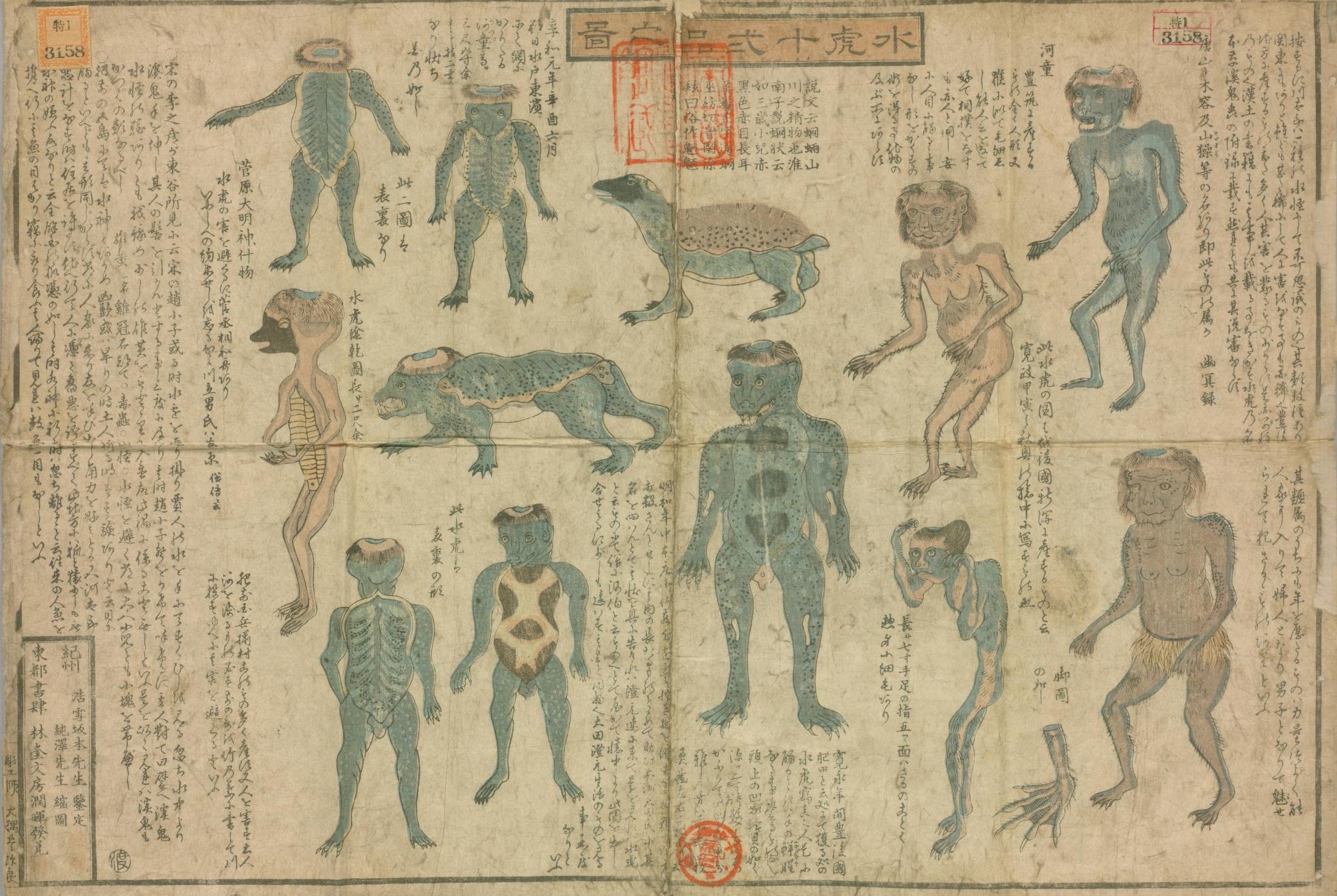
Suiko Junihin no Zu (水虎十弐品之圖) from the late Edo period, sourced from the National Diet Library Digital Collections.
It is said that the folklore of the Kappa took its modern form during the Edo period. However, that is not to say that the Kappa did not exist before then. In fact, the “monsters” of the Edo period were largely inspired by Chinese texts such as the Honzo Komoku (本草綱目) and the Sankaigyo (山海経). The Kappa-esque creatures described therein resemble snakes, possess four legs, and look like dragons. The beings appearing in the Konjaku Monogatari (今昔物語), a collection of tales from the late Heian period, are also close to snakes and dragons. This unknown creature, also known as the Suiko (水虎), seems to have been deliberately refashioned into a yokai tale during the Edo period, resulting in the form known so well in Japan today.
Where Do Kappa Come From?
There is something that has always piqued my curiosity: just how is a Kappa born? If one simply dismisses them by saying “there is no such thing as a Kappa,” then that is the end of it; but just as a human child is born from a human, surely the Kappa must have an origin story.
There are various theories regarding the birth of the Kappa. Today, I would like to introduce the theory that I personally find most intriguing.
Are Kappa the Final Form of Dolls?
Long ago, there was a renowned carpenter named Takatan Banjo (たかたん番匠). Tasked with building a castle, he is said to have created many dolls into which he breathed life, forcing them to assist with the work. As some of the dolls began to slack off, the carpenter would strike them on the head with a wooden mallet. Consequently, the tops of the dolls’ heads gradually became dented. Eventually, the castle was successfully completed, and the dolls had nowhere left to go. When the dolls pleaded, “What is to become of us now? Where shall we go?”, the carpenter retorted, “Creatures like you? Go throw yourselves in the river and live off the backsides of men!” And to this day, it is said they haunt the rivers, dragging unsuspecting swimmers down to pluck out the elusive shirikodama—a mythical ball of life-force located inside the human anus.
What is a Shirikodama?
The shirikodama, coveted by the Kappa, is a fictional organ once imagined to exist inside the human anus. It was believed that if this was extracted, a person would die or lose all their strength. It seems the Kappa took a liking to pulling out shirikodama out of resentment for the carpenter’s harsh treatment.
Cucumbers, Aubergines, Pumpkins… Kappa Love Summer Vegetables
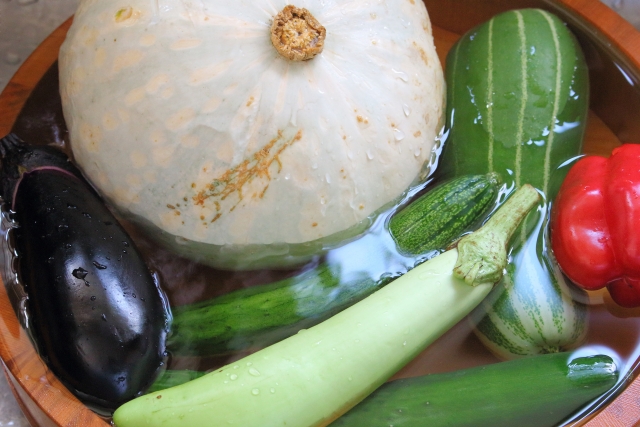
When speaking of the Kappa’s favourite food, the cucumber is, of course, legendary. They seem particularly fond of plump cucumbers and are known to sneak into fields to steal them. Surprisingly, they are quite the gourmets; they are also said to help themselves to pumpkins, suggesting a preference for plants in the Cucurbitaceae family. In some regions, they are even said to appear in aubergine patches.
The Kappa has another favourite: human livers. It is said that the reason a Kappa drags people into the water is to take their shirikodama or their liver. However, their method of acquisition is an utter nuisance: they stroke the victim’s backside with their child-like hands or the tip of their tongue.
Insatiable Perverts, Groping Men and Women Alike
Indeed, it seems the Kappa is incredibly fond of human backsides. They are even known to lick a person’s bottom with a cold tongue. It is often said that they prefer the backsides of women because there are only male Kappa and no females; however, reading through folklore, it does not seem as though they target only women.
A story from Nagano tells of women being troubled by a hand that would always stroke their backsides when they went to the toilet. Eventually, a man dressed in women’s clothing sneaked into the toilet and successfully caught the wrist of the stroking hand. There are many stories about people obtaining a Kappa’s severed arm, but the backside is not the only thing they touch.
In Yamagata, there is a tale of a samurai who had his genitals grabbed by a Kappa-like creature, and even temple monks have fallen victim. The Kappa likely made advances regardless of gender, or perhaps each had their own individual preferences.

Wanting human livers, some Kappa even go as far as writing letters to lure humans. This story has been passed down:
A young woman was walking when a young man suddenly appeared and entrusted her with a letter to be delivered to a fuchi (淵) — a deep pool of water. As she carried it, a traveling rokubu (六部) — a wandering monk — approached and asked what she held in her hand. The girl explained the situation. Upon opening the letter, it appeared to be blank with no writing. Sensing something was amiss, the monk soaked the paper in water, and the words written by the Kappa appeared: “It is acceptable to take and eat this girl.” Realising this was a dire situation and the girl would be eaten if things continued, the monk rewrote it to say, “Do not eat her, but give her much gold.” When she reached her destination, a handsome youth appeared from the depths; though he pulled a face upon reading the letter, he nonetheless handed the money to the girl.
Kappa are capable of using human script, and they even possess their own unique kappa-script (河童文字). At first glance, Kappa script looks like nothing more than smears of a brush, but it is actually a clever device that can only be read when soaked in water. To an onlooker, it appears to be a mere blank sheet of paper with no address. If you are handed such a letter and deliver it to its destination without realising, you might encounter a Kappa and have a truly terrifying experience.
The Kappa’s fatal flaw: an aversion to all things metallic
Even the Kappa has its weaknesses. One is anything with a metallic quality (kanake / 金気). It is said that when a new pond was built, iron objects — which Kappa dislike — were buried at the bottom to prevent them from settling there. There are also stories of people chasing off Kappa by pointing kitchen knives or guns at them, so it seems the Kappa fundamentally detests anything metallic.
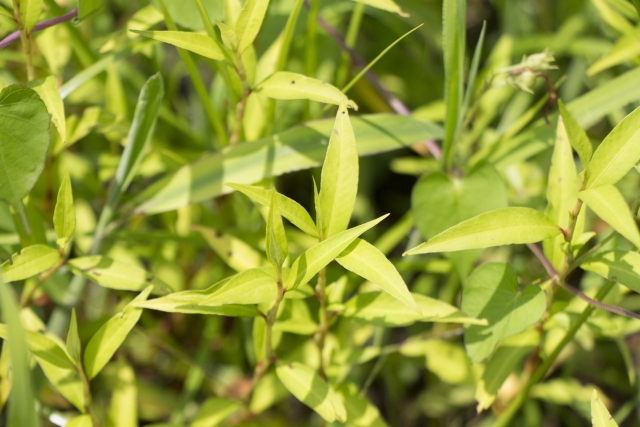
The water pepper (tade / タデ) mentioned in the proverb “To each their own” (literally, “There are even bugs that eat water pepper”) is a seasonal delicacy of early summer.
One of the river monster’s most famous aversions is smartweed (tade)—a bitter, peppery plant. Additionally, deer antlers were believed to have the effect of warding off evil, and it is said that fishermen used to wear them as protective amulets to ward off Kappa.
By the way, one must be careful, as interfering with or harming a Kappa can lead to a terrible curse. It is said that a fisherman who defeated a Kappa died of a high fever, and others have been nearly dragged into the sea for dropping a needle, or died of poisoning after using tade to drive a Kappa away. Caution may be necessary when confronting a Kappa.
Their Hobby is Sumo. And Their Strength is Grand Champion Class.
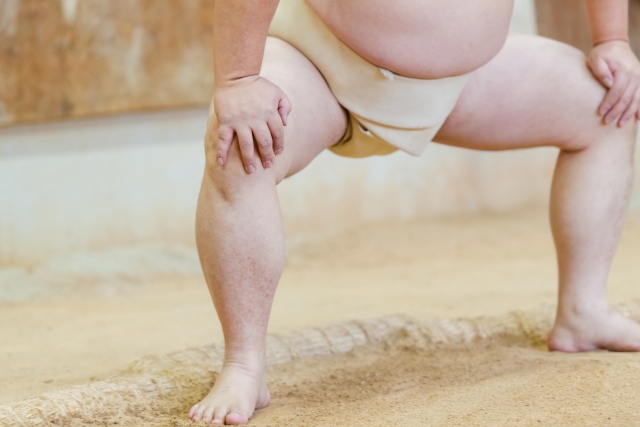
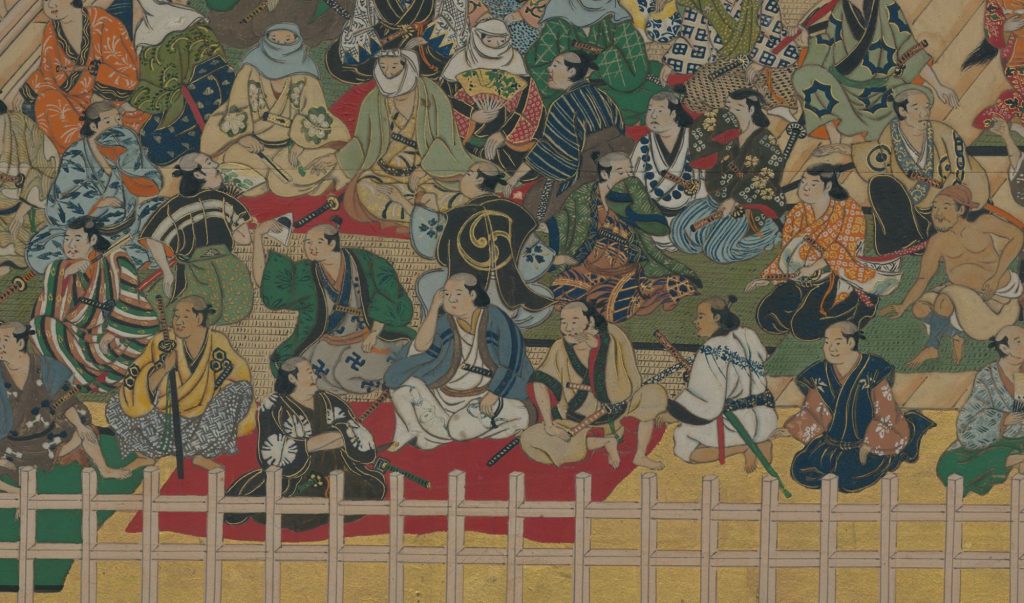
While the Kappa rarely exposes itself to human eyes without reason, there is one thing it simply cannot resist when it sees a human: Sumo. Folklore is full of stories of people being challenged to a match by a Kappa.
Though small, the Kappa is incredibly nimble. It will fly straight at you, only to dodge nimbly just before impact, slipping under your arm to get behind you. Even if you think you have caught it, its body is slimy and smells of fish, making for a gruelling struggle. Furthermore, while the participant can see the creature, a third party cannot see the Kappa, so to an onlooker, the scene appears quite farcical.
It is said that after engaging in such “solo sumo,” the person often collapses with a fever or appears to have lost their mind. Moreover, because they love sumo, once you start, several more may appear, which is quite a nuisance. One would think no one would want to wrestle a Kappa, yet stories of those who bravely stood their ground remain for a reason. This is because the opponents the Kappa challenges are always local wrestlers who pride themselves on their strength. For a human sumo wrestler, once egged on by a Kappa, they likely could not resist testing their skills.
In Closing
While the Kappa is a meddlesome prankster that drags people into ponds and touches their backsides, it also has a history of being worshipped as a water deity. Behind the Kappa legends lies the belief in water spirits (suirei-shinko / 水霊信仰), reminding us that the folklore and legends remaining today are rooted in mythology. Appearing in the form of a child, the Kappa is also said to have a kind side, such as gifting fish or helping with rice planting. However, it is said that only those with an honest heart can receive such blessings. I feel I have begun to understand a little more why the Kappa continues to be loved across generations.
▼Recommended Reading
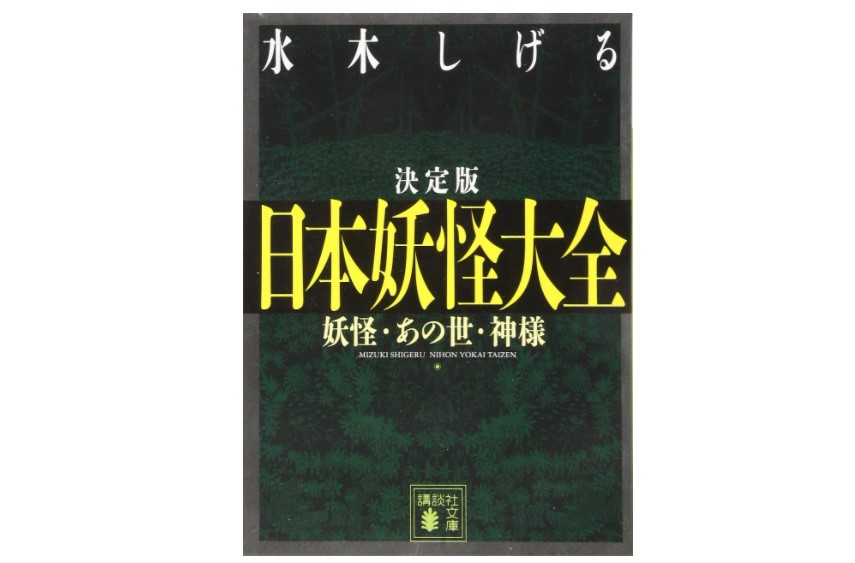
Ketteiban Nihon Yokai Taizen: Yokai, Ano Yo, Kamisama (決定版 日本妖怪大全 妖怪・あの世・神様) by Mizuki Shigeru (水木しげる)
References: Kappa no Sekai (河童の世界) by Ishikawa Junichiro (石川純一郎), Jiji Press, 1985.
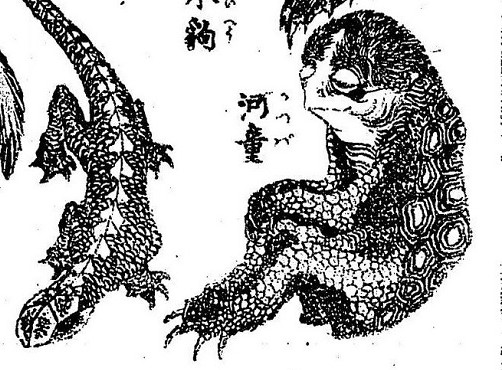
Eyecatch Image: Kawatsuha (Kappa; 河童) from Hyakkai Zukan (百怪図巻) by Sawaki Suushi (佐脇嵩之), via Wikimedia Commons.
This article is translated from https://intojapanwaraku.com/rock/culture-rock/111860/