













One of the famous works drawn by Vermeer, the woman who pours milk. The eyes of the viewer gather on the milk flowing from the milk pitcher because it is attracted to the pure white brilliance. Vermeer used various techniques to express the different textures of milk and bread that appear in this work, and the hood that women wore on their heads. Even in the same "white" expression method is completely different.
How to express Vermeer white in "Woman pouring milk"
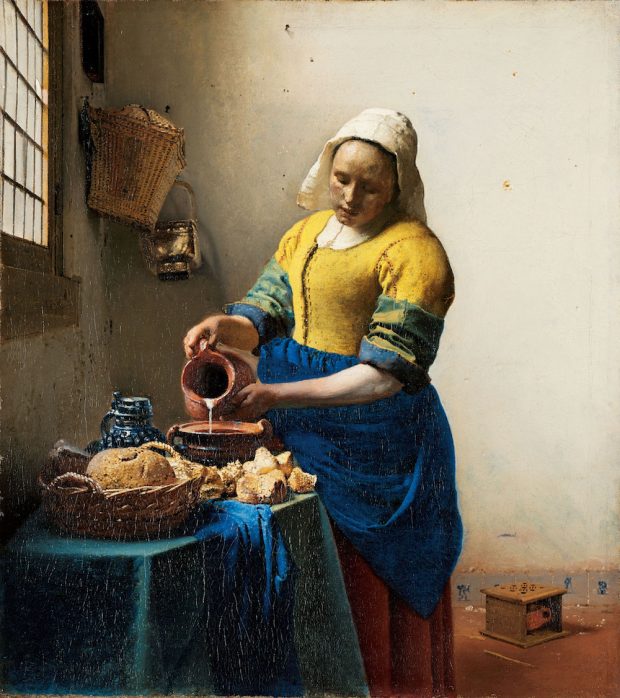 Johannes Vermeer "The woman who pours milk" Oil on canvas around 1660 45.5 x 41 cm Rijksmuseum Rijksmuseum, Amsterdam / PPS news agency
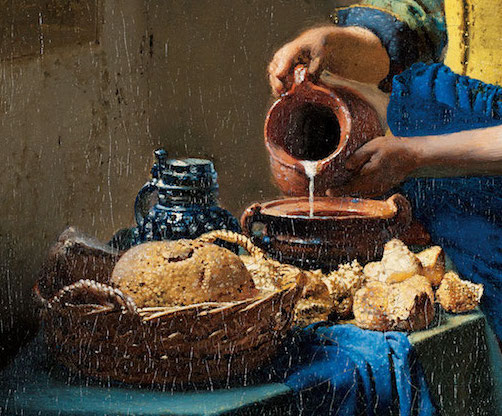
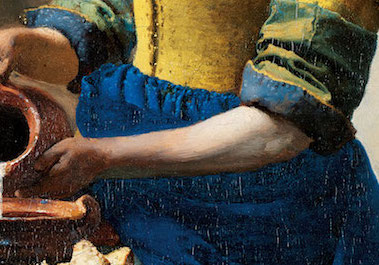
Vermeer painted this picture in his late twenties. You can see that you have already learned to represent milk or bread crumb, which is a liquid, by the Pointier (dots spelling) technique of dot-drawing white grains. White particles of light on milk, bowl edge, bread, etc. This is a technique unique to Vermeer.
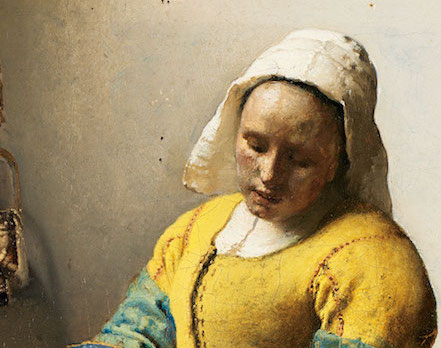
The white hood on the head is overpainted with white paint to make it feel even the crisp feel of the fabric. A thick white paint with high viscosity and lead white was thickly coated to express the feel of the thick head cloth to the touch.
Also, focusing on the arm of a woman, whitening the area where the light strikes. By putting the light coming from the window in white on the arm, it gives the skin a three-dimensional effect.
Ito Wakatsuki expresses various snow with one paint
On the other hand, in the Japanese art world, there was a painter who had an extraordinary passion for expressing snow in white. Ito Wakatsuki was active in the middle of the Edo period. What differs from Vermeer is that "one paint" represented various types of snow. The snow that feels sticky and piles up on the tree, and the powder snow that is falling now ... is drawn realistically only with the white paint and the flour that is made by breaking the shell. It's a divine skill! I am surprised at the expressive power to adjust the texture and volume of the snow while applying the flour to the back as well as the surface of the silk.
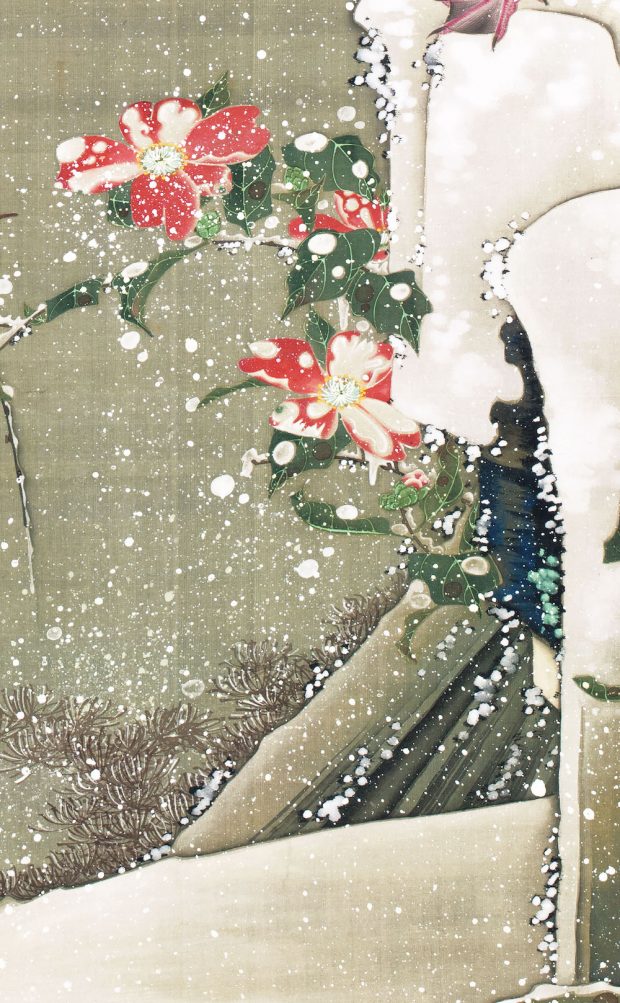 Ito Wakasa "Snow-chuu-zu-zu" full width Silk book coloring Treasure calendar 9 (1759) 142.0 x 79.8 cm Yearly Miyauchi Government Sanno Marusokan
The above work is a piece depicting the waterside of winter in three of Wakatsuki's three works depicting snow in "Kotobuki". The wet and heavy snow was partially painted with stalks from the back of the silk, giving it a lightness difference and expressing the texture. This technique gives the snow humidity and weight.
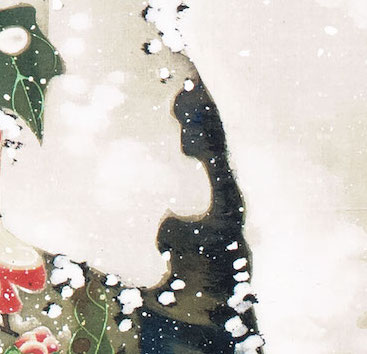
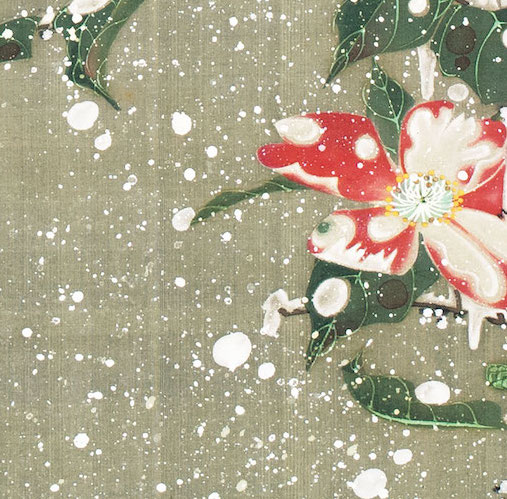
The falling powdery snow is a mixture of those sprayed with the back of the powder and those sprayed from the surface, creating a deep landscape. In addition, it piled up on the petal, and after a long time, the snow that turned like ice was drawn realistically.
I want to read together
■ Vermeer related articles · 35 points in all! A glimpse of existing works of Vermeer
・Genius painter ・ Fermer's mysterious life
・ The distinctive features of the work of Vermeer
■ Ito Wakaba related articles ・The ink painting of Ito Wakatsuki is so cute! Large set of monochrome animals
・What is the life of Ito Wakatsuki? Footsteps of a genius painter looking back with his masterpiece
・The super-skilled skill of the young woman is full of excitement! Exploring "the Secret of Beauty" from rare paintings
・ We see in "Kotobuki picture"! Wakatsuki's 7 Super-Skilled Techniques
・You can see the barrier picture of Ito Wakatsuki close up! Aikoku Temple Jotenkaku Museum of Art

My motto is "I'm serious about being stupid", and I am having fun and having fun every day.