






Who is Domon Ken?
Active on the front lines of journalism throughout the pre-war and post-war eras
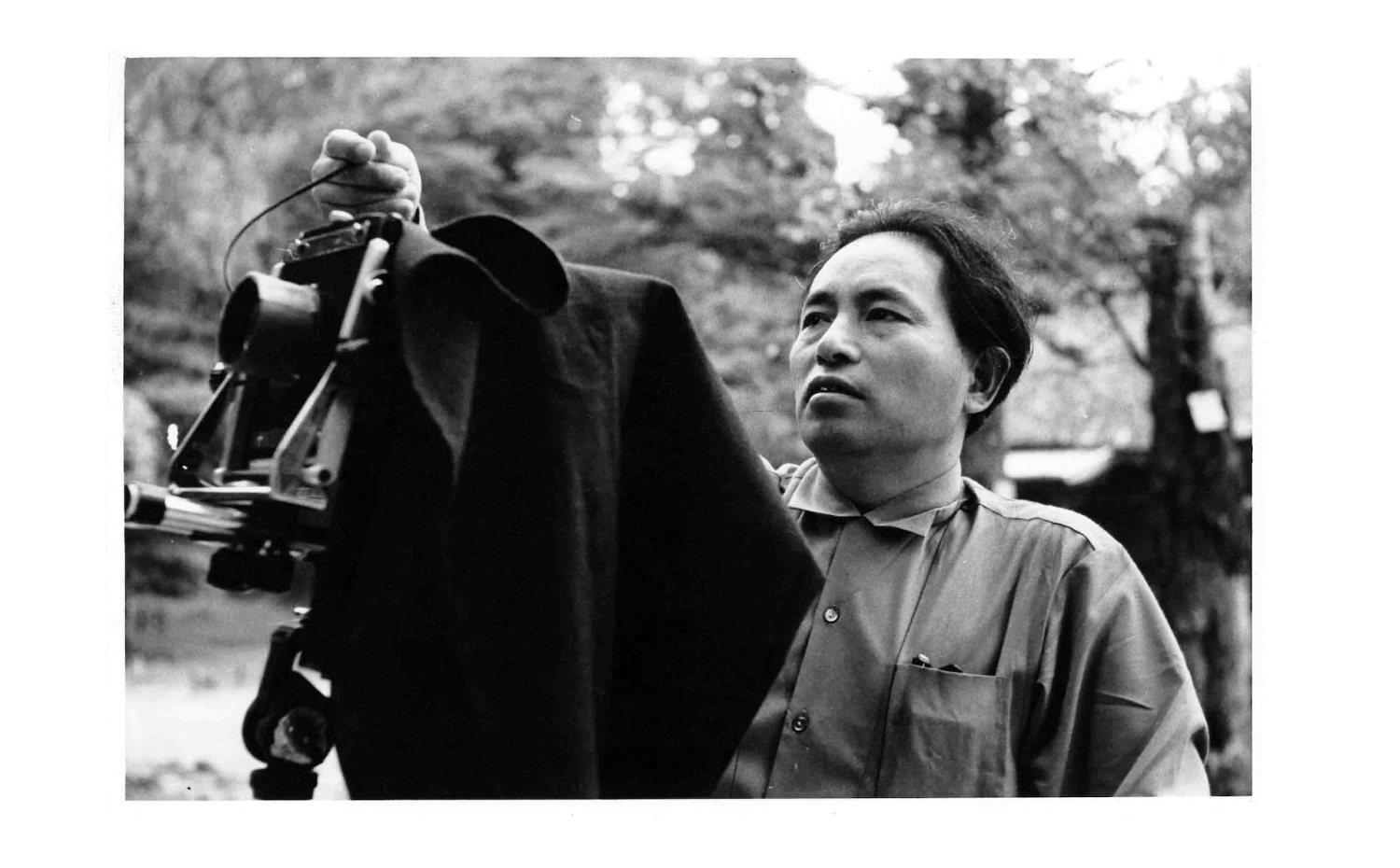
Domon Ken (1909–1990) left a significant mark on the history of Japanese photography, working as a photojournalist from before the war and covering a wide range of themes, including documentaries, portraits, and the beauty of Japan.
Domon was born in 1909 in what is now Sakata (酒田) City, Yamagata (山形) Prefecture. Raised in Yokohama, he aspired to be a painter but faced a setback. After transitioning through various professions and serving as a live-in apprentice at a commercial photo studio in Ueno (上野), Tokyo, he joined the company Nippon Kobo (日本工房), led by Natori Yonosuke (名取洋之助), who paved the way for Japanese photojournalism. He was 26 years old at the time.
Nippon Kobo was an editing and production company that provided photographs, graphic design, and publicity materials overseas. Domon rapidly distinguished himself by taking photographs that promoted Japanese lifestyles and traditional culture abroad.
Thus, Domon established his unique style of boldly cropping parts of his subjects, actively working mainly for magazines from before the war. After the war, he tackled social themes, covering atomic bomb survivors in Hiroshima and the impoverished lives in the closed Chikuho (筑豊) coal mining area. Having serialised work in camera magazines and newspapers, he left behind many written texts, continuously voicing his opinions and profoundly influencing amateur photographers as well.
(C) Ken Domon Photography Institute *Unauthorised reproduction prohibited
Travelling across the country visiting Buddhist statues during the war
In 1939, along with art historian Mizusawa Sumio (水澤澄夫), he visited Muroji Temple (室生寺) for the first time and was completely captivated by the beautiful halls and pagodas standing quietly in the mountains, as well as the early Heian period Buddhist statues. Thereafter, during the Second World War, when transport and food were scarce, he went on repeated journeys to photograph Buddhist statues across the country, from Shojoji Temple (勝常寺) in Aizu (会津) in the north to the stone Buddhas of Usuki (臼杵) in the south.
At that time, photography did not use film but ‘glass dry plates’—thin glass plates coated with a photosensitive agent. Domon Ken Koji Junrei includes 22 photographs taken with glass dry plates. The resolution is magnificent, possessing a reproducibility and three-dimensionality that make you feel as if you could reach out and touch the statue. Muroji was also the very first place Domon headed to after the war ended.
Domon Ken and Koji Junrei
In 1959, at the age of 50, Domon collapsed from a cerebral haemorrhage. He was left with after-effects and determined that shooting with a 35mm camera, which required agility, would be difficult. From then on, he devoted himself to photographing Koji Junrei using a large-format camera.
(C) Ken Domon Photography Institute *Unauthorised reproduction prohibited
Publication of the ultra-deluxe book Koji Junrei
Koji Junrei (originally planned as a four-volume set) was Domon’s independent project. Domon believed that Buddhist art brought over from the continent was “sufficiently purified and fermented in Japan, giving birth to Japanese culture as its clear supernatant, so to speak,” and he sought to explore the essence of Japanese culture by photographing ancient temples using colour film.
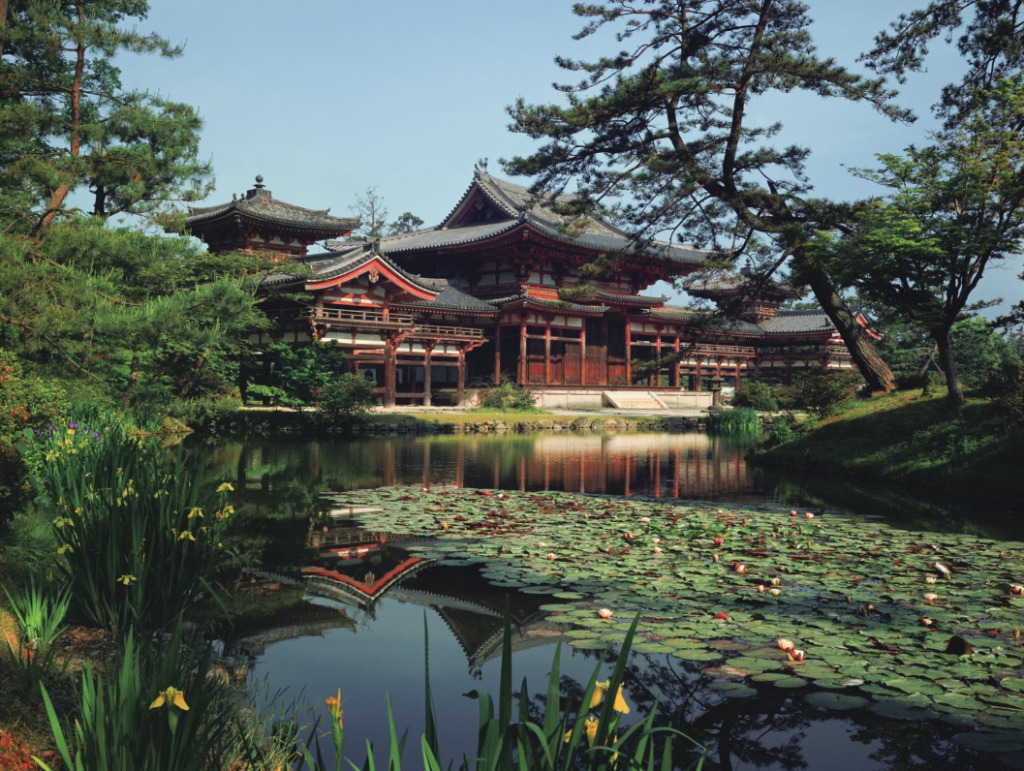
Byodoin, introduced here, is included in the third volume, which focuses on the Heian period. In the preface, Domon wrote, “The Heian period was a rare era in the history of Japanese culture where the Japanese people did not flinch for a moment at things bright, flowery, and luxurious; that is, things magnificent and gorgeous.”
For Koji Junrei (published by Bijutsu Shuppansha (美術出版社)), he handled both the layout and book design himself, and the first volume was published in 1963. It was a luxurious special edition in A3 size, presented in a wooden paulownia box with a branded seal, limited to 2,000 copies, and priced at 23,000 yen. This was an era when the starting salary for a university graduate was around 10,000 yen. Alongside the photographs, he critiqued the theories of past and present scholars and developed his own arguments. He included a lengthy essay solely on Horyuji (法隆寺) that exceeded 40 sheets of manuscript paper.
Photographing only what he loves
Domon described himself as having “a truly selfish attitude towards photography, taking pictures of what I like in the way I like, and being so coldly indifferent to what I dislike that I won’t even give it the time of day, much less attempt to photograph it,” and he remained steadfast in this stance. Koji Junrei includes renowned temples such as Horyuji and Yakushiji (薬師寺), as well as temple ruins where only the foundation stones remain.
(C) Ken Domon Photography Institute *Unauthorised reproduction prohibited
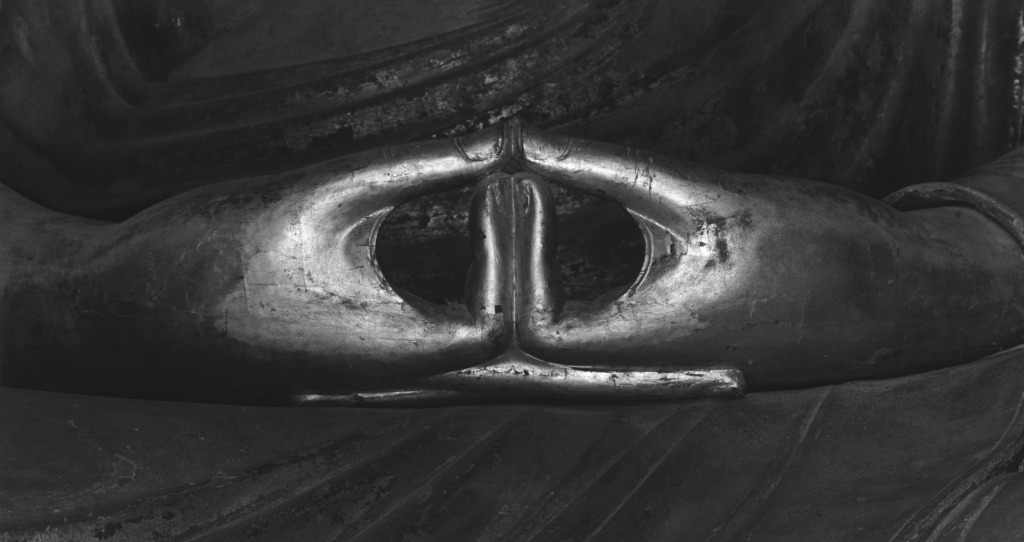
(C) Ken Domon Photography Institute *Unauthorised reproduction prohibited
Zeroing in to the heart of the shot
Close-ups are the true essence of Domon’s work. “I stare intently at the things I am drawn to, letting myself be drawn in. The longer I gaze at an object, the more it seeps into my heart, and my own perspective bubbles up.” “I point the camera at the exact spot I want, place it dead centre in the frame, focus as sharply as possible, and press the shutter with a focused burst of energy.”
Domon’s assistant, Fujimori Takeshi (藤森武), remarks, “If it took the master two hours to take a single shot, he would spend nearly an hour intently observing. However, when it came to actually shooting, he was quick, just as you would expect from a former photojournalist.”
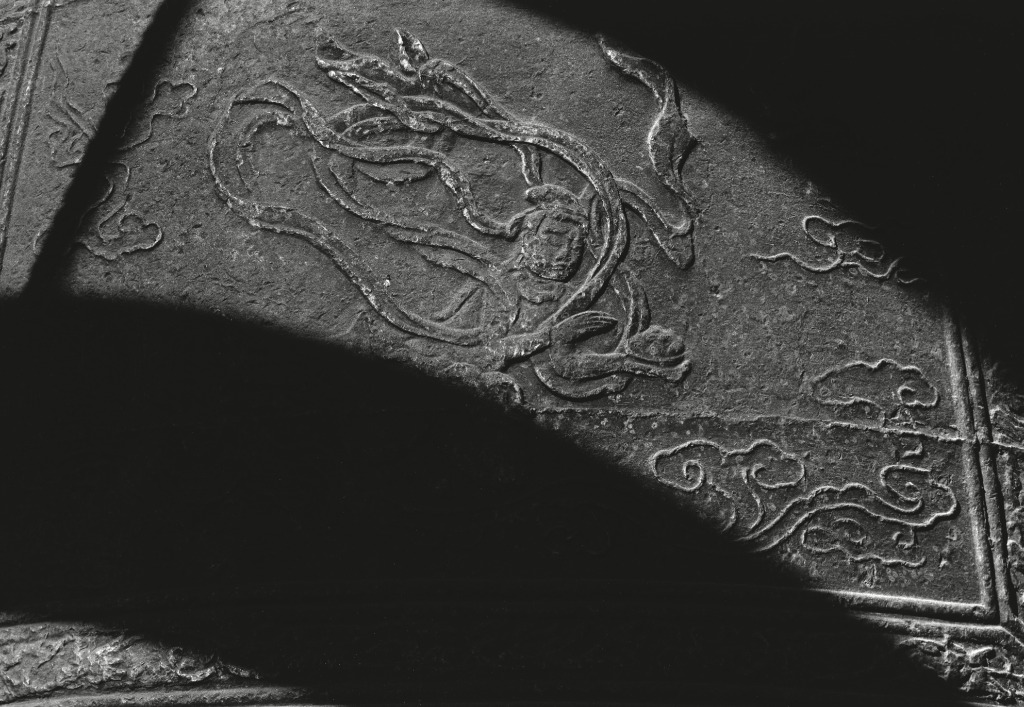
(C) Ken Domon Photography Institute *Unauthorised reproduction prohibited
The bell of Byodoin is one of the Tenka Sanmeisho (天下三名鐘) (three great bells of the realm), along with those of Jingoji (神護寺) and Onjoji (園城寺). Domon took a close-up of only the Hitenzu (飛天図) (flying celestial maidens illustration) on this famous bell, renowned for its shape, and noted, “The fluttering celestial garments seem to embody the resonant voice of the bell.” It is currently on display at Museum Hoshokan (ミュージアム鳳翔館).
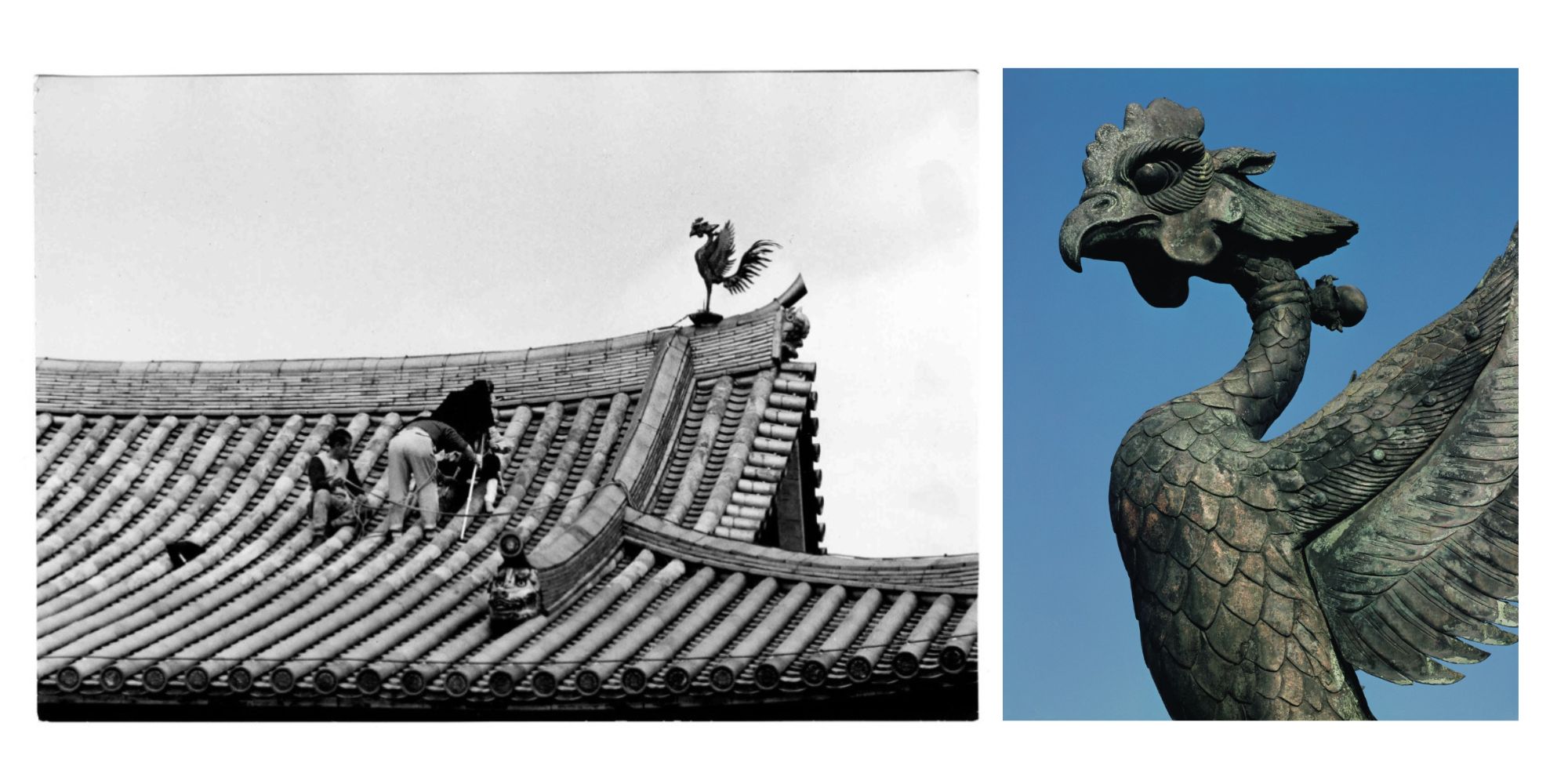
(C) Ken Domon Photography Institute *Unauthorised reproduction prohibited
It is said that with a rope tied around Domon’s waist, pulled by a professional tile-maker while an assistant pushed him from behind, he scrambled up a ladder to the great roof and crawled up the tiles one by one. He captured a close-up of the phoenix as if it were about to take flight into the blue sky. It is currently on display at Museum Hoshokan.
Domon’s unique method of photographing Buddhist statues
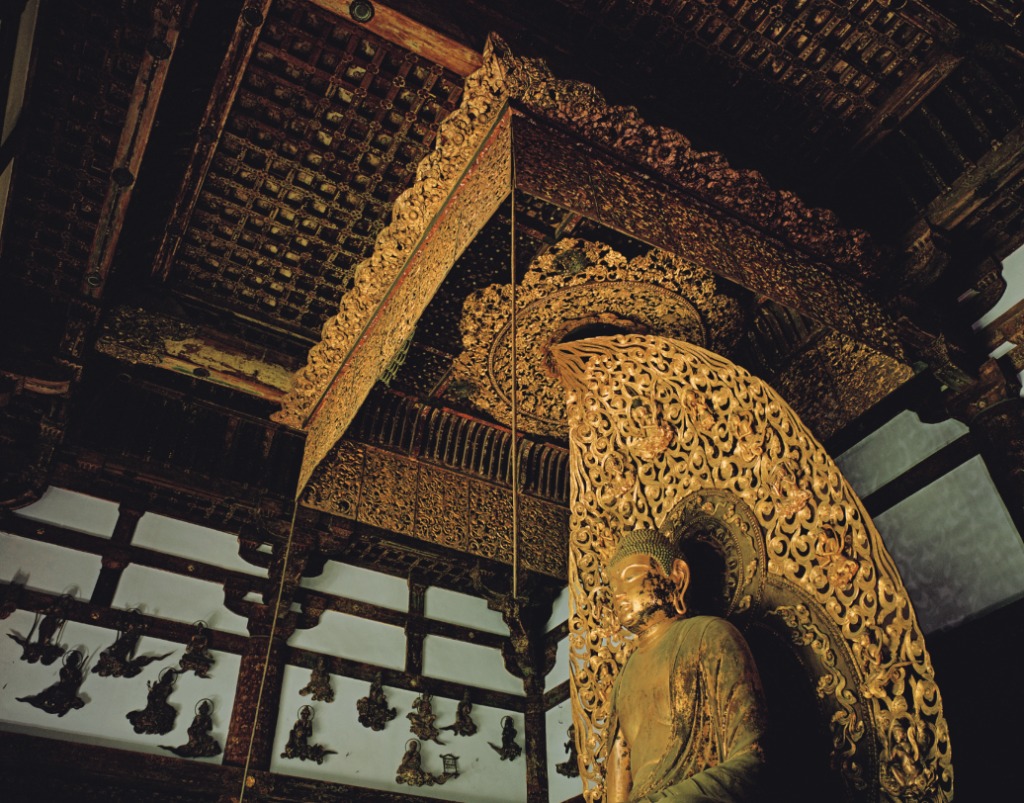
To photograph a Buddhist statue, he would first decide on the composition and have his apprentice focus on the statue’s eyes. Next, he attached a shade about 18cm in diameter to the end of a long bamboo pole and fitted a flashbulb into it. As Domon himself held the bamboo pole and shouted a cue, an assistant would open the shutter; another assistant would trigger the flashbulb, and then immediately close the shutter. The assistant in charge of lighting would change the bulb, and they would systematically fire flashes one by one, from top to bottom, covering the upper part, the sides, and the front of the statue, opening and closing the shutter each time. Domon ran around doing the lighting entirely by himself. In other words, he photographed the statue as if carving light into it point by point. For a life-sized statue, he used 8 to 10 bulbs. His assistant, Fujimori Takeshi, remarks that a single photograph is created through this “accumulation of point light sources.”
Domon paid attention even to the wood grain and chisel marks, stopping down the aperture as much as possible to ensure everything was in focus from corner to corner, and attempting to express this through his lighting. Domon’s photographs, which aimed not merely at capturing the shape but at grasping the inner essence of the statue and the intentions the sculptor carved into it, consequently grip the viewer’s heart and leave an unforgettable impression.
Even immobile objects have a definitive moment
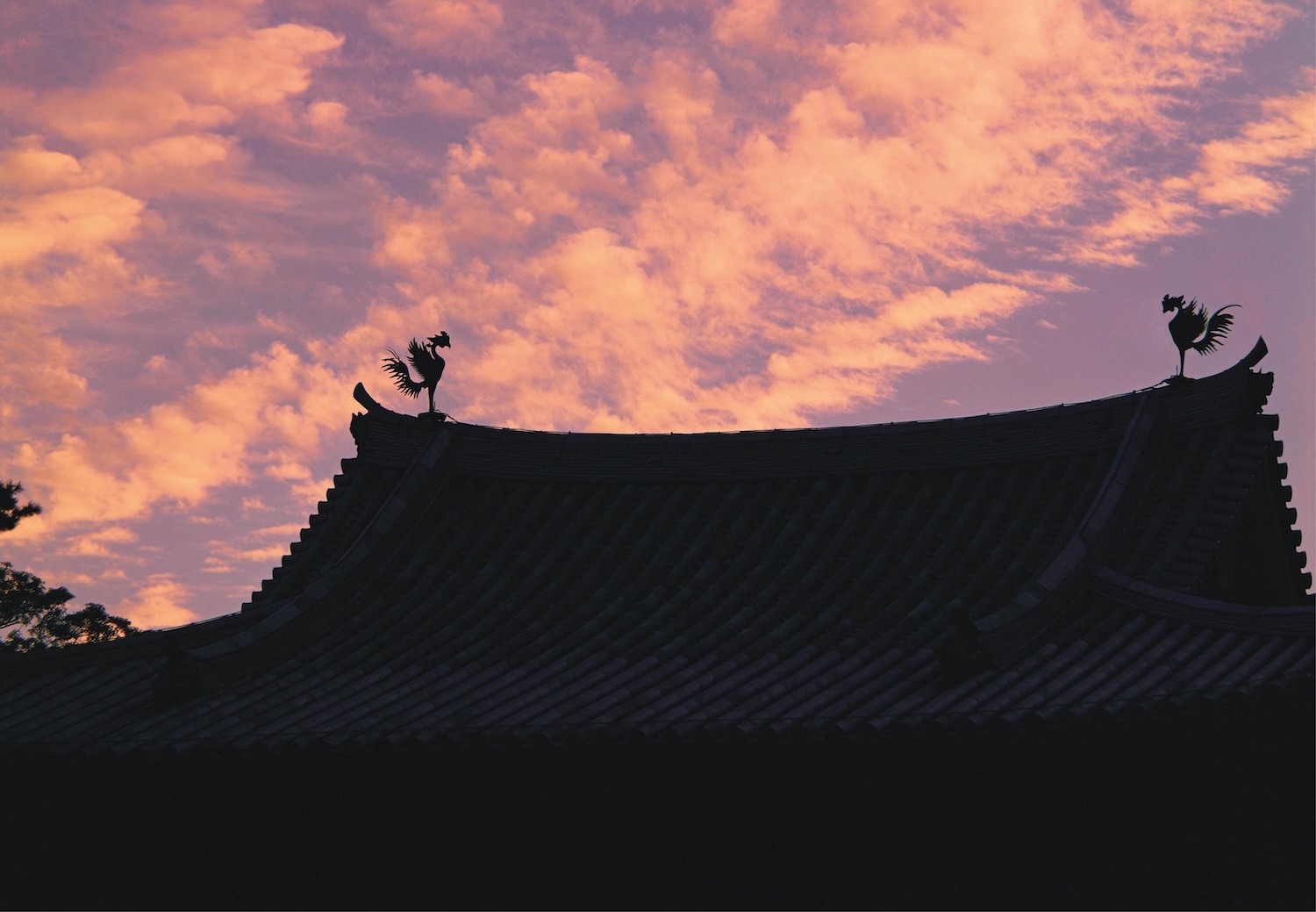
(C) Ken Domon Photography Institute *Unauthorised reproduction prohibited
When Domon finished photographing Byodoin and was about to leave, he happened to look back and noted, “I realised that the Hoodo, silhouetted against the madder-red twilight clouds, was far from stationary; it was racing at a dizzying speed. Stunned for a moment, I instinctively yelled, ‘Camera!’” Even as he had his apprentice reassemble the packed-away camera, “The Hoodo was running faster and faster, as if to escape.” He frantically pressed the shutter, but managed to capture only a single shot. This is the memorable work that opened Domon’s eyes to the fact that even immobile architecture and Buddhist statues possess a definitive moment.
Photographing from a wheelchair
Towards the end of the shooting for the fourth volume of Koji Junrei, Domon fell ill again and spent two years recuperating. He then resumed photographing for the fifth volume from a wheelchair. Although his line of sight became about 50 cm lower than his eye level when standing, his desire to photograph did not wane: “I trust my own perspective, search for the subject’s line of sight, and have my wheelchair pushed forward. Even if my viewpoint gets lower still and my left leg can no longer support my body, as long as my eyes can capture the subject’s gaze, I will take photographs.” He completed the fifth volume in 1975. Domon referred to the entire five volumes of Koji Junrei as “my alter ego”. It was literally his life’s work.
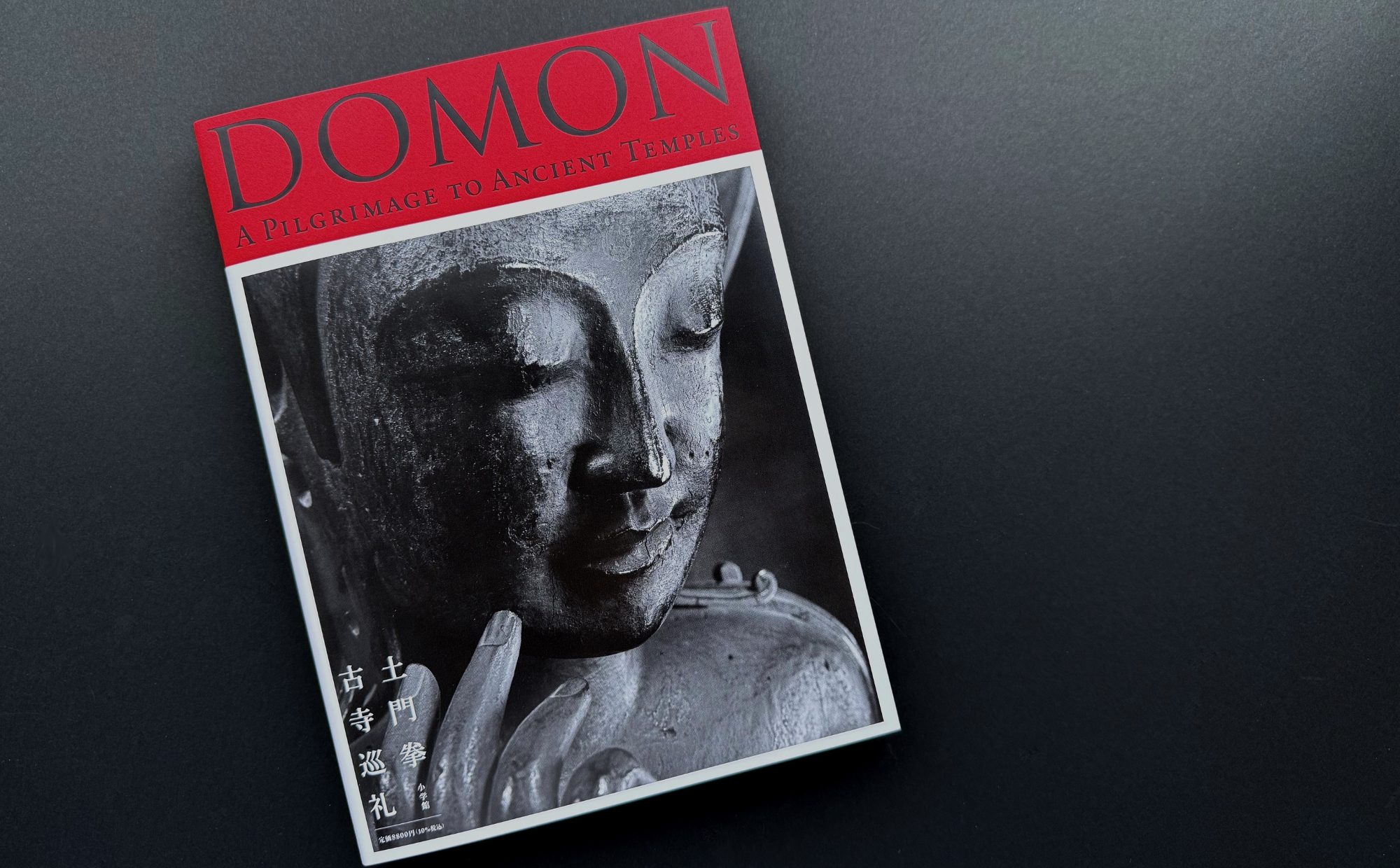
DOMON: A Pilgrimage to Ancient Temples Domon Ken Koji Junrei
On sale 17 April. Price: 8,800 yen (tax included). Shogakukan
*A permanent preservation edition featuring 155 of Domon Ken’s representative works, photographed between around 1940 and 1978.
*Based on the Shogakukan SUMO Hon Domon Ken (B2 size, priced at 352,000 yen including tax) released in 2021, this single volume has been re-edited into a popular edition (B5 size, priced at 8,800 yen including tax—about 1/8 the size and 1/40 the price), while retaining the high-resolution quality of that ultra-deluxe book.
*Includes commentary on the works interwoven with quotes from Domon, who is also known as a masterful writer, conveying the photographer’s creative intentions.
*Includes full English translation.
www.shogakukan.co.jp/books/09682518
Domon Ken Shashin Bijutsukan (土門拳写真美術館)
Following Domon’s selection as the first honorary citizen of his hometown, Sakata City in Yamagata Prefecture, he donated his works. It opened in 1983 as Japan’s first museum dedicated solely to photography. Domon’s works are exhibited in four special exhibitions a year, drawn from a collection of approximately 135,000 pieces.
Special Exhibition ‘THE LOVE – Domon Ken ga Totta Ai -‘ (THE LOVE-土門拳が撮った愛-) runs from Friday, 17 April to Sunday, 12 July.

2-13 Iimoriyama, Sakata City, Yamagata Prefecture
TEL 0234-31-0028
http://www.domonken-kinenkan.jp
Text & Layout / Konishi Harumi (小西治美)
This article is translated from https://intojapanwaraku.com/art/302935/