






Kaneko Nobuhisa’s 7 irresistible reasons to love Rosetsu’s works
When talking about ‘cute Edo paintings’, Kaneko Nobuhisa can go on for hours without stopping. He is a self-proclaimed and widely recognised ‘lover of all things cute’.
“When people think of Nagasawa Rosetsu, they tend to think of his delightfully relaxed style, and those iconic whimsical puppies” says Kaneko. “But the truth is, he tackled an incredible variety of subjects and painted in a vast range of styles—and he was stunningly brilliant at all of them. He was, after all, a star disciple of the great Maruyama Okyo. Because of this, critics often like to say, ‘Rosetsu is more than just cute.’ But to that, I always want to laugh and say—why can’t being cute be quite enough?”
The ‘Spring Edo Painting Festival’ (春の江戸絵画まつり) at Fuchu Art Museum (府中市美術館) in Tokyo, which Kaneko oversees and is highly popular every year, is holding a long-awaited Rosetsu exhibition this spring. From the works that can be appreciated at this exhibition, we introduce the ‘extraordinary Rosetsu’! Including the pieces that are not cute, Kaneko has explained their charm from his unique perspective.
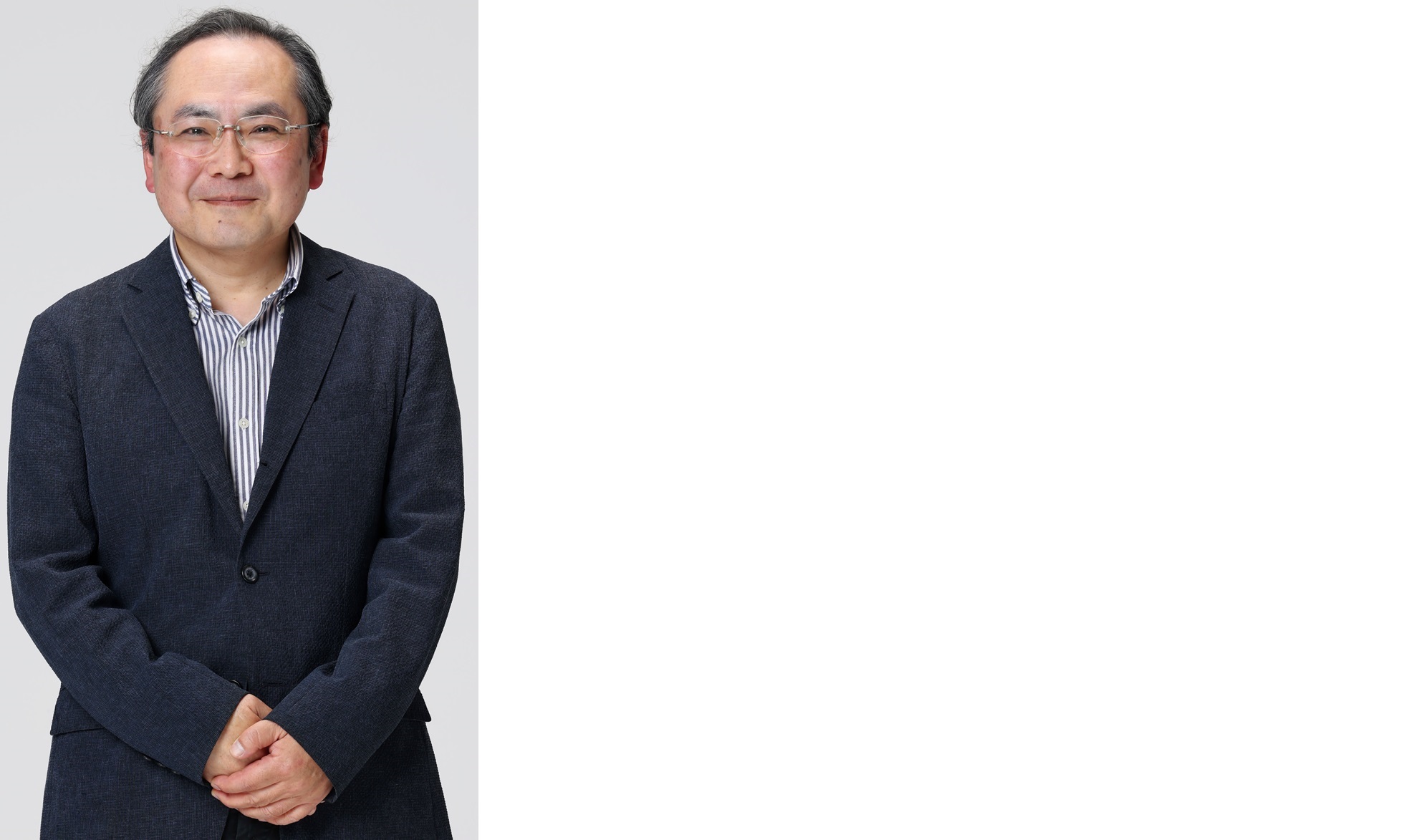
Kaneko Nobuhisa
Art historian. His favourite genre, which he speaks passionately about, is ‘cute Japanese art’. He has served as a curator at museums and art galleries for 41 years. At the end of last year, he launched the YouTube channel ‘Hesomagari bijutsu channel’ (へそまがり美術チャンネル).
1: Overwhelmingly cute! “Even among Rosetsu’s cute puppies, this is by far the best!”
Those Slanted Eyes, That Tail, That Bottom – Whats not to love!
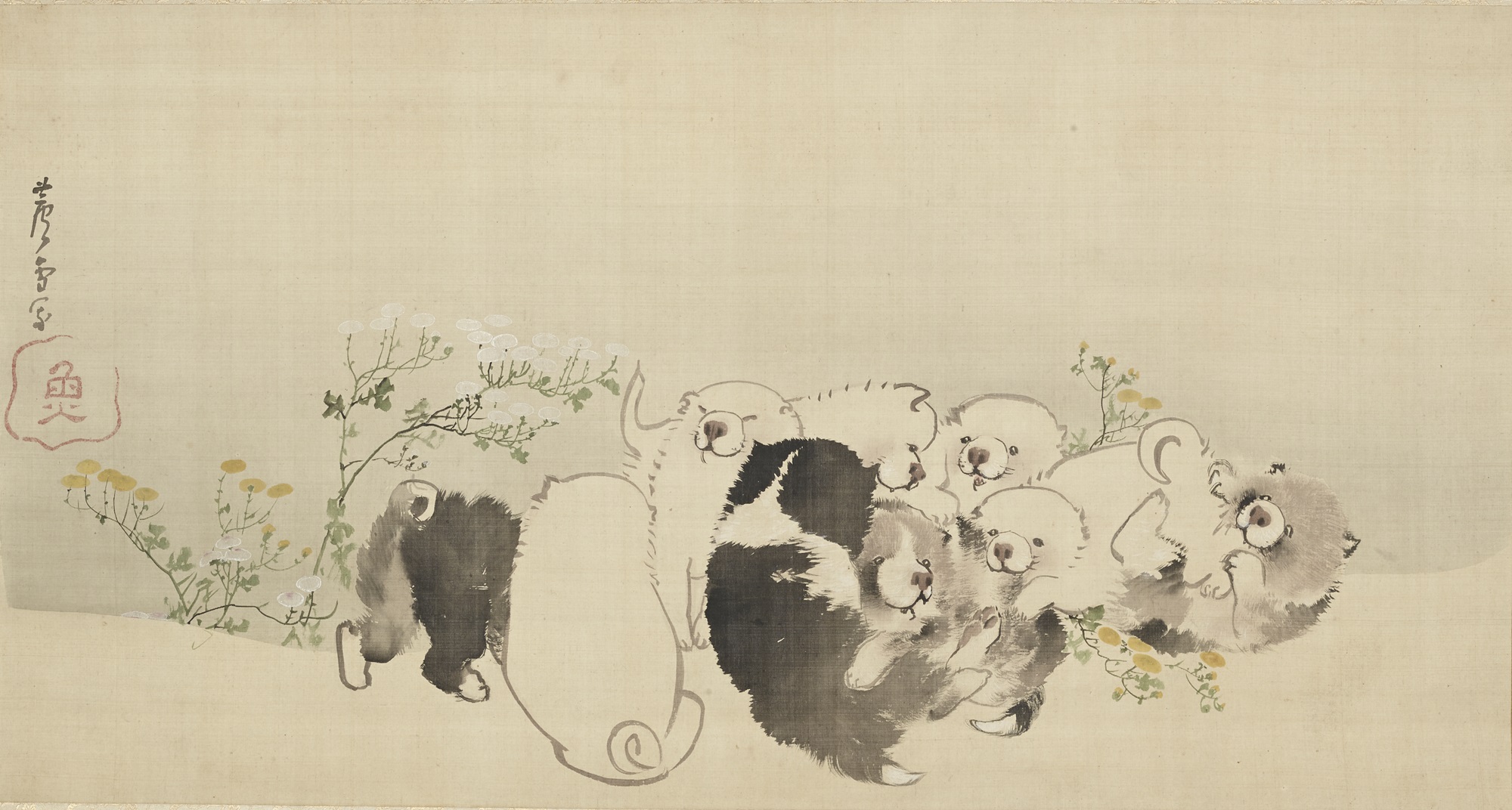
His works include those that are painted realistically in the style of his master, Maruyama Okyo, and others that are highly stylised and broken down, but this work takes the best of both worlds. The way the movement of the puppies huddling and playing together is captured is in Okyo’s style, but the brushwork and expression are uniquely Rosetsu’s. It is just too incredibly cute. Furthermore, it is finished so beautifully that I was astonished when I first saw it. The way the yellow and white chrysanthemums are arranged is stylish, and he is very clever at using subtle touches of colour.
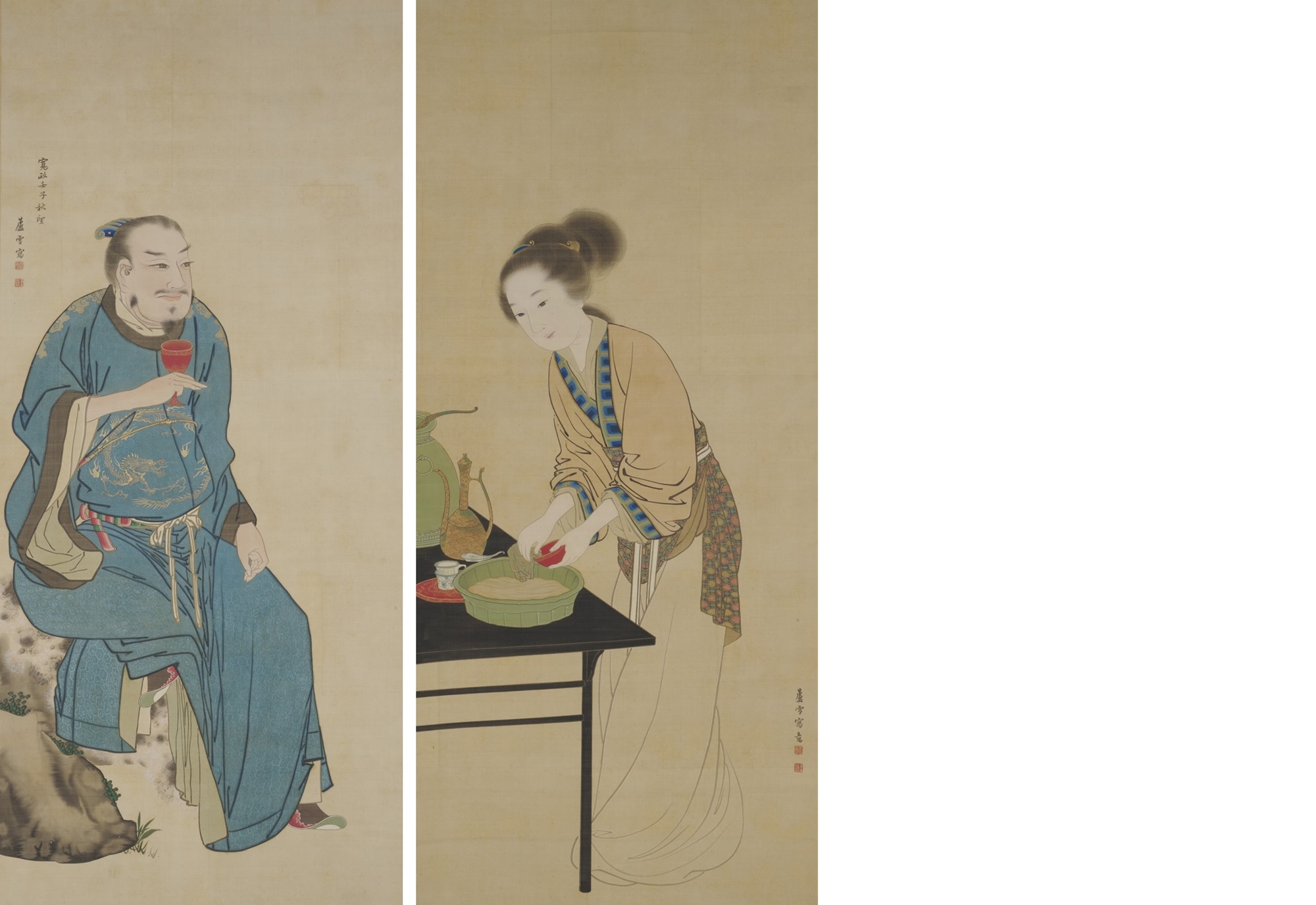
2: Also great at depicting bustling scenes. “I feel his affection for children in the way he distinctively draws their facial features, expressions, and gestures.”
Illustrations of children, from the timid-looking to the mischievous-looking
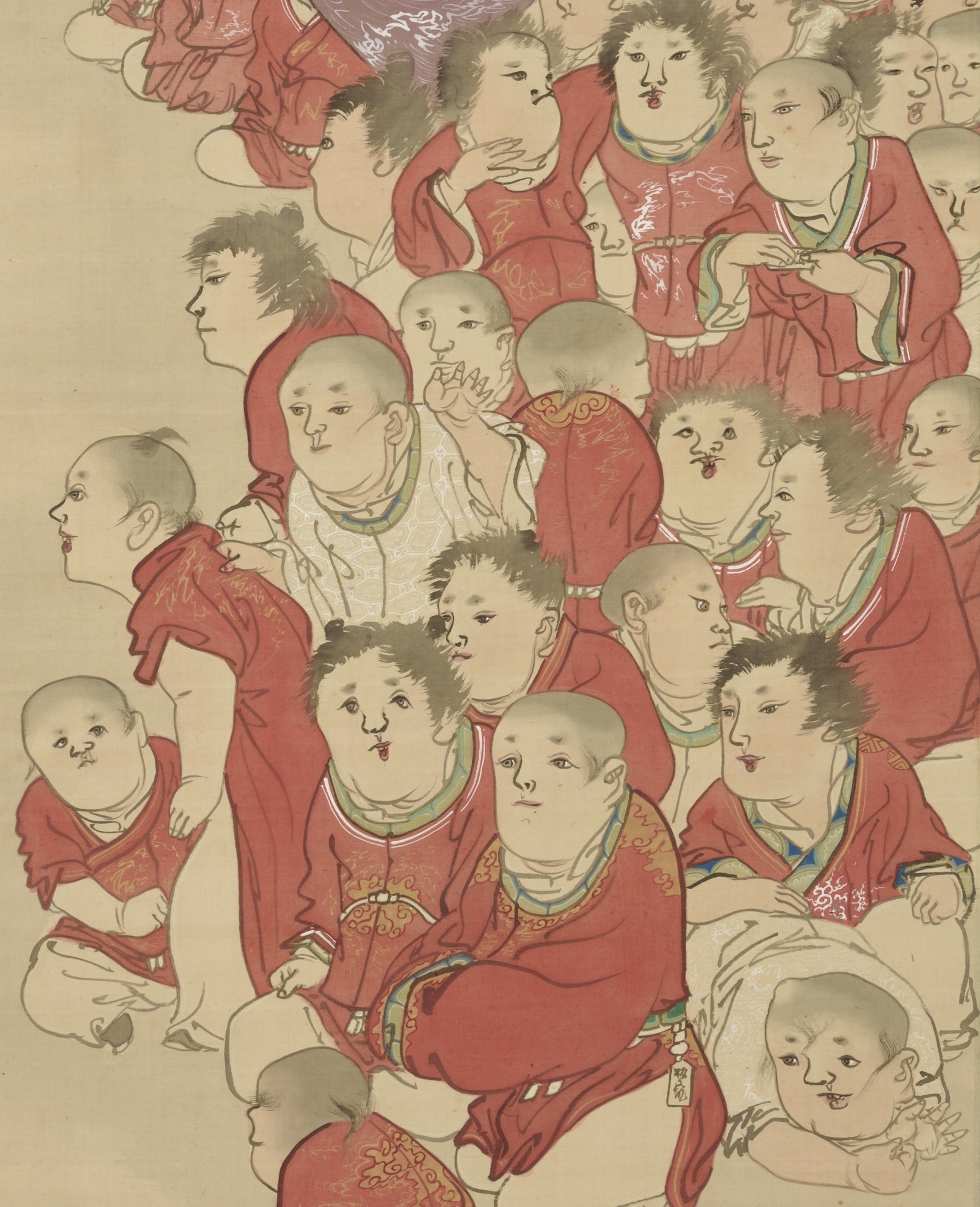
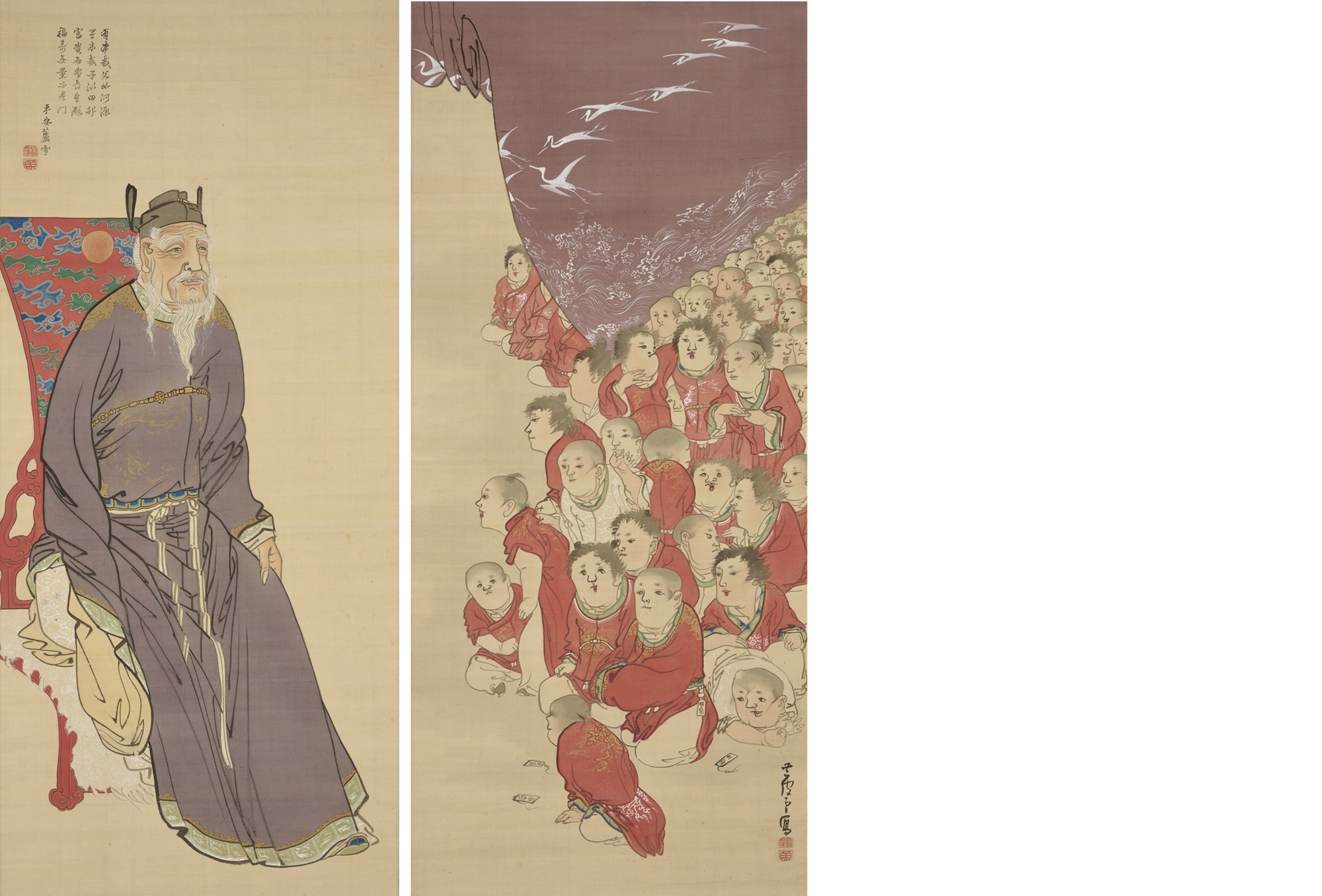
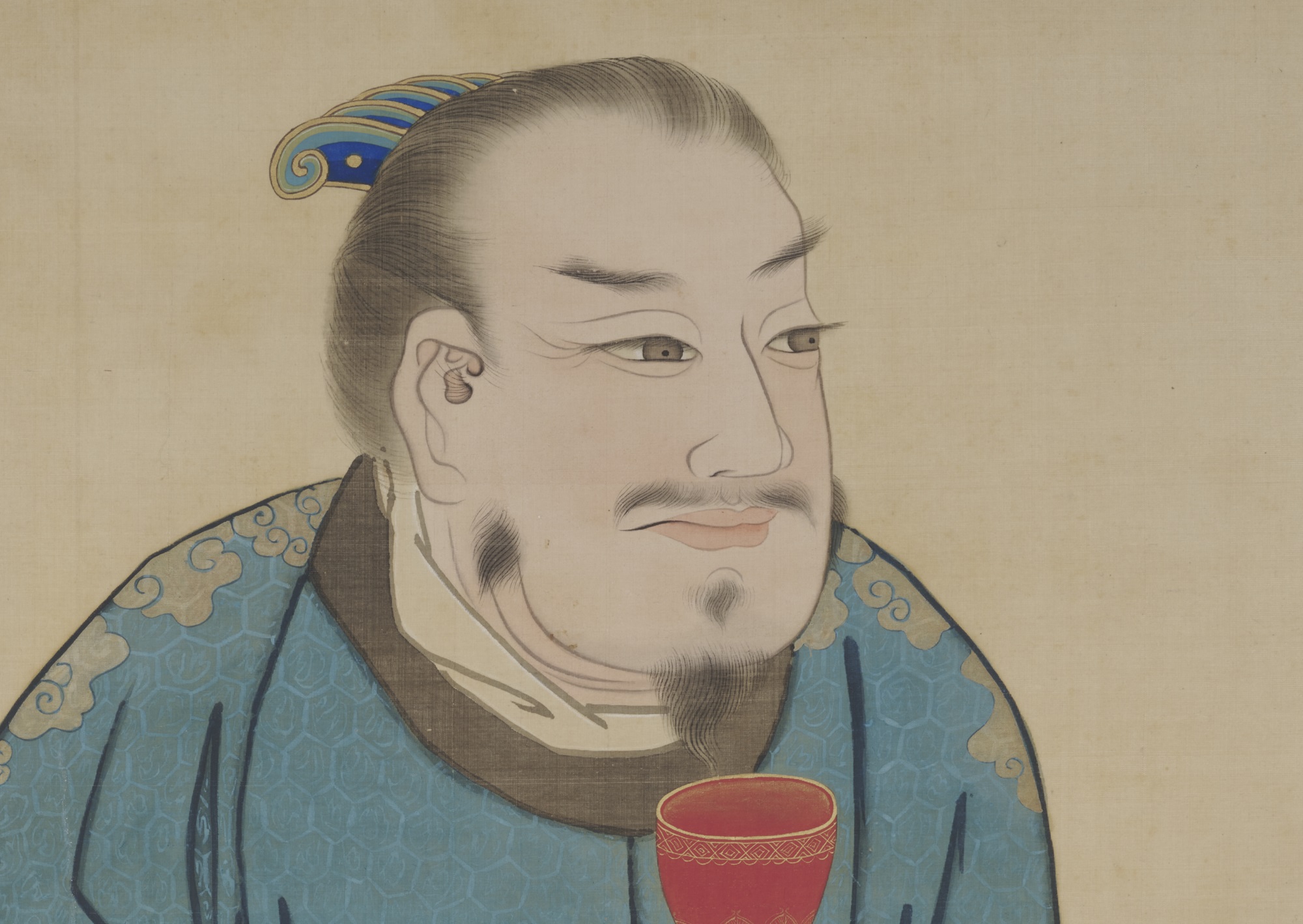
The old man in the left scroll is a Chinese military commander who is often depicted as an auspicious subject because he lived a long life and was blessed with many children and grandchildren. Like Ito Jakuchu’s (伊藤若冲) works,’Hyakkenzu‘ (百犬図) and Kamisaka Sekka’s (神坂佳) ‘Hyakufukuzu‘ (百福図), simply having a large number of subjects makes it an auspicious motif. There are also many cranes flying on the purple drapes. Perhaps because he has too many grandchildren to remember, making them wear name tags on their waists is rather endearing. Please note how each one is drawn distinctly. They feel oddly familar don’t they?
3: Overflowing scholarly nature. “He doesn’t just draw from original sources, but expands his imagination.”
Is this Rosetsu’s utopia!?
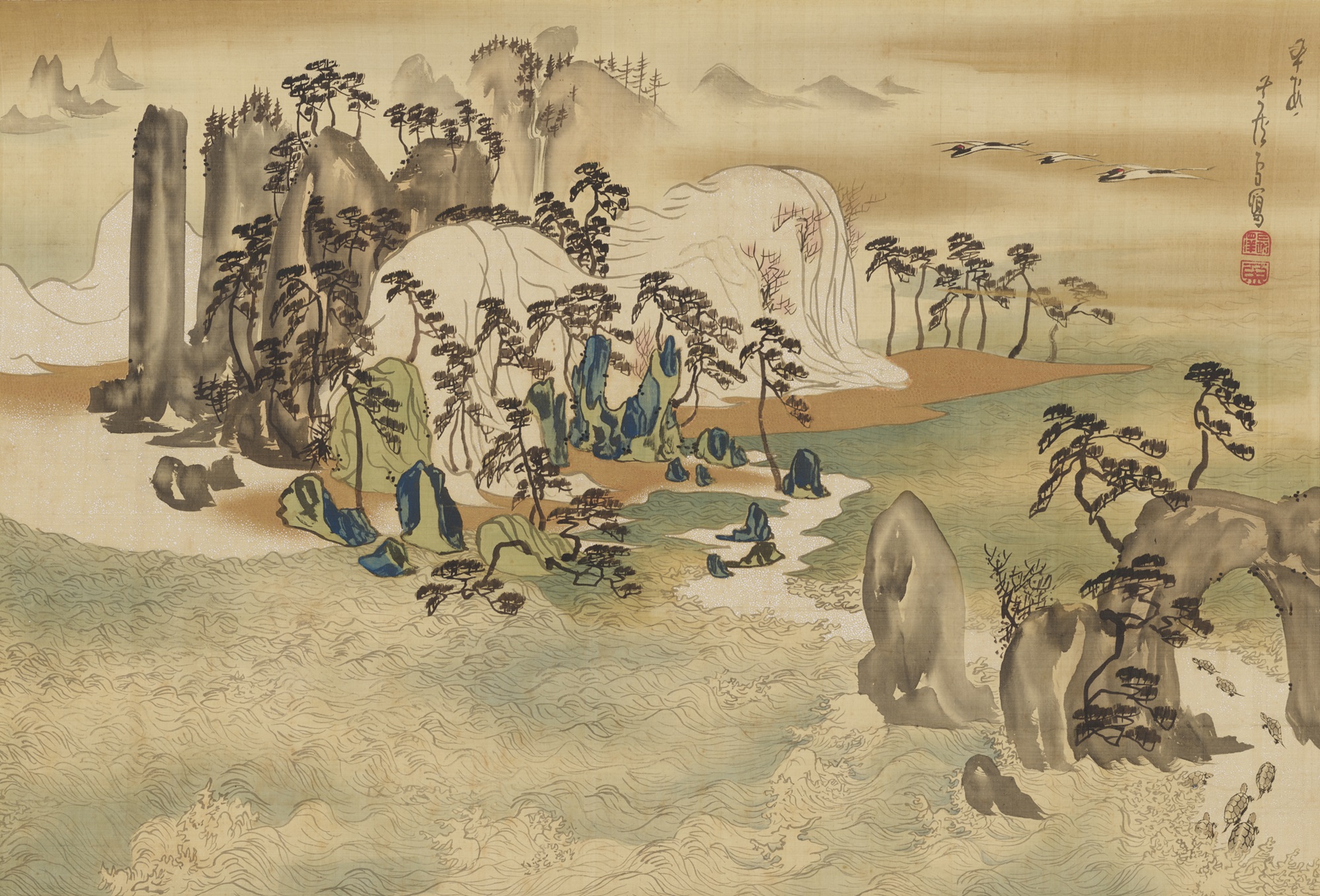
I have never seen a depiction of Horaisan quite like this. Usually, it is painted on a vertically long hanging scroll, like a typical landscape painting, but Rosetsu painted it on a large, horizontally long screen as if looking down from the sky. What I want you to look closely at are the white dots on the sandy beach. They are not gold or silver but a clam shell pigment, yet they look sparkling and are very beautiful. There is a very similar description in the Heian period song collection ‘Ryojinhisho‘ (梁塵秘抄), and I suspect Rosetsu expanded his imagination from there and wanted to paint it like a dream like fantasy.
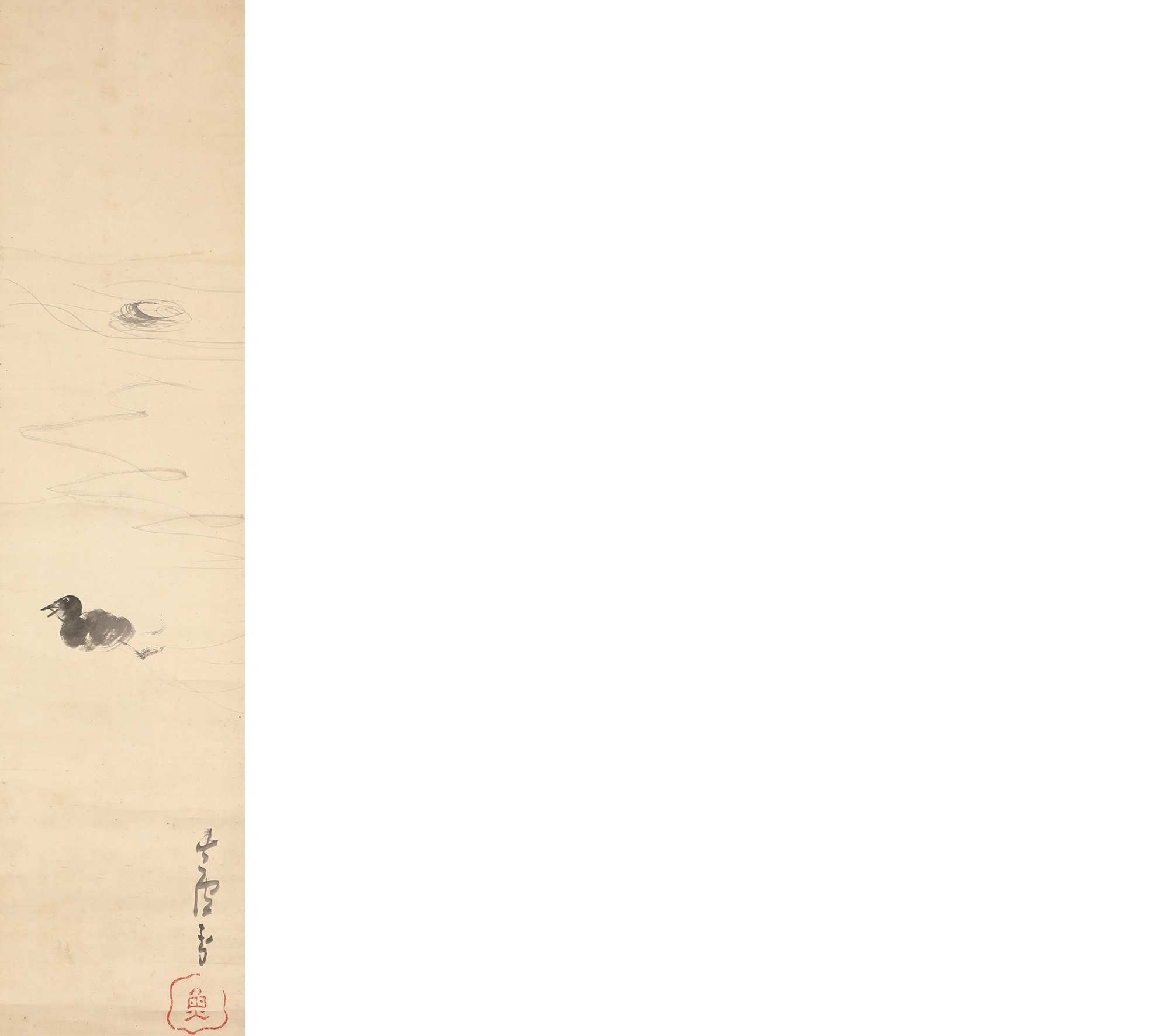
4: A whimsical sketch with hidden precision. “It’s a goofy waterbird, but it is swimming properly.”
Rather than tranquillity or subtle profundity, it is just somehow comical!
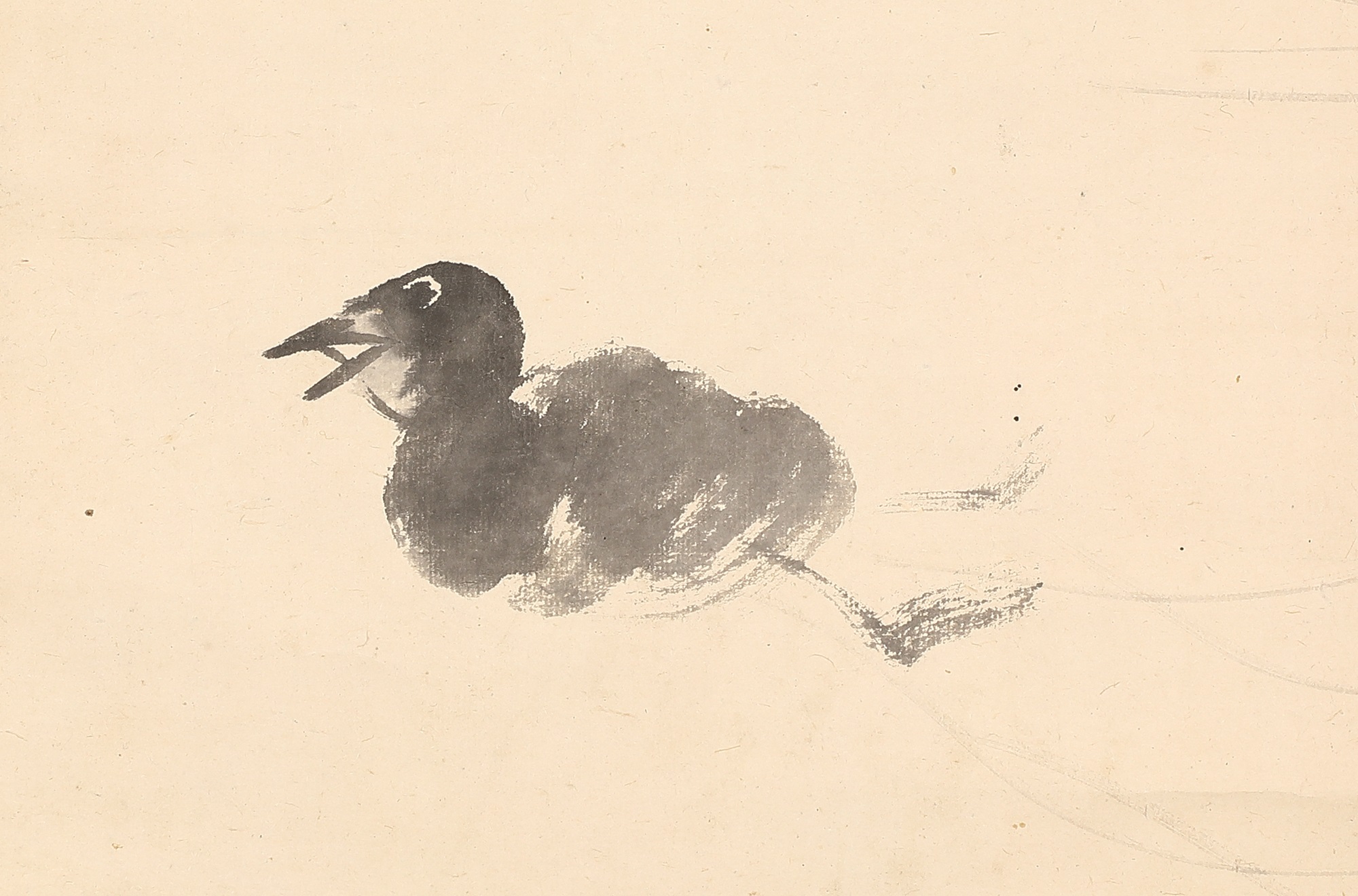
Looking as if it was painted spontaneously but actually intentionally constructed is one of Rosetsu’s defining chracteristics, and this waterbird is exactly that. He has run his brush effortlessly across the paper, but it is amusing how you can clearly see the feeling of the feet moving underwater. It is with no doubt swimming on the page! You can also see the moon in the background. This also looks like it was drawn swiftly, but the feeling of it reflecting on the swaying water surface is brilliantly depicted. These kinds of lines, you see, are what make Rosetsu who he is. The goofy expression of the waterbird is also adorable.
5: Techniques inherited from Okyo. “Like a true disciple of Okyo, his realistic expression continues until his later years.”
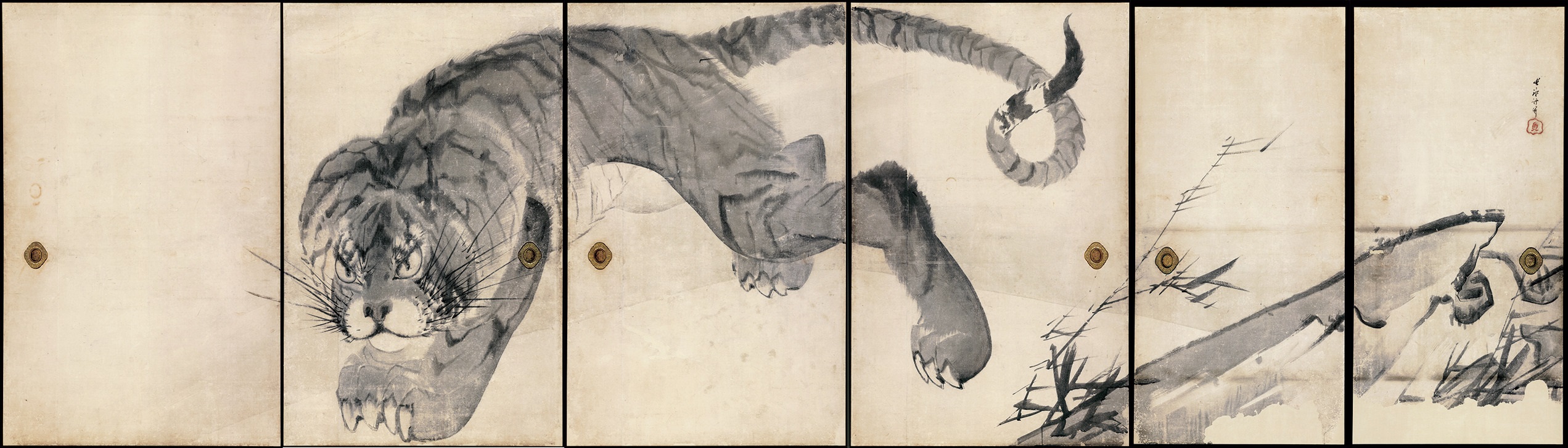
Okyo-style but with charm. Have you ever seen such a handsome tiger?
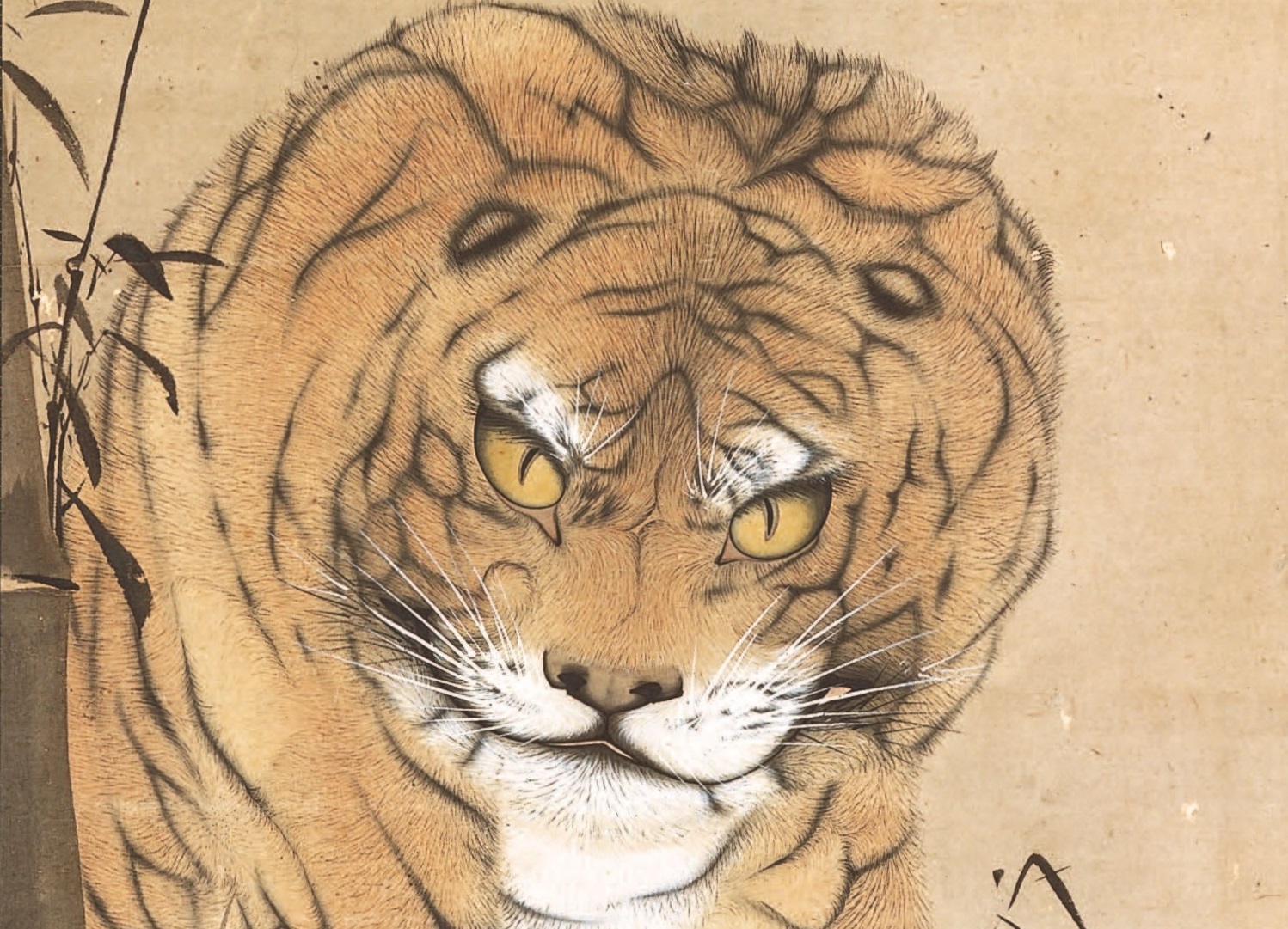
When speaking of Rosetsu’s tigers, the sliding door paintings at Muryoji (無量寺) in Wakayama prefecture are popular. However, the tiger in this ‘Torazu‘ (虎図) is also fascinating. Even every single hair is three-dimensional, and the flow of the fur is firmly depicted, but the fact that it is somewhat comic-like, or rather has a graphic novel touch, is what sets him apart from his master. There is an interpretation that he started painting swiftly during his stay in Wakayama around the age of 33, but that is not the case. Since there are works painted meticulously even in his later years, such as ‘Shibashojo takubunkunzu‘ (司馬相如 卓文君図), it means he did both. He was very skilful.
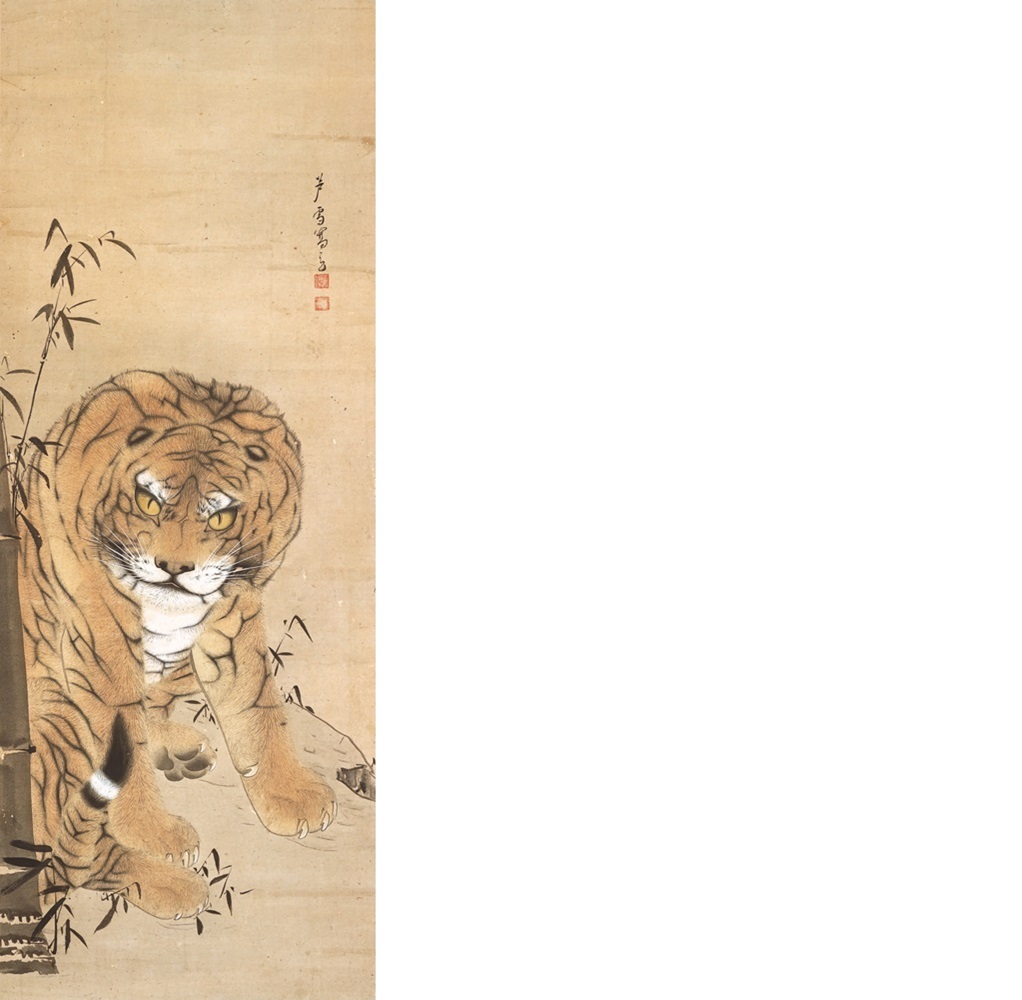
The long eyelashes are also super realistic. The realistic expression of hair and other details is exactly what he inherited from Okyo.
6: From the gigantic to the microscopic at will. “The largest and cutest tiger in the history of Japanese painting.”
Smitten by Feline Charm! The Birth of Rosetsu’s Masterpieces in Kinan
7: Pure, Unadulterated Eeriness – the result of his relentless obsession over exactly where to dot the pupil
A different kind of fear from his master’s ghost paintings.
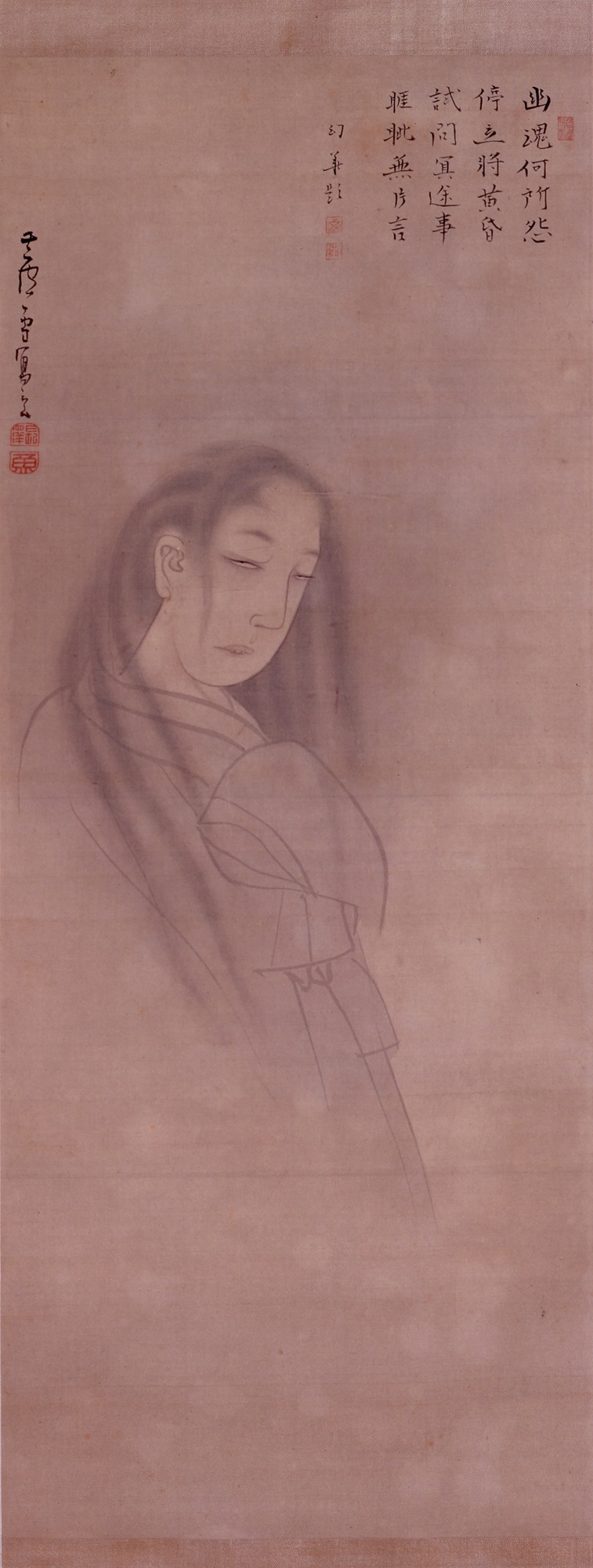
It is said that Okyo was the first to paint a ghost without feet, and his disciple Rosetsu also painted several ghost paintings. While preparing for this exhibition, I once again felt his greatness; this one scroll is an exceptionally chilling ghost painting by Rosetsu, who paints such cute pictures. I think he studied extensively on exactly where to place the pupils to create a terrifying expression. The misalignment of the mouth, or rather the distorted front teeth that look as if they are biting the lower lip, also amplifies the creepiness.
Tell us, Mr Kaneko! Rosetsu’s charm, personality, life… Why are people so fascinated by him?
How was the ‘Irresistible 7’? I imagine you have been completely captivated by the world of Nagasawa Rosetsu’s works. So, the question that naturally arises is, “What kind of painter was he?” Here, Kaneko Nobuhisa, the “curator who loves Rosetsu”, will also unravel the ‘person’.
‘Cute’ is perfectly fine!
There is actually not much that is clearly known about Rosetsu’s life. He was born into a samurai family in Tanbanokuni (丹波国) (Hyogoken) in Horeki 4 (1754) (though there are various theories). He went to Kyoto and became a pupil of Maruyama Okyo. At the age of 33, he went to Kinan (Wakayamaken (和歌山県)) as a proxy for Okyo. And he died suddenly in Osaka (大坂) at the age of 46. He left behind a vast number of works during his short life, but for some reason, the years of production are rarely inscribed, so it is also difficult to meticulously trace the development of his style in chronological order.
Among these, his well-known masterpiece is the ‘Torazu fusuma‘ painted at Muryoji in Kushimoto (串本) (Wakayamaken). Out of his master’s sight, inspired by the warm and open-hearted nature of the southern region, he awakened to a free-spirited way of painting. As a result, it is often said that “until he was 33, he painted earnest pictures trained by Okyo, and after going to Kinan, he went wild” (laughs). People say that Rosetsu’s true charm lies in the latter half of his career. However, I think that is not the whole story. Throughout his life, Rosetsu was capable of painting earnest pictures in the Okyo style, and he actually did so. But there, unlike Okyo who mastered sketching from life, lies a unique expression that softens the hearts of those who view it. I believe that is the “cuteness” unique to Rosetsu, and the reason why he attracts us.
In the art world, saying something is “cute” is often perceived as superficial. In fact, on the cover of an art-related book, it was written, “It is not enough just to be cute.” Seeing that, I instinctively thought, “Isn’t it perfectly fine just to be cute!” (laughs). Being able to properly express cute things as cute requires immense skill. It is not just about drawing things realistically exactly as you see them; you need ideas to make them look cute. I think Rosetsu is a rare painter who thoroughly pursued this.
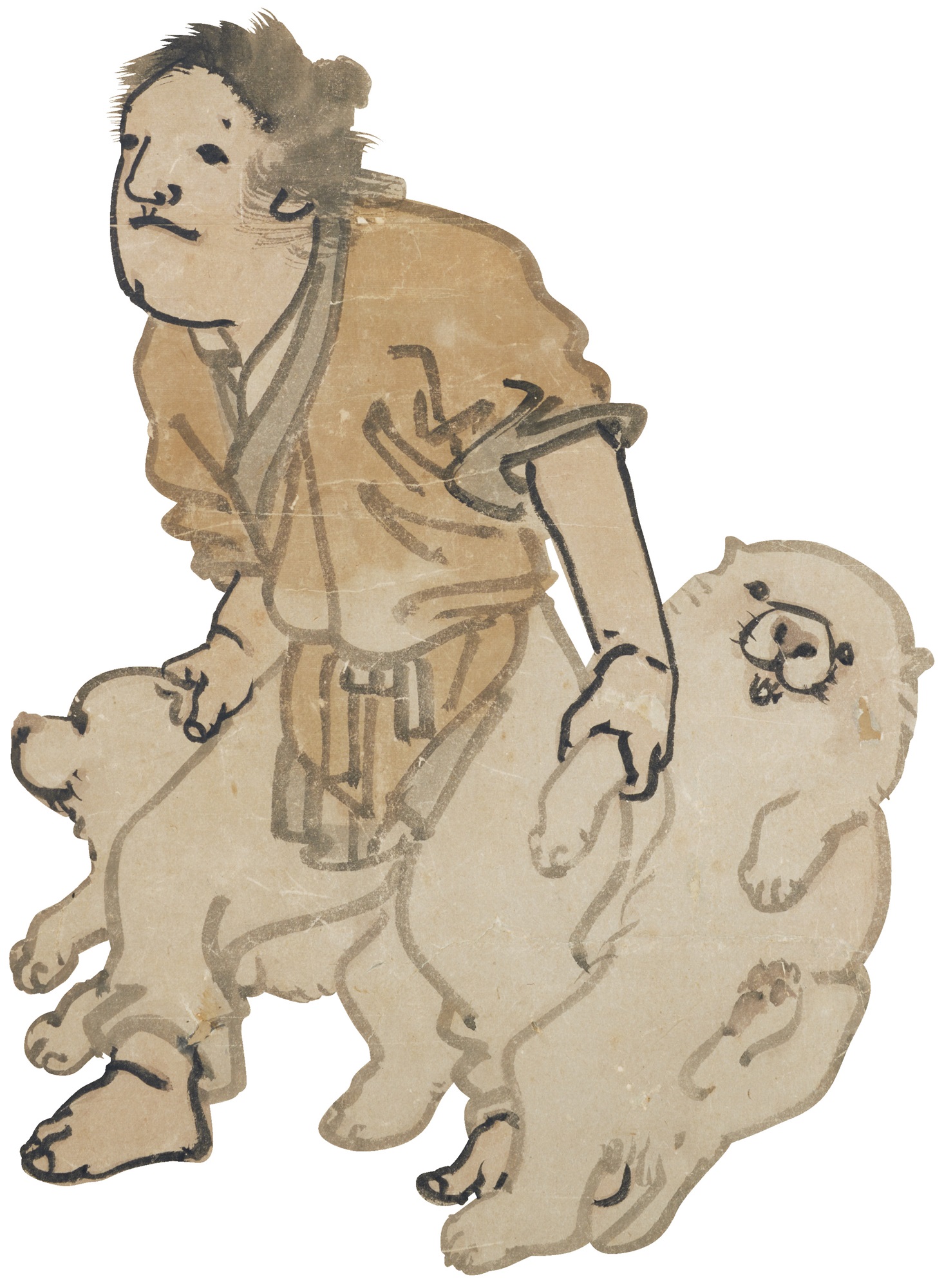
A work that clearly shows Rosetsu’s perspective on “cute things” is ‘Karako asobizu fusuma‘ (唐子遊図襖). The figures of children and puppies playing innocently are very lively. Among them, the commonly known “dragged dog” shown above, which is being carried by its front paws, became a hot topic on social media as “a sight you see at vaccination venues” (laughs). It has a mischievousness that makes you want to add a speech bubble and make it say something, or throw in a witty remark. Rosetsu must have truly loved cute things. I think the depth of that emotional engagement is what gains our sympathy even across time. (Story by Kaneko Nobuhisa)

Children and puppies bustling about on a 10m-long fusuma painting!
*Although there are various theories regarding the Kanji (漢字) spelling of Nagasawa Rosetsu, the main magazine of ‘Waraku‘ and ‘Waraku web’ have unified the spelling as ‘長沢芦雪’.
This article is translated from https://intojapanwaraku.com/art/301793/