









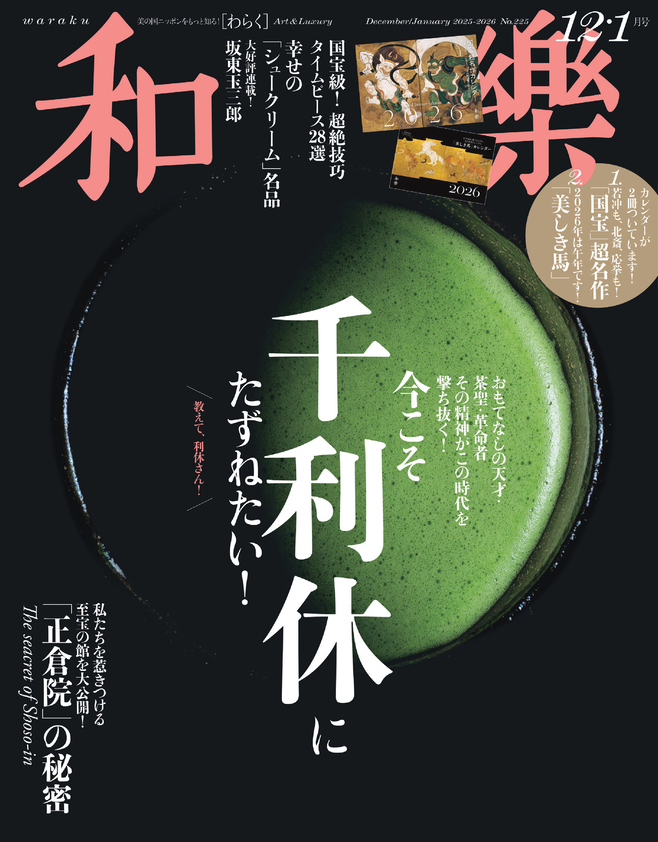




"National Treasure" which can be said to be the highest achievement point of Japanese art At Shogakkan, "Weekly published Nippon National Treasure 100" rediscovers its hidden beauty and cultural history On sale.
As digest of each issue, we introduce profile of famous treasure.
This time, the general art of the Asuka period "Tamushi Ayako" and 61 national gem Buddha "Usuuma Cliff Buddha".
The famous treasure of Horyuji Temple
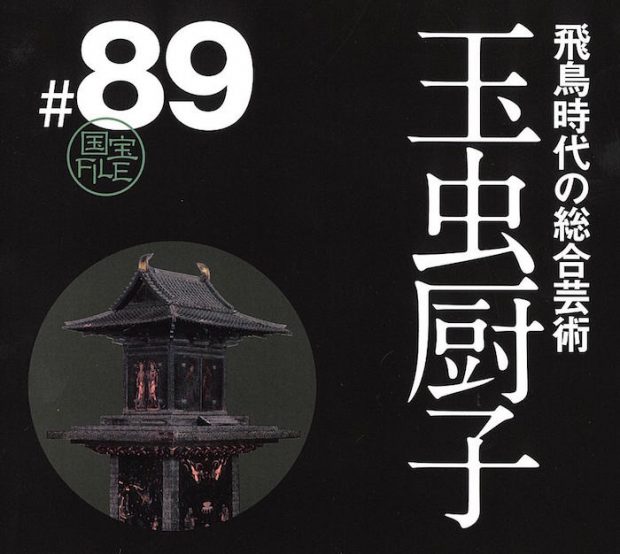
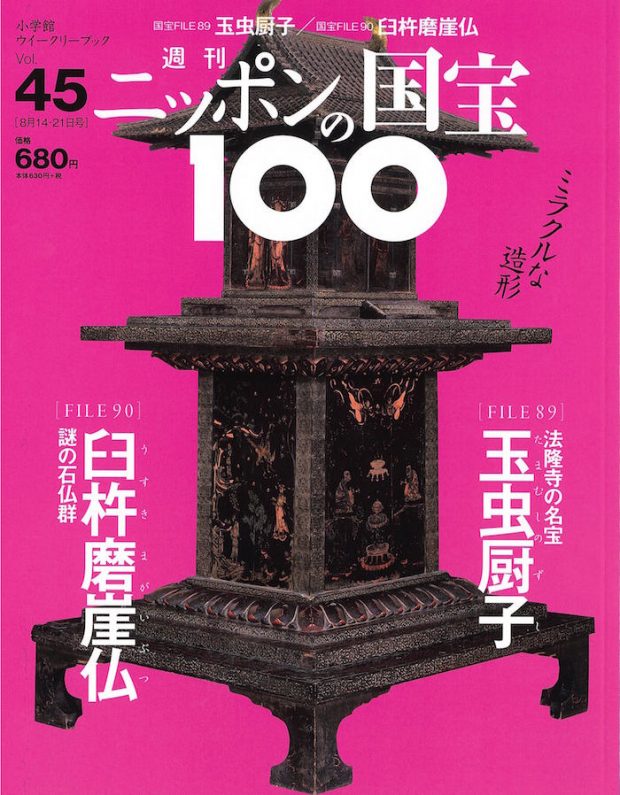
"Edamushi Reiko" is considered to be one of the oldest crafts in Japan. The name is derived from the fact that an immature moth is placed under an arabesque-shaped, transparent engraving. "Edamushi Reiko", which is said to have used about 4500 beads of a long-established beetle as a beetle with seven-colored moths, is a crystal of the craft, painting and architecture of the Asuka period.
A lion is a Buddhist tool that holds Buddha statues, a scroll, and the bones of Buddha. It is said that furniture used in the kitchen (kitchen) has turned to be used as a container for storing Buddhist instruments. It is believed that “Yamushi Reiko” was also enshrined in the temple hall of Horyuji Temple, probably with a Buddha statue. In addition, there is also a tradition that the ancient emperor, who used the national administration with Prince Shotoku (Ohko Shishido) as a regent, put it close to worship.
"Eamushi Reiko", which exceeds 2 meters in height, consists of a palace section in the upper half and a pedestal section in the lower half of a Buddhist temple. There are various theories as to the exact time of production and how long it has been transmitted to Horyu-ji, but Keiko, which appears to be this product, is described in the "Horyu-ji Koryu Riki Shiho-Seisho" written in Tenhei 19 (747). Because of being done, it is considered that the theory that it was in Horyuji during the Nara period is strong.
The interior of the palace area is filled with a large number of Buddhas (pushed statues of Buddha) that have been punched out of a copper plate, and a bronze statue is currently located in the center. The pedestal section is composed of Suzuri and Sugamo shaped like Suzurizan (the spirit mountain which is supposed to rise to the center of the world in Buddhism), and the story of Buddha is made of lacquer paintings and oil paintings (oil paintings) on four sides of Suzusa. It is drawn.
In addition, "Edamushi Reiko" is designated as a national treasure in the department of crafts, but it is also valuable as an architectural document. At present, there are almost no remaining Buddhist buildings in the Asuka period, and the figure at that time can only be guessed from the ruins. However, the palace section, which can be said to be a miniature version of the Buddhist temple, has an old style that has now been lost, such as a style called 錣 葺 with a step in the middle of the roof, and a sashio that imitates the tail of a bird attached to both ends of the ward I have. "Tamushi Reiko", created as a target of worship, is a "comprehensive art" that conveys modern techniques in crafts, paintings and architecture in the Asuka period.
National Treasure Profile
Tamamushi eggplant
7th Century wooden gilt-painted lacquered secretly painted picture lacquered painting 233.3 cm tall Horyujira Nara
It is a large dumpling that is transmitted to Horyuji Temple and consists of an upper palace and a lower pedestal. Under the transparent carving hardware of the palace area, an eaves of insects is paved. Both the palace and pedestal sections are painted with lacquer paintings and secret paintings (oil paintings) to illustrate the story of the Buddha's previous life, etc., and are finely decorated in detail.
Mysterious stone buddha group "Usutama cliff Buddha"
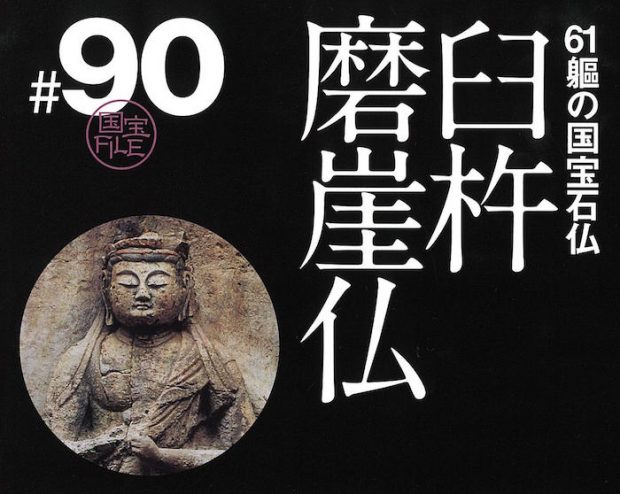
On the hilly slope facing the south bank of the Fuchida River, a tributary of the Usuki River flowing in the southern part of Oita Prefecture, there are 61 stone Buddha groups "Usuima Cliff Buddha". In the Korean peninsula and other continents, a large number of stone Buddhas were built, but in Japan, which was not blessed with high quality stone materials, bronze statues and wood were the most famous Buddha statues. However, the area of Oita Prefecture, covered in soft bedrock of fused tuff that arose from the eruption of Mount Aso (Kumamoto Prefecture), is a treasure trove of rare stone Buddhas in Japan.
Among them, "Usuuma Cliff Buddha" is one of the largest in the country. A cliff of Buddha is a kind of stone Buddha, a sculpture of a Buddha on a steep cliff or a large stone. It is thought that it was built from the end of Heian period to the Kamakura period, divided into four groups and scattered, and it is called "Hoki stone Buddha first group" "Hoki stone Buddha second group" "Sannoyama stone Buddha" "Koen stone Buddha" from the place name It is done.
Many of the carved Buddha statues are expressed in a near three-dimensional “round-carved” expression, with the back just touching the bedrock. It is a figure similar to the wooden statues of the same period, and in particular, the noble Buddha honors found in the Hoki Stone Buddha 1st and 2nd Groups are modeled after the style of the Great Buddha and Dosho, who was active in the late Heian period. I feel the taste of "Dr. On the other hand, Koen Ishibutsu has placed two statues of 4 Buddha and 4 Suga statues on the left and right, respectively, on the left and right, mainly on the Dainichi Nyorai, and on the outside, the Bishamon Heaven and Fudomei King. There is no other example of such arrangement, and it is thought that it is a three-dimensional version of a secret religion "mandala" that schematizes the world of enlightenment of Buddha.
There is no definite record of “Usuhi Mafutsu Buddha”, but two stone Olympic towers near the Hoki Stone Buddha 1st group are Jae 2 years (1170) and Cee'an 2 years (1172) respectively. The inscription is inscribed, and it serves as a guide for the production age of Buddha Buddha. In addition, it is considered that it was established in relation to Tendai sect.
In 1995, 59 vessels were designated as national treasures for "Usuuma Cliff Buddha". In addition, in 2017, two golden warrior statues in front of the old ground stone Buddha were newly designated as National Treasure. Stone Buddha carved in rock surface of idyllic hillland conveys form of original faith brought up in this land while resisting many years of wind and rain.
National Treasure Profile
Usuuma Cliff Buddha
Latter half of the 12th century to the 14th century Stone construction Hoki stone Buddha first group 4 龕 25 Hoki stone Buddha second group 2 18 龕 Sanno mountain stone Buddha 3 軀 園 石 15
It is divided into 4 groups by stone Buddha group carved on the cliff of the hill of Usuki city in the southeastern part of Oita prefecture. It is sculpted in the shape of a round carving on the soft stone layer of fused tuff from the eruption of Mt. Aso. "Hoki" is a place name that means a steep cliff.
My motto is "I'm serious about being stupid", and I am having fun and having fun every day.