






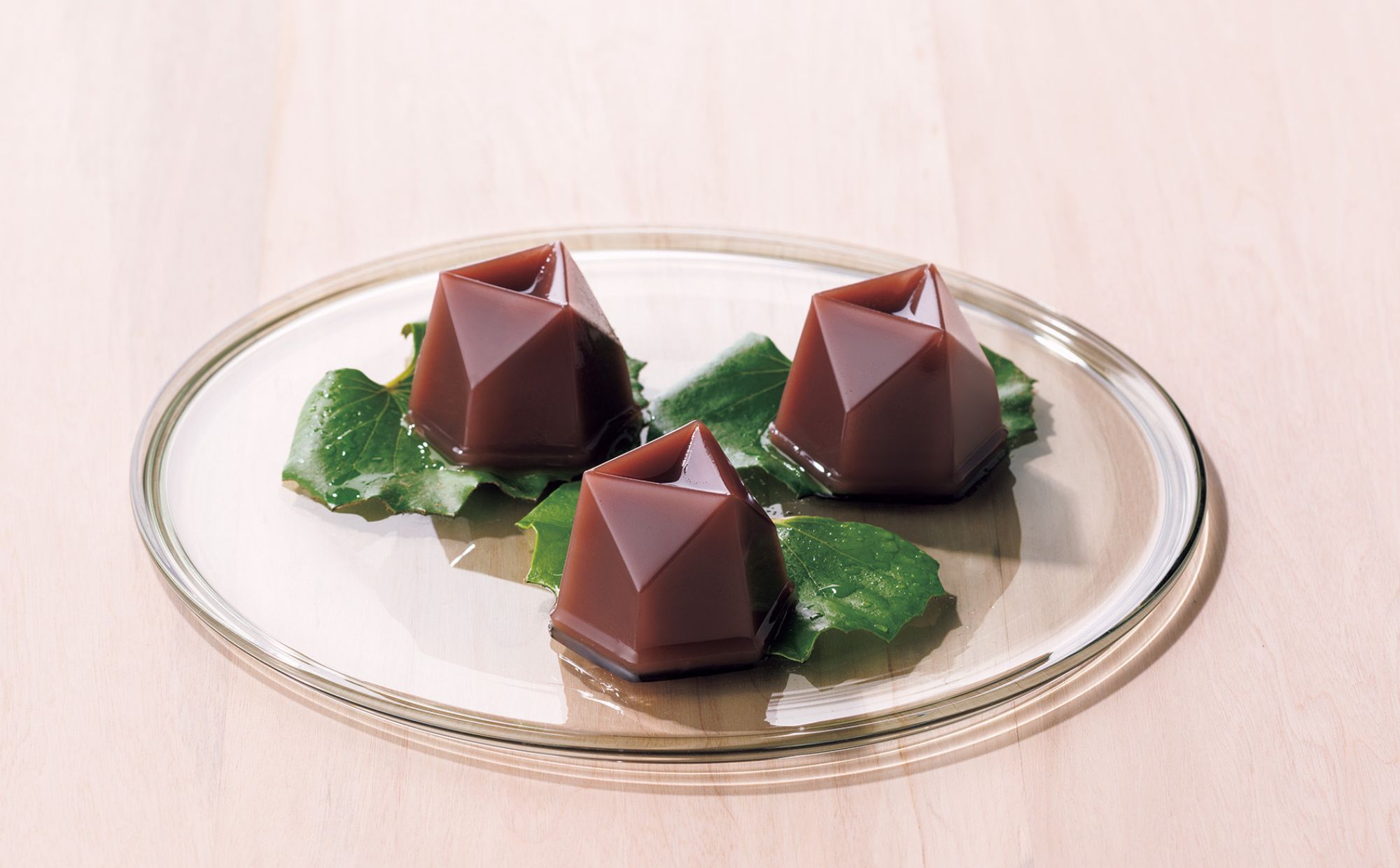
A Beautiful Encounter Between Natural Thread Agar and Satoyama Water
Creating a Mizuyokan that satisfies both a silky texture and a richness of adzuki beans is no easy feat. One wishes to achieve a precise balance between the agar and the Koshian, which is prepared richly to preserve the flavour of the beans. In its quest for this ideal, Kanou Shoujuan arrived at the Itokanten produced by Ogasawara Shoten (小笠原商店), based in Ina (伊那), Nagano (長野) Prefecture.
The Ina region, stretching across the foot of the Minami Alps (南アルプス ; Southern Alps), has been a thriving centre for agar production since the Edo period. Winters are characterised by many clear days and cold, dry winds. Using the temperature difference between day and night, the traditional method involves slowly removing moisture from the boiled and dissolved Tengusa (天草 ; agarweed). Complemented by mineral-rich underground water from the mountains, this process is said to produce an Itokanten that is firm and elastic yet crisp and smooth. Kanou Shoujuan’s Mizuyokan luxuriously uses the ‘Jo Kanten’ (上寒天 ; premium agar) from among these varieties, and the water that supports the very foundation of its taste flows through Sunai no Sato, where the confectionery is made.
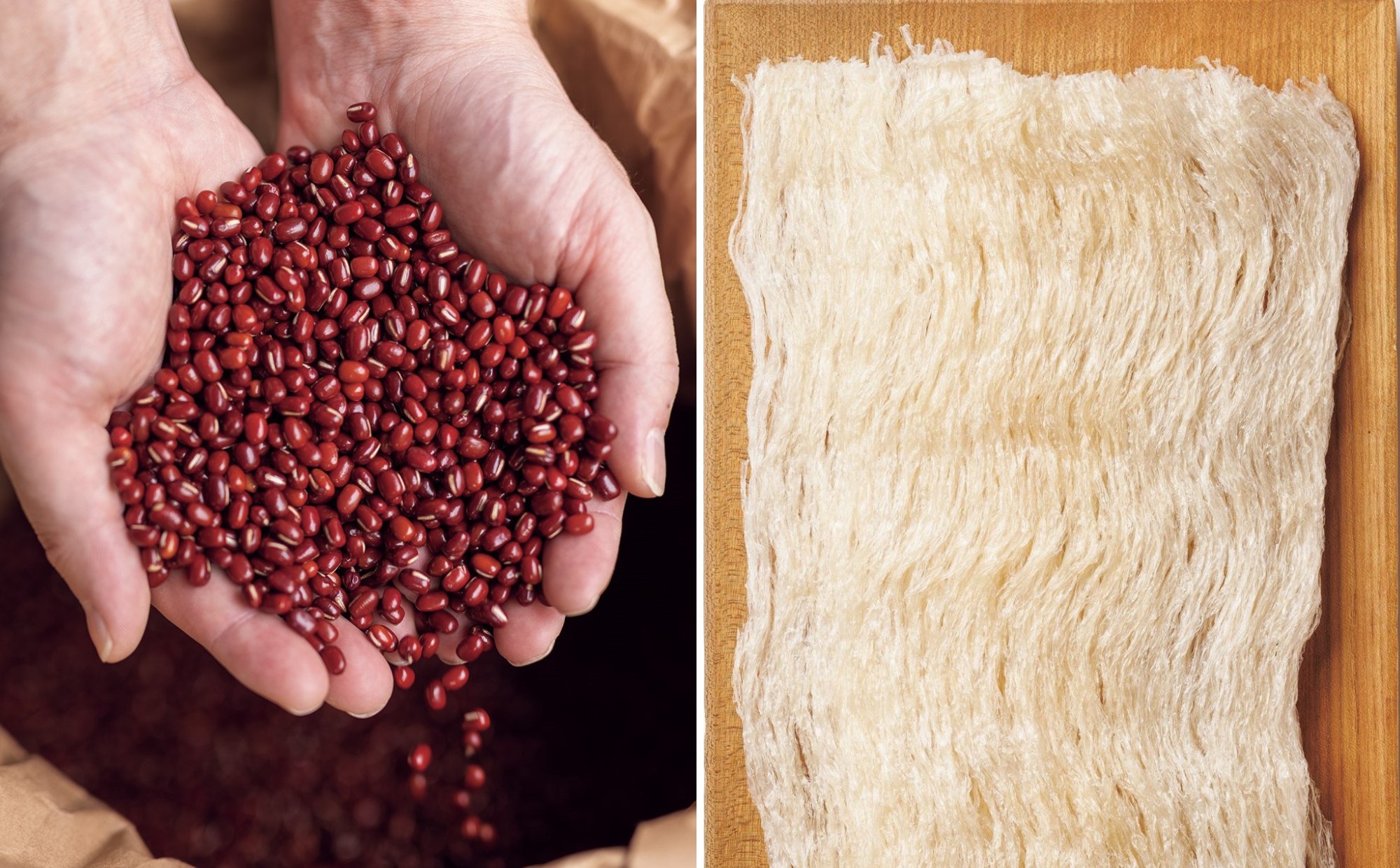
Confectionery Making in Harmony with Nature, Born from a Factory with its Own Plantation
Sunai no Sato is a 208,000-square-metre Satoyama owned by Kanou Shoujuan. It is located in Oishi Ryumon (大石龍門), surrounded by mountains and hills at the southernmost tip of Otsu-shi (大津市), Shiga (滋賀) Prefecture, where clear streams flow. It was in the 60th year of Showa (1985) that the company moved all its operations, including the factory, from its birthplace in Nagara (長等), Otsu-shi, to this Satoyama. Rooted in the belief that agriculture and craft are inseparable, as crafting wagashi begins with crafting the finest ingredients, we cultivated the mountain forests of Oishi and have carried that legacy to the present day.
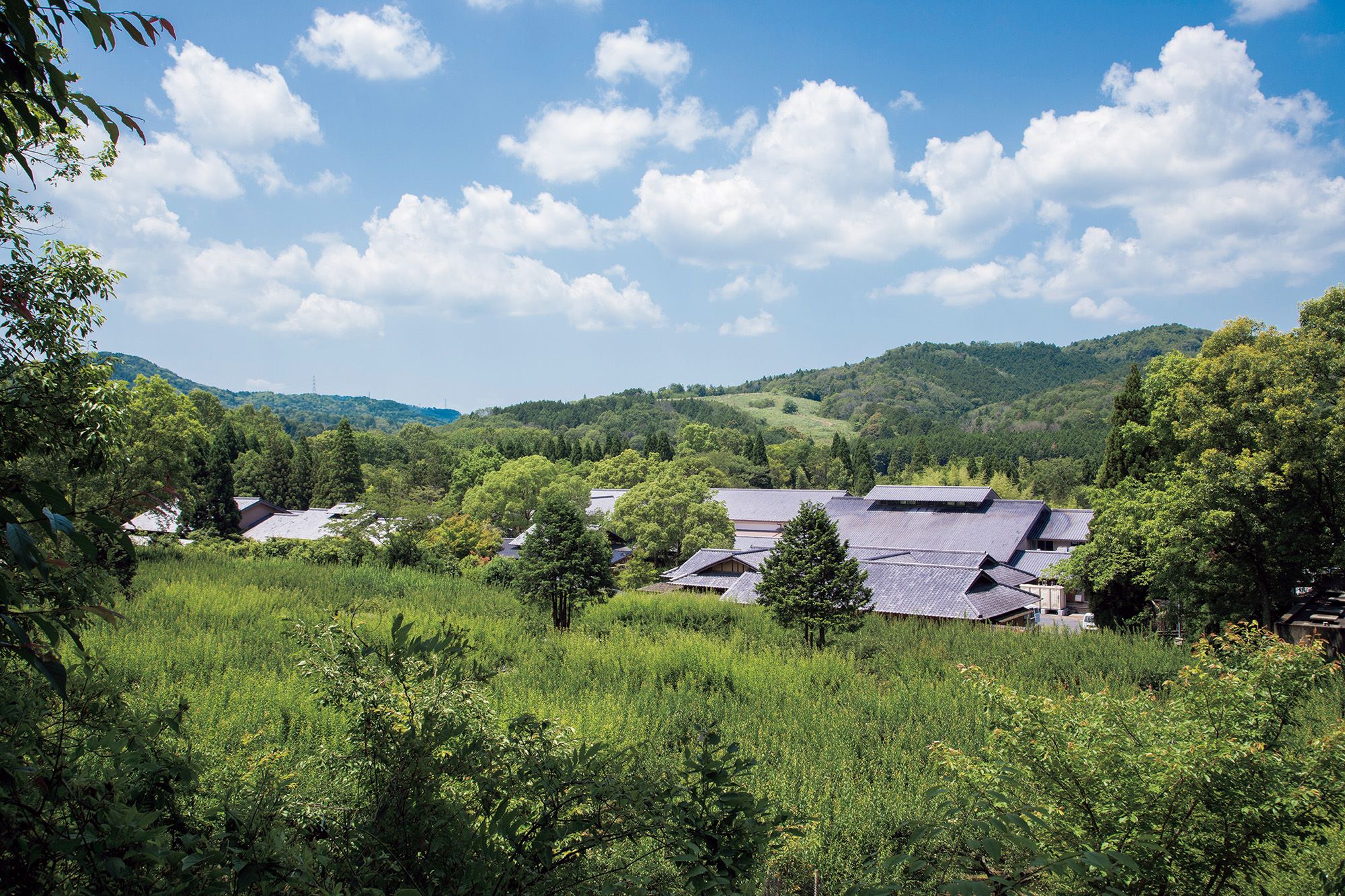
The water indispensable for confectionery making is drawn from the local Matagadani (又ケ谷) and is used not only for the cultivation of fruit trees that provide ingredients for the sweets but also within the factory. The water discharged from there is sent to a purification facility on the premises. Furthermore, the outer skins of the adzuki beans produced during the manufacture of Koshian are mixed with scraps from forest thinning to become compost for the fields. In this way, Sunai no Sato and the Satoyama form a cycle, preserving the environment. It is precisely because the staff of Kanou Shoujuan place themselves in an environment where they can feel the harshness and blessings of nature firsthand that there is weight in their words: “Water is the lifeblood of confectionery. It is what determines the flavour of the sweets.”
In 2023, Sunai no Sato was certified by the national government as a ‘Nature Symbiosis Site’, defined as an ‘area where the conservation of biodiversity is being promoted’. While collaborating with local farmers in various regions, expectations are rising for the production of even better raw materials and the further development of circular confectionery making.
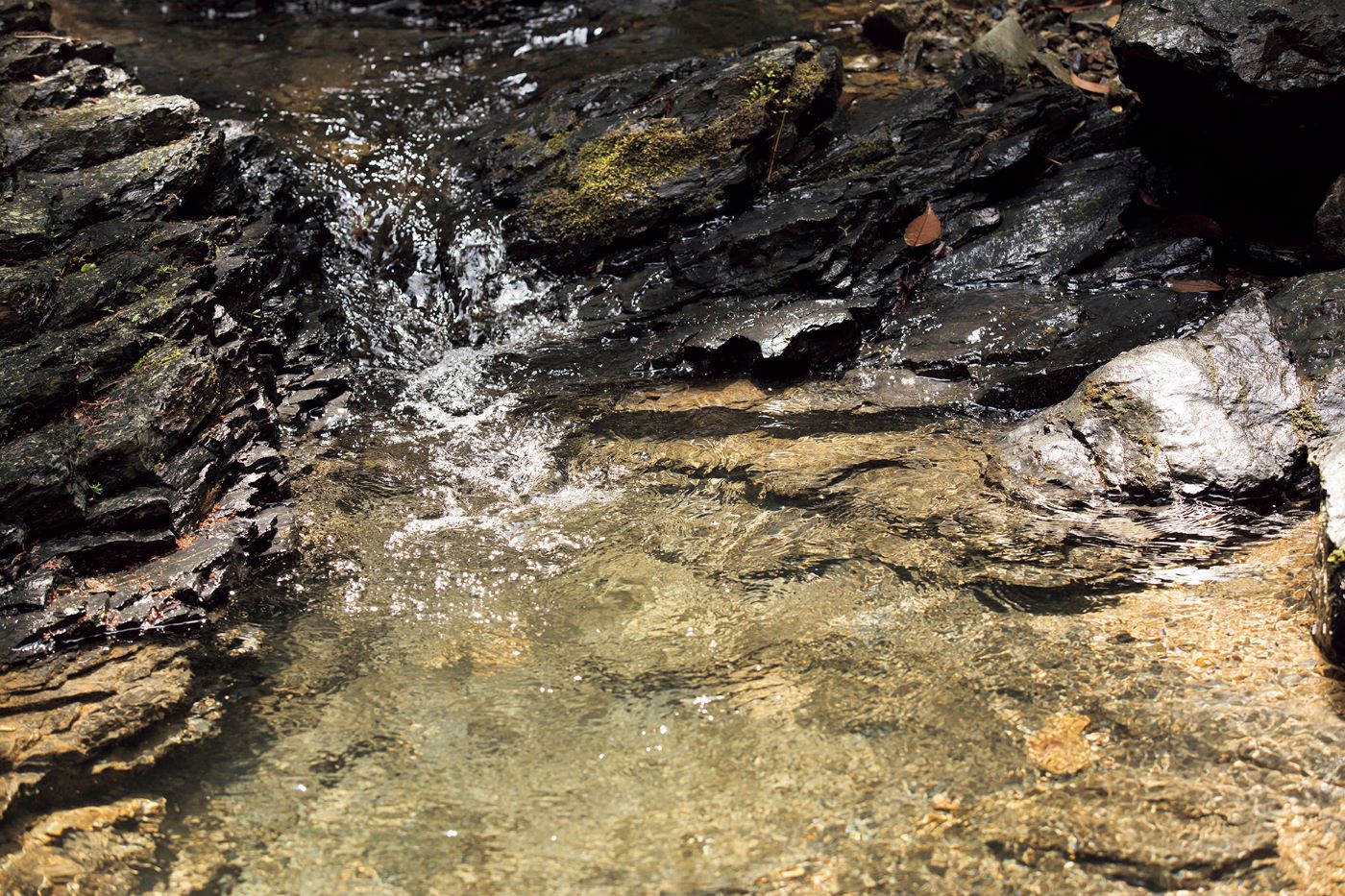
The Encounter of Natural Itokanten, Hokkaido Adzuki Beans, and the Pure Streams of Satoyama Gives Birth to Succulent Mizuyokan
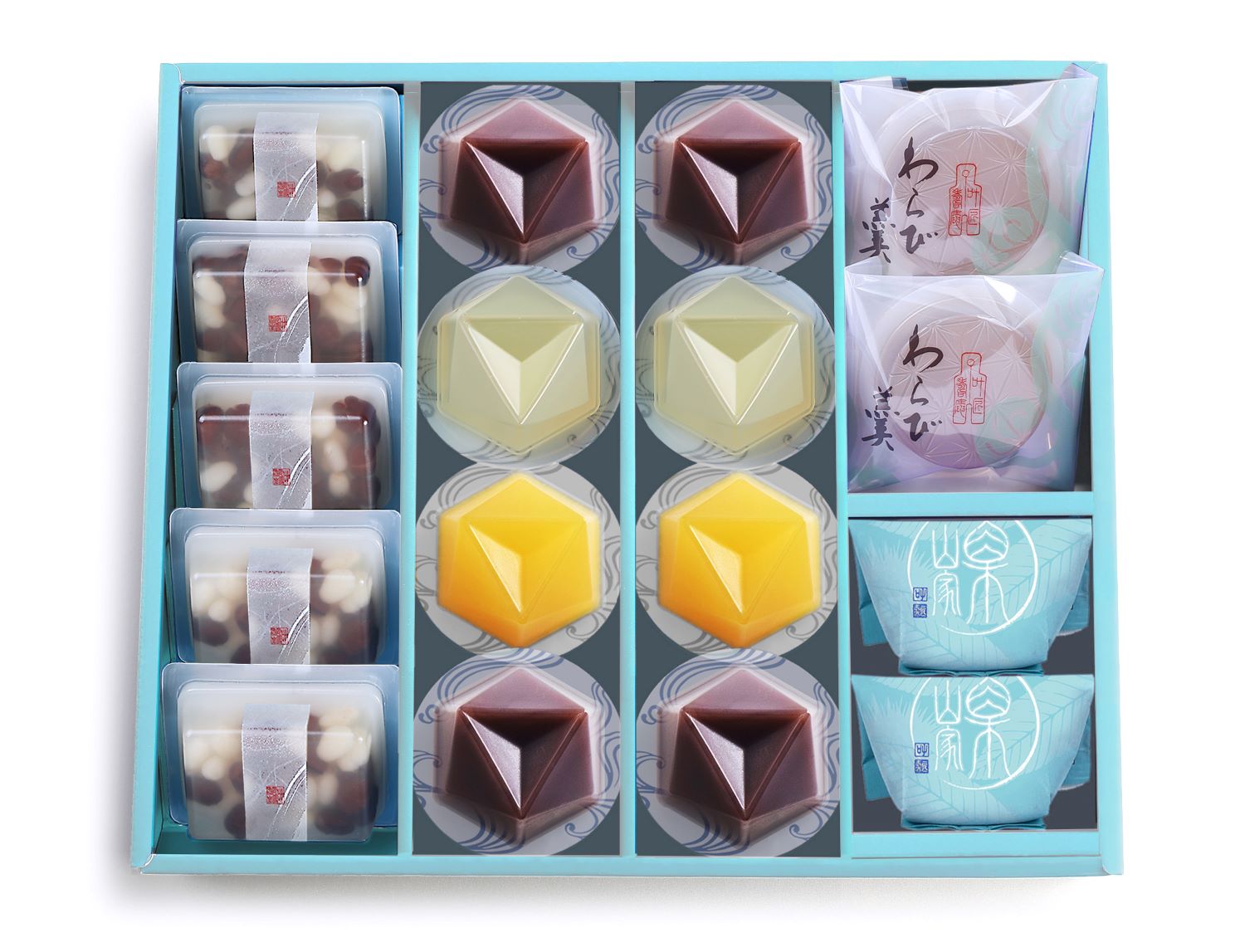
The Kingyokukan ‘Natsunotamaroji’ has been Renewed! Together with Mizuyokan, it makes a Perfect Summer Gift
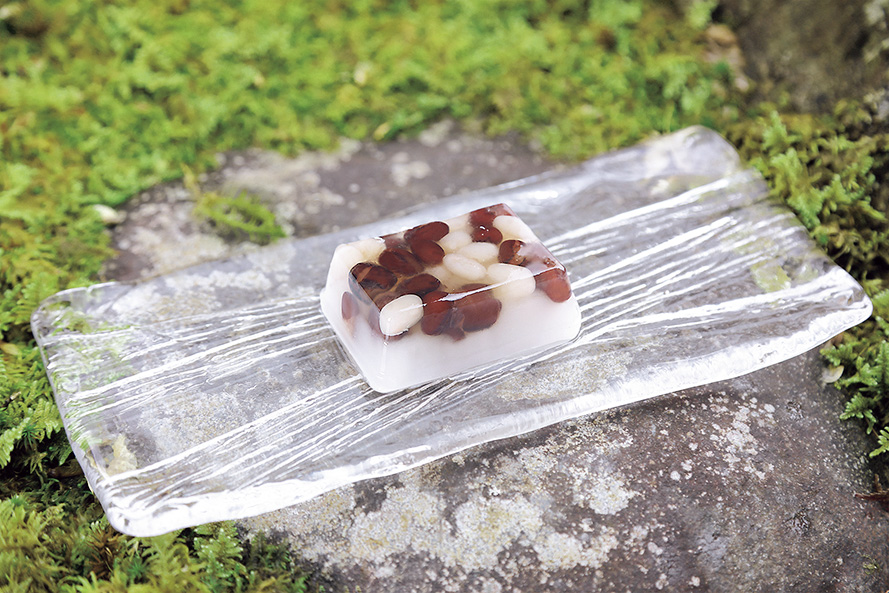
Inspired by the image of a Roji (露地 ; tea garden path) sprinkled with water, the new ‘Natsunotamaroji’ (夏の玉露地) is being offered from this summer. Encapsulated within the translucent Kingyokukan (錦玉羹 ; clear jelly) are soft Mochi and carefully selected Dainagon Azuki Dainagon adzuki beans and white adzuki beans. Tasting it chilled will surely bring a pure state of mind, much like the refreshing effect of Uchimizu (打ち水 ; sprinkling water to cool the ground).
Contact Information
Kanou Shoujuan Customer Centre
0120-257-310
Official Website
Photography / Ishii Hiroaki (石井宏明)
Stylist / Jo Motoho (城 素穂)
Composition / Fujita Yu (藤田 優)
*Prices are as of 1 July 2024.
This article is translated from https://intojapanwaraku.com/lifestyle/246318/