






‘Beauty of Use’ Considered Through the Existence of the Chawan
Theaster Gates is a contemporary artist based in Chicago, USA. Taking his visit to Japan in 2004 to study ceramics in Tokoname (常滑市), Aichi (愛知県) as an opportunity, he deepened his interest in Japanese crafts and Mingei folk art (民藝). This background has influenced his subsequent projects, leading to his unique concept of ‘Afro Mingei’ (アフロ民藝).
He is an internationally acclaimed artist whose activities reinterpret cultural and historical resources, primarily through urban regeneration, whilst traversing multiple fields such as architecture, sculpture, and music.
The core of this project comprises numerous ceramic works conceived by him. These exist not merely as objects of appreciation, but as vessels to be held, used, and with which to cultivate a relationship over time.
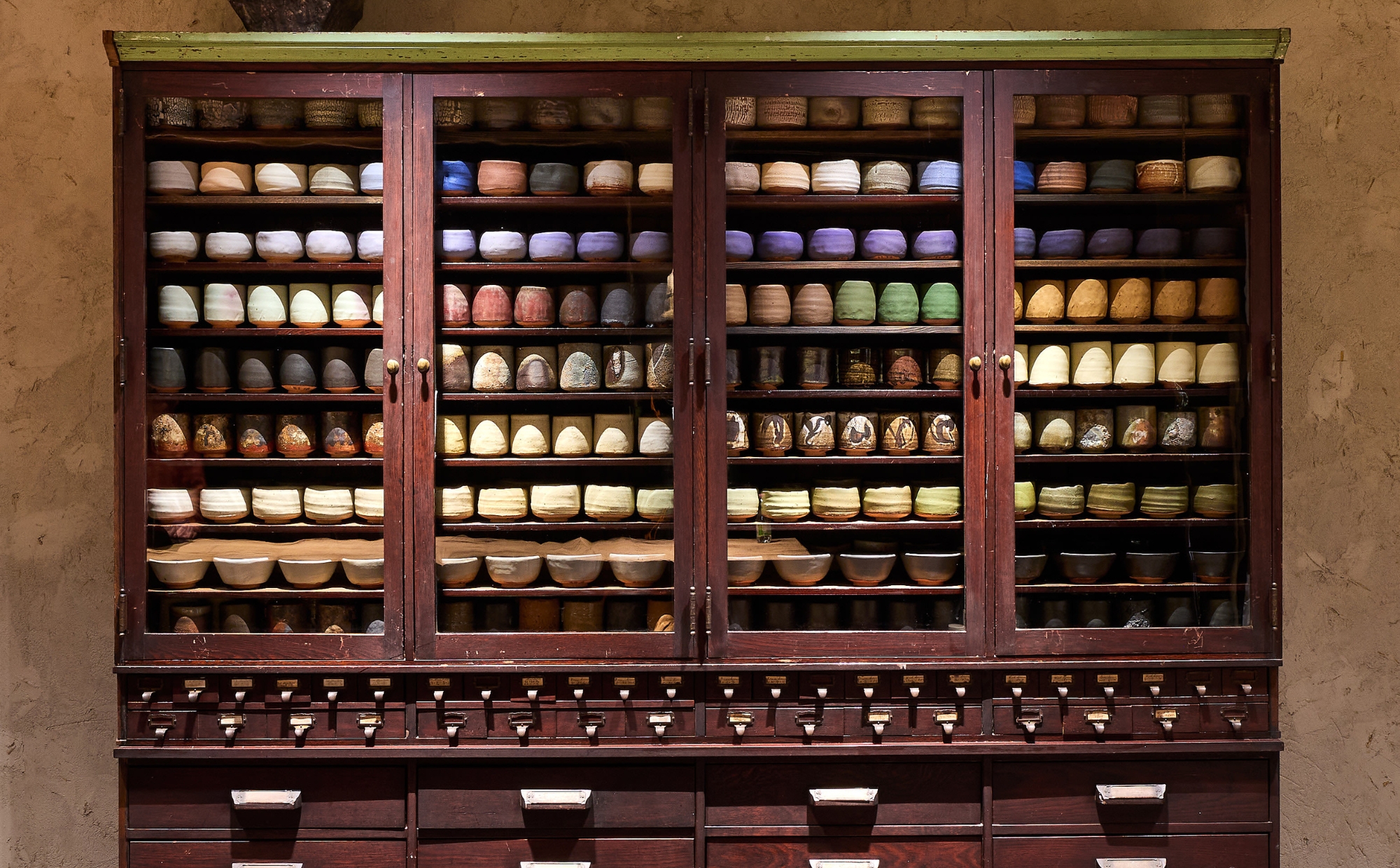
Particularly symbolic is the Chawan in Japanese tea ceremony culture. It is an entity that embodies not only a tool but the very gestures of the ceremony, conveying thoughtfulness, respect, and the meaning of being present in that moment as an expression of hospitality.
In contrast to the ceremonial chawan, the yunomi—a everyday handleless teacup—represents the comfort of daily routine and quiet tranquility, anchoring our ordinary moments. Meanwhile, vessels like the guinomi (sake cup) and tokkuri (sake carafe) serve a more social purpose, acting as traditional tools designed to deepen human connection and build trust through the shared ritual of drinking.
In this way, vessels function as a medium for nurturing relationships within our lives. It is not that they are cherished simply because they are beautiful; rather, their intrinsic value stands out through their use—a sensibility that could be described as the Yonobi (用の美 – Beauty of Use), which perhaps flows at the very foundation of this project.
A Space Filled with Tranquillity, Envisioned by Theaster Gates
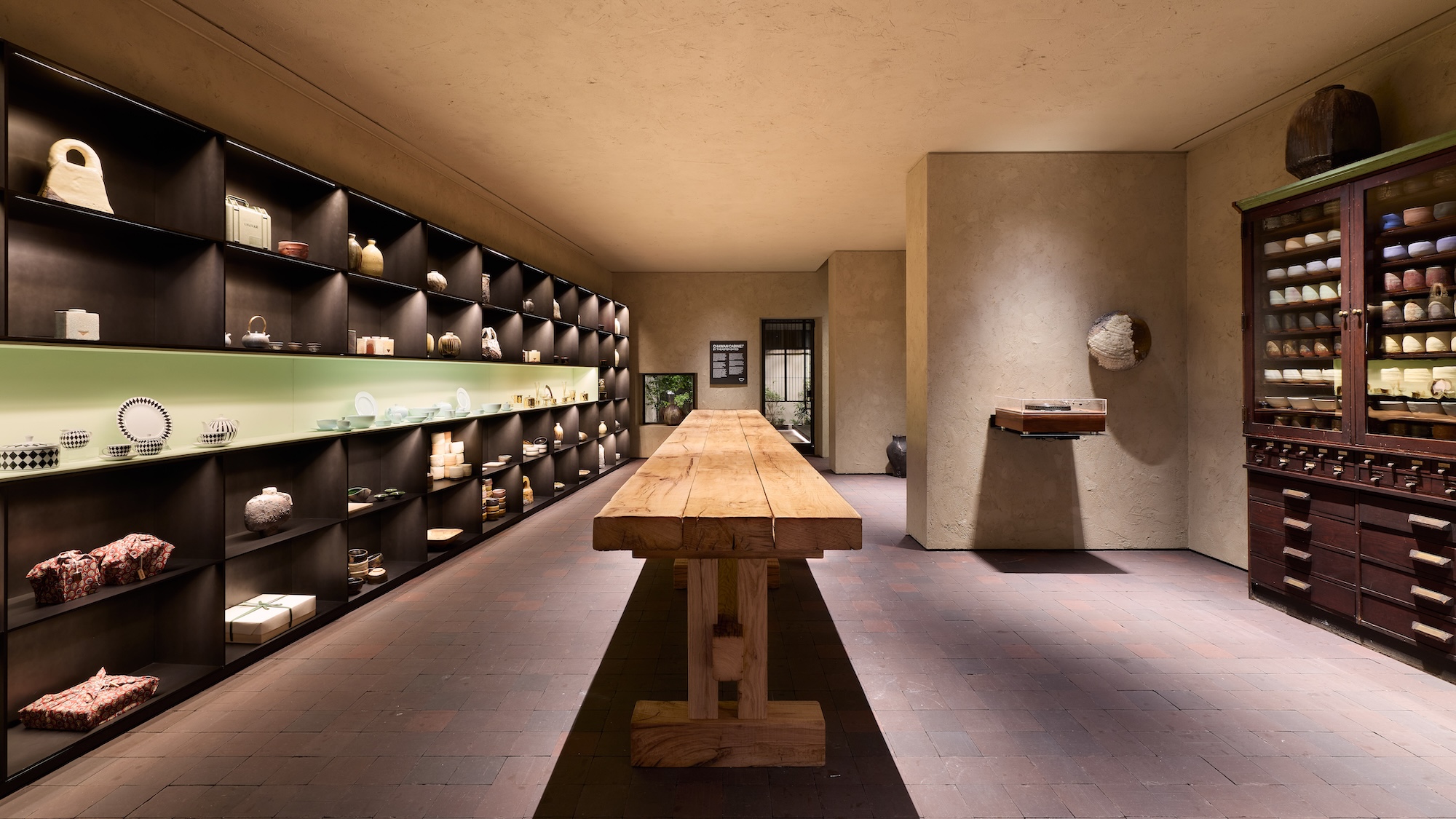
The exhibition space has been designed as an environment that evokes the serenity of a Japanese dwelling. The floor features ceramic tiles created in collaboration with the Mizuno Seitoen Lab (水野製陶園ラボ) in Tokoname; the walls consist of earthen walls inspired by traditional Japanese plastering techniques; and a long table made from reclaimed wood is situated in the centre. The slightly unrefined expressions of these materials add depth to the space.
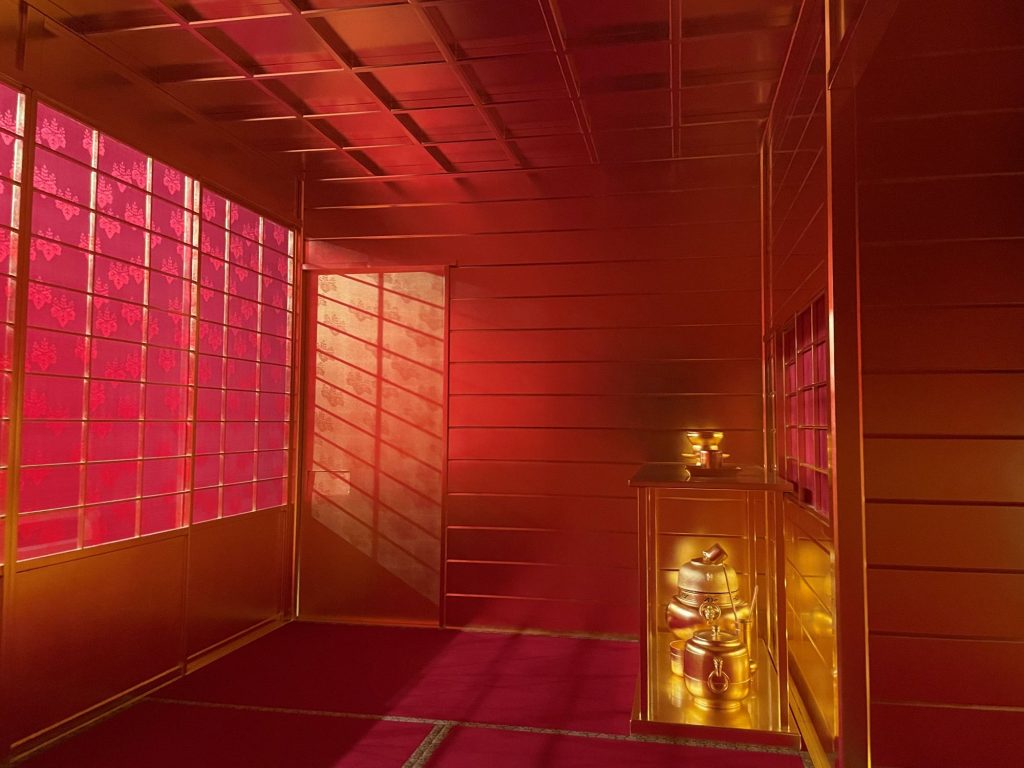
Stepping into the courtyard, visitors will discover a chashitsu—a traditional Japanese teahouse. Rather than serving as a static museum display, this pavilion is a living space hosting actual chakai, or formal tea gatherings. This space, which encompasses not just an exhibition but the activity itself, shifts the perspective from ownership to experience, questioning the relationship between vessels and people on a deeper level.
Japanese Ceramics and Contemporary Art Resonate
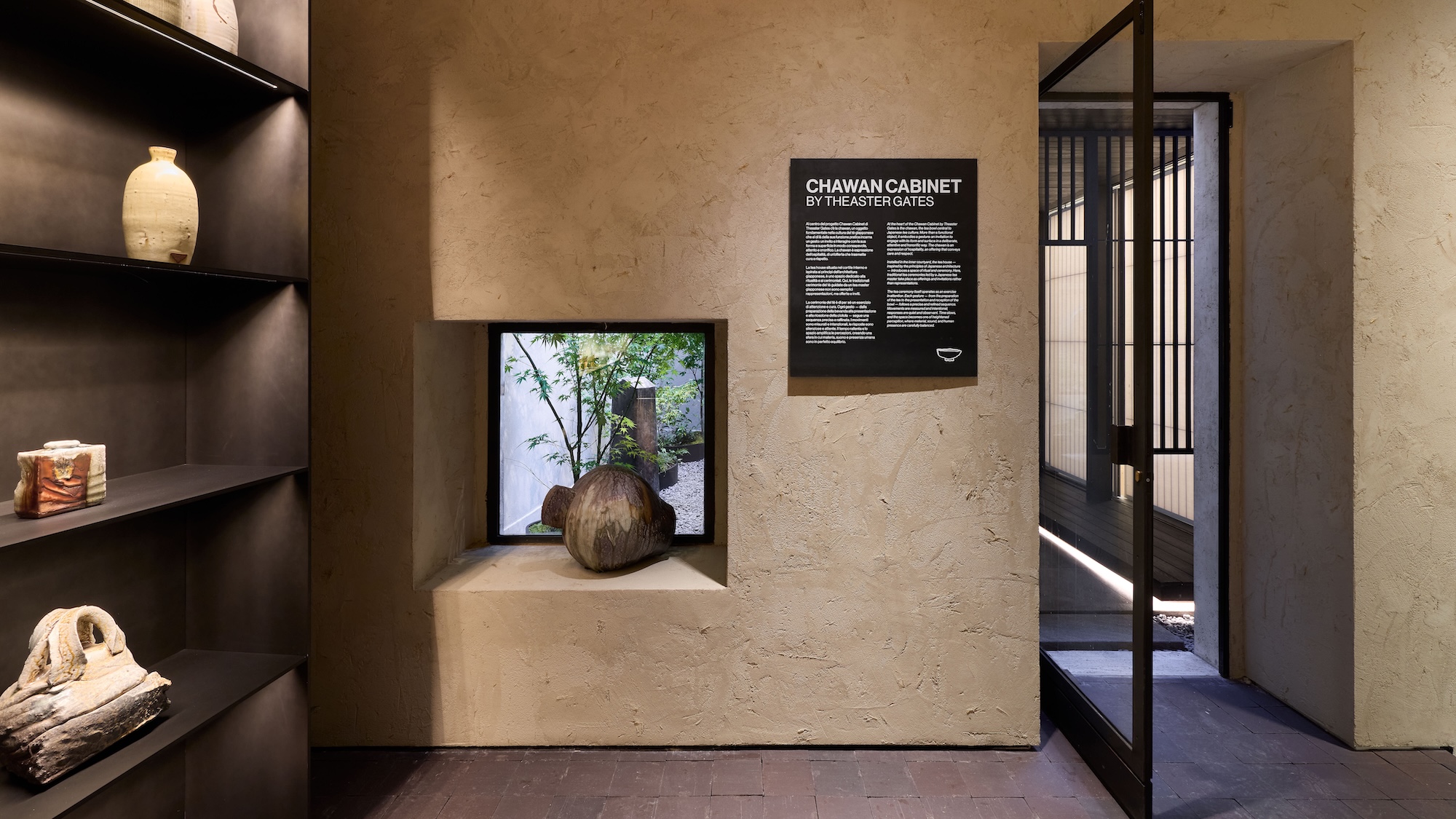
In the exhibition, alongside the works of Theaster Gates, pieces by Japanese ceramicists are displayed. Works by Japanese ceramicists and close friends of the artist—Kuroki Taira from Kyoto, Hirano Yuichi from Tokoname, Tabata Shion from Karuizawa (軽井沢), and Ohara Koichi from Tokoname—are introduced, each positioned as if in conversation with Theaster Gates’s creations.
Furthermore, interwoven with a selection from the Japanese-made Prada Home collection, the space unfolds in a way that questions the intellect of craftsmanship, cultural depth, and the intrinsic value of living and ceremonial spaces.
This exhibition, where the disparate contexts of Italian design, Japanese craft, and the contemporary art presented by Theaster Gates resonate, poses broad questions about our way of life and how we interact with others. What do we choose, how do we use it, and how do we accumulate time with it? By confronting such questions, ‘CHAWAN CABINET’ tells us that even the most human and simple gestures and vessels can reveal profound meaning and presence.
‘CHAWAN CABINET by THEASTER GATES’ Venue
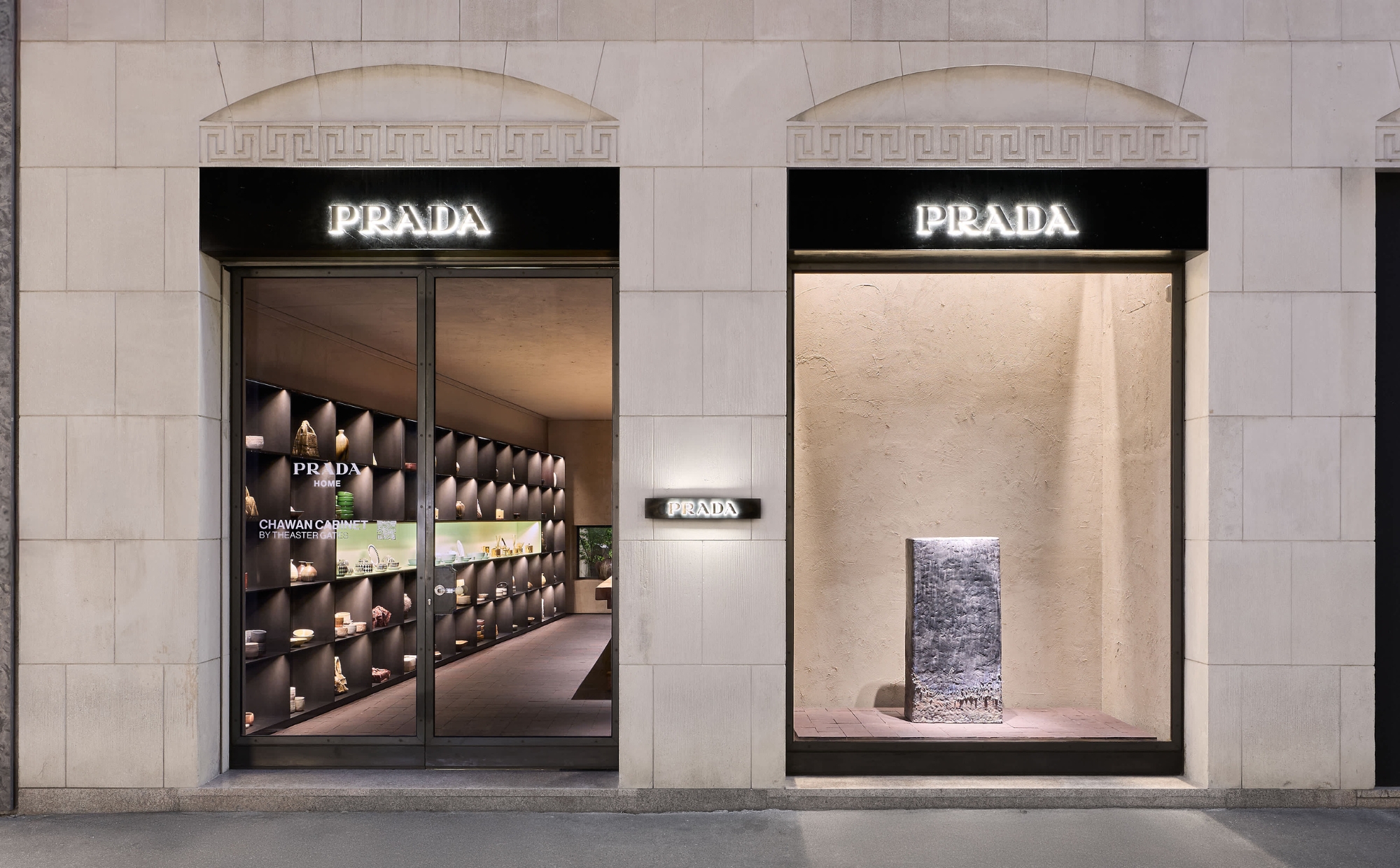
PRADA HOME | CHAWAN CABINET
BY THEASTER GATES
VIA MONTENAPOLEONE 6
This article is translated from https://intojapanwaraku.com/art/304298/