













Following the method of appreciation , we unravel sword history. What is the origin? How do you care? The sword may be similar to general art, something like kabuki ...
Please tell me the origin of the sword.
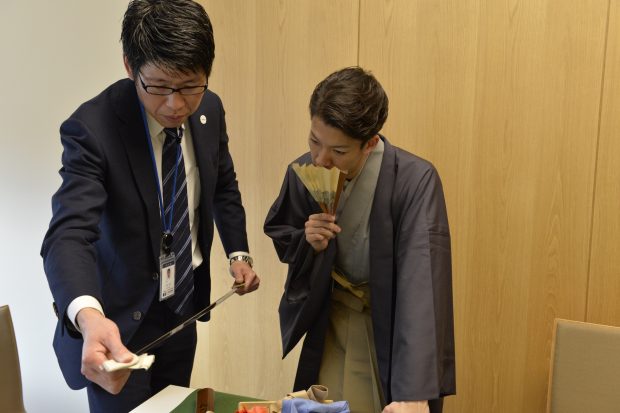
Well, let's see the origin of the sword. "It seems that the beginning is probably simultaneous with the outbreak of samurai ... Now it is said that the middle to late period of Heian period is the origin of Japanese swords. The oldest place is now Shimane, Tottori, It is often said that the swordsman of Yasutsuna (Musuchika) in Kyoto, and the sword called Warabiteto, which has a sharp bend in the Tohoku region, is the source of the movement. There is also a theory that there is no such place, and there are still areas where the direct source is still unexplained, ”said Mr. Ishii. "When did it start to bring value to swords? Well, they often appear in kabuki as well as famous swords and family treasures," Kenken asked. "In fact, there is a house that uses the appraisal and sharpening of a sword called Hon Amaya from around the latter half of Muromachi, and I served the Tokugawa family even in the Edo period, and issued a so-called Origami appraisal certificate. By that time the sword was completely used as a gift for the daimyo, and it was no longer practical, so that aspect was getting bigger and bigger.
How do I clean my sword?
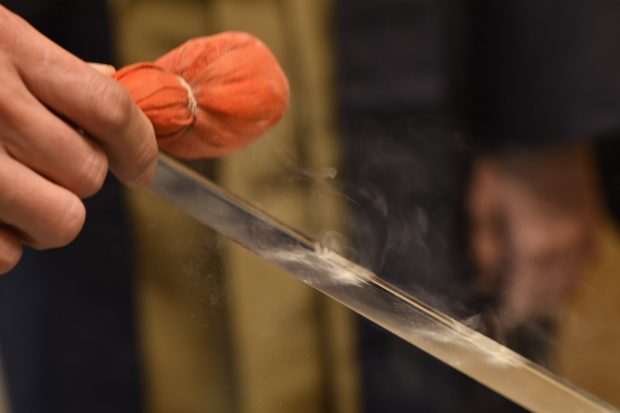
After seeing "Kinryo Insuke Sushin" and "Tsutakoshi Maemori Hirohiro", I showed you the maintenance work. To prevent rusting, wipe the old oil clean, reapply it lightly and store it in a white sheath. In a period drama etc., the work of a hammer hitting a pompon and a sword for maintenance of a sword ... "What is this for?", Kenken. "It looks like a powder is in the shape of a grindstone, but it looks like this oil entangles with old oil. It looks like a thin film with a thick film, and if it gets too fat, the oil does not soak into the sheath. The taste of rust is also a point of appreciation. The condition of the rusting is good. The good thing is really faint. It feels like it has been really carefully maintained for many years. " And Mr. Ishii. And as soon as I put the two swords in the sheath, "Hmm, it feels like the great man has returned (laughs). I feel nervous only with the sword. It's similar to having two great men, quite It was a strange feeling when I asked you to use a sword and it was strange that the great one was back home, oh, I already returned, I didn't drink tea, now I feel like that (Laughs) "said Kenken.
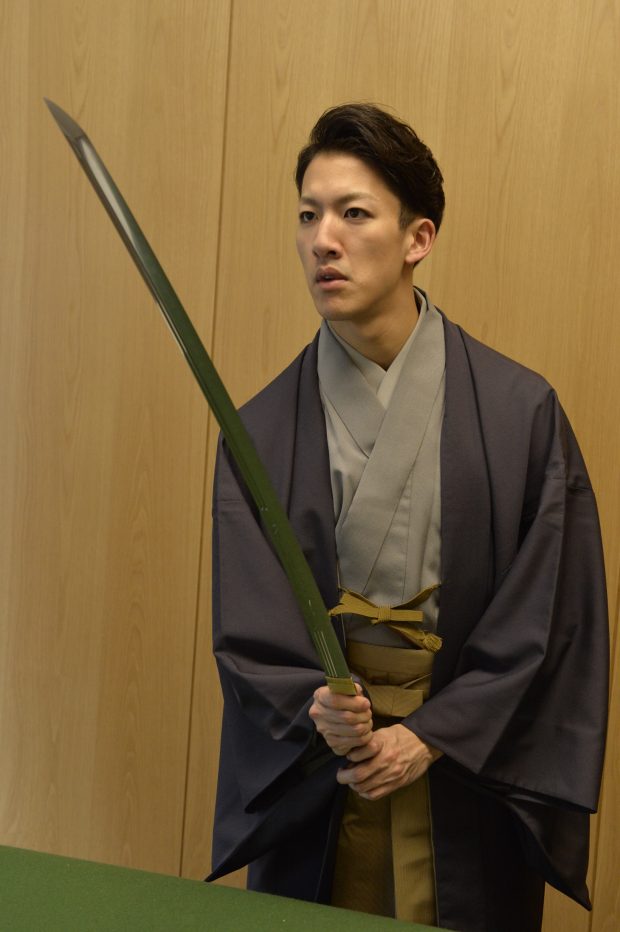 Just like the last scene of Jiro Saemon!
"I thought that as soon as I got help, I could hear a loud tinnitus and fall. ... After all, is there anything that is said to be a yokai?" "According to one theory, <Muramasa> and so on are often said to go to the Tokugawa family, but I think the side of the creation of the posterity is probably big," said Ishii. Hoh. "There's a lot of that in Kabuki's performance." The Ise Onsen Koi Nei Blade is operated by the sword of Aoe Shimosaka, and it is manipulated too. The man who was betrayed by the bridegroom, Jiro Saemon gets a famous sword called <Koto Fishing Bottle>, and at the end he remakes it with it. "You can do it," said Kenken, who shook Jiro Saemon and showed it. "Oh, do you have such a program? Actually, the word" 籠 "is also a term that expresses the sharpness of a sword. Mr. Ishii has a way to say "Sakai fishing bottle" in the sense that the water does not leak even because it can not hold even water droplets. "Hey, that's why it's interesting," said Kenken.
It starts with "Tatara" to make Japanese iron.
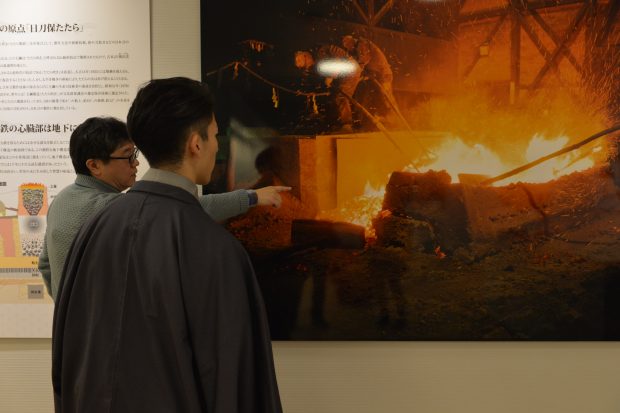
Well, in the information corner on the 1st floor of the museum, it will explain in an easy-to-understand manner the process until the blade is made. The Japanese sword is also said to be an "art of iron" unique to Japan that can be proud of the world. First of all, Japanese iron used as raw material for Japanese swords is produced by Tara, an ancient Japanese steelmaking technology. Iron is generally manufactured from the Meiji era, but it is the only iron manufactured by the blast furnace of the style, but the Japanese sword can not be made with the iron. Before the war, Japanese iron was manufactured in fine detail in Yasune, Shimane Prefecture, but now the Japan Art Sword Preservation Church is revitalizing "If I keep Sword" in Okuizumo-cho, Shimane Prefecture. A photograph and an illustration are given to explain how the furnace made of clay is heated with sand iron and charcoal without a break for three days and nights.
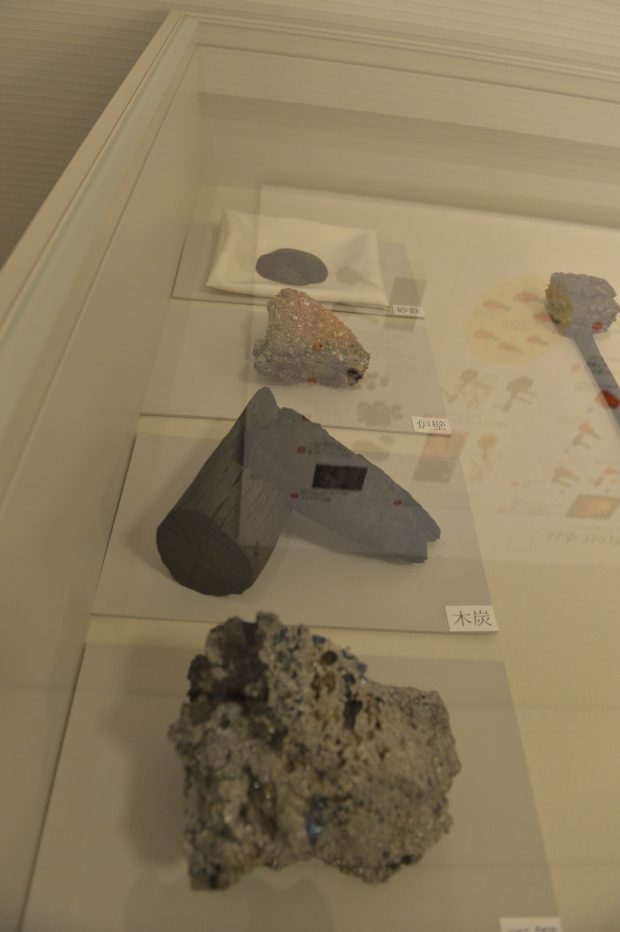
The iron produced by Tatara is a lump called eel. Among the items classified by crushing and steel selection, the best one is called "Tamagane", which is the material of the sword.
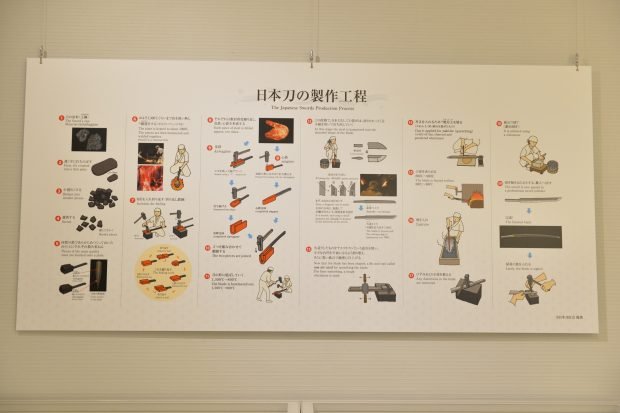
Starting from the stage of making iron, it takes complicated processes by many craftsmen to complete a swing of Japanese sword. Swordsman (make sword), researcher (sharpen sword), sword sculptor (sculpt a sword), silversmith (mainly make a kite), sheather (design a sword with sheath, make a sheath), painter There are various types of workers who are involved in such swords, such as coating the sheath with lacquer etc., the handle of the pattern (finishing the pattern of the sheath with the Yodogawa etc.), metalworkers (brackets and metal fittings of eyebrows) It is a comprehensive art to be completed only by bringing together "The use of swords is to kill or kill. The role of the researcher is very big. If the researcher is bad, the sword will be ruined. Sometimes there is a very sorry sword. How to finish with dignity and dignity In other words, Ishii-san's words, "It's the way of makeup. It will change completely if it's thick makeup or sharp natural feeling." It is better to see the person's skeleton in nature, and if you make makeup that is dark enough to erase the skeleton, there will be places like that, ”said Kenken. The important point is how to be finished to take advantage of the goodness of the sword, "the form, how to decide the line, the white part of the blade sentence is also white because the whetstone is small. How to make such white "There is a subtle difference depending on the researcher on the concentration of whitening, etc. This will be endless if you talk about it in detail (laughs)," said Mr. Ishii. "Kabuki is also the first time that there are various specialists such as performing arts, costumes and props, music, and actors, and in the sense of general art, kabuki is also included," said Kenken.
It still continues!
Is your dream to make your own sword? !
Swing the Swords Museum! (To) Kenken Sanpo
Kenken goes to the Swords Museum!
Onoe Ukon Profile
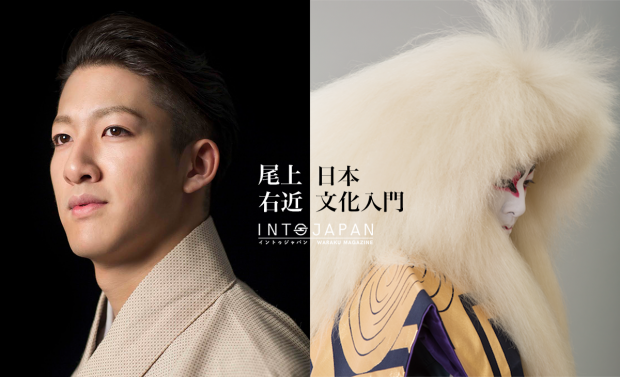
Kabuki actor. Born in 1992. Born as the second son of Edo Joruri Siyomoto Festival House and Shichimoto Yonju Taito. My brother is Kiyomoto Kiyomoto, who is a member of the Kiyomoto Section Shamisen. My great grandfather is the sixth generation Kikugorou. My mother's grandfather is Koji Tsuruta. In April 2000, under the name of Kensuke Okamura (Konsuke), he performed the first stage with the Kabuki theater performance "Mitsuru Suezukika" Matsumoto and played an active role as a great child. The second generation in 2005 was attacked by Ukon Ukon. The arm of the dance is also present. In addition, while continuing the actor, as a professional of Kiyomoto, the 7th generation of Tayuo Eju who is the father's former name is attacked, and it is scheduled to appear in the stage performance of Misonoza on October 1st (Month) to 25th (Thursday). 【Official Twitter】 【Official Instagram】 【Official Blog】
Sentence / Noriko Arai / Photography / Kenji Miura Composition / Noriko Arai / Shiho Kubo
[Mr. Ogami's introduction to Japanese culture]
The first Hokusai LOVE Western artists な
Speaking of the 2nd Taikan Fuji?
The third Tokyo International Exposition of the super-competitive room group!
The 4th Kenken is a Sword Museum!
The path to the birth of the 5th Makie Charm of Harunobu Suzuki
What is the 6th Japanese architecture!
The seventh national treasure "Gaso dokodoku" is interesting!
At the 8th Nagao Bunko, I saw "the beauty of the beauty of the palace and princess"